Different Ways of Software Configuration

Most of the time software needs some way to configure things: depending on the settings, the software will do different things. For example the software running on the microcontroller on top of the Raspberry might have the OLED LCD available or not:

Raspberry Pi and tinK22 with OLED LCD

Raspberry Pi and tinyK22 (NXP Kinetis K22FN512) with OLED LCD

How can I deal with this in my application code? Continue reading

Tutorial: Changing ARM Cortex Core or Microcontroller in Eclipse CDT Projects

Sometimes I start a project with an ARM microcontroller, and in the middle of the project I find out that it was a wrong choice at the beginning and I need to switch the microcontroller derivative or even the used ARM core. With little knowledge of the project structure and the files needed, such a switch is not the easiest thing, but definitely possible.

switching cores

switching cores

Continue reading

Tutorial: Blinky with the NXP LPC845-BRK Board

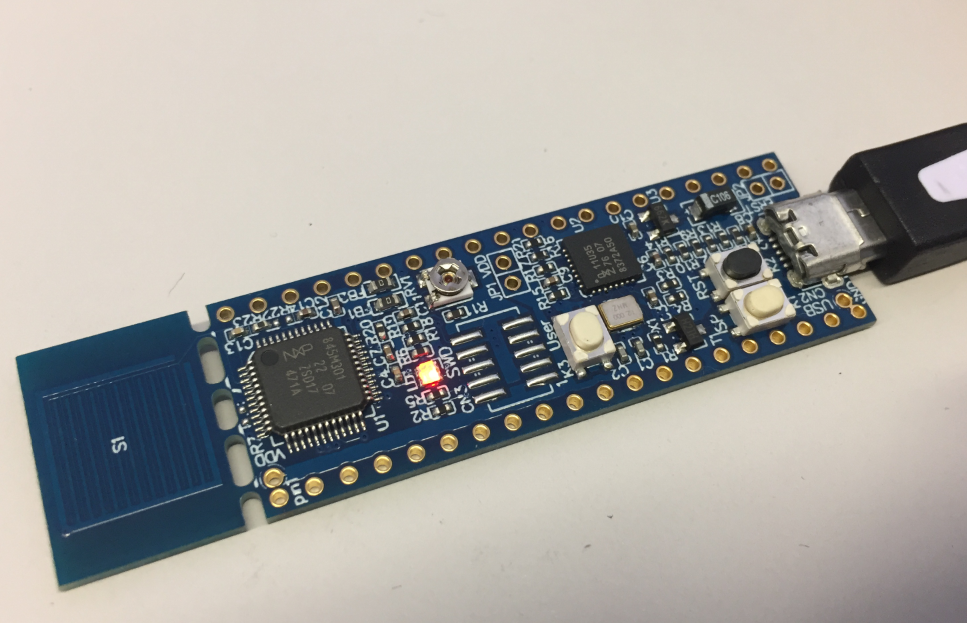
The NXP LPC845-BRK board is a sub-$6 breadboard friendly development board with an ARM Cortex-M0+ on it. This tutorial is about developing a ‘blinky’ on it using MCUXpresso.

Binky on NXP LPC845-BRK Board

Binky on NXP LPC845-BRK Board

Continue reading

Unboxing the NXP LPC845-BRK Board

I really love tiny and bread board friendly boards, especially if they are very affordable and can be use with Eclipse based tools. So I was excited to see the NXP LPC845-BRK board to be available at Mouser, so I ended up ordering multiple boards right away. Why multiple? Because they only cost CHF 5.95 (around $6)!

NXP LPC845-BRK Board

NXP LPC845-BRK Board

Continue reading

Tutorial: HD44780 Display Driver with NXP MCUXpresso SDK

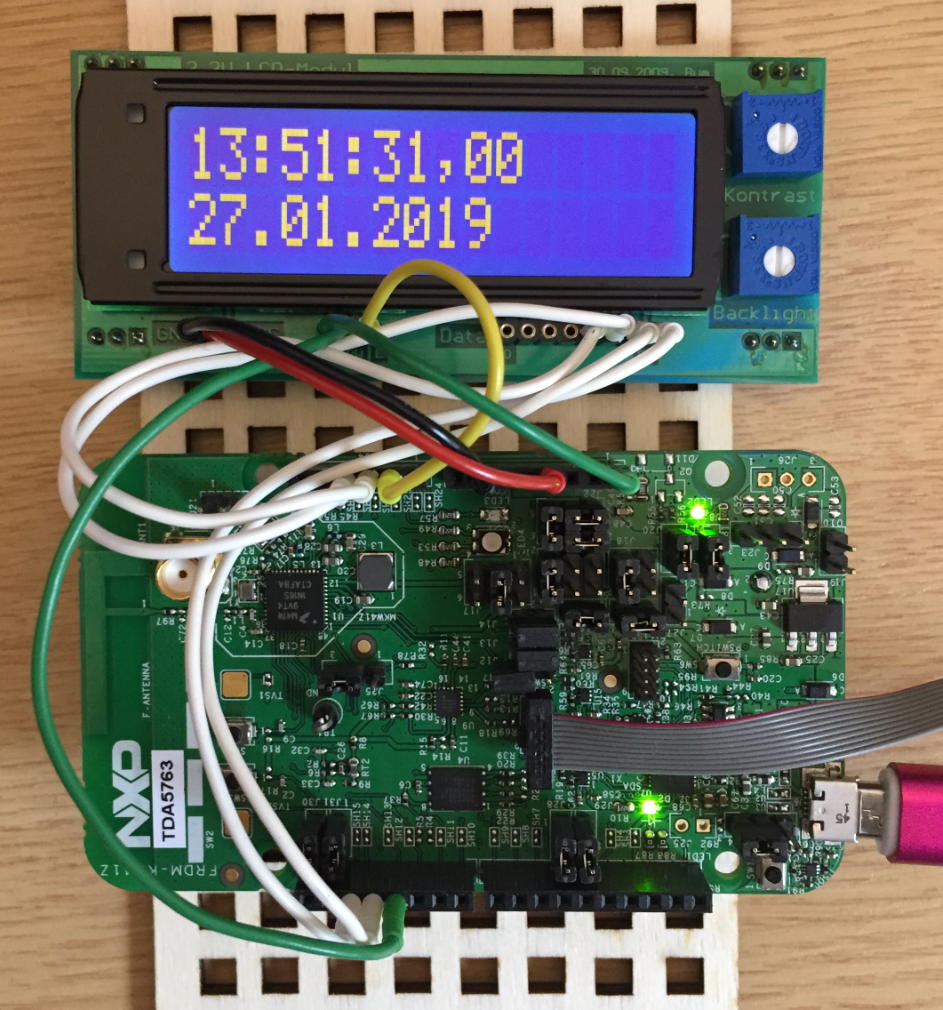
In the age of high-resolution graphical LCDs using a character display might look like a bit anachronistic. But these displays provide a lot of value for me as they are robust, available in different shapes and number of lines. And such a character display can be a better solution for an industrial application.

hd44780 display with NXP FRDM-KW41Z Board

hd44780 display with NXP FRDM-KW41Z Board

Continue reading

GDB All-Stop and Non-Stop Mode with LinkServer

GDB supports a mode which allows the GDB debug client to read memory while the target is running. This allows features like ‘live variables’: that way I can see the variables refreshed and changing over time without halting the target. Another functionality which comes with that feature is to check stopped threads or to see all threads in the system.

multiple freertos threads in debug view

multiple FreeRTOS threads in debug view

Continue reading

Driver for VL53L0X Time-Of-Flight (ToF) Sensor and NXP K20DX128

I’m using the VL6180X ToF (Time-of-Flight) sensors successfully in different projects. The VL6180X is great, but only can measure distances up to 20 cm and in ‘extended mode’ up to 60 cm. For a project I need to go beyond that, so the logical choice is the VL53L0X which measures between 30 cm and 100 cm or up to 200 cm. For this project I’m using the VL53L0X breakout board from Adafruit, but similar products are available e.g. from Pololu.

NXP K20dx128 with adafruit vl53l0x tof sensor

NXP K20dx128 with Adafruit VL53LOx tof sensor

Continue reading

Regaining Debug Access to NXP i.MX RT1064-EVK executing WFI

Working with low power modes can be challenging. It can severely affect debugging capabilities of a microprocessor or microcontroller. I ported a FreeRTOS application using the Tickless Idle Mode to the NXP i.MX RT1064 board, and all of a sudden, the board was unresponsive to any debugger connection. Luckily the board was not really bricked, but it took me while to find a way to recover it. So for when you end up in a situation with a ‘bricked’ i.MX RT1064 board, this article might be helpful for you to recover it.

i.MX RT1064-EVK Board

i.MX RT1064-EVK Board

Continue reading

Using Camera Modules with NXP i.MX RT10xx EVK

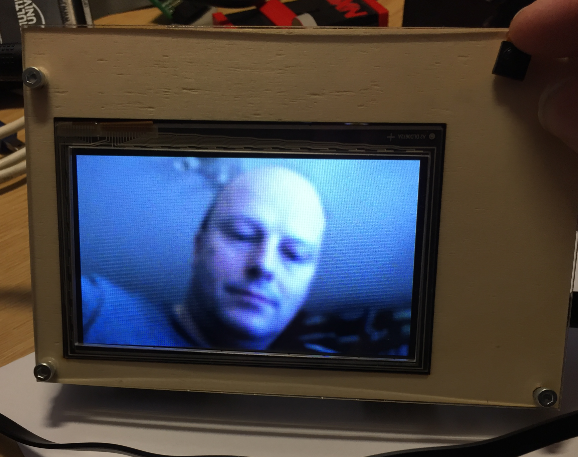
In “First Steps with the NXP i.MX RT1064-EVK Board” I mentioned that the board kit came with a camera module, but it was unclear to me which module was included in the kit. I know it now: it is the ON Semiconductor MT9M114 :-).

Image from the MT9M114

Image from the MT9M114

Continue reading

Tutorial: Git with Eclipse

There are things which are game changer in the world of software development: one such event was when I started using a VCS (Version Control System): it changed for me how I keep and store my projects and settings. It even changed the way how I deal with non-software related items like documents or other valuable things: I started storing them in to a VCS too.

EGit with Eclipse
EGit with Eclipse
Continue reading