A very useful feature in Eclipse is Ctrl+Shift+L which lists all the available shortcuts:
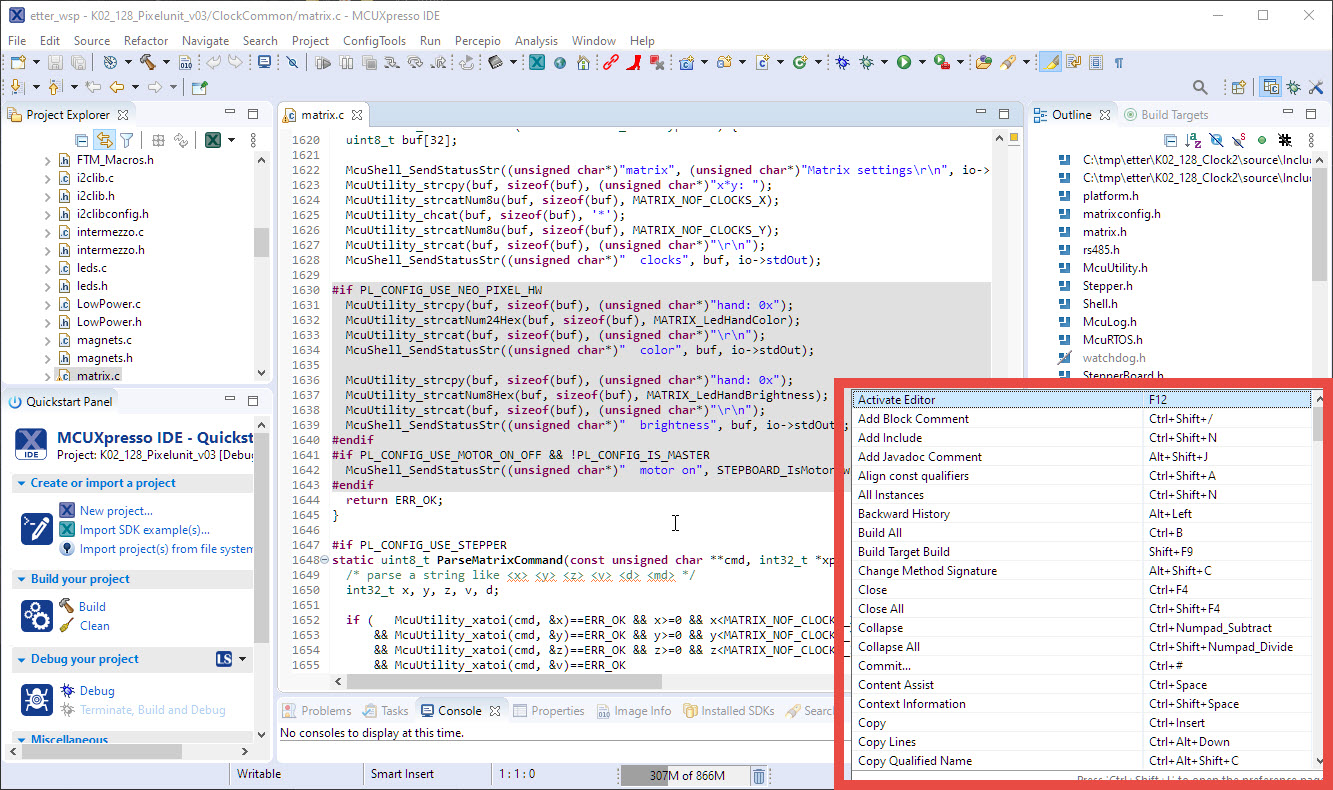
List of Shortcuts
Pressing Ctrl+Shift-L again will open up a dialog where I can configure them. But what if the shortcut or action is not listed there?
A very useful feature in Eclipse is Ctrl+Shift+L which lists all the available shortcuts:
List of Shortcuts
Pressing Ctrl+Shift-L again will open up a dialog where I can configure them. But what if the shortcut or action is not listed there?
The NXP Kinetis devices implement a UID (Unique ID) for each device, using the ‘Unique Identification Register) which is part of the SIM (System Integration Module):

SIM Unique ID (NXP K22P144M120SF5RM.pdf Reference Manual)
While this number should be unique, I was wondering last week why students in the labs reported the same UID for multiple robots in the lab. So maybe this number is not so unique as it should be?
Continue reading
The NXP MCUXpressso IDE Release V11.2.1 gave a hint about a coming new debug probe, the MCU-Link which is available now:

MCU-Link in 3D printed enclosure debugging the LPC845-BRK Board
Tomorrow is the 1st Advent, and right on time I was able to finish a special version of an Advent calendar for the Christmas 2020:
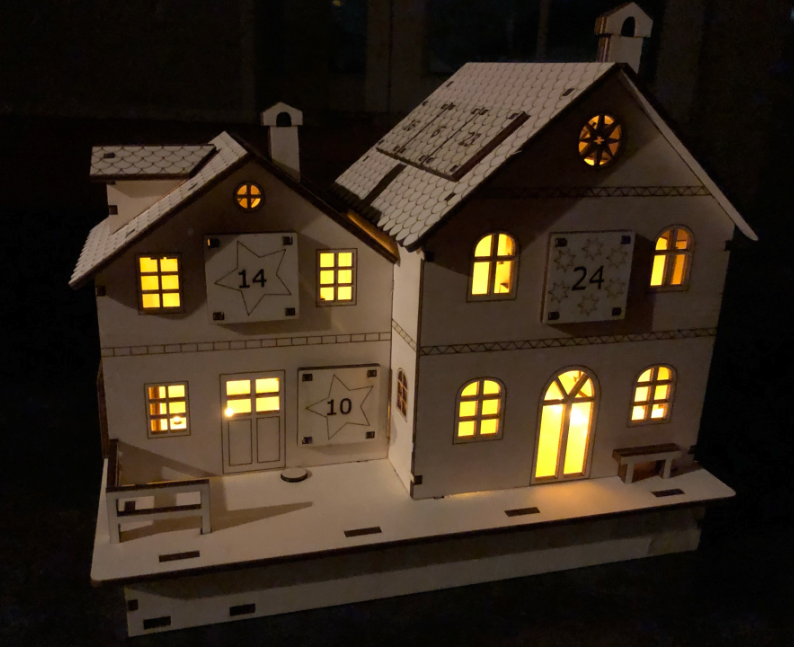
laser cut advent calendar illuminated
Having visibility and insights into a running system is highly valuable or critical: not only for optimizations but as well to verify the system design and behavior. In Getting Started with Microsoft Azure RTOS (aka ThreadX) I showed how to quickly run Azure RTOS. This article is about getting trace out of an ThreadX application and show it in TraceX.
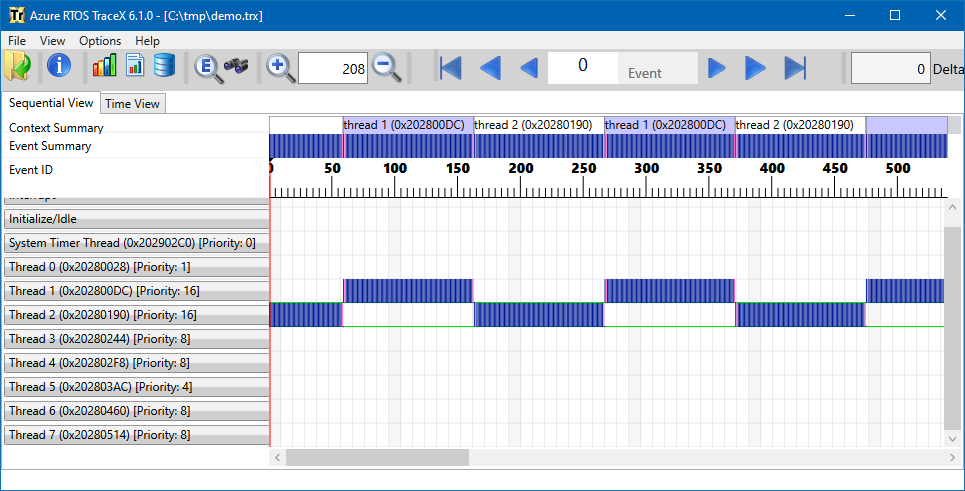
Azure RTOS TraceX
Most of my students seems to prefer the ‘Dark’ desktop and tool theme. So this is getting popular, and I was reluctant to use it. But tools support is getting better (see MCUXpresso IDE) and I switched do the ‘dark’ side for now :-).
But what do you prefer? Not Eclipse in particular, but as a general color theme? Is it the ‘new’ Dark, black, darker-than-dark, … theme?

Dark Theme
Or is it the ‘classic’ Light, bright, white, … theme?

Light Theme
Please let us know:
Happy undarking 🙂
Reentrancy is an attribute of a piece of code and basically means it can re-entered by another execution flow, for example by an interrupt or by another task or thread. This is an important concept and still a lot of code ‘in the wild’ does violate reentrancy. As a result the application crashes immediately in the best case. Worse it crashes randomly or even worse it behaves incorrectly 😦 .
Reentrancy is always a concern if using standard library functions, including printf() or malloc(). FreeRTOS offers a reentrant wrapper to the standard malloc() and free() (Memory Scheme 3)

Running FreeRTOS with reentrant newlib
If you are a regular reader of my articles, you probably know that I’m using FreeRTOS in most of my applications, for obvious reasons. But clearly this is not the only RTOS out there. After Microsoft had acquired Express Logic back in April 2019 things kept quite for a while. To me the crown jewel of Express Logic is the ThreadX RTOS. But recently Microsoft is pushing more and more the ‘Azure Sphere’ and trying to monetize the ‘IoT’ (I apologize for mentioning that overused acronym) application space and providing it now free for devices from selected partners which includes NXP now.
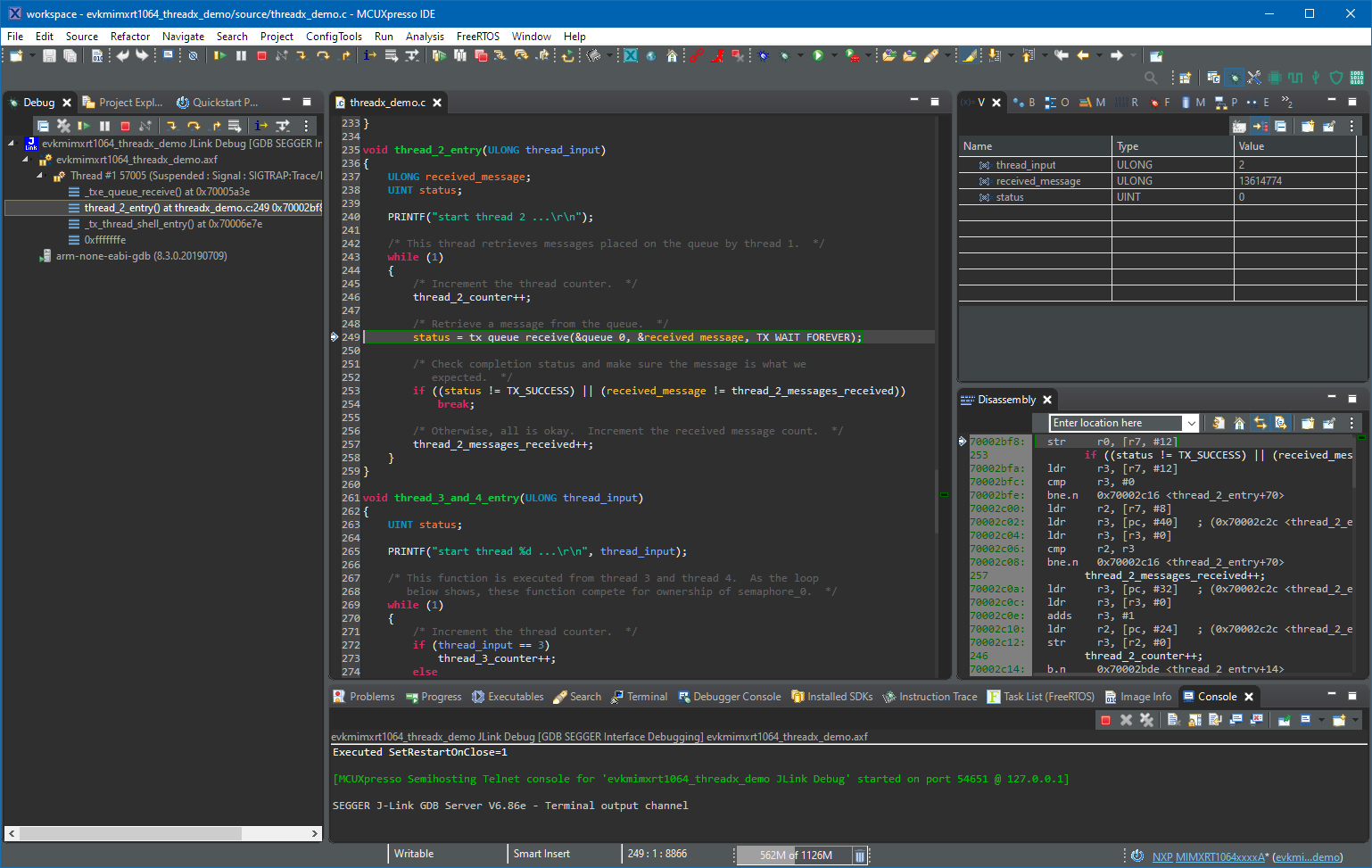
Debugging with ThreadX in MCUXpresso IDE
Philips Hue Smart LED stripes are great, but they have a disadvantage: the LED density is rather low: one LED cluster (WW, RGB, CW) every 55 mm. This leads to the problem that individual dots might be visible if the LED stripe is directly visible. Even if the LED stripe is used for indirect ambient light it means that individual dots might still be visible on the wall or ceiling. The solution is to create a ‘high density’ Hue smart LED stripe:
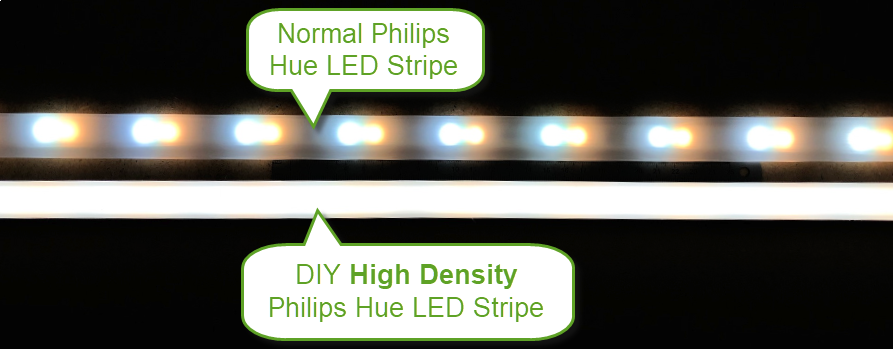
Normal vs High Density Philips Hue LED Stripe
If having a boot loader running on a micro-controller, it is very useful if both the boot loader and the loaded application can be debugged together:

Bootloader with Application Code
 MCU on Eclipse