From my previous MetaClockClock project, I still had some hardware available. So I decided to build my largest build so far: to clocks with 78 clocks each.
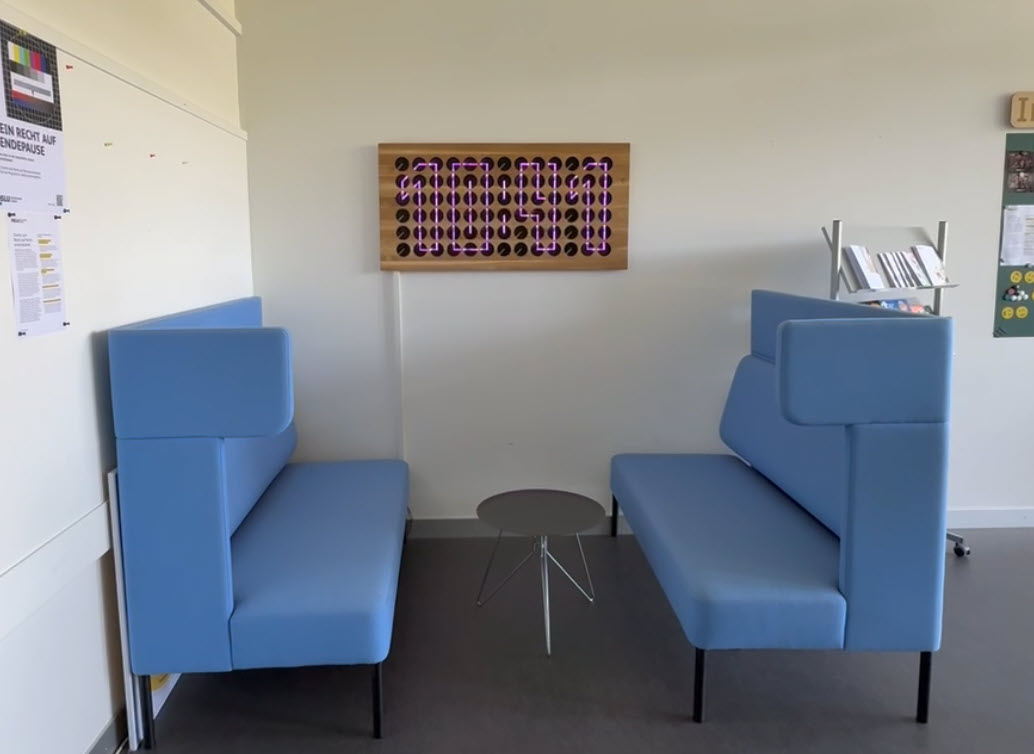
From my previous MetaClockClock project, I still had some hardware available. So I decided to build my largest build so far: to clocks with 78 clocks each.
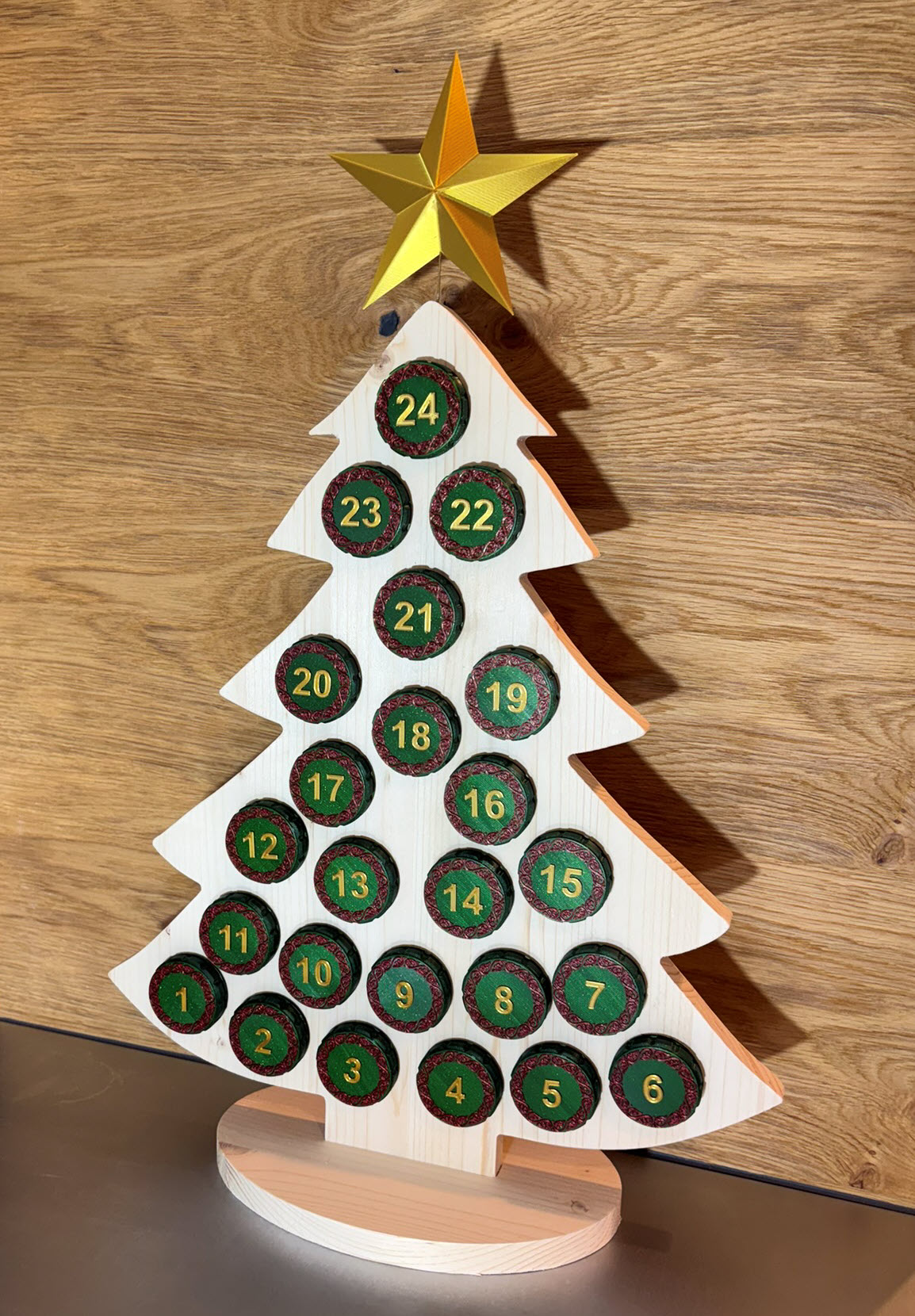
It is the last day of November. And tomorrow the Advent starts with December 1st. Over the last weeks I have spent the weekends with building an Advent Calendar. This year it is one without any electronics. The CNC machine has cut a pine wood tree. And the 3D printer created round threaded and numbered containers, with a shiny star on top of the tree:
The MetaClockClock is a clock made of clocks. It consists of multiple dual-shaft stepper motors, arranged as a matrix of 5×12 analog clocks. Each clock has two motorized hands that can move independently. The clock can tell the time, but in a unconventional way. The entire matrix creates a meta-display that shows the time or other information. Between the updates, the hand can do coordinated, choreographed movements.
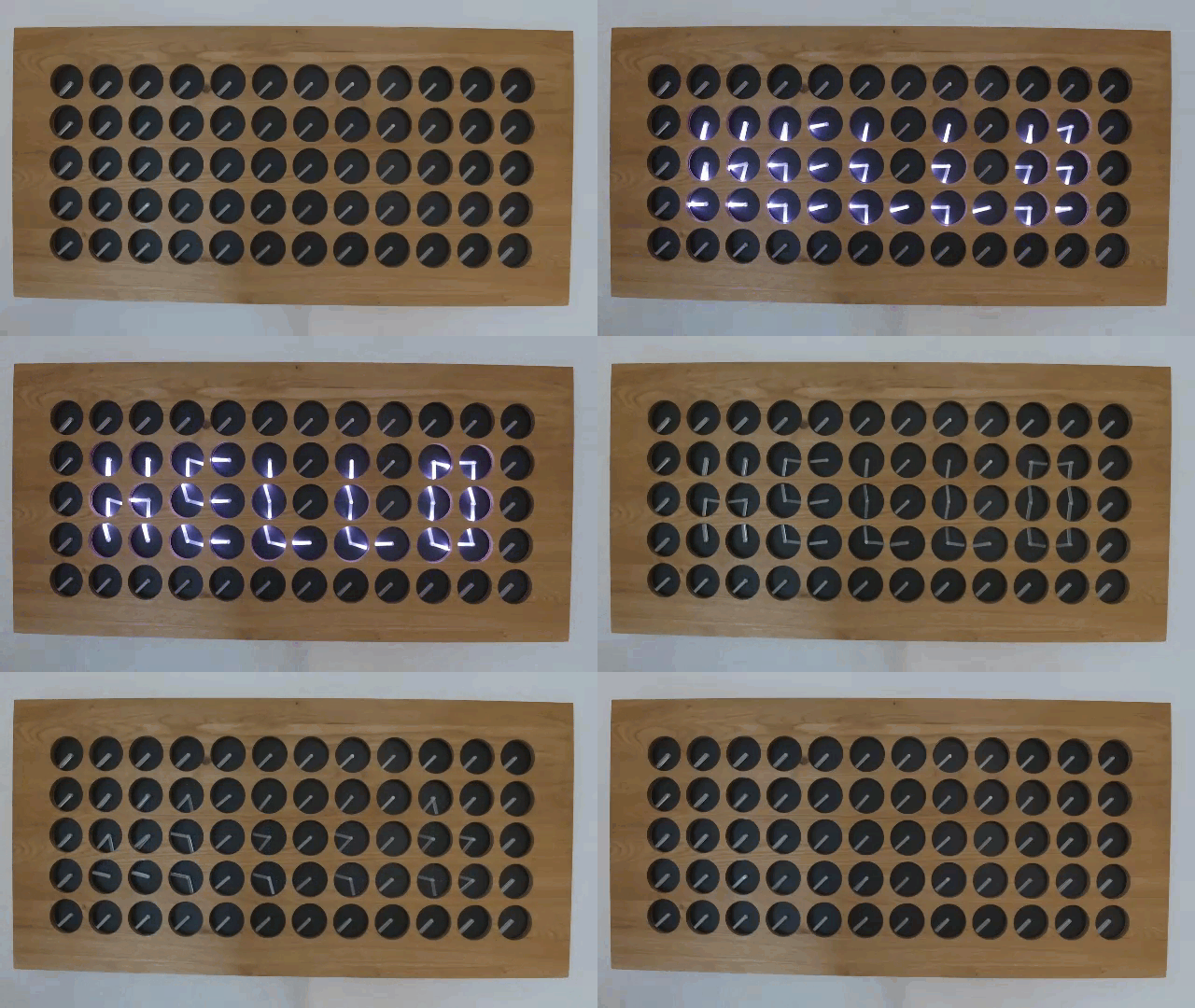
The clock hands are laser cut acrylics with get light up with a LED ring around the clock.
This article describes the build with CNC cut oak enclosure, laser-cut parts and 3D printed items.
Continue readingThe holiday break at the end of the year is always a good time to finish projects started during the year. This one is about my ‘MetaClockClock’ Version 3.

2020 with Red Hands on Blue
Philips Hue Smart LED stripes are great, but they have a disadvantage: the LED density is rather low: one LED cluster (WW, RGB, CW) every 55 mm. This leads to the problem that individual dots might be visible if the LED stripe is directly visible. Even if the LED stripe is used for indirect ambient light it means that individual dots might still be visible on the wall or ceiling. The solution is to create a ‘high density’ Hue smart LED stripe:
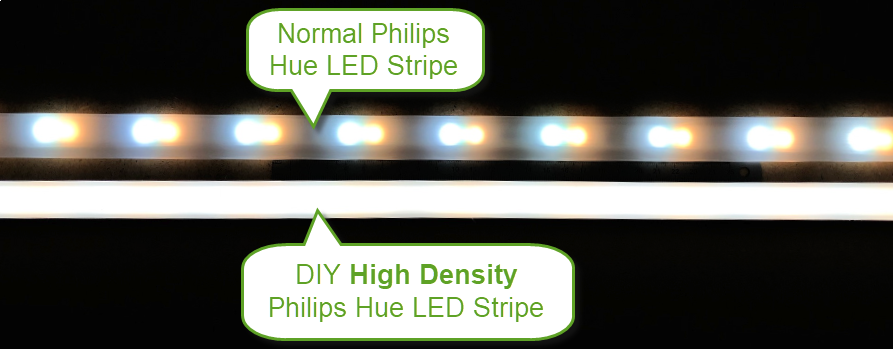
Normal vs High Density Philips Hue LED Stripe
Human since 1982 claims
“Human since 1982 have the copyright to works displaying digital time using a grid arrangement of analog clocks…”
I’m not a lawyer, but without obligations (imho) I have removed the content.
You can read more of the details here: Copyright Law for Makers and Educators
Thanks for understanding,
Erich
If your child is making a special wish, you will do everything to make it happen, right? So my daughter’s wish was a ‘moon lamp’. And here is it: a magnetic levitating (MagLev) wireless moon light:

MagLev wireless LED Moon
If you follow me on Twitter, then you are aware that I’m working on a larger project building an SMT pick and place machine :-). The fun with this project is that it includes electronics, mechanics and all kind of 3D printing and laser cutting. That machine picks SMD components and places them on a PCB. One sub-project is to build a SMD cut tape holder:

SMD Tape Holder
I’m making great progress with the firmware for the new Mini Sumo Robot (see “New Concept for 2018 Mini Sumo Roboter“). The goal is a versatile and low-cost Mini Sumo robot, and the robot comes with the feature of magnetic position encoders. In a previous article I have explained how to mold custom tires for robots (see “Making Perfect Sticky DIY Sumo Robot Tires“), this article is about how to make DIY Magnetic disk encoders.

3D Printed Magnetic Encoders Disks
I’m a fan of all kind of weather stations. When Daniel Eichhorn twittered about his new version using an E-Paper display module, I immediately preordered one. I decided to build a station with a custom enclosure, so here is my version of a 3D printed version, featuring magnets so it can be attached to the fridge:

E-Paper Weather Station
 MCU on Eclipse