Steps to use FreeRTOS with newlib reentrant Memory Allocation

Reentrancy is an attribute of a piece of code and basically means it can re-entered by another execution flow, for example by an interrupt or by another task or thread. This is an important concept and still a lot of code ‘in the wild’ does violate reentrancy. As a result the application crashes immediately in the best case. Worse it crashes randomly or even worse it behaves incorrectly 😦 .

Reentrancy is always a concern if using standard library functions, including printf() or malloc(). FreeRTOS offers a reentrant wrapper to the standard malloc() and free() (Memory Scheme 3)

Running FreeRTOS with reentrant newlib
Running FreeRTOS with reentrant newlib
Continue reading

Getting Started with Microsoft Azure RTOS (aka ThreadX)

If you are a regular reader of my articles, you probably know that I’m using FreeRTOS in most of my applications, for obvious reasons. But clearly this is not the only RTOS out there. After Microsoft had acquired Express Logic back in April 2019 things kept quite for a while. To me the crown jewel of Express Logic is the ThreadX RTOS. But recently Microsoft is pushing more and more the ‘Azure Sphere’ and trying to monetize the ‘IoT’ (I apologize for mentioning that overused acronym) application space and providing it now free for devices from selected partners which includes NXP now.

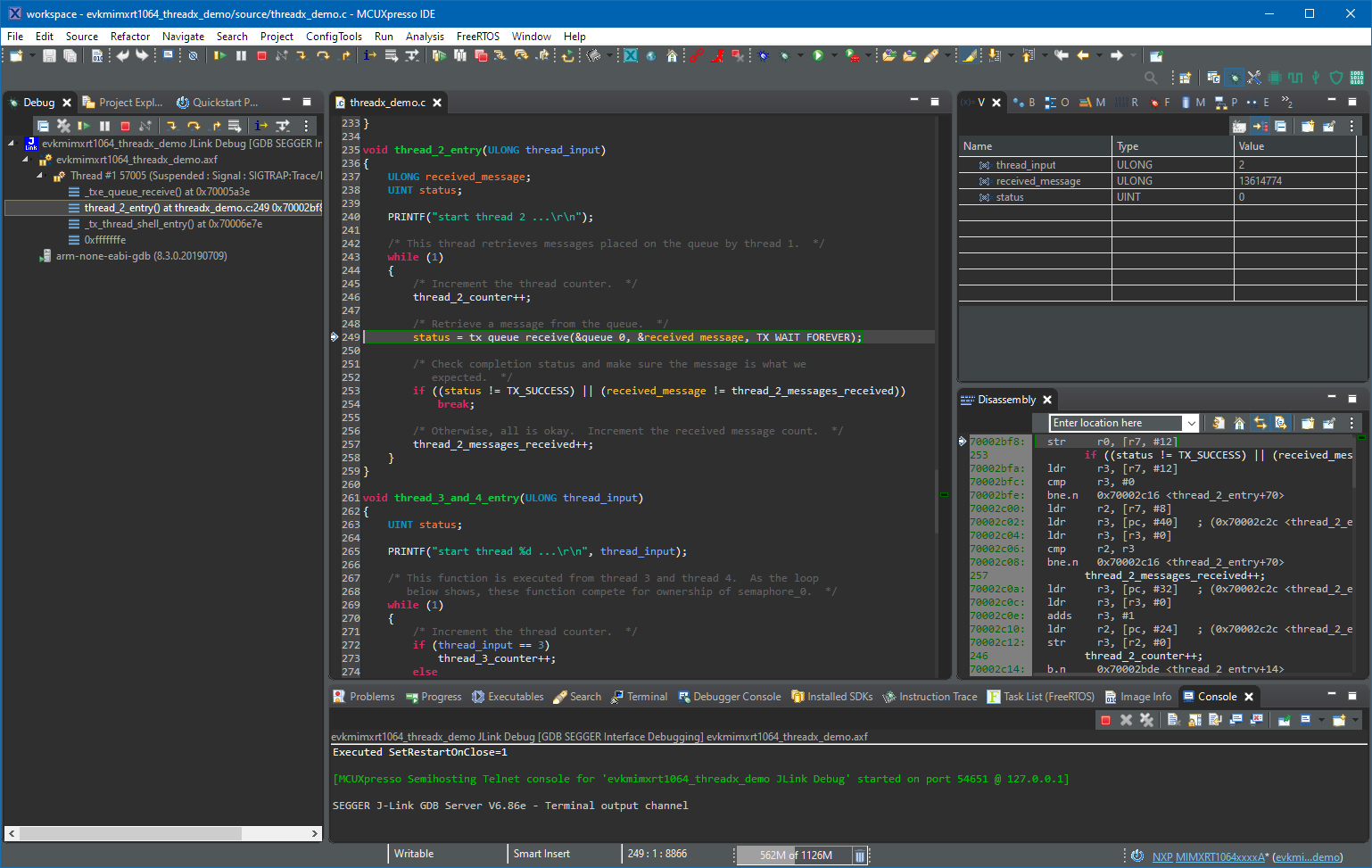
Debugging with ThreadX in MCUXpresso IDE

Debugging with ThreadX in MCUXpresso IDE

Continue reading

Debugging Bootloader and Application with one Debug Session

If having a boot loader running on a micro-controller, it is very useful if both the boot loader and the loaded application can be debugged together:

Bootloader with Application Code

Bootloader with Application Code

Continue reading

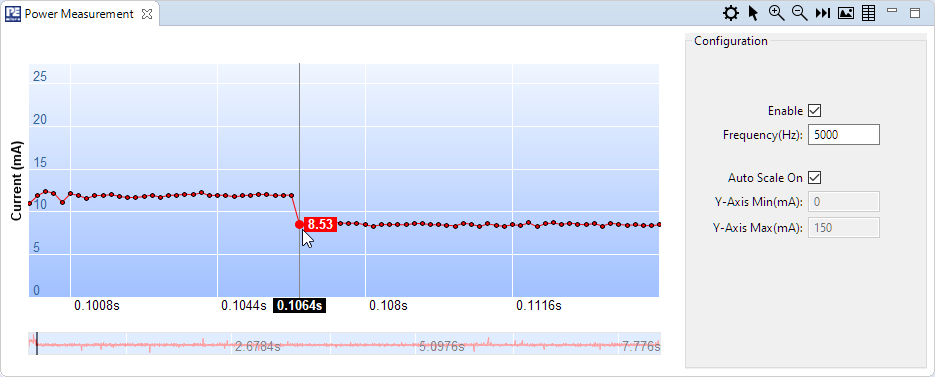
Power Measurement with the PEmicro Multilink Universal in Eclipse

Implementing low power in embedded applications implemented can be challenging. Measuring current consumption is a first step to see if the software changes indeed have an effect on the current consumed. The PEmicro Universal Multilink FX debug probe comes with a useful feature to provide power to the target and the same time to measure the current consumption and to show the current used in the Eclipse IDE:

PEmicro power measurement

PEmicro power measurement

Continue reading

tinyK22 Board Rev 1.3 released

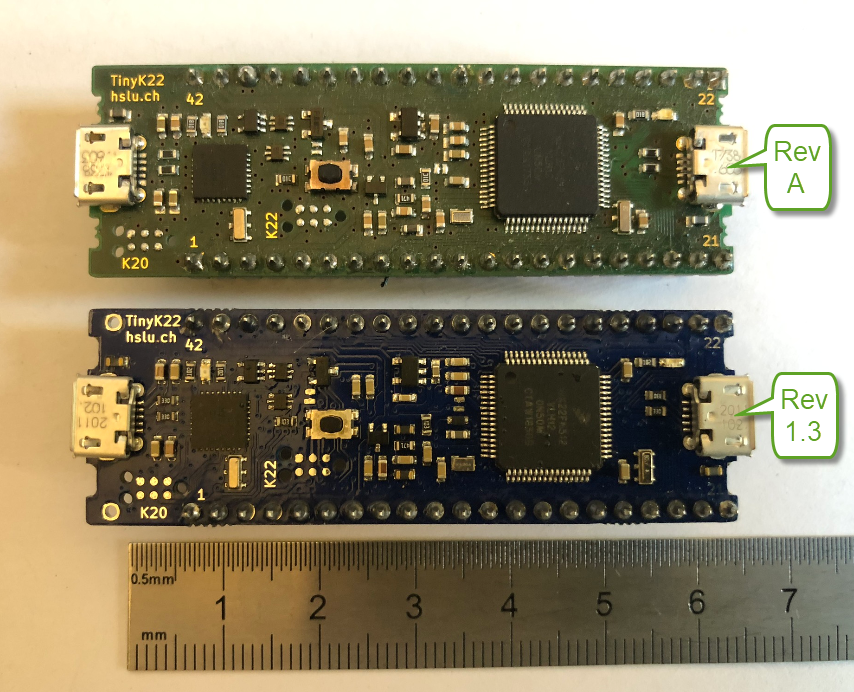
The tinyK22 board is a tiny micro controller board we use at the Lucerne University of Applied Sciences and Arts. It is used in many research project, used in lectures and labs and used in most student projects. Because there was no small and breadboard friendly NXP Kinetis board with a debug interface available, we developed one featuring the NXP K22FN512, named the ‘tinyK22‘. Because of the success and high demand we stated a new large production run and used this to upgrade the board to the new Rev 1.3: you might notice already the color change :-).

tinyK22

tinyK22

Continue reading

Tweaking MCUXpresso IDE Black Theme

‘Dark’ or ‘Black’ themes are on vogue: some love it, some do not care. The good thing is that we all have a choice. Things are getting improved on the host OS (Windows/Linux) side, but the challenge is still on the application side, but things are getting better. This is true for the Eclipse based IDEs too, with the NXP MCUXpresso IDE V11.2.1 just recently released: it comes with improved Dark Theme support:

Tweaked MCUXpresso IDE Dark Theme

Tweaked MCUXpresso IDE Dark Theme

Continue reading

MCUXpresso IDE V11.2.1

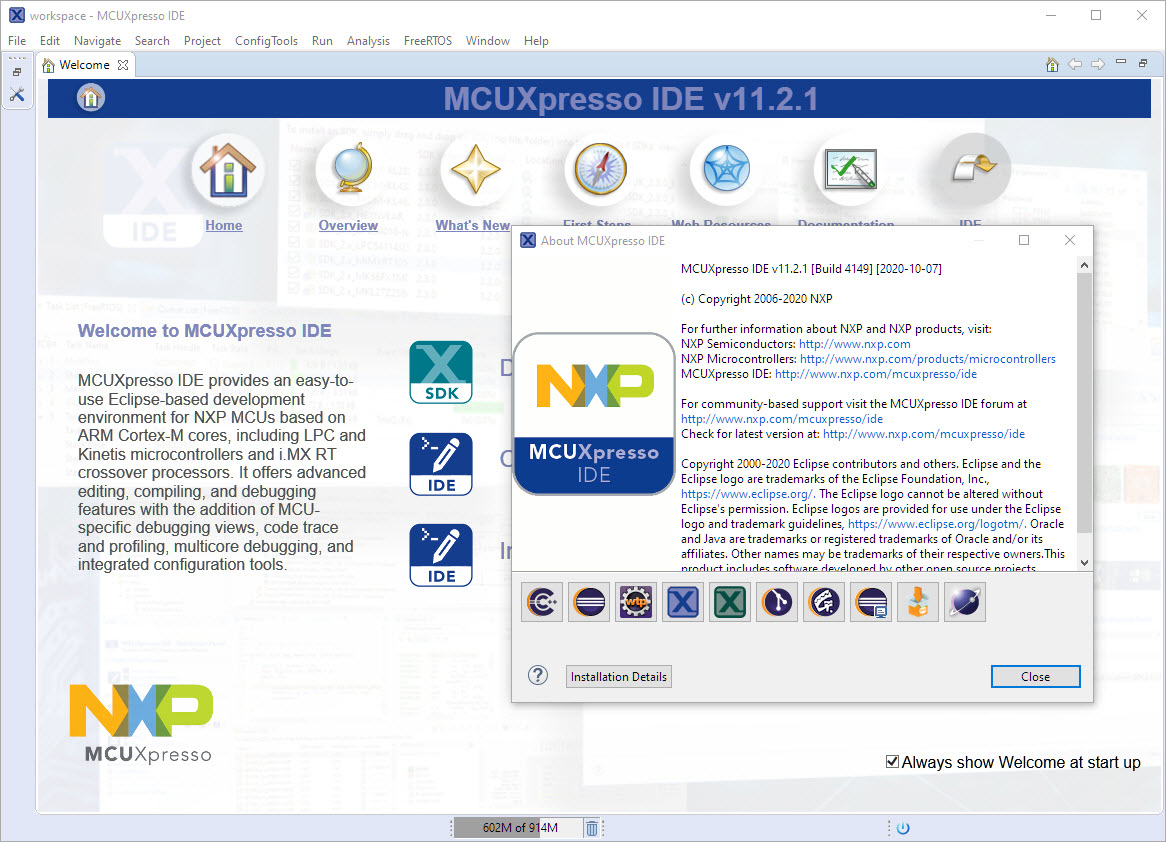
I have started the semester and labs using the MCUXpresso IDE V11.2.0 which has been available from July this year. The past week I received the notification that the update V11.2.1 is available: time to check it out….

MCUXpresso IDE V11.2.1

MCUXpresso IDE V11.2.1

Continue reading

MCUXpresso IDE V11.2.0

At the university the end of a semester means that you have to get ready for the next semester. I always tend to use the latest and greatest tools for the labs. This week I received the notification that a new version of the Eclipse based MCUXpresso IDE is available, time to check it out for the next semester.

MCUXpresso IDE 11.2.0

MCUXpresso IDE 11.2.0

Continue reading

Eclipse Gems, Tips & Tricks: Faster Debugger Start

This article is part of a β€˜mini series’ about hidden gems, tips and tricks around Eclipse.
The topic of this one is how to accelerate the start of the debugger.

Nothing to be done

Nothing to be done

Continue reading

Disabling NMI (Non Maskable Interrupt) Pin

The NMI is a special interrupt on ARM Cortex-M architecture: as the name indicates, it cannot be ‘masked’ by the usual ‘disable interrupts’ flags (PRIMASK, BASEPRI), similar to the Reset signal.

cortex-m-vector-table

cortex-m-vector-table (Source: adapted from arm.com)

Dealing with the reset signal is kind of obvious, and most designs and boards have it routed to a reset button or similar. The NMI is less obvious if you don’t pay attention to it: most ARM-Cortex implementations and boards have the NMI signal routed to a pin and are ‘hiding’ it in the schematics behind a normal GPIO pin or port: if you don’t pay attention to the NMI functionality, the board might not work as intended.

Continue reading