Unknown's avatar

About Erich Styger

Embedded is my passion....

Dandelion, Snow and Mythen

Image

The long Easter Weekend has its benefits, beside of preparing lecture material and writing up geeky technology articles :-). I love that view with meadows sprinkled with all the Dandelion, and the snow-covered mountains in the back. Back on the left the peaks of the Mythen.

Mythen Panorama

Talkessel Schwyz (click to enlarge)

Continue reading

Tutorial: MCUXpresso SDK with Linux, Part 2: Commandline Debugging with GDB

In “Tutorial: MCUXpresso SDK with Linux, Part 1: Installation and Build with Maked” I used cmake and make to build the SDK application. In this part I’m going to use the command line gdb to debug the application on the board.

Cross-Debugging with GDB

Cross-Debugging with GDB

Continue reading

Tutorial: MCUXpresso SDK with Linux, Part 1: Installation and Build with Make

I admit: my work laptop machine is running a Windows 10 OS by default. But this does not prevent me running Linux in a Virtual Machine (VM). Each host platform has its benefits, and I don’t feel biased to one or the other, but I have started using Ubuntu more and more, simply because I have worked more on Embedded Linux projects. While I have used mostly Windows with Eclipse for NXP LPC, Kinetis and i.MX platforms in the past, I started using Ubuntu too from last year with the NXP MCUXpresso SDK. I did not find much documentation about this on the web, so I thought it might be a good idea to write a tutorial about it. So here we go…

Building NXP MCUXpresso SDK on Linux Ubuntu

Continue reading

Log2Ram: Extending SD Card Lifetime for Raspberry Pi LoRaWAN Gateway

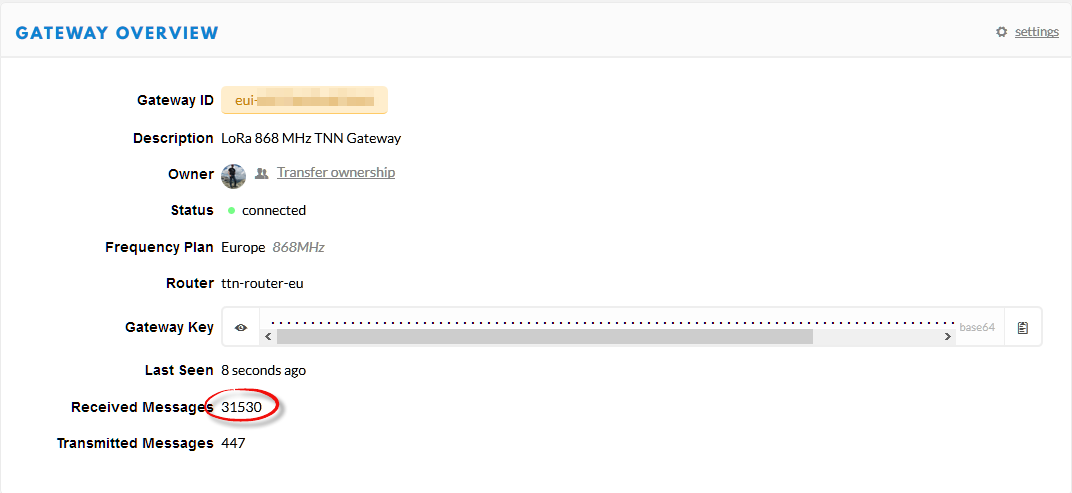
My LoRaWAN gateway (“Contributing an IoT LoRaWAN Raspberry Pi RAK831 Gateway to The Things Network” is running and working great now for more than a month and it already has transmitted more than 30k messages:

Gateway Overview

Gateway Overview

This creates a lot of log entries on the micro SD card of the Raspberry Pi. To avoid writing too many times log data, I have installed Log2Ram.

Continue reading

Be aware: Floating Point Operations on ARM Cortex-M4F

My mantra is *not* to use any floating point data types in embedded applications, or at least to avoid them whenever possible: for most applications they are not necessary and can be replaced by fixed point operations. Not only floating point operations have numerical problems, they can lead to performance problems as in the following (simplified) example:

#define NOF  64
static uint32_t samples[NOF];
static float Fsamples[NOF];
float fZeroCurrent = 8.0;

static void ProcessSamples(void) {
int i;

for (i=0; i < NOF; i++) {
Fsamples[i] = samples[i]*3.3/4096.0 - fZeroCurrent;
}
}
Continue reading

Tutorial: RAK813 LoRaWAN+BLE+GPS Sensor Node with Eclipse IDE

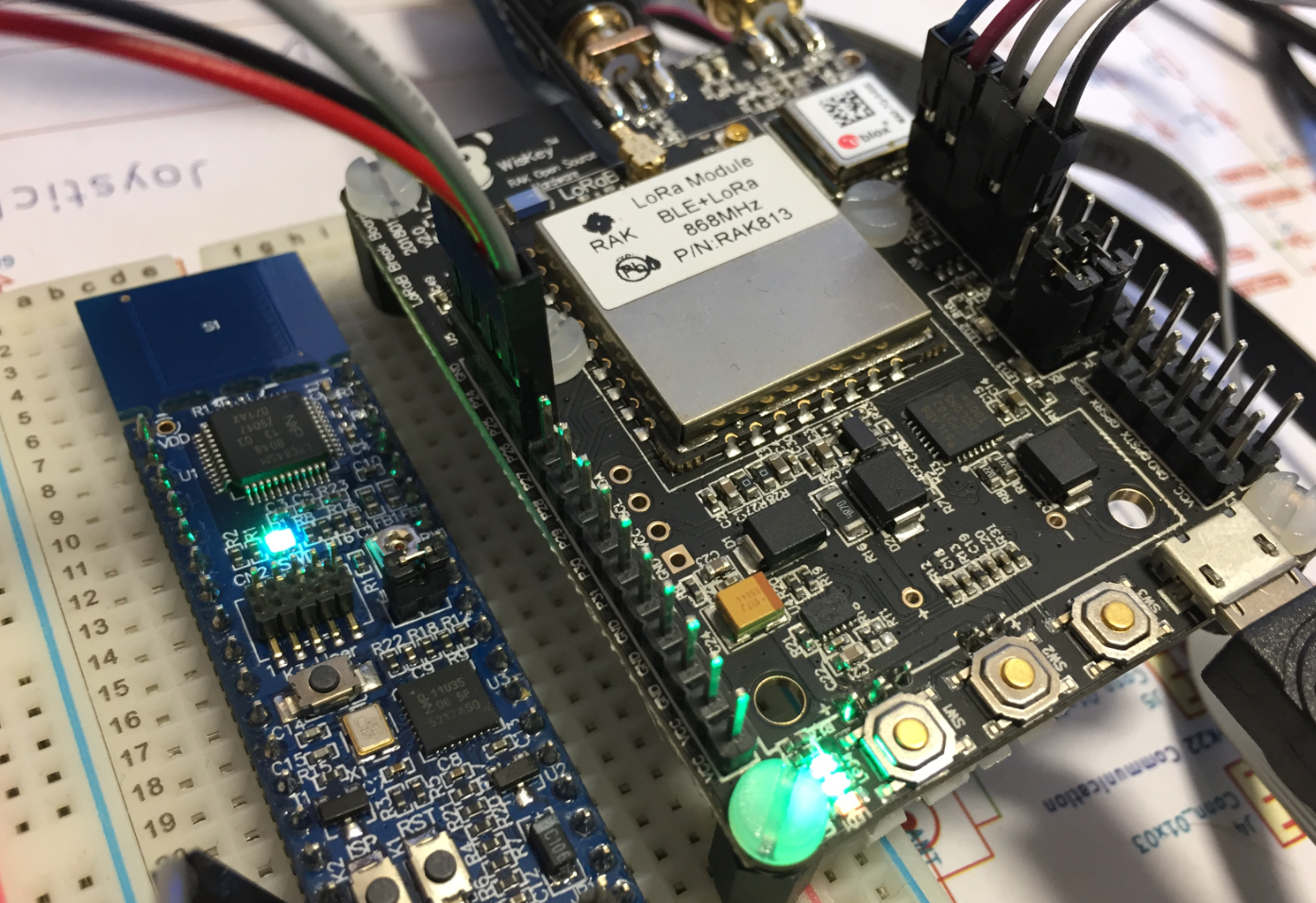
In the IoT world, it is all about security, connectivity and low power. LoRaWAN with the Things Network is able to connect devices over several kilometers, and I’m running my gateway for it already (see “Contributing an IoT LoRaWAN Raspberry Pi RAK831 Gateway to The Things Network“). This tutorial is about building a BLE+LoRaWAN+GPS sensor node with GNU tools and Eclipse:

LoRa+BLE with RAK813 and LPC845

LoRa+BLE with RAK813 and LPC845

Continue reading

Running FreeRTOS on the VEGA RISC-V Board

In “Debugging the RV32M1-VEGA RISC-V with Eclipse and MCUXpresso IDE” I described how to build and debug applications for the VEGA RISC-V board. In this article I describe how to enable FreeRTOS for RISC-V, based on the latest FreeRTOS V10.2.0 release.

Blinky with FreeRTOS on the VEGA RISC-V Board

Blinky with FreeRTOS on the VEGA RISC-V Board

Continue reading

Debugging the RV32M1-VEGA RISC-V with Eclipse and MCUXpresso IDE

The ARM Cortex cores are everywhere. I like (and use) them a lot. Don’t take me wrong: maybe ARM needs some competition? It is very refreshing to see that something new is getting a lot of attention: RISC-V!

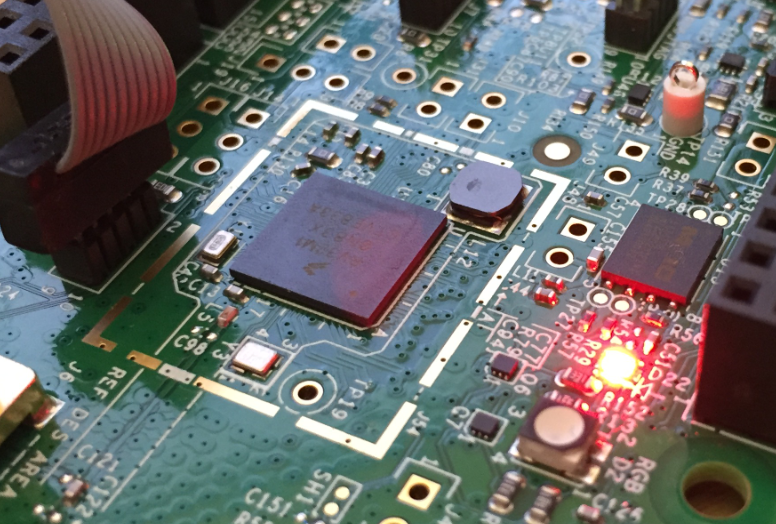
RV32M1

RV32M1 (VEGA)

Continue reading