With the new MCUXpresso versions out, and because it has been a while I showed how to install Processor Expert into Eclipse, here is an update how to do this.

With the new MCUXpresso versions out, and because it has been a while I showed how to install Processor Expert into Eclipse, here is an update how to do this.
The silicon shortage is still going on. While the NXP Kinetis KE devices might not be my first choice, they still seem to be available, in at least in lower quantities. This has been recognized by others, as I’m getting more and more questions and requests for the KE and KV family. This is why I un-dusted my old FRDM-KE02Z to be used with the latest MCUXpresso SDK and IDE.

And in case you want to use that board or device with semihosting, I have you covered.
Continue readingSplit-flap displays are electromechanical display devices, which were common in airports or railway stations a few years ago.Unfortunately, most of them are gone and replaced by LED displays. Why not create a DIY version of it?

LoRaWAN is getting more an more popular, both for terrestrial and increasingly with low-orbit satellite systems. The ‘Long Range’ in ‘LoRa’ makes it an ideal solution for low-power and low data rate applications. For a university research project we selected the Semtech SX1261/62 transceiver together with the NXP LPC55S16 mikrocontroller. Because the board used for that project is not available for the public (yet), I share here how you can run the LoRaWAN stack with the NXP LPC55S16-EVK.

I’m pleased to announce a new release of the McuOnEclipse components, available on SourceForge. This release includes several bug fixes, support for more devices, and updated components like FreeRTOS, MinINI, Percepio Tracealyzer and SEGGER SystemView.

SourceForge
This tutorial shows how to use and collect coverage data using the GNU gcov tool. As board and hardaware I’m using the NXP i.MX RT1064 EVK:
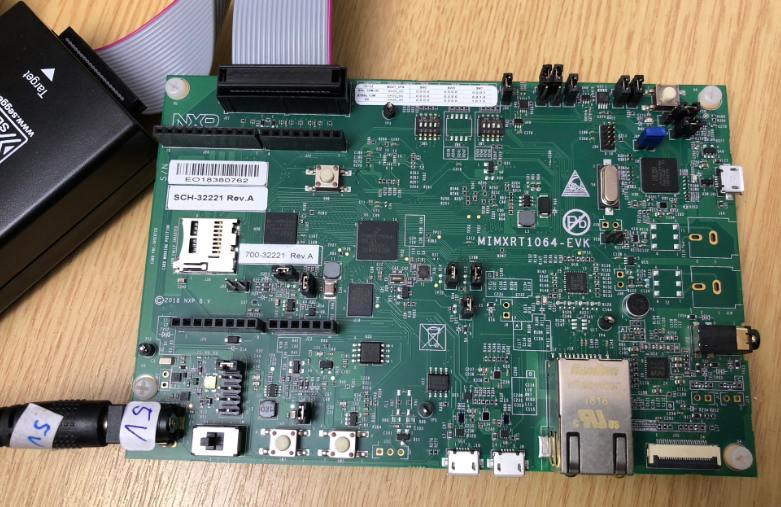
While this tutorial uses this specific board, things are pretty generic and should be applicable for any other board or MCU.
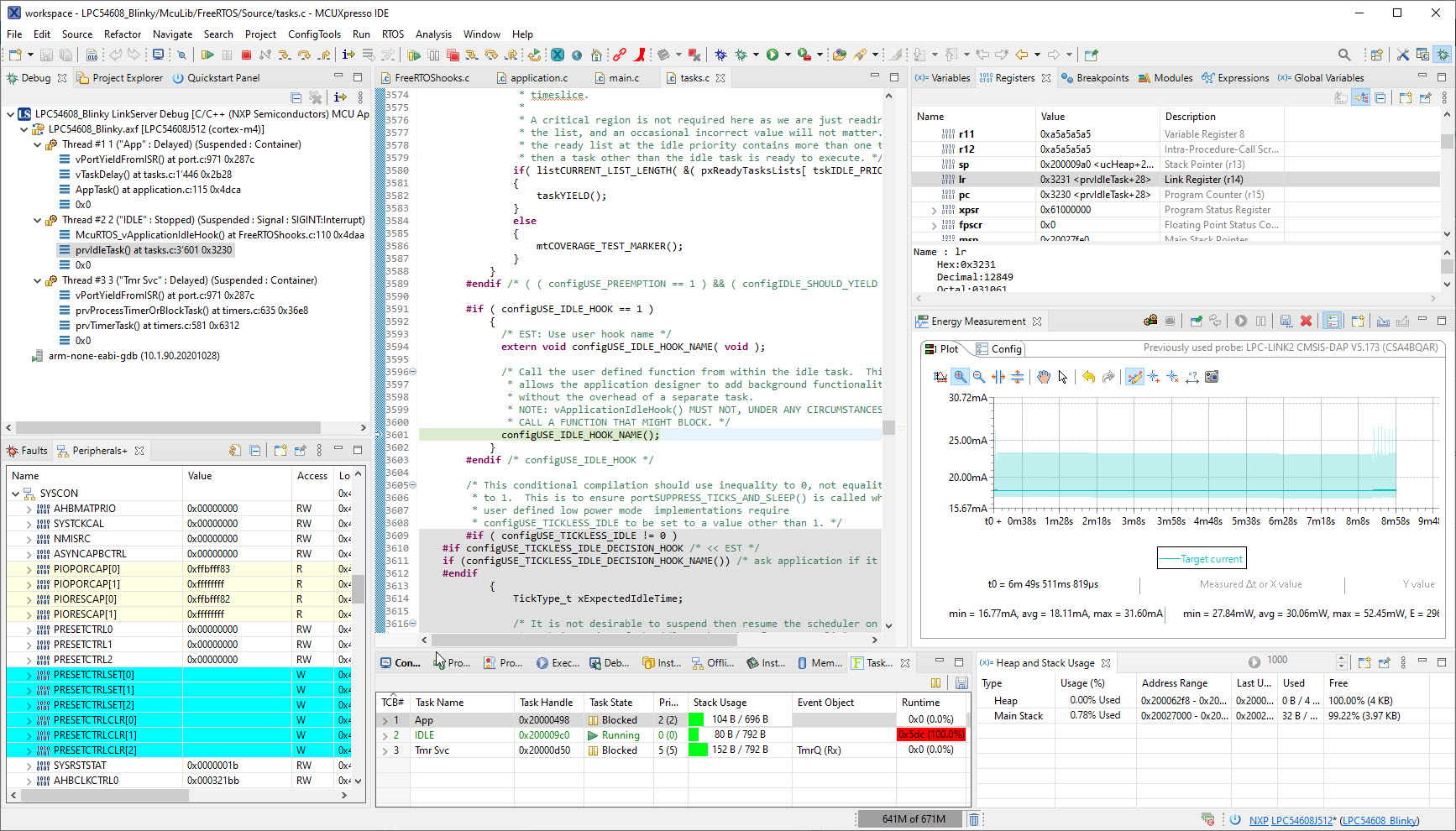
Continue readingUniversity exam grading are all done now and results are in the system, and it is already time to prepare for the fall semester. I always try to use the latest and greatest tools in my courses, and the NXP MCUXpresso IDE 11.4.0 just came out. So time to have a look and explore the changes and features.
I always have been fascinated by electromechanical stuff like these Flip-Dot Displays.

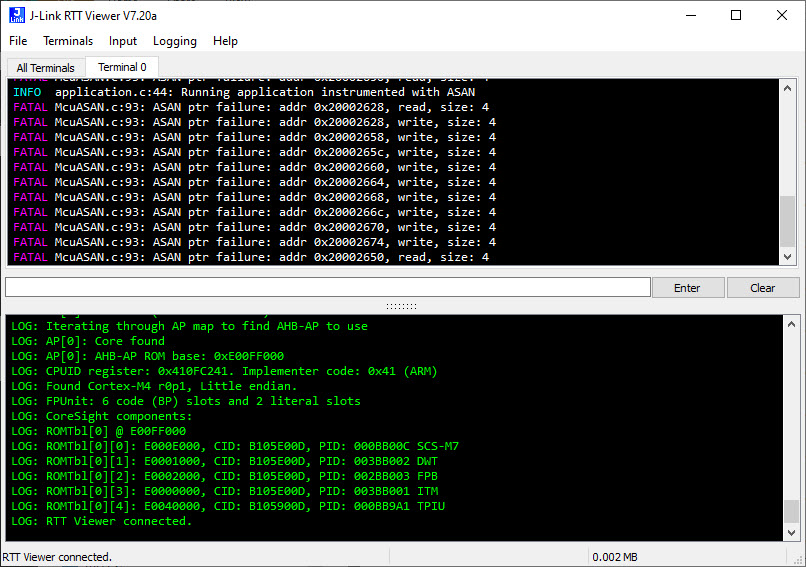
Dangling pointers and memory corruption problems are nasty issues for any developer, and usually hard to find and locate in the code. Luckily Google has developed an open source tool to solve such issues: the Address Sanitizer (ASAN). The tool is available for x86 and other desktop style architectures, including Android and Linux. This article describes how ASAN can be used for an embedded target, e.g. ARM Cortex-M4 or similar.
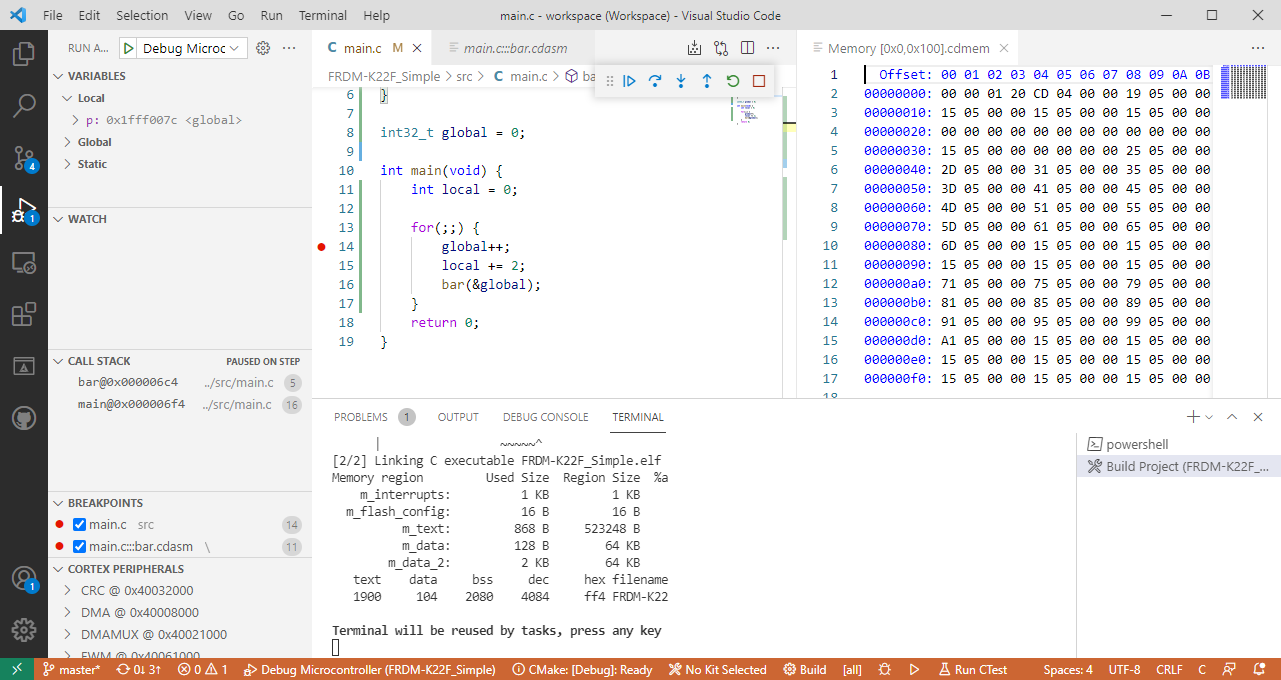
The previous parts were about installation, project setup and building. This one is about debugging an ARM Cortex-M Microcontroller with Visual Studio Code:
 MCU on Eclipse