Driver and Command Line Shell for Winbond W25Q128 16MByte Serial FLASH Device

Modern microcontroller come with plenty of internal FLASH memory. On the other side, many high performance MCUs as the NXP i.MX RT are ‘flashless’, because the silicon process for high performance cores is not matching the FLASH memory technology, so they are using external serial SPI or Quad-SPI (QSPI) memory instead.

Winbond w25q128 breakout board

Winbond w25q128 Serial Flash Breakout Board

Why not using an external SPI FLASH for a ‘normal’ microcontroller too?

Continue reading

Driver for VL53L0X Time-Of-Flight (ToF) Sensor and NXP K20DX128

I’m using the VL6180X ToF (Time-of-Flight) sensors successfully in different projects. The VL6180X is great, but only can measure distances up to 20 cm and in ‘extended mode’ up to 60 cm. For a project I need to go beyond that, so the logical choice is the VL53L0X which measures between 30 cm and 100 cm or up to 200 cm. For this project I’m using the VL53L0X breakout board from Adafruit, but similar products are available e.g. from Pololu.

NXP K20dx128 with adafruit vl53l0x tof sensor

NXP K20dx128 with Adafruit VL53LOx tof sensor

Continue reading

New NXP MCUXpresso IDE V10.3.0 Release

Friday this week NXP has released a new version of their flagship IDE: the MCUXpresso IDE V10.3.0. The version number indicates an incremental update from the earlier V10.2.1,  but there are many exciting features and new features which make me switch my lecture material to this new IDE for the next semester.

MCUXpresso IDE V10.3.0

MCUXpresso IDE V10.3.0

Continue reading

Playing Zork with FreeRTOS on ARM in three different Ways

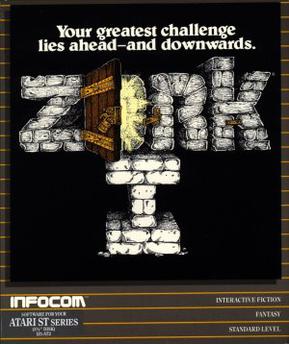
You might wonder what ‘Zork‘ is? Zork is one of the first and earlist fictive computer games, written around 1977 and 1979, written in MDL on a DEC PDP-10 by members of the MIT Dynamic Modelling group (see https://en.wikipedia.org/wiki/Zork). I believe the first time I have played Zork was around 1984 on a Commodore 64.

Zork

Zork

Continue reading

Using GDB Server Monitor Commands from Eclipse GDB Console

With Eclipse as IDE it is very easy to debug an application on a board. Still sometimes it is useful to get one level down and control the GDB server directly.

Monitor Flash Download

Monitor Flash Download

Continue reading

McuOnEclipse Components: 30-Sept-2018 Release

I’m pleased to announce a new release of the McuOnEclipse components, available on SourceForge. This release includes several bug fixes, extra support for the NXP S32 Design Studio and SDK and includes FreeRTOS V10.1.1.

SourceForge

SourceForge

Continue reading

Tutorial: Catching Rogue Memory Accesses with ARM Watchpoint Comparators and Instruction Trace

In my “Tutorial: Catching Rogue Memory Accesses with Eclipse and GDB Watchpoints” I have used Eclipse/CDT and GDB watchpoints.  I used a conditional watchpoint, but this comes with a performance hit. In this article I show how to use the ARM Cortex trace hardware to catch specific writes to a memory location. Without severe performance degradation. But for this I need a little helper: the DEADBEEF catcher!

0xdeadbeef catcher

0xdeadbeef catcher

Continue reading

Tutorial: Using Runtime Statistics with Amazon FreeRTOS V10

FreeRTOS includes a nice feature to give me information about how much time every task is spending running on the system:

FreeRTOS Runtime Information

FreeRTOS Runtime Information

This tutorial explains that FreeRTOS Runtime Statistics feature and how it can be turned on and used.

Continue reading

MCUXpresso IDE 10.2.1

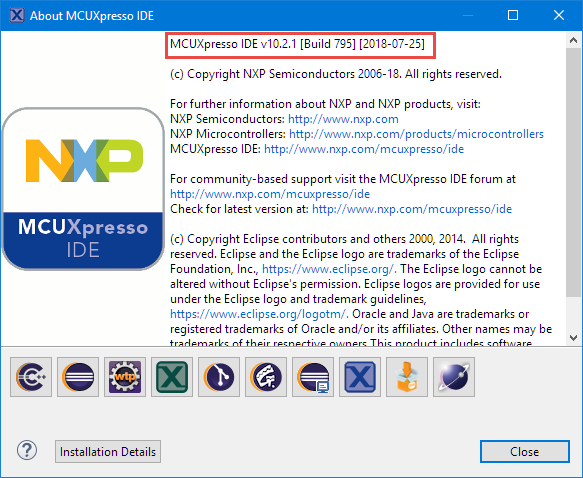
NXP has just released the 10.2.1 update of their flagship Eclipse based IDE. While the number increase from 10.2.0 to 10.2.1 indicates a minor release, there are a several things which make me move over to that new release.

MCUXpresso IDE 10.2.1 build 795

MCUXpresso IDE 10.2.1 build 795

Continue reading