In “Spilling the Beans: Endless Loops” several ways of creating and using endless loops were discussed. In this ‘bean’ it is about how to exit or break a loop.

In “Spilling the Beans: Endless Loops” several ways of creating and using endless loops were discussed. In this ‘bean’ it is about how to exit or break a loop.
G-Code (or RS-274) is a widely used protocol for CNC machines. I have added vinyl cutting capabilities to the Shapeoko desktop CNC recently (see DIY Vinyl Cutting Drag Knife for Desktop CNC), however cutting vinyl with a drag knife is whole different story compared cutting materials like wood or aluminum. As with many other things, it is about handling all corner cases properly.

Welcome to ‘Alice in Wonderland‘! For a university research project using an ARM Cortex-M33 we are evaluating position-independent code as way to load applications or part of it with a bootloader. It sounds simple: just add -fPIC to the compiler settings and you are done.
Unfortunately, it is not that simple. That option opened up a ‘rabbit hole’ with lots of wonderful, powerful and strange things. Something you might not have been aware of what could be possible with the tools you have at hand today. Leading to the central question: how is position-independent code going to work with an embedded application on an ARM Cortex-M?
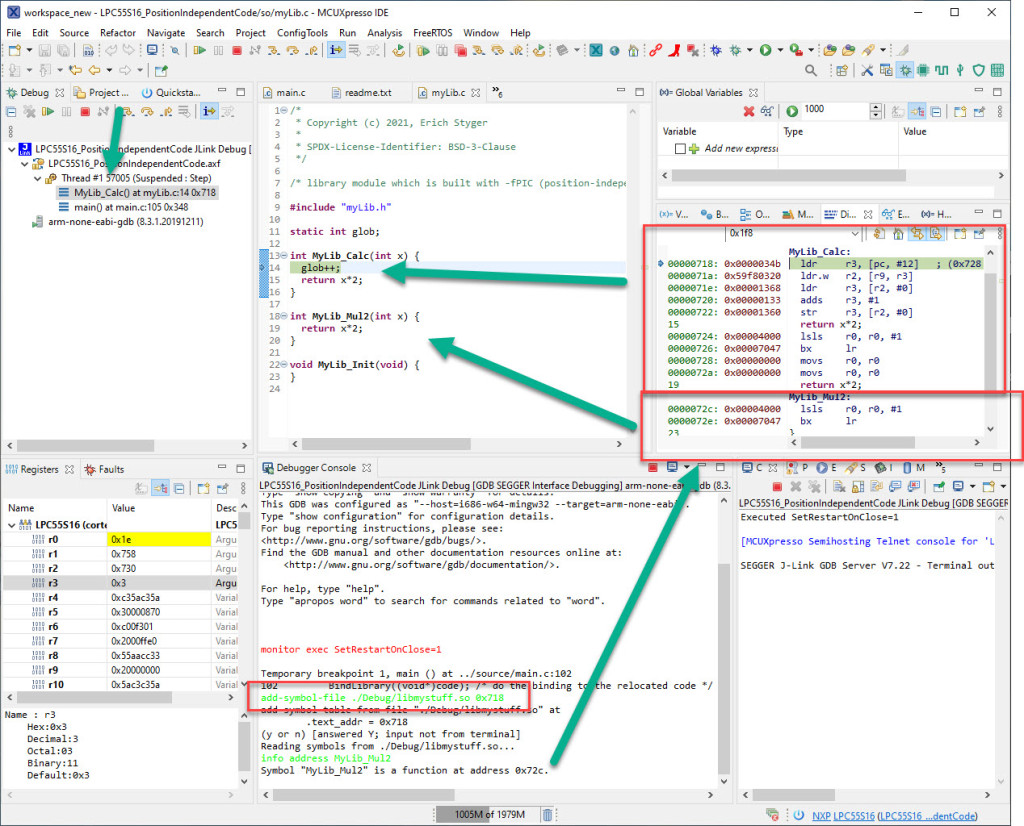
Let’s find out! Let’s start a journey through the wonderland…
Continue readingThis is the third part in a series to get up and running using the Microsoft Visual Studio Code for embedded development on ARM Cortex-M. So far we have installed the needed tools, created a project and are able to build it from the command line. Now it is about how execute directly scripts or the build from the IDE.

It is very valuable to have a date and time information in the binary. That way for example using a shell I can check the version of the firmware running on a device, or it can be printed on a console or UART as needed.

Firmware Date and Time
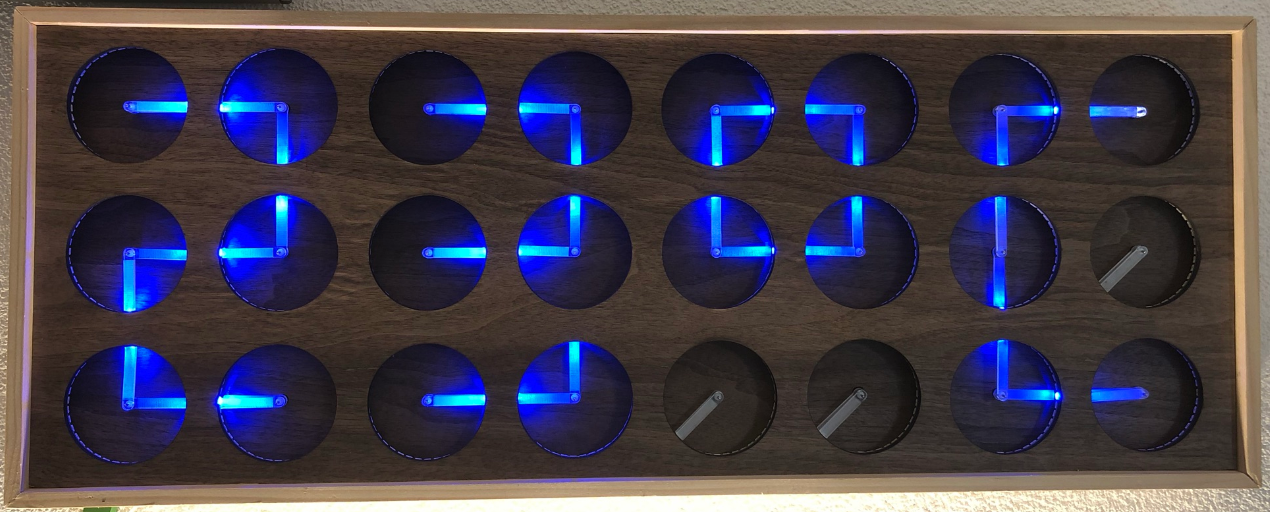
If you are not aware (yet?): it looks like the COVID pandemic caused a global silicon and microcontroller shortage with lead times >50 weeks in some cases. The microcontroller I have used for the MetaClockClock build (see “New MetaClockClock V3 finished with 60 Clocks” and “MetaClockClock V4 for the Year 2021“) is affected by this too, but I had luck and still enough microcontrollers to build a few more boards.
So I still have enough for building a new variant with it (not finished yet). While everyone else is waiting for the devices to arrive, here are more details and instructions for your own build.
One of the most frustrating part developing embedded applications is if the debug connection fails somehow: with all the different factors like operating system, virtual machines, USB ports and hubs, debug probe and firmware a ‘connection failed’ is my nightmare. And this is probably the most frustrating parts for my students (and myself!)
I do have a growing list of tips & tricks in “Debugging Failure: Check List and Hints“, so check this list. What I just have added is an entry for
java.net.SocketException: Connection reset
It occurred for a few students when they wanted to use the on-board CMSIS-DAP LinkServer debug connection on the NXP LPC845-BRK.
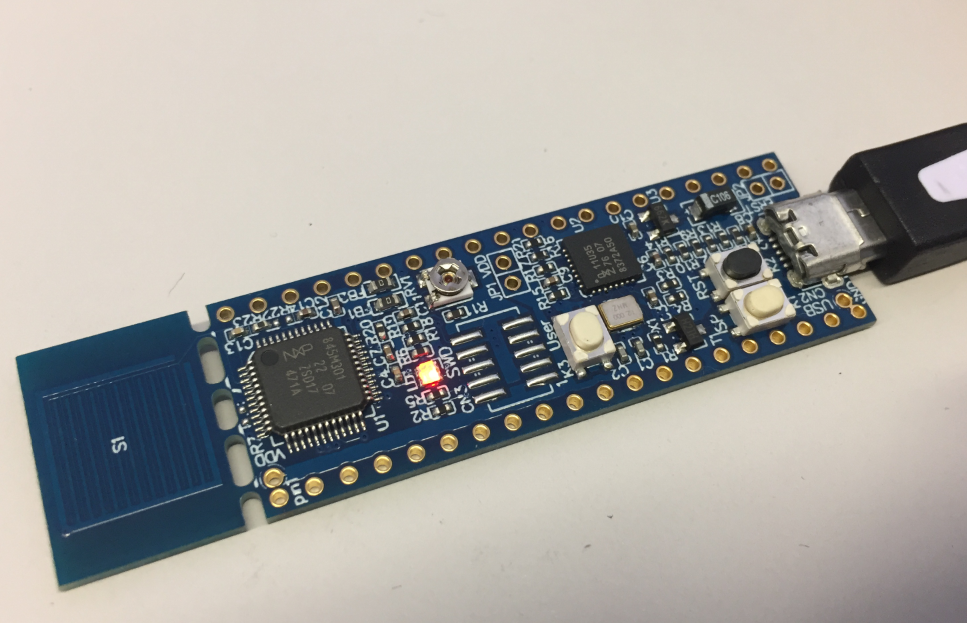
NXP LPC845-BRK Board
“A young man is smoking one cigarette after each other without a pause. An elderly woman observes that and says: “Young man, you are smoking like crazy! Don’t you know that there is a warning on each cigarette package that this can kill you?” The young man finishes his cigarette, looks at the elderly person and says: “Yes, I know. But look, I’m a programmer, and it is only a warning.”
I don’t smoke, and I do pay attention to warnings :-). I always try to keep my source code free of compiler warnings. And I always pay special attention to the following on:
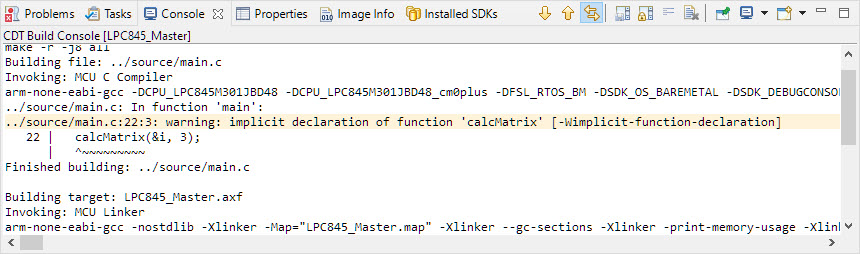
implicit declaration of function
If you are developing Linux or desktop applications with GNU tools, you very likely are familiar with gcov: the GNU coverage tool. It collects data what parts of the code gets executed and represents that in different formats, great to check what is really used in the application code or what has been covered during multiple test runs.
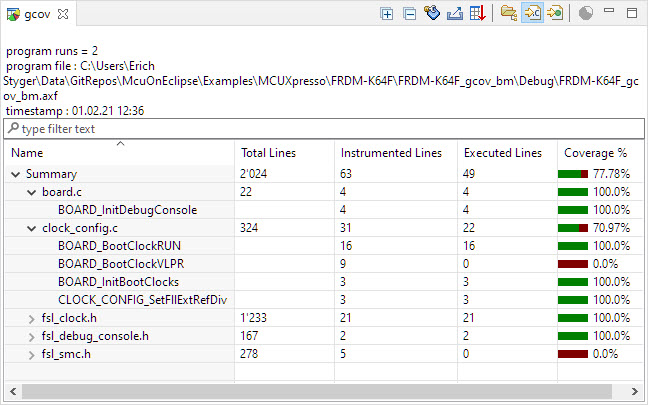
Coverage Information with gcov
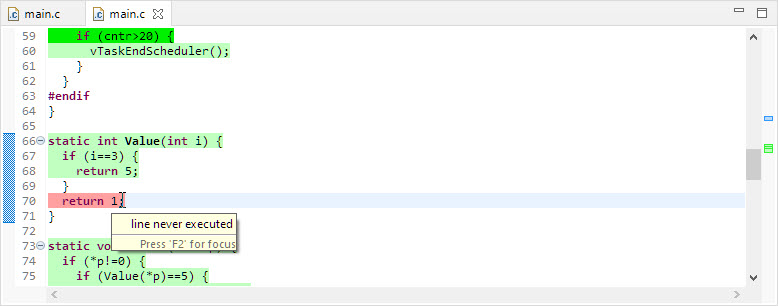
line never executed
GNU coverage is possible for resource constraint embedded systems too: it still needs some extra RAM and code space, but very well spent for gathering metrics and improves the firmware quality. As I wrote in “MCUXpresso IDE V11.3.0 for 2021” things are now easier to use, so here is a short tutorial how to use it.
It is always good to have a close look what ends up in a microcontroller FLASH memory. For example using EHEP Eclipse plugin to inspect the binary file:

Source File Name in Binary Image
Obviously it has path and source file information in it. Why is that? And is this really needed?
What about:
So let’s have a look what is the reason for this and how it could be avoided or at least reduced.

