By default, when debugging an embedded application, the target usually stops at main():

stopped in main
That’s usually fine, but what if I want to debug the code out of reset?

By default, when debugging an embedded application, the target usually stops at main():
stopped in main
That’s usually fine, but what if I want to debug the code out of reset?
I really love tiny and bread board friendly boards, especially if they are very affordable and can be use with Eclipse based tools. So I was excited to see the NXP LPC845-BRK board to be available at Mouser, so I ended up ordering multiple boards right away. Why multiple? Because they only cost CHF 5.95 (around $6)!
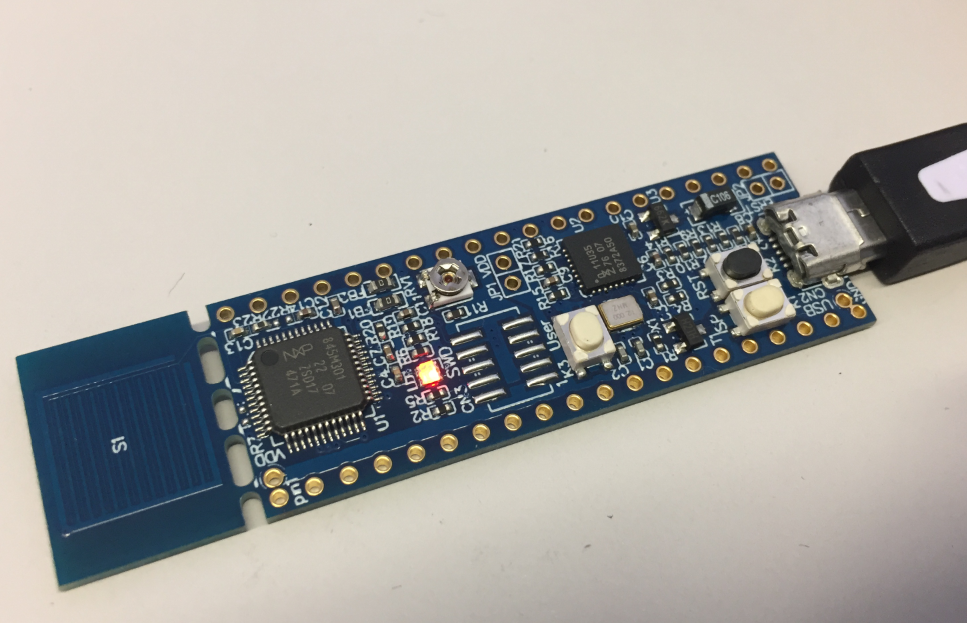
NXP LPC845-BRK Board
It is a common thing to boot a Linux system (see the Raspberry Pi) from a micro SD card. It is not that common for a microcontroller. The NXP i.MX RT ARM Cortex-M7 fills that gap between these two worlds. No surprise that it features a ROM bootloader which can boot from a micro SD card.

SD Card with i.MX RT1052
Most host or desktop systems (say Linux, Mac or Windows) have a normal use case where you start the operating system say in the morning and shut it down in the evening, and then you leave the machine. Embedded Systems are different: they are not attended, and they are supposed to run ‘forever’. Not every embedded system needs to run an OS (or in that world: Real-Time Operating System or RTOS), but the same applies here: after the RTOS is started, it is not intended that it will shutdown and restart. To the extend that you won’t they support the ‘shutdown’ and ‘restart’ functionality at all. In case of gathering coverage information this would be really useful:

coverage information from FreeRTOS application
In the case of FreeRTOS: what if I really need to shutdown the RTOS and restart it again, as by default this is not supported. This is what this article is about …
GDB supports a mode which allows the GDB debug client to read memory while the target is running. This allows features like ‘live variables’: that way I can see the variables refreshed and changing over time without halting the target. Another functionality which comes with that feature is to check stopped threads or to see all threads in the system.

multiple FreeRTOS threads in debug view
Modern microcontroller come with plenty of internal FLASH memory. On the other side, many high performance MCUs as the NXP i.MX RT are ‘flashless’, because the silicon process for high performance cores is not matching the FLASH memory technology, so they are using external serial SPI or Quad-SPI (QSPI) memory instead.

Winbond w25q128 Serial Flash Breakout Board
Why not using an external SPI FLASH for a ‘normal’ microcontroller too?
Working with low power modes can be challenging. It can severely affect debugging capabilities of a microprocessor or microcontroller. I ported a FreeRTOS application using the Tickless Idle Mode to the NXP i.MX RT1064 board, and all of a sudden, the board was unresponsive to any debugger connection. Luckily the board was not really bricked, but it took me while to find a way to recover it. So for when you end up in a situation with a ‘bricked’ i.MX RT1064 board, this article might be helpful for you to recover it.

i.MX RT1064-EVK Board
In “First Steps with the NXP i.MX RT1064-EVK Board” I mentioned that the board kit came with a camera module, but it was unclear to me which module was included in the kit. I know it now: it is the ON Semiconductor MT9M114 :-).
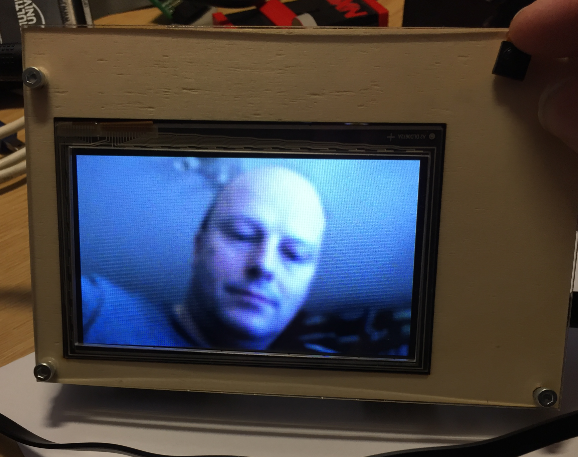
Image from the MT9M114
Dealing with variable width character encoding as with UTF-8 is pretty much a standard these days, at least in the Desktop programming world. This is not so much true when programming embedded devices and microcontroller. In any case, Eclipse has you covered. This is especially helpful dealing with non-ASCII character codes in comments:

Comment with UTF-8 in Eclipse
With Eclipse as IDE it is very easy to debug an application on a board. Still sometimes it is useful to get one level down and control the GDB server directly.

Monitor Flash Download

