Disabling EzPort on NXP Kinetis to Solve Power-On Issues

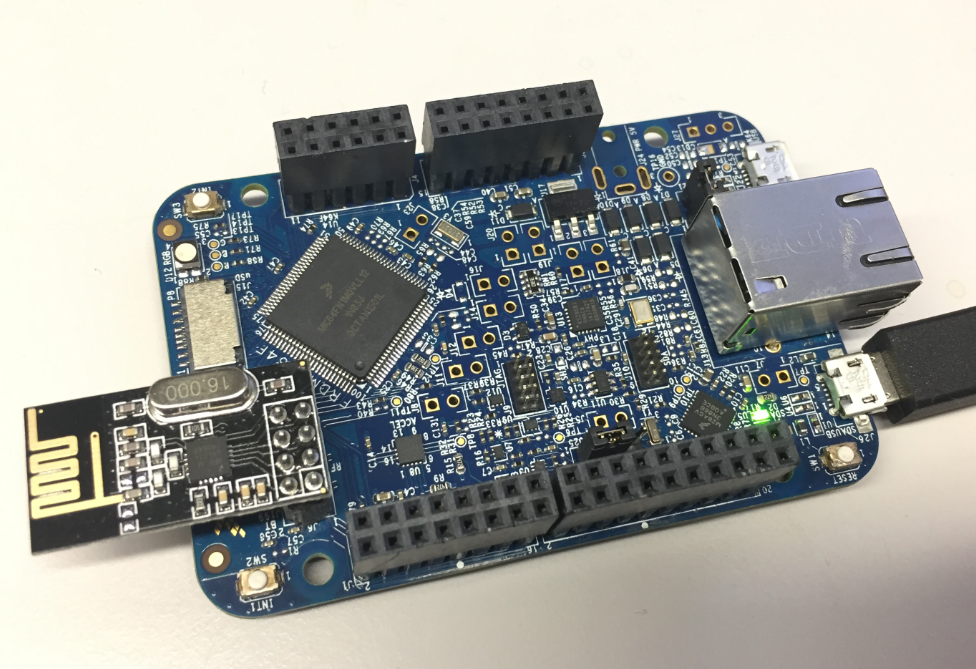
I’m using the NXP FRDM-K64F board in several projects: it is reasonably prices, has USB, Ethernet, micro SD card socket and connectors for Bluetooth classic and Nordic Semiconductor nRF24L01+ 2.4 GHz transceiver:

NXP FRDM-K64F Board

NXP FRDM-K64F Board

But one issue I have faced several times is that the board works fine while debugging and connected and powered by a host machine, but does not startup sometimes if powered by a battery or started without a debugger attached. I have found that the EzPort on the microcontroller is causing startup issues.

Continue reading

Tutorial: BLE Pairing the Raspberry Pi 3 Model B with Hexiwear

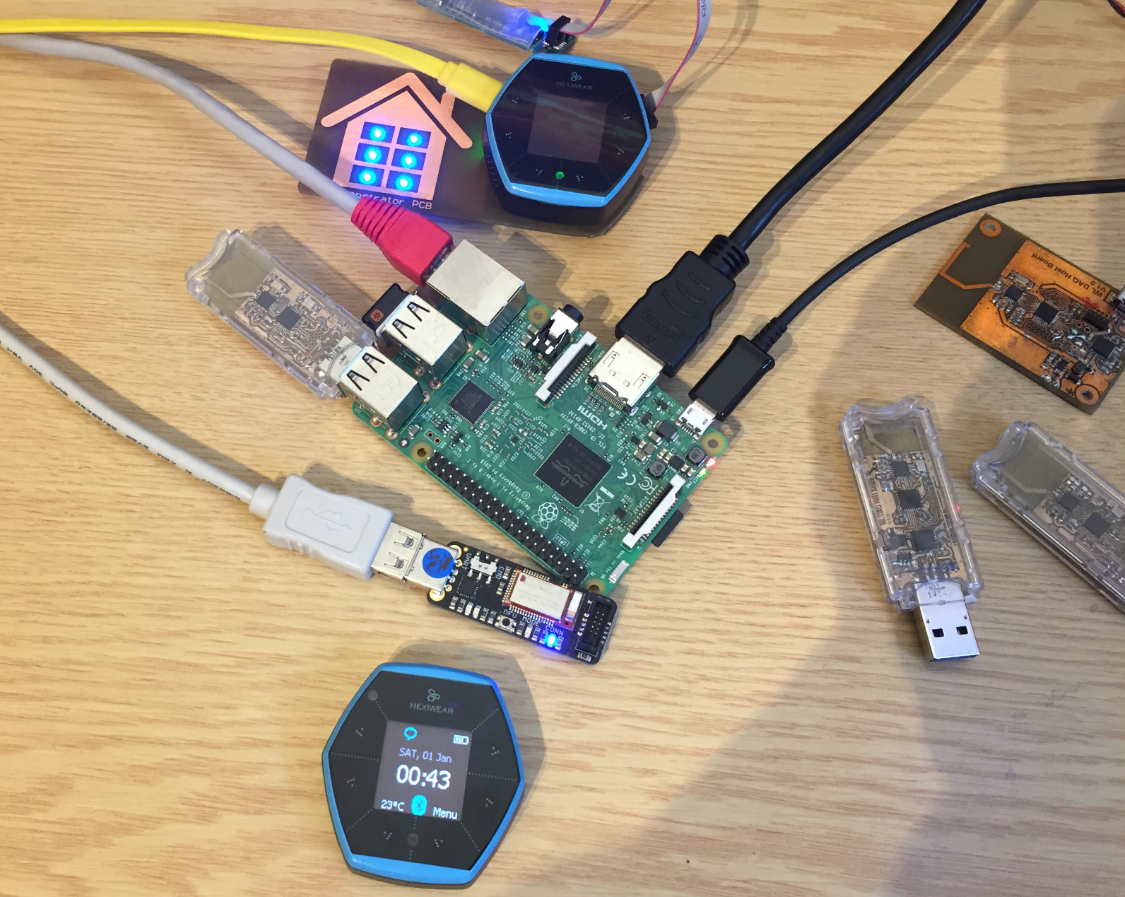
The Hexiwear (see “Hexiwear: Teardown of the Hackable ‘Do-Anything’ Device“) is a small and portable sensor node with built-in BLE (Bluetooth Low Energy) transceiver. In a research project we try to use multiple Hexiwear in a classroom environment and to collect sensor data on a Raspberry Pi. The Raspberry Pi 3 Model B running Linux has an on-board BLE transceiver too, so why not binding them (wirelessly) together?

Raspberry Pi 3 connected with Hexiwear over BLE

Raspberry Pi 3 connected with Hexiwear over BLE

Well, things seemed easy at the beginning, and as always, there are many things to learn on a journey like this…

Continue reading

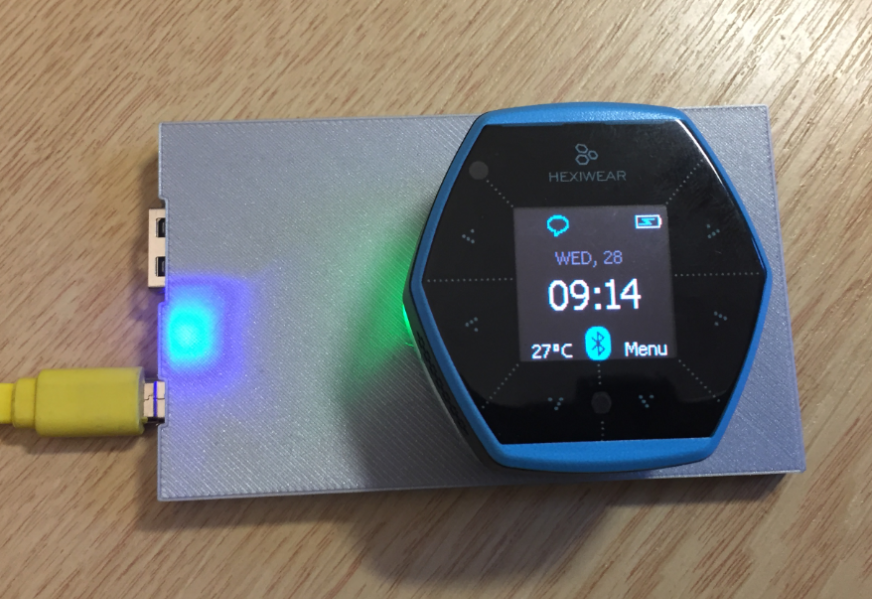
Flashing and Restoring the Hexiwear Firmware

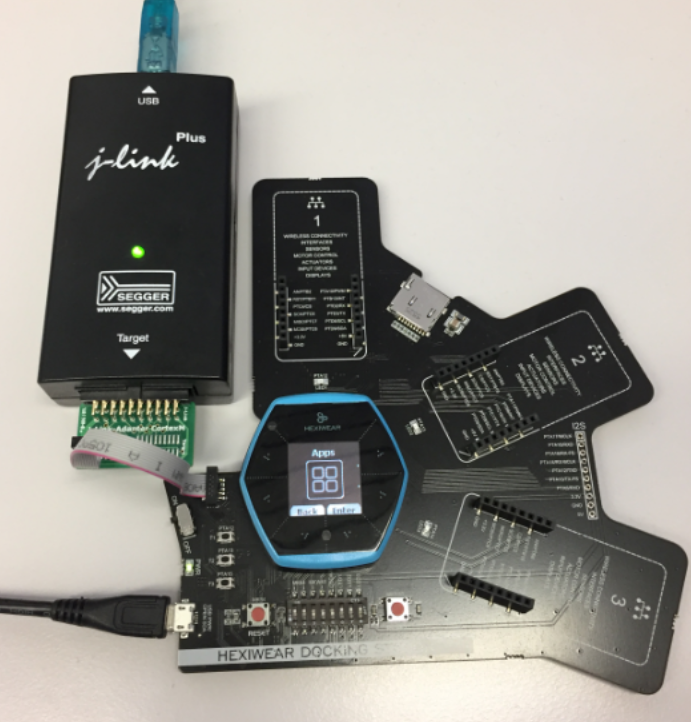
The Hexiwear device is a great and versatile device with two microcontrollers on it. Developing firmware on a Hexiwear means changing what was originally on it. And sometimes it happens that I’m not sure if the changes are for good. Or that I accidentally destroyed the firmware on the NXP Kinetis KW40 BLE microcontroller :-(. So I had to find a way to restore the original firmware, and this is what this post is about.

Restoring the Hexiwear Firmware with a Segger J-Link

Restoring the Hexiwear Firmware with a Segger J-Link

Continue reading

Making-Of Sea Shell Sand Clock

The year is coming to an end, the Holiday season is approaching. In case you are looking for a nice present: I have completed my version of a sand clock: a clock writing the time into sand:

Sandclock

Sandclock

If you are interested to build your own version, I have documented the different steps with tips and tricks…

Continue reading

Failure with Solder Points and Mechanical Pressure

The good thing with failure is: it is an opportunity to learn :-).

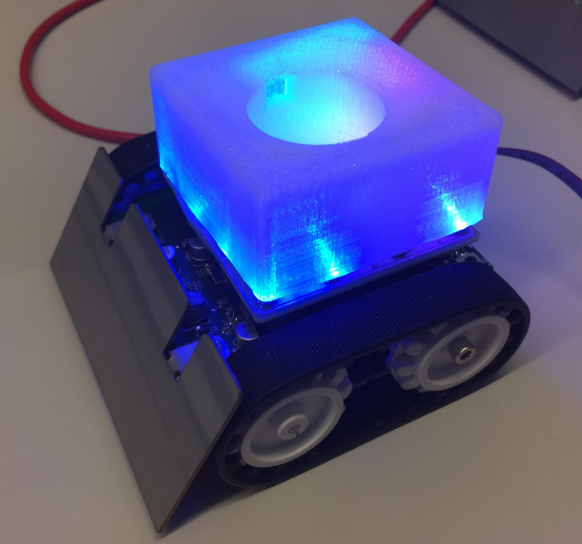
So here is a case: For a STEM roadshow (see “MINTomat: World’s Most Complicated Bubble Gum Automata?“), we have produced in a rush an autonomous robot with a shiny printed 3D cover:

LED effect in blue

Prototyp with LED Effects

Continue reading

Tutorial: Getting ETM Instruction Trace with NXP Kinetis ARM Cortex-M4F

It seems to me that not many developers use hardware trace? ARM indicates that maybe only <5% of developers are using trace. Too bad! Why are all the ARM Cortex microcontroller vendors putting a powerful hardware (and complicated!) trace engine into their devices, if only few developers are using it? Seems like a waste of silicon and an unnecessary price adder? Well, hardware trace can be a life saver: Because only with hardware trace the most complicated bugs and problems can be solved. And maybe because only the best are using it ;-).

In this article I proudly present my research how to get instruction trace out of the ARM Cortex-M4 microcontroller on a NXP TWR-K64F120M board with a Segger J-Trace for ARM:

J-TRACE tracing NXP TWR-K64F Board

J-TRACE tracing NXP TWR-K64F Board

Continue reading

Accessing GNU Linker Script Symbols from C/C++

With the GNU compiler and linker I can place variables into custom sections (see “Defining Variables at Absolute Addresses with gcc“). This article is about how to get the section start and end address so I can for example access that range in my code. Or in general ways: how to use symbols defined in the linker script accessible in the C source code.

Using Linker Script Symbols in Source Code

Using Linker Script Symbols in Source Code

Continue reading

Tutorial: Updating Embedded Linux on Toradex i.MX7 Colibri Module using SD Card

My Toradex i.MX7Dual module comes with a preflashed Linux distribution (see “Tutorial: First Steps with NXP i.MX7 and Toradex Colibri Board“). As with any other things, Linux gets updated from time to time, and Toradex publishes new firmware. In this article I’m documenting how I can update Linux in the external FLASH on that module.

NXP i.MX7Dual Module

NXP i.MX7Dual Module

Continue reading

Tutorial: Running FreeRTOS on NXP i.MX7Dual Cortex-M4F

In my previous article (see “Tutorial: First Steps with NXP i.MX7 and Toradex Colibri Board“) I have booted the i.MX7 on a Toradex CPU module. In this post I’m showing how to run a FreeRTOS application on that board.

UART-A and UART-B Connections

UART-A and UART-B Connections

Continue reading