Eclipse MCUXpresso IDE 10.1 with integrated MCUXpresso Configuration Tools

Back in March 2017, NXP had rolled the MCUXpresso IDE starting with Version 10.0.0. With the intent to unify the SDK, LPCXpresso, CodeWarrior, Kinetis Design Studio and Processor Expert into one unified and integrated set of tools. V10.0.0 was a good start. The MCUXpresso IDE V10.0.2 in July was more of a smaller update, and the Pin and Clock configuration tools were not integrated, no added tool for peripheral configuration.

A week ago the MCUXpresso V10.1.0 has been released which shows where the journey is going: an free-of-charge and code size unlimited Eclipse based integrated set of tools to configure, build and debug Cortex-M (Kinetis, LPC and i.MX RT) microcontroller/processor based applications.
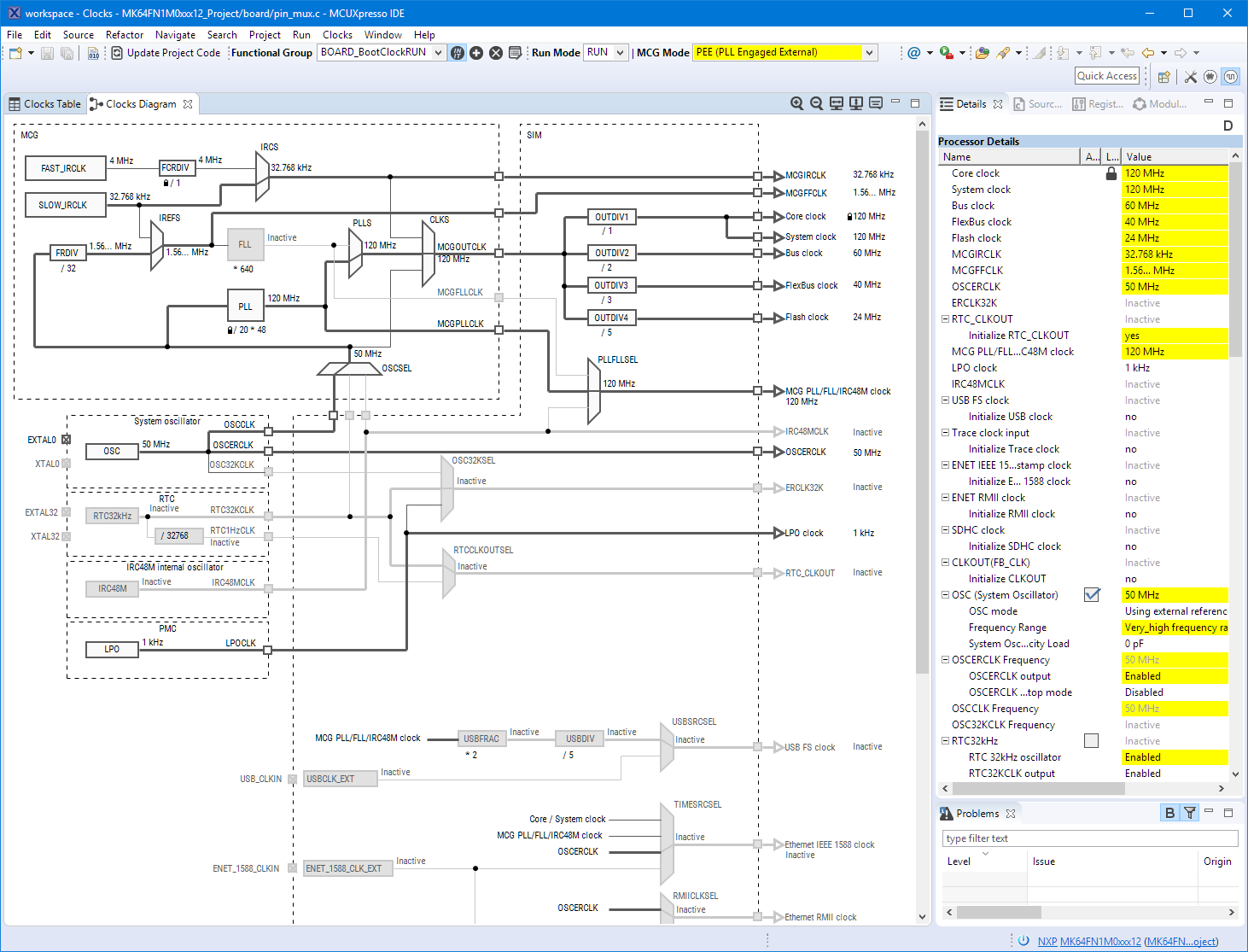
Clock Tool inside MCUXpresso IDE

Clock Tool inside MCUXpresso IDE

I have used it for a week, and although many things are still new, I thought I’m able to give an overview about what is new.

Continue reading

Exploring a Microcontroller and Software and Tools for the next Project

I’m using many microcontroller in my projects. And a lot more are available out there in the ecosystem. Like many others, I tend to select what I am familiar with. But is this the correct approach to select the hardware and tools for a next project?

Microcontroller Boards

Microcontroller Boards

Continue reading

Solving Problem with GNU Linker and “referenced in section, defined in discarded section ” Error Message

I have been running recently into an interesting case where the GNU ARM Linker failed to link an application with strange error messages:

referenced in section, defined in discarded section

referenced in section, defined in discarded section

Continue reading

Adding a Delay to the ARM DAPLink Bootloader

The ARM mbed USB MSD bootloader which is used on many silicon vendor boards has a big problem: it is vulnerable to operating systems like Windows 10 which can brick your board (see “Bricking and Recovering OpenSDA Boards in Windows 8 and 10“). To recover the board, typically a JTAG/SWD programmer has to be used. I have described in articles (see links section) how to recover from that situation, including using an inofficial new bootloader which (mostly) solves the problem. The good news is that ARM (mbed) has released an official and fixed bootloader. The bad news is that this bootloader does not work on every board because of a timing issue: the bootloader mostly enters bootloader mode instated executing the application.

DAPLink in Bootloader Mode

DAPLink in Bootloader Mode

Continue reading

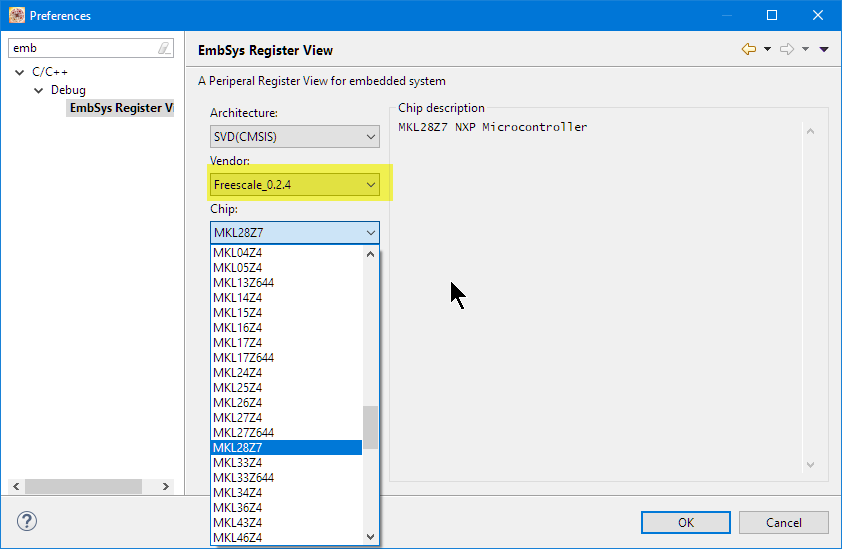
EmbSysRegView 0.2.6 for NXP Kinetis Design Studio V3.2.0

Kinetis Design Studio by default uses an older version of EmbSysRegView. This article explains how to upgrade to the latest and greatest version 0.2.6. And how it is possible to use the latest NXP update for the 0.2.4 version:

Installed Files in Eclipse

Installed Files in Eclipse

Continue reading

SQUIX ESP8266 based E-Paper WiFi Weather Station

I’m a fan of all kind of weather stations. When Daniel Eichhorn twittered about his new version using an E-Paper display module, I immediately preordered one. I decided to build a station with a custom enclosure, so here is my version of a 3D printed version, featuring magnets so it can be attached to the fridge:

E-Paper Weather Station

E-Paper Weather Station

Continue reading

McuOnEclipse Components: 25-Sept-2017 Release

I’m pleased to announce that a new release of the McuOnEclipse components is available in SourceForge. In this release more ARM Cortex devices/vendors are supported with different SDKs, plus it comes with several FreeRTOS enhancements for debugging highly optimized code.

SourceForge

SourceForge

Continue reading

Using Multiple Memory Regions with the FreeRTOS Heap

ARM Cortex-M microcontrollers can have multiple memory controllers. This is a good thing as it allows the hardware to do multiple parallel memory read/writes. However this makes the memory map more complicated for the software: it divides the memory into different regions and memory segments.  This article is about how to enable FreeRTOS to use multiple memory blocks for a virtual combined memory heap:

FreeRTOS with Segmented Heap Memory

FreeRTOS with Segmented Heap Memory

Continue reading

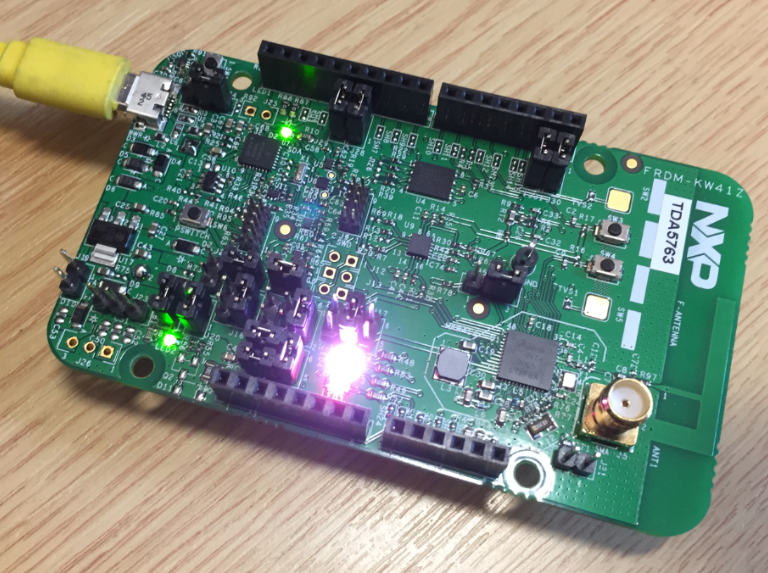
Tutorial: Porting BLE+NRF Kinetis Design Studio Project to MCUXpresso IDE

The tools and IDE market is constantly changing. Not only there is every year at least one new major Eclipse IDE release, the commercial tool chain and IDE vendors are constantly changing the environment too. For any ARM Cortex-M development, the combination of Eclipse with the GNU tool chain provided by ARM Inc. is the golden standard. But this does not mean that things can be easily moved from one IDE package to another.

While moving between Eclipse versions and GNU versions is usually not a big deal at all, moving between the Eclipse build tool integration is usually not simple. While the GNU MCU Eclipse plugins are widely used (see Breathing with Oxygen: DIY ARM Cortex-M C/C++ IDE and Toolchain with Eclipse Oxygen), the Eclipse based IDEs from the silicon vendors or commercial Eclipse toolchain vendors are using  their own GNU toolchain integration. Which means the project files are not compatible :-(.

NXP FRDM-KW41Z Board

NXP FRDM-KW41Z Board

Continue reading

Why you should not use Arduino for Professional Work

Have a read at http://embedded.fm/blog/2017/8/12/dont-use-arduino-for-professional-work.

I love the Arduino ecosystem, and it is great for getting something up and running quickly for a ‘proof of concept’. But it stops at that point.

I think it should be obvious why Arduino (code and libraries) should not be used for professional work. Especially the lack of proper debugging support makes it nearly impossible to solve the problems of the real world.’printf()’ style of debugging is simple, but it is a huge waste of time. I have seen too many student projects failing because the inability to properly debug the system and solve the problems.

Even equally important for professional work is the topic of IP and licensing. Be aware of the licensing terms and conditions as pointed out by above article. If not, your product easily get GPL’d which might not want you want.

Arduino

Arduino

Happy Arduinoing 🙂