Tutorial: μCUnit, a Unit Test Framework for Microcontrollers

Unit testing is a common practice for host development. But for embedded development this still seems mostly a ‘blank’ area. Mostly because embedded engineers are not used to unit testing, or because the usual framework for unit testing requires too many resources on an embedded target?

What I have used is the μCUnit framework which is a small and easy to use framework, targeting small microcontroller applications.
uCUnit

uCUnit

Continue reading

Tutorial: Open-Source Embedded GUI Library LittlevGL with i.MX RT1050-EVK

Most embedded projects need an user input device. For the NXP i.MX RT1050-EVK board I have recently added a 480×272 full color touch LCD (see “Adding a Rocktech Capacitive Touch LCD to the NXP i.MX RT1052 EVK“). I have looked at different commercially available GUI libraries, but none of them really were matching my expectations: either very expensive or closed source, or an overkill for small LCDs and projects. But then I have found LittlevGL: free-of-charge, open source, easy to use, well documented and has everything I need. And it really looks gorgeous 🙂

Hello from LittlevGL

Hello from LittlevGL

Continue reading

Display Library Function Help Text in Eclipse C/C++ Projects

In this short article I show you how to enable one of the hidden gems in Eclipse: how to get a description of the library function used in the code

Library Hover

snprintf() help text

Continue reading

Tutorial: Using Runtime Statistics with Amazon FreeRTOS V10

FreeRTOS includes a nice feature to give me information about how much time every task is spending running on the system:

FreeRTOS Runtime Information

FreeRTOS Runtime Information

This tutorial explains that FreeRTOS Runtime Statistics feature and how it can be turned on and used.

Continue reading

MCUXpresso IDE 10.2.1

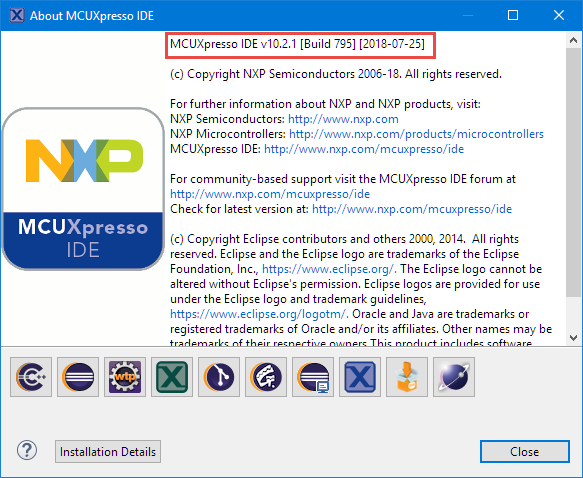
NXP has just released the 10.2.1 update of their flagship Eclipse based IDE. While the number increase from 10.2.0 to 10.2.1 indicates a minor release, there are a several things which make me move over to that new release.

MCUXpresso IDE 10.2.1 build 795

MCUXpresso IDE 10.2.1 build 795

Continue reading

Debug the Last Launched Application with Eclipse and other Debug Tricks

My usual workflow is: edit – build – debug and repeat. And this for the same project again and again. So here are a few tips how to make these iterations faster with Eclipse. One thing is to use the F11 shortcut to debug the last launched/debugged application:

Debug Last Launched

Debug Last Launched

Continue reading

Porting Processor Expert Projects to MCUXpresso IDE

The McuOnEclipse GitHub repository hosts many Processor Expert projects and is very popular (cloned more than 1000 times, thank you!). Processor Expert is a powerful framework which generates driver and configuration code, simplifying application development for a wide range of microcontroller and families. But Processor Expert won’t be developed further by NXP and is not part of MCUXpresso IDE. While it is possible to install Processor Expert into MCUXpresso IDE 10.2, how can these projects used ini an IDE *without* Processor Expert? This article describes how to port an existing Processor Expert project into the NXP MCUXpresso IDE.

Adafruit SSD1351 with FRDM-K64F

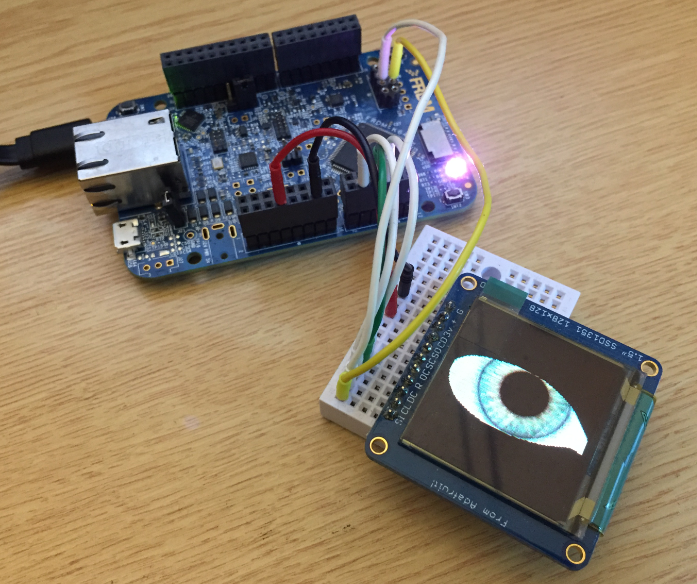
Ported Project with FRDM-K64F using Adafruit SSD1351 and Processor Expert

Continue reading

Updating the S32K144EVB to Switch between 5V and 3.3V Logic Levels

By default, the NXP S32K144EVB and microcontroller is using a 5V supply voltage and logic levels which is great for noisy environment or any 5V devices. Many of my displays and sensors use 3.3V logic levels, so I would have to use a level shifter from 5V to 3.3V. There is another way: to change the board for 3.3V logic levels so I can use directly things like a SSD1306 display.

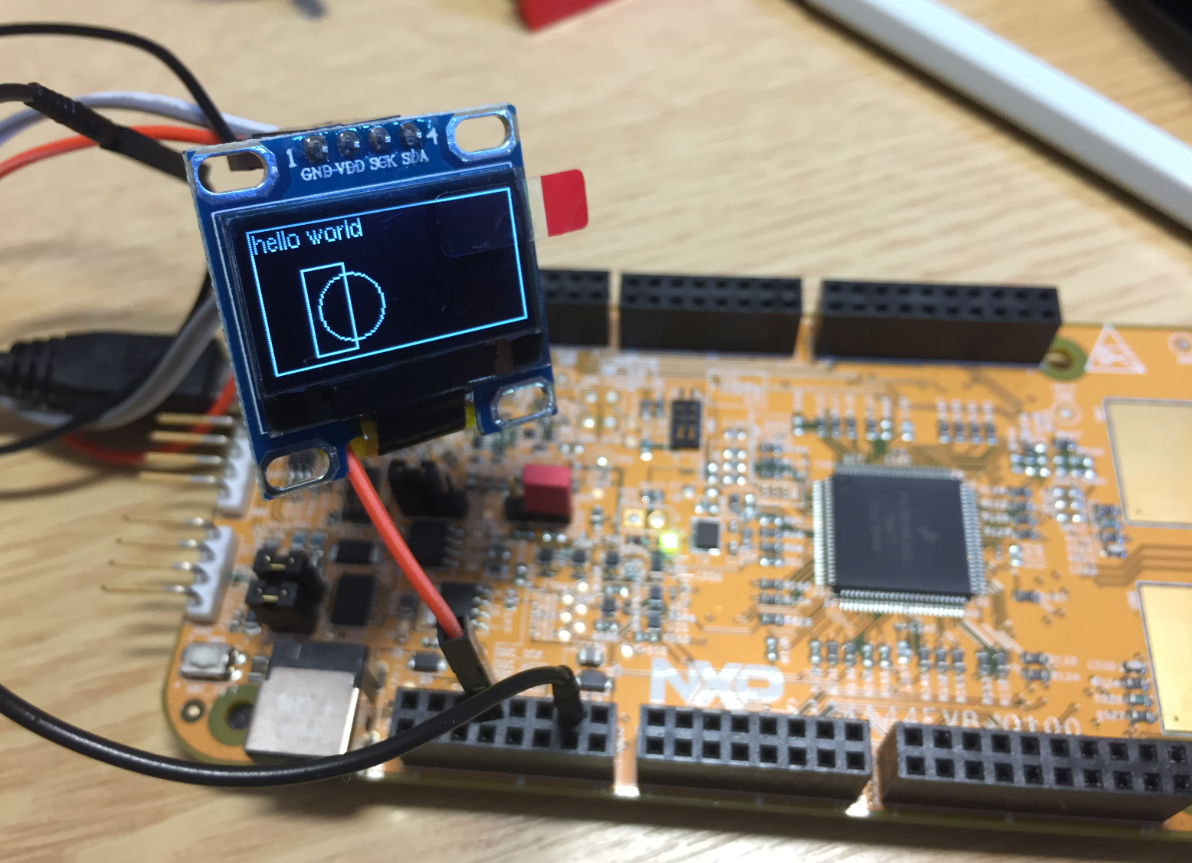
S32K144EVB with OLED SSD1306 using 3.3V Logic Levels

S32K144EVB with OLED SSD1306 using 3.3V Logic Levels

Continue reading

Using custom FreeRTOS with S32K SDK and OSIF for ARM

In “Tutorial: FreeRTOS 10.0.1 with NXP S32 Design Studio 2018.R1” I showed how to use a custom FreeRTOS with the S32 Design Studio (ARM). The OSIF (OS Interface) provides an operating system and services abstraction for the application which is used by other S32K SDK components:

OSIF in S32K for ARM Eclipse Project

OSIF in S32K for ARM Eclipse Project

Continue reading

Execute-Only Code with GNU and gcc

“There is no ‘S’ for Security in IoT” has indeed some truth. With all the connected devices around us, security of code should be a concern for every developer. “Preventing Reverse Engineering: Enabling Flash Security” shows how to prevent external read-out of critical code from device. What some microcontroller have built in is yet another feature: ‘Execute-Only-Sections‘ or ‘Execute-Only-Memory‘. What it means is that only instruction fetches are allowed in this area. No read access at all. Similar like ‘read-only’ ‘execute-only’ it means that code can be executed there, but no other access from that memory is allowed.

Locked Code

Locked Code

In this article I describe the challenges for a toolchain like the GNU gcc, and how to compile and link code for such an execute-only memory.

Continue reading