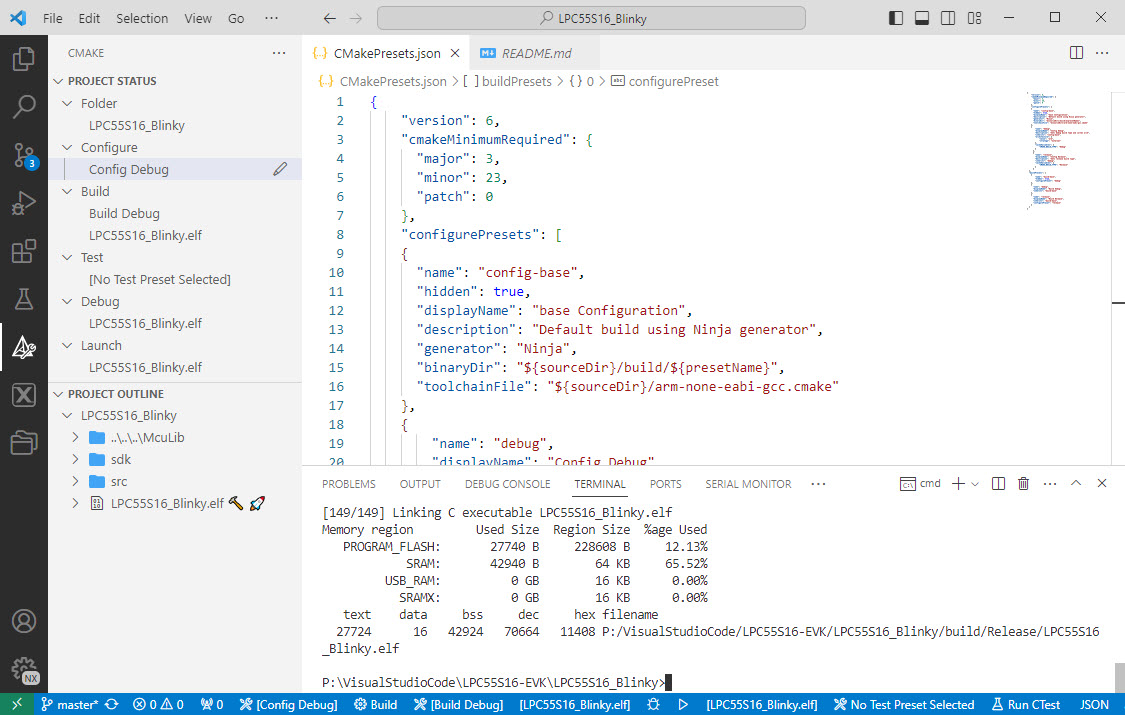
Binary, do you use Hard-Float or Soft-Float?

Many cost-sensitive ARM Cortex-M devices like the M0+ do not have a hardware floating point unit, and some like the M4 only has an optional single-precision floating point unit (FPU). As outlined in “Be aware: Floating Point Operations on ARM Cortex-M4F“, using floating point operations without a hardware unit can be costly.

Looking at the disassembly for sure will tell you if the hardware is handling the float or double operation or not:

Disassembly showing runtime routines

But who wants check the all the disassembly? With the GNU tools there is an easier way: readelf.

Continue reading →
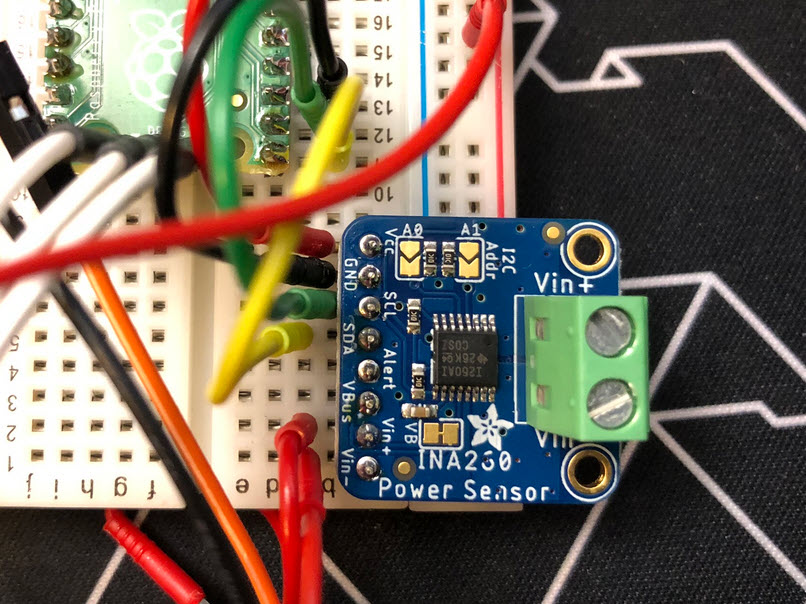
Power Measurement with INA260 Sensor

For a research project and demonstrator at HSLU university I have to measure voltage a DC voltage and current. For this I’m planning to use the Texas Instrument Texas Instruments INA260, so I had to quickly develop a software driver for it.

TI INA260 Power Sensor Breakout Board
Continue reading →

Multi-Core Symmetric Multi-Processing (SMP) with FreeRTOS

Maybe you are using a multi-core device in your projects, but have not tapped into multi-core usage yet? FreeRTOS V11.0 is out, and the big news is that it has finally Symmetric Multi-Processing (SMP) integrated into the mainline. This greatly simplifies FreeRTOS usage, as I finally can use the same RTOS for my SMP targets and boards, and I can easily switch between single-core and multi-core applications.

Dual-Core Boards running with FreeRTOS
Continue reading →

Modern On-Target Embedded System Testing with CMake and CTest

One key element of a CI/CD pipeline is the automatic testing phase: whenever I check in new source code or manually trigger it, I can run a test suite to make sure that the changes do not break anything. For this, I have to run automated tests. For an an embedded target, it means that I have to run some tests on the board itself too.

CTest with VS Code
Continue reading →

Building with CMake Presets

I’m getting my head more and more around CMake and its features. After having so many issues with VS Code dealing with CMake Kits, I have found feature in CMake which really is a game changer for me: CMake Presets.

Working with CMake Presets in VS Code
Continue reading →

GNU Coverage (gcov) for an Embedded Target with VS Code

An important part of every CI/CD pipeline is having a testing phase. In this article I show how to use GNU gcov (coverage) with an embedded target, using Visual Studio Code as front end:

GNU gcov with VS Code

With this, I can run the code on the embedded target which stores the coverage data on the host.

Continue reading →

VS Code: Data Breakpoints and Watchpoints

There are many cases where setting a breakpoint on a line of code does not help much. Cases like data or variables get modified from somewhere. That can be data in a linked list somewhere, and all what I have found out so far that it gets changed or corrupted. But I do not know what piece of code is responsible for it.

The solution for such problems are ‘data breakpoints’ or ‘watchpoints‘. Still, not many developers seem to be aware of watchpoints? They are incredibly helpful. And VS Code has at least some basic support for it.

Data Breakpoints in VS Code
Continue reading →

VS Code: Cure the Extension Creep with Profiles

What makes Microsoft Visual Studio Code really useful is the concept of Extensions: Probably for every problem or use case you might find an extension. There are more than 40K extensions available for VS Code. And VS Code asks to install extensions:

VS Code asking to install an extension

The issue with this is: more and more extensions get added, making VS Code slower and slower, caused by that ‘extension creep’. Even worse: extensions can cause conflicts, and clutter the development flow. Luckily, there is a cure for this in VS Code: Profiles.

Active Profile in VS Code
Continue reading →

“No Kit Selected”: Fixing VS Code CMake Kit Assignment

One important thing in using VS Code and CMake projects is that one needs to have a CMake kit assigned to the project. But after a restart of VS Code or if I re-load a project, VS Code has lost the previously assigned CMake kit:

VS Code has forgotten about the previously assigned CMake Kit?

This is very annoying, but luckily I have found a fix for this.

Continue reading →