
Mountain Tree Sunset
Sunset in the Alps, the mountain trees forming new branches with the clouds …
Happy Treeing 🙂

Mountain Tree Sunset
Sunset in the Alps, the mountain trees forming new branches with the clouds …
Happy Treeing 🙂
I’m using the VL6180X ToF (Time-of-Flight) sensors successfully in different projects. The VL6180X is great, but only can measure distances up to 20 cm and in ‘extended mode’ up to 60 cm. For a project I need to go beyond that, so the logical choice is the VL53L0X which measures between 30 cm and 100 cm or up to 200 cm. For this project I’m using the VL53L0X breakout board from Adafruit, but similar products are available e.g. from Pololu.

NXP K20dx128 with Adafruit VL53LOx tof sensor
Working with low power modes can be challenging. It can severely affect debugging capabilities of a microprocessor or microcontroller. I ported a FreeRTOS application using the Tickless Idle Mode to the NXP i.MX RT1064 board, and all of a sudden, the board was unresponsive to any debugger connection. Luckily the board was not really bricked, but it took me while to find a way to recover it. So for when you end up in a situation with a ‘bricked’ i.MX RT1064 board, this article might be helpful for you to recover it.

i.MX RT1064-EVK Board
We did not receive much snow this winter in the lower areas. I really love this linden tree (Tilia, or ‘lime tree’ in some areas) up above a hill, and it always looks different.
As noticed in “First Steps with the NXP i.MX RT1064-EVK Board” there is a new LPC4322 based debug interface on the RT1064-EVK board.

LPC4322JET100 based Debug Interface
In “First Steps with the NXP i.MX RT1064-EVK Board” I mentioned that the board kit came with a camera module, but it was unclear to me which module was included in the kit. I know it now: it is the ON Semiconductor MT9M114 :-).
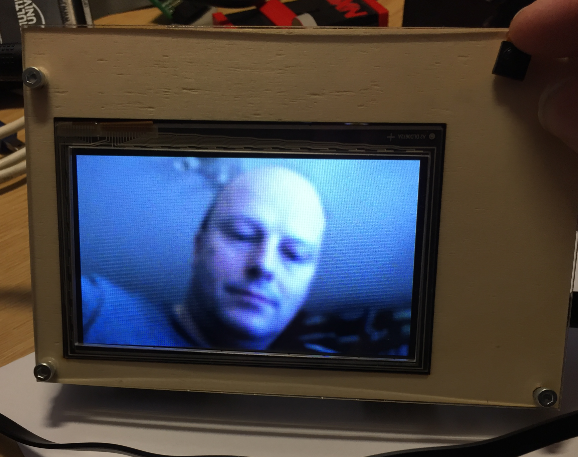
Image from the MT9M114
I always reserve time between Christmas and New Year to get my hands on technology pieces which I might not have any time otherwise. Among different things I ordered the NXP i.MX RT1064-EVK board from Mouser.com, and it arrived right before Christmas. Time to have it unboxed and started….

i.MX RT1064 Processor
The last challenge of the robotics course of this Fall semester had to be something special: This time it was about a ‘beauty contest’ followed by a line following challenge. Motto: Merry Christmas Time!

For this Christmas time I wanted to create a special gift box for a special neighbor family.

Christmas Gift Box Wrapped
Dealing with variable width character encoding as with UTF-8 is pretty much a standard these days, at least in the Desktop programming world. This is not so much true when programming embedded devices and microcontroller. In any case, Eclipse has you covered. This is especially helpful dealing with non-ASCII character codes in comments:

Comment with UTF-8 in Eclipse
 MCU on Eclipse