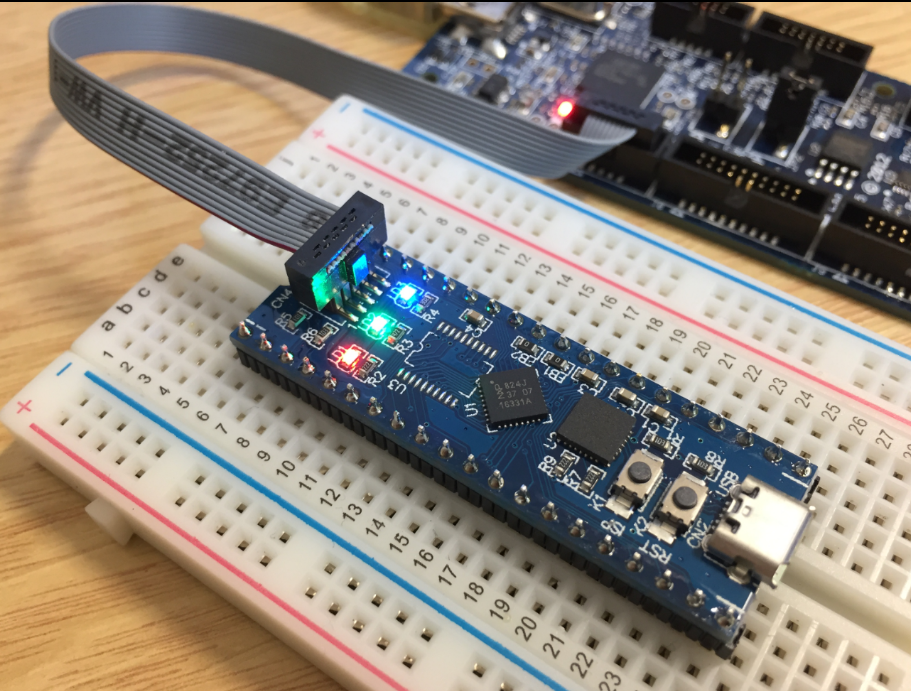
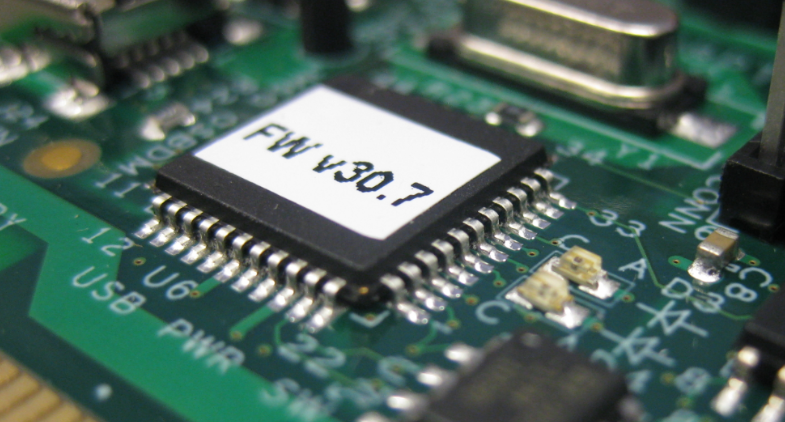
In “Cycle Counting on ARM Cortex-M with DWT” I have used the ARM DWT register to count the executed cycles. With the MCUXpresso IDE comes with a very useful feature: it can capture the ARM SWO (Single Wire Output) trace data. One special kind of trace data is the ‘cycle counter’ information which is sent through SWO.
Category Archives: CPU’s
2017 Spring Semester Sumo Challenge
Video
The spring university semester is coming to an end, and the Infotronic course closed with a Sumo robot challenge. Great challenge, new technologies, innovative approaches and funny designs 🙂
MCUXpresso IDE: Blinky the NXP LPC800-DIP Board
During Embedded World 2017 in Nürnberg I was lucky to get a handful LPC800-DIP boards. To get all students who were lucky to get one, here is a tutorial to make that very exciting ‘blinky’ application on that board:
MCUXpresso IDE: Terminate and Disconnect a Debug Session
Eclipse for C/C++ (CDT) offers two different ways to get out of a debug session: Terminate and Disconnect:
The terminate and disconnect behaviour is not standardized, and varies between Eclipse distributions and debug connection. This article is about how things are handled in MCUXpresso IDE, and how I can influence the behaviour.
McuOnEclipse Components: 06-May-2017 Release
I’m pleased to announce that a new release of the McuOnEclipse components is available in SourceForge, with the following changes and updates:
- SEGGER SystemView updated to V2.42
- More components to work with MCUXpresso SDK: GenericSWSPI, FXO8500 and SimpleEvents
- SSD1351 display driver supports 128×128 pixel resolution and Adafruit 1.5″ breakout module
- Extended FreeRTOS debug helper settings
- GenericI2C: added ReadWordAddress8() and ReadWordAddress8() functions
- RingBuffer with new Getn() and Update() functions
- Utility with map(), constrain(), random() and randomSetSeed()
- XFormat: new xsnprintf(), contributed by Engin Lee
- OneWire protocol component with Maxim DS18B20 temperature sensor
- Many smaller bug fixes and enhancements
Using Eclipse to Program Binary Files to an Embedded Target
I’m using Eclipse based IDE’s to develop and debug my embedded applications. This works great, as Eclipse has all the necessary tools to edit, build and debug it. But when it comes just to download/flash a binary to the board, then things are pretty much specific to the tools used. With the advent of the new MCUXpresso IDE, here is how that Eclipse IDE can be used for this.
Using the LPCXpresso V2/V3 Boards to Debug an external Board
The MCUXpresso IDE (see “MCUXpresso IDE: Unified Eclipse IDE for NXPs ARM Cortex-M Microcontrollers“) has one great feature: it includes debug support for the popular LPC-Link2 debug probes. That way I have yet another powerful debug probe with extra features for ARM based boards. That LPC-Link2 circuit is present on many LPCXpresso boards from NXP. So why not using it to debug it my custom hardware?
Is Developing for ARM more difficult than for other Architectures?
I believe in ‘life-long-learning’. With this I continue to learn and discover new things every day. I’m writing tutorials to give something back to the community from which I have learned so much.
On top of this, I receive emails on a nearly daily basis, asking for help. Many articles have the origin in such requests or questions. I prefer questions or comments in a public forum, because that way I feel all others can benefit from it. Last week Alessandro contacted me with this:
“Hi Erich,
I hope this find you well! I’m starting to using ARM processors, but I find them quite complicated on the configuration side. I started in the past with PIC micro (PIC16) with asm, and I found them quite straightforward to be configured (clock, IO, peripherals, …). Then I moved myself on C language, and on PIC18 without any big issues.
Now I would really like join the ARM community, I see that these processors are what I’ve always looking for, on energy, calc power, peripherals, and FINALLY on IDE (editor, toolchain and utilities)… AMAZING!!!”
The topic is about how to start learning developing for ARM. Alessandro agreed to make this public, so I thought this might be a good topic for an article?
Modifying the Teensy 3.5 and 3.6 for ARM SWD Debugging
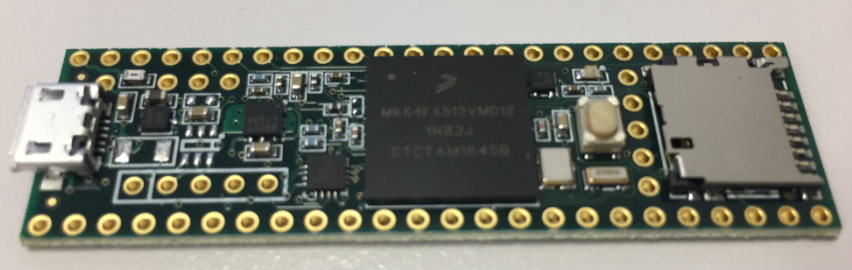
Looking for a small, inexpensive ($25-30) ARM development board (say 120-180 MHz ARM Cortex-M4 with FPU, 512kB-1MB of FLASH and 256 KByte of RAM? Then have a look at the Teensy 3.5 and Teensy 3.6 by PJRC/Paul Stoffregen:
The only problem? it is not possible to debug it :-(. At least not in the traditional sense. This article is about how to change the board to use it with any normal SWD debugging tool e.g. Eclipse and the Segger J-Link :-).
Tuturial: mbedTLS SSL Certificate Verification with Mosquitto, lwip and MQTT
In “Tutorial: Secure TLS Communication with MQTT using mbedTLS on top of lwip” I already used TLS for a secure communication, but I had not enabled server certificate verification. This article is about closing that gap.