Converting a Raw Binary File into an ELF/Dwarf File for Loading and Debugging

Binary files are just a binary blob without debug information. Most debug tools and flashers are able to deal (raw) binary (see “S-Record, Intel Hex and Binary Files“). But GDB or the P&E GDB server really needs a ELF/Dwarf file which usually has all the debug information in it. This is a problem if all what I have is a binary file.

This post is about transforming a raw binary (.bin) file into an ELF/Dwarf file with adding a header to it:

Added Elf Header to Raw Binary File

Added Elf Header to Raw Binary File

Continue reading

Custom 3D Printed Magnetic Encoder Disks for Robotics Projects

I’m making great progress with the firmware for the new Mini Sumo Robot (see “New Concept for 2018 Mini Sumo Roboter“). The goal is a versatile and low-cost Mini Sumo robot, and the robot comes with the feature of magnetic position encoders. In a previous article I have explained how to mold custom tires for robots (see “Making Perfect Sticky DIY Sumo Robot Tires“), this article is about how to make DIY Magnetic disk encoders.

3D Printed Magnetic Disk Encoders

3D Printed Magnetic Encoders Disks

Continue reading

MCUXpresso IDE V10.1.0 with i.MX RT1052 Crossover Processor

In “Eclipse MCUXpresso IDE 10.1 with integrated MCUXpresso Configuration Tools” I mentioned that I wanted to try the i.MX RT1050 processor. Well, finally my ordered board from Mouser arrived, right on time for the week-end, so I had a chance to use that ARM Cortex-M7 running at 600 MHz :-).

i.MX RT1050 EVK

i.MX RT1050 EVK

Continue reading

Adding a Delay to the ARM DAPLink Bootloader

The ARM mbed USB MSD bootloader which is used on many silicon vendor boards has a big problem: it is vulnerable to operating systems like Windows 10 which can brick your board (see “Bricking and Recovering OpenSDA Boards in Windows 8 and 10“). To recover the board, typically a JTAG/SWD programmer has to be used. I have described in articles (see links section) how to recover from that situation, including using an inofficial new bootloader which (mostly) solves the problem. The good news is that ARM (mbed) has released an official and fixed bootloader. The bad news is that this bootloader does not work on every board because of a timing issue: the bootloader mostly enters bootloader mode instated executing the application.

DAPLink in Bootloader Mode

DAPLink in Bootloader Mode

Continue reading

WiFi OLED Mini Weather Station with ESP8266

I’m convinced that this ‘Internet of Things’ thing-thing is not real. Pure marketing and buz words without any added value, right? The IoT hype is so bizar: it must be originated by aliens which have taken over the brains of all the Pointy-haired Bosses of the world? There is no useful application or use case out there!

But wait! There *is* actually good use case, at least for the geeks of this world. We all love clocks as we want to know the time, and we all love the weather forecast so we can plan accordingly. At least I usually do :-).

SQUIX ESP8266 Mini Weather Station

SQUIX ESP8266 Mini Weather Station

Continue reading

Tutorial: Porting BLE+NRF Kinetis Design Studio Project to MCUXpresso IDE

The tools and IDE market is constantly changing. Not only there is every year at least one new major Eclipse IDE release, the commercial tool chain and IDE vendors are constantly changing the environment too. For any ARM Cortex-M development, the combination of Eclipse with the GNU tool chain provided by ARM Inc. is the golden standard. But this does not mean that things can be easily moved from one IDE package to another.

While moving between Eclipse versions and GNU versions is usually not a big deal at all, moving between the Eclipse build tool integration is usually not simple. While the GNU MCU Eclipse plugins are widely used (see Breathing with Oxygen: DIY ARM Cortex-M C/C++ IDE and Toolchain with Eclipse Oxygen), the Eclipse based IDEs from the silicon vendors or commercial Eclipse toolchain vendors are using  their own GNU toolchain integration. Which means the project files are not compatible :-(.

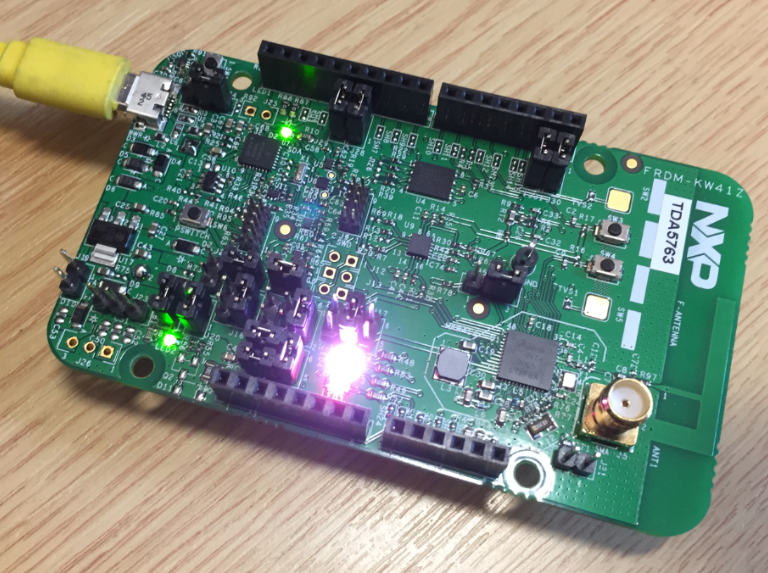
NXP FRDM-KW41Z Board

NXP FRDM-KW41Z Board

Continue reading

Getting Control over a 50 Watt CO2 Laser Cutter from China

There are people around me who think I’m crazy. And they are probably right. Who else would buy a machine from someone he does not know. I have to pay upfront. It is not clear how things will get delivered, what gets delivered, or if it gets delivered at all. Up to the point I can lose the money I have spent. Best of all: that machine is dangerous enough to potentially kill me. And it has the potential to put my home on fire too. Well, that sounds like an exciting weekend project, or not?

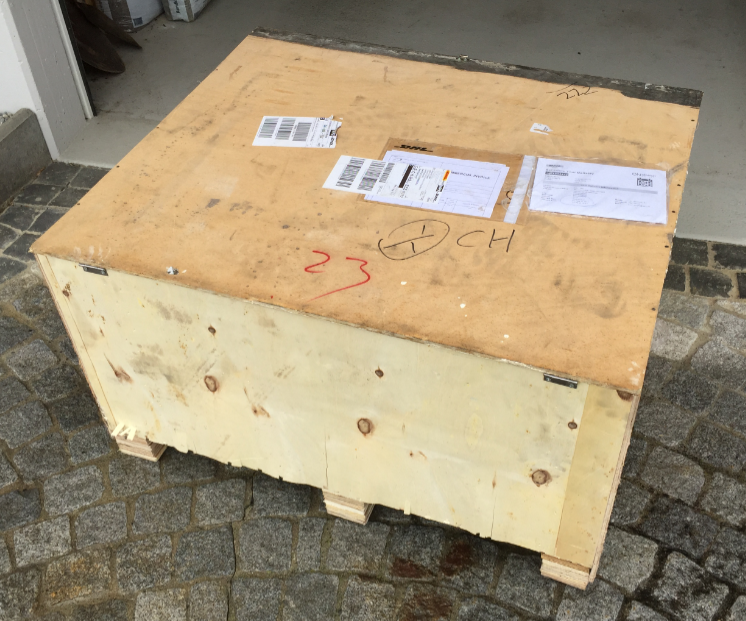
Weekend Box

60 kg Weekend Project Box arrived on the front door

Continue reading

Breathing with Oxygen: DIY ARM Cortex-M C/C++ IDE and Toolchain with Eclipse Oxygen

Last month (June 2017), the latest version of Eclipse “Oxygen” has been released, and I have successfully used it in several embedded projects. Time to write a tutorial how to use it to build a custom Do-It-Yourself IDE for ARM Cortex-M development: simple, easy, unlimited and free of charge. While the DIY approach takes a few minutes more to install, it has the advantage that I have full control and I actually know what I have.

Eclipse Oxygen

Eclipse Oxygen

Continue reading

Tutorial: Makefile Projects with Eclipse

The benefit of an IDE like Eclipse is: it makes working with projects very easy, as generates make files and it takes and automatically manages the make file(s). But sometimes this might not be what I want because I need greater flexibility and control, or I want to use the same make files for my continues integration and automated testing system. In that case a hand crafted make file is the way to go.

One thing does not exclude the other: This article explains how to use make files with Eclipse with similar comfort as the managed build system in Eclipse, but with the unlimited power of make files:

Makefile Project with Eclipse

Makefile Project with Eclipse

Continue reading

Getting Started: ROM Bootloader on the NXP FRDM-KL03Z Board

A bootloader on a microcontroller is a very useful thing. It allows me to update the firmware in the field if necessary. There are many ways to use and make a bootloader (see “Serial Bootloader for the Freedom Board with Processor Expert“). But such a bootloader needs some space in FLASH, plus it needs to be programmed first on a blank device, so a JTAG programmer is needed. That’s why vendors have started including a ROM bootloader into their devices: the microcontroller comes out of the factory with a bootloader in FLASH. So instead writing my bootloader, I can use the one in the ROM.

FRDM-KL03Z with ROM Bootloader

FRDM-KL03Z with ROM Bootloader

And as with everything, there are pros and cons of that approach.

Continue reading