New NXP MCUXpresso Eclipse IDE v11.0

A few days ago NXP has released a new version of their Eclipse IDE flagship: the MCUXpresso IDE v11.0.
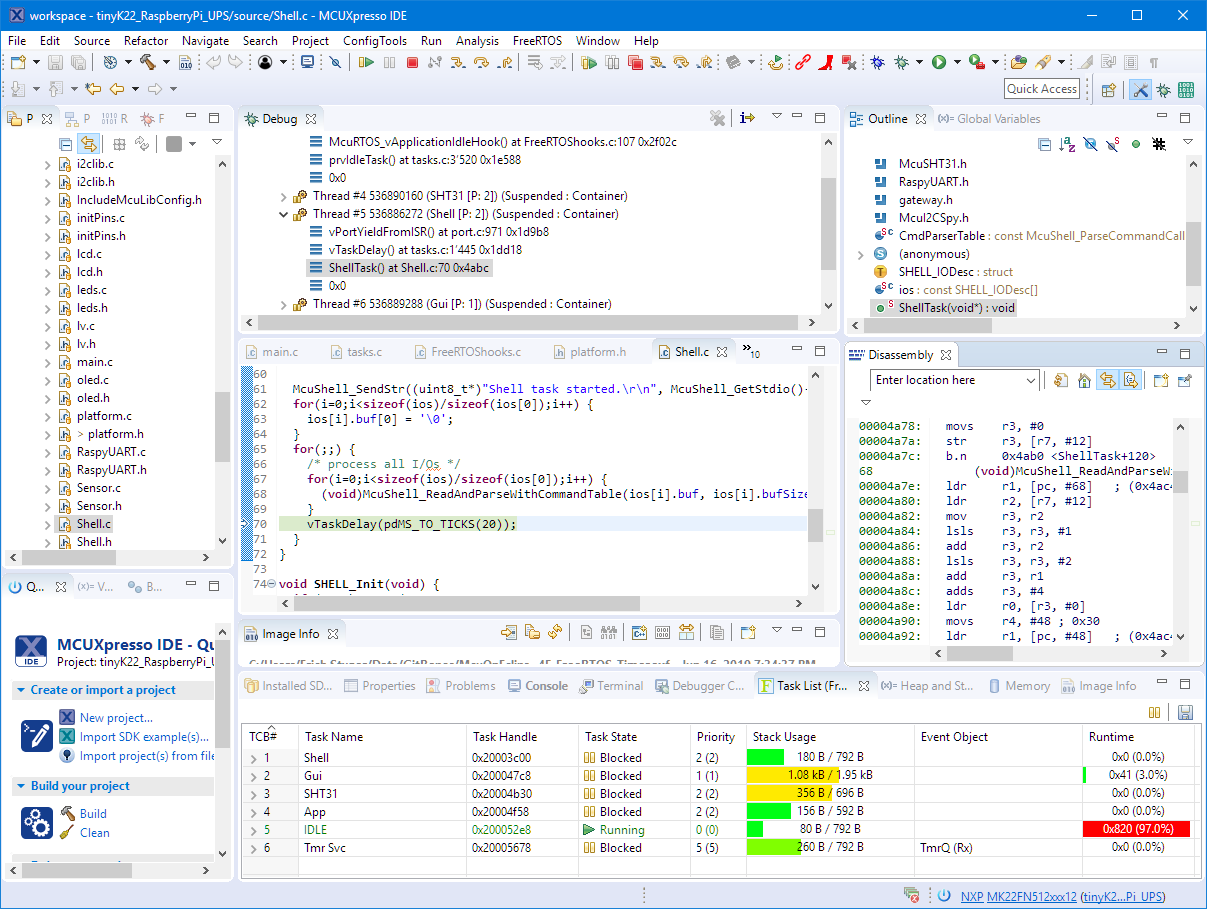
NXP MCUXpresso IDE V11.0.0

NXP MCUXpresso IDE V11.0.0

The previous v10.3.1 was released back in Feb 2019, and the 11.0 now in June this year matches up with the Fall university semester. I appreciate that the releases are about every 6 months, so this gives me time to use it in my university lecture material and lab work. I had the weekend for trying it out, and I’m very pleased.
Continue reading

Reverse Engineering of a Not-so-Secure IoT Device

The ‘Internet of Things’ is coming! It started as an overused marketing hype with no real use case (who needs internet connected fridges? Who wants the internet connected toilet paper?).

New ‘things’ start to pop up, useful or not: From smart bulbs (Philips Hue), thermostats (Nest), smart TV (Samsung and others) up to voice assistants (Alexa, Cortana, Google). You might even have installed one of these, right? What about temperature and humidity sensors? Probably there is nothing wrong with that?

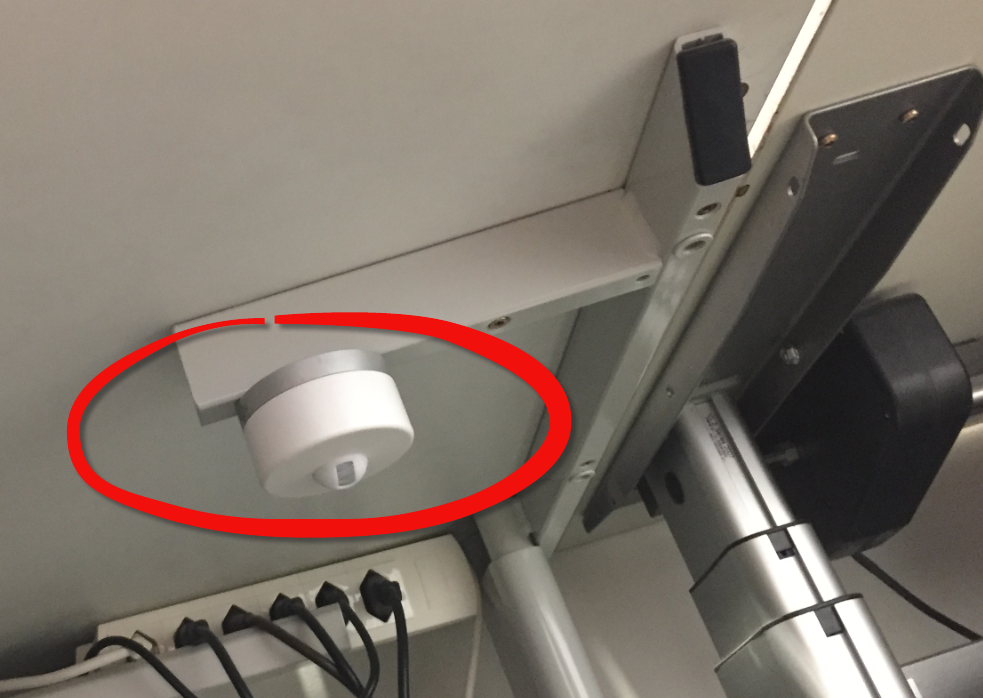
But what would you think if one morning you find a strange unknown device installed under your working desk, connected to the cloud and internet?

IoT Device attached under a working desk
Continue reading

Be aware: Floating Point Operations on ARM Cortex-M4F

My mantra is *not* to use any floating point data types in embedded applications, or at least to avoid them whenever possible: for most applications they are not necessary and can be replaced by fixed point operations. Not only floating point operations have numerical problems, they can lead to performance problems as in the following (simplified) example:

#define NOF  64
static uint32_t samples[NOF];
static float Fsamples[NOF];
float fZeroCurrent = 8.0;

static void ProcessSamples(void) {
int i;

for (i=0; i < NOF; i++) {
Fsamples[i] = samples[i]*3.3/4096.0 - fZeroCurrent;
}
}
Continue reading

Different Ways of Software Configuration

Most of the time software needs some way to configure things: depending on the settings, the software will do different things. For example the software running on the microcontroller on top of the Raspberry might have the OLED LCD available or not:

Raspberry Pi and tinK22 with OLED LCD

Raspberry Pi and tinyK22 (NXP Kinetis K22FN512) with OLED LCD

How can I deal with this in my application code? Continue reading

Freelink LPC4322JET100 based Debug Circuit on NXP i.MX RT1064-EVK Board

As noticed in “First Steps with the NXP i.MX RT1064-EVK Board” there is a new LPC4322 based debug interface on the RT1064-EVK board.

LPC4322JET100 based Debug Interface

LPC4322JET100 based Debug Interface

Continue reading

Replacing a cheap Chinese CO2 Laser Tube

What is the life span of a cheap Chinese CO2 laser tube? I mean: how long can I use one these (aka K40) laser engraver/cutter tubes as used in that 50W machine I have? I have used my machine for over a year for now, and I don’t have hour meter, but I estimate it have used it for about 500 hours. I don’t have a data sheet of the tube used inside my machine. Discussions on the internet estimate the live span from DOA (Dead On Arrival) to ‘a few months with moderate usage’ up to 3000-5000h’. Well, whatever it would be: my laser cutter stopped working two weeks ago. Here is how I got it back operating again….

New Laser Tube on the Bench

New Laser Tube on the Bench

Continue reading

i.MX RT1050 EVK vs. EVKB

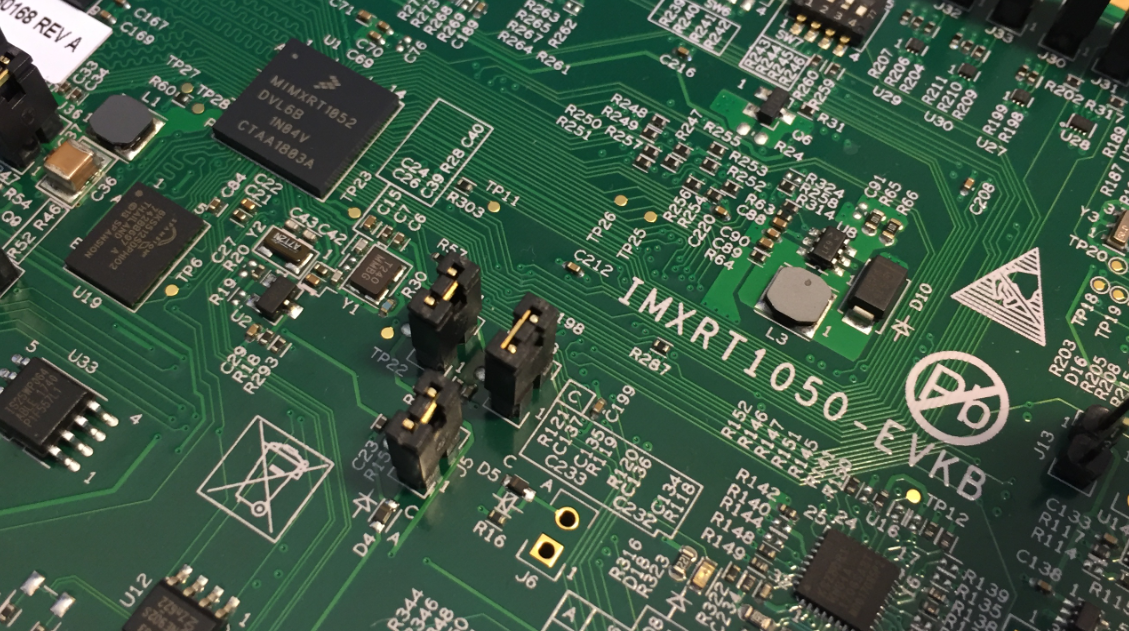
I noticed on Mouser.com that there is a new i.MX RT1050 board: the EVKB one. I have used the EVK (the one without the ‘B’) for several weeks (see “MCUXpresso IDE V10.1.0 with i.MX RT1052 Crossover Processor” and “Adding a Rocktech Capacitive Touch LCD to the NXP i.MX RT1052 EVK“). I needed anyway a second board, so I ordered that EVKB from Mouser, and after some delay and waiting it arrived on my desk. So far this boards seems to be a better one:

i.MX RT1050 EVKB Board

i.MX RT1050 EVKB Board

Continue reading

Execute-Only Code with GNU and gcc

“There is no ‘S’ for Security in IoT” has indeed some truth. With all the connected devices around us, security of code should be a concern for every developer. “Preventing Reverse Engineering: Enabling Flash Security” shows how to prevent external read-out of critical code from device. What some microcontroller have built in is yet another feature: ‘Execute-Only-Sections‘ or ‘Execute-Only-Memory‘. What it means is that only instruction fetches are allowed in this area. No read access at all. Similar like ‘read-only’ ‘execute-only’ it means that code can be executed there, but no other access from that memory is allowed.

Locked Code

Locked Code

In this article I describe the challenges for a toolchain like the GNU gcc, and how to compile and link code for such an execute-only memory.

Continue reading

Do you Speak Klingon? How to change the Eclipse IDE UI Language with Babel

We in Switzerland are proud about the fact that our country has four official languages: Italian, French, German and Romansh. Most of Swiss people speak at least two of them, plus the inofficial fifth language (English).

Eclipse is even better than that and speaks 46 different languages. If you are not happy with the default language, try out Babel! And yes, Eclipse has a language pack for Klingon too:

Babel Language Packs in Klingon

Babel Language Packs in Klingon

🙂

Continue reading