First Steps with the NXP i.MX RT1064-EVK Board

I always reserve time between Christmas and New Year to get my hands on technology pieces which I might not have any time otherwise. Among different things I ordered the NXP i.MX RT1064-EVK board from Mouser.com, and it arrived right before Christmas. Time to have it unboxed and started….

i.MX RT1064 Processor

i.MX RT1064 Processor

Continue reading

New NXP MCUXpresso IDE V10.3.0 Release

Friday this week NXP has released a new version of their flagship IDE: the MCUXpresso IDE V10.3.0. The version number indicates an incremental update from the earlier V10.2.1,  but there are many exciting features and new features which make me switch my lecture material to this new IDE for the next semester.

MCUXpresso IDE V10.3.0

MCUXpresso IDE V10.3.0

Continue reading

Playing Zork with FreeRTOS on ARM in three different Ways

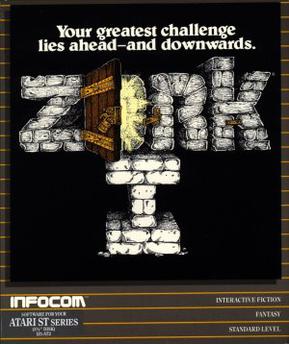
You might wonder what ‘Zork‘ is? Zork is one of the first and earlist fictive computer games, written around 1977 and 1979, written in MDL on a DEC PDP-10 by members of the MIT Dynamic Modelling group (see https://en.wikipedia.org/wiki/Zork). I believe the first time I have played Zork was around 1984 on a Commodore 64.

Zork

Zork

Continue reading

Using GDB Server Monitor Commands from Eclipse GDB Console

With Eclipse as IDE it is very easy to debug an application on a board. Still sometimes it is useful to get one level down and control the GDB server directly.

Monitor Flash Download

Monitor Flash Download

Continue reading

Lasercut Plywood Board for Raspberry Pi

Need a quick way how to attach a LED, a push button and two resistors to the Raspberry Pi header? One way is to use some ‘flying’ wires. Or to use three pieces of lasercut plywood for a nice looking Raspy extension board:

Wood Board on Raspberry Pi

Wood Circuit Board on Raspberry Pi

Continue reading

McuOnEclipse Components: 30-Sept-2018 Release

I’m pleased to announce a new release of the McuOnEclipse components, available on SourceForge. This release includes several bug fixes, extra support for the NXP S32 Design Studio and SDK and includes FreeRTOS V10.1.1.

SourceForge

SourceForge

Continue reading

Tutorial: First Steps with Embedded Artists NXP i.MX RT1052 OEM Module

Not ready for the complexity of a full blown Embedded Linux, but need that extra compute performance? Need an ARM Cortex-M7 running at 600 MHz module on a half-sized business card, ready to be integrated? Here we go: the Embedded Artists i.MX RT1052 OEM module:

Embedded Artists NXP i.MX RT1052 OEM Module

Embedded Artists NXP i.MX RT1052 OEM Module

Compute modules are very common in the Embedded Linux space, for example see this Toradex module. The reason is simple: these high-performance boards simplify the design, as I don’t have to care about the BGA packages and the external SDRAM and FLASH devices: everything is on a module I can easily integrate into my base board.

Continue reading

Open Source RISC – Eclipse with RISC-V on the SiFive HiFive1 Board

Open Source software has been around for decades. But open source on hardware especially microcontroller is not much a reality these days. But there is something which might change this: RISC-V is a free and open RISC instruction set architecture and for me it has the potential to replace some of the proprietary architectures currently used. RISC-V is not new, but it gets more and more traction in Academia (no surprise).

I wanted to play with RISC-V for over a year, but finally a week ago I did one of these “hey, let’s buy that board” thing again. Sometimes these boards get on a pile to wait a few weeks or longer to get used, but that one I had to try out immediately :-).

SiFive HiFive1 Board

SiFive HiFive1 Board

Continue reading

Tutorial: Open-Source Embedded GUI Library LittlevGL with i.MX RT1050-EVK

Most embedded projects need an user input device. For the NXP i.MX RT1050-EVK board I have recently added a 480×272 full color touch LCD (see “Adding a Rocktech Capacitive Touch LCD to the NXP i.MX RT1052 EVK“). I have looked at different commercially available GUI libraries, but none of them really were matching my expectations: either very expensive or closed source, or an overkill for small LCDs and projects. But then I have found LittlevGL: free-of-charge, open source, easy to use, well documented and has everything I need. And it really looks gorgeous 🙂

Hello from LittlevGL

Hello from LittlevGL

Continue reading