Eclipse JTAG Debugging the ESP32 with a SEGGER J-Link

When Espressif released in 2014 their first WiFi ESP8266 transceiver, they took over at least the hobby market with their inexpensive wireless devices. Yet again, the successor ESP32 device is used in many projects. Rightfully there are many other industrial Wi-Fi solutions, but Espressif opened up the door for Wi-Fi in many low cost projects. Many projects use the ESP devices in an Arduino environment which basically means decent debugging except using printf() style which is … hmmm … better than nothing.

What is maybe not known to many ESP32 users: there *is* actually a way to use JTAG with the ESP32 devices :-). It requires some extra tools and setup, but with I have a decent Eclipse based way to debug the code. And this is what this article is about: how to use a SEGGER J-Link with Eclipse and OpenOCD for JTAG debugging the ESP32.

Roboter with ESP32 and JTAG Debug Port

Robot with ESP32 and JTAG Debug Port

Continue reading

Seeed Studio Arch Mix NXP i.MX RT1052 Board

The Seeed Studio ‘Arch Mix’ board is a small and versatile development board with an NXP i.MX RT1052 on it, and it costs only $29.90. So I was not able to resist and just have ordered one so I can explore it.

Seeed Arch Mix Top Side

Seeed Arch Mix Top Side

Continue reading

Visualizing Global Variables while Target is Running with Eclipse and MCUXpresso IDE

By default, Eclipse provides ‘stop-mode-debugging’: in order to inspect the target code and data, I have to stop the target. But with the right extensions as present in the Eclipse based MCUXpresso IDE, it is possible to inspect the target even while it is running.

Graphing Variables

Graphing Variables

Continue reading

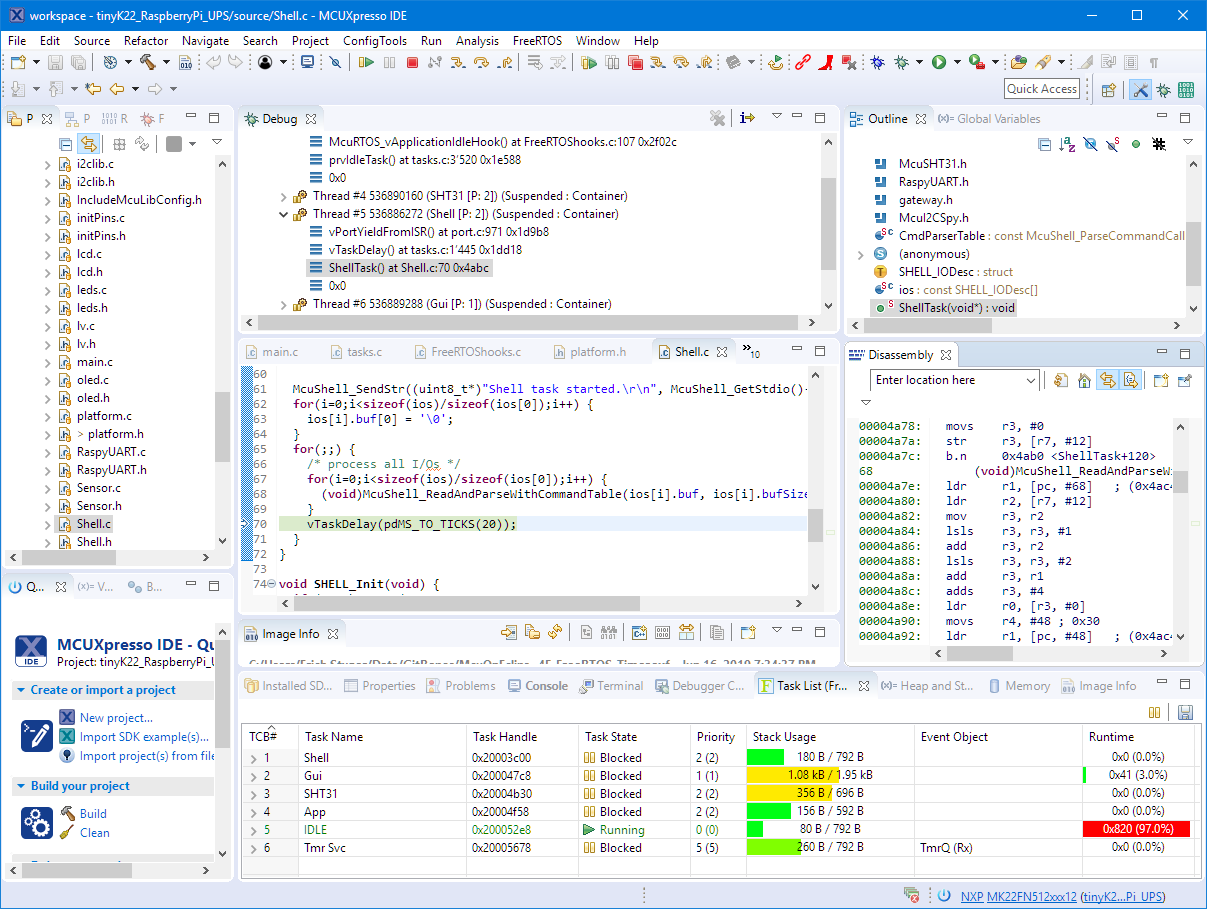
New NXP MCUXpresso Eclipse IDE v11.0

A few days ago NXP has released a new version of their Eclipse IDE flagship: the MCUXpresso IDE v11.0.

NXP MCUXpresso IDE V11.0.0

NXP MCUXpresso IDE V11.0.0

The previous v10.3.1 was released back in Feb 2019, and the 11.0 now in June this year matches up with the Fall university semester. I appreciate that the releases are about every 6 months, so this gives me time to use it in my university lecture material and lab work. I had the weekend for trying it out, and I’m very pleased.

Continue reading

MCUXpresso Eclipse IDE Mouse Tips & Tricks

In a modern development workflow both command-line and a graphical user interface has its place. On the GUI side, Eclipse is famous that it offers many different ways to accomplish something which is great. But sometimes I continue to use an old habit or way because I have missed that there is a newer and better way, and the MCUXpresso Eclipse IDE is no exception to that. In this article I show a few ways how to use the mouse even more productive.

Project Settings

Project Settings

Continue reading

Internal and External Debug Options for the NXP LPC55S69-EVK Board

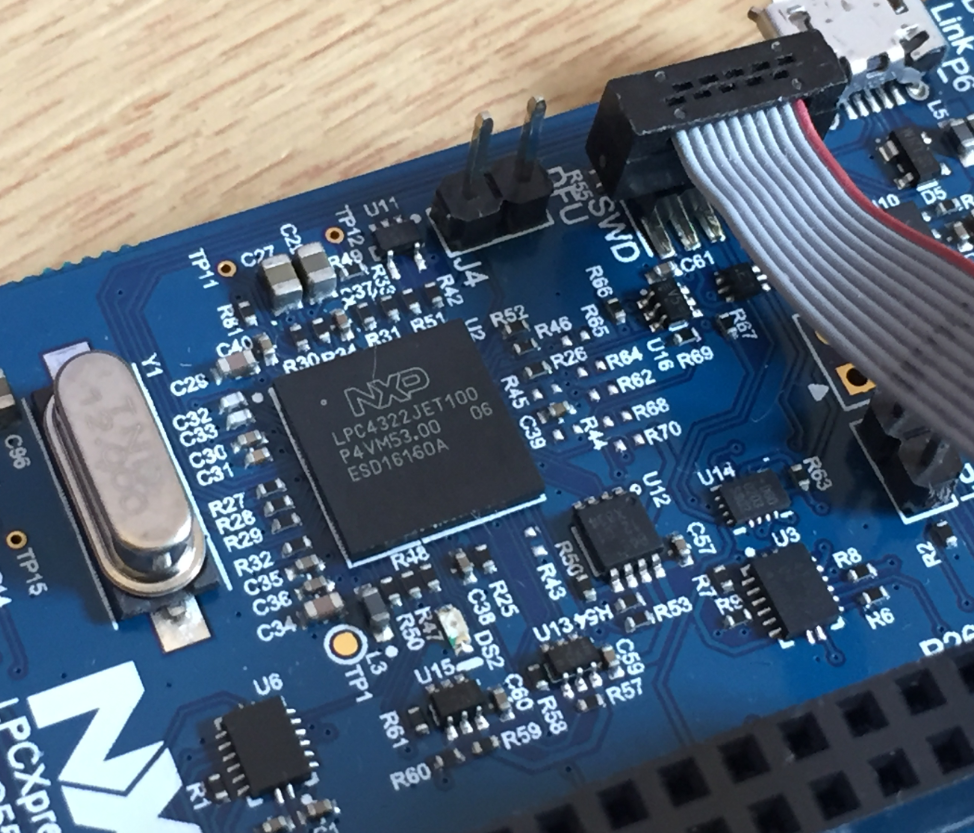
The LPC55S69-EVK board comes on-board debug probe. The board includes the LPC4322JET100 device which acts like NXP LPC-Link2 debug probe:

LPC4322JET100 on LPC55S69-EVK

LPC4322JET100 on LPC55S69-EVK

But it is easily possible to use the board with an external debug probe or re-program the onboard one as a SEGGER J-Link debug probe.

Continue reading

Tutorial: MCUXpresso SDK with Linux, Part 2: Commandline Debugging with GDB

In “Tutorial: MCUXpresso SDK with Linux, Part 1: Installation and Build with Maked” I used cmake and make to build the SDK application. In this part I’m going to use the command line gdb to debug the application on the board.

Cross-Debugging with GDB

Cross-Debugging with GDB

Continue reading

Tutorial: RAK813 LoRaWAN+BLE+GPS Sensor Node with Eclipse IDE

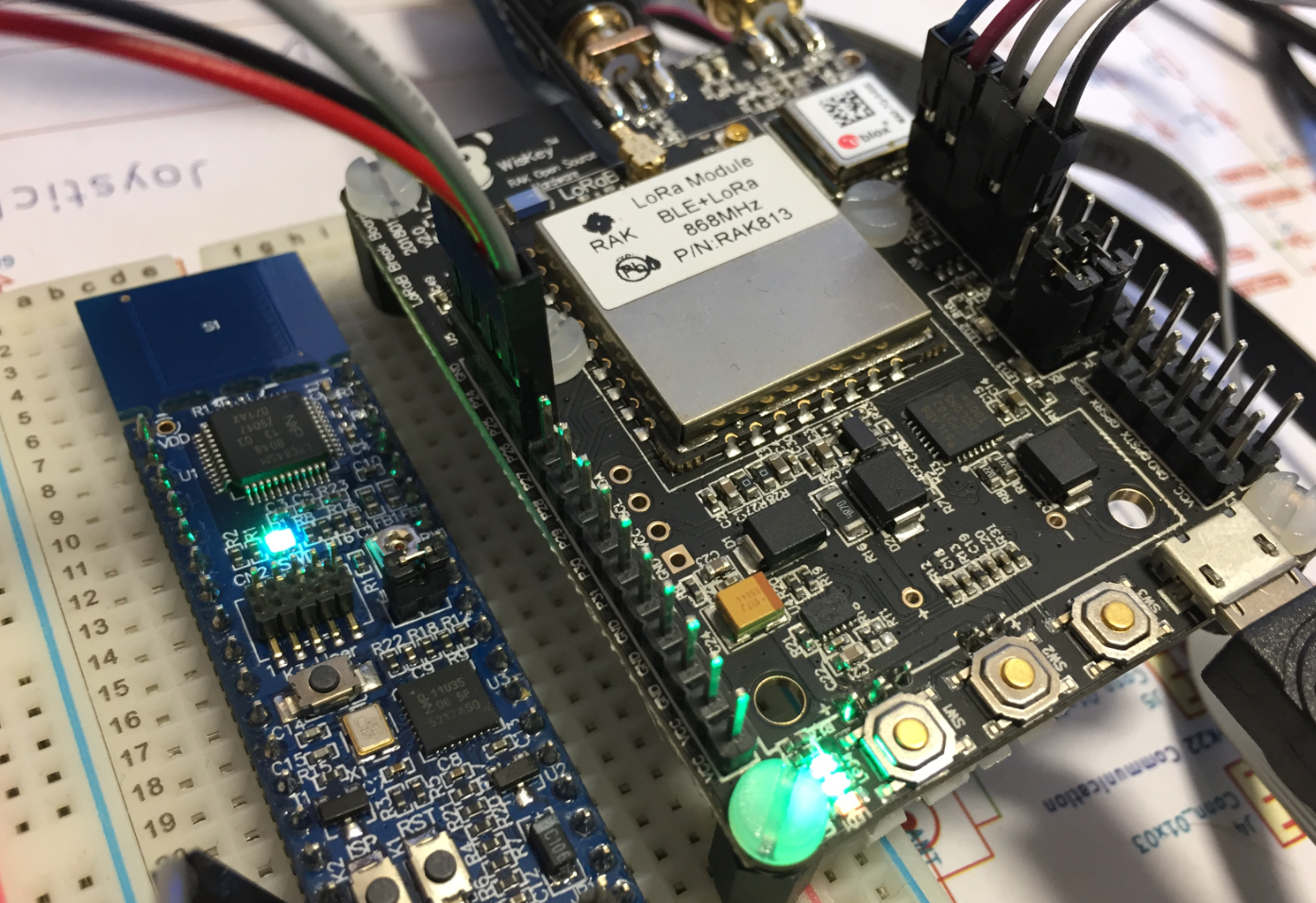
In the IoT world, it is all about security, connectivity and low power. LoRaWAN with the Things Network is able to connect devices over several kilometers, and I’m running my gateway for it already (see “Contributing an IoT LoRaWAN Raspberry Pi RAK831 Gateway to The Things Network“). This tutorial is about building a BLE+LoRaWAN+GPS sensor node with GNU tools and Eclipse:

LoRa+BLE with RAK813 and LPC845

LoRa+BLE with RAK813 and LPC845

Continue reading

Remote Debugging with USB based JTAG/SWD Debug Probes

For some projects it is not possible to have the device under debug available on my desk: the board might be in another room, on another site or in a place where physical access is not possible or even dangerous. In that case an IP-based debug probe (see Debugging ARM Cores with IP based Debug Probes and Eclipse) is very useful: as long as I can access its IP address, that works fine. It is an excellent solution even if the board is moving or rotating: hook it up to a WLAN access point and I still can use it as it would be on my desk.

But what if I have a debug probe only connected to USB? This article shows how to turn a USB debug probe into a IP-based debug solution: that way I can easily debug a board from remote, connected to the network:

IP Based Debugging with USB Debug Probe

IP Based Debugging with USB Debug Probe

Continue reading

Debugging the Startup Code with Eclipse and GDB

By default, when debugging an embedded application, the target usually stops at main():

stopped in main

stopped in main

That’s usually fine, but what if I want to debug the code out of reset?

Continue reading