McuOnEclipse Components: 28-Jan-2017 Release

I’m pleased to announce that a new release of the McuOnEclipse components is available in SourceForge, with the following main features and changes:

  • New Sharp Memory Display Driver supporting 96×96 and 128×128 pixel ultra low power display
  • PID_Int can be used without hardware
  • GenericTimeData has added functions to convert date/time into strings
  • HardFault can now disable write buffers on ARM Cortex to simplify debugging faults
  • Folder support for SEGGER SystemView and Percepio FreeRTOS+Trace
  • Component usage without Processor Expert
  • NXP MCUXpresso SDK support for FreeRTOS using tickless idle mode and low power timer
  • Many other smaller bug fixes and enhancements
SourceForge

SourceForge

Continue reading

Zephyr: Thoughts and First Steps on the ARM Cortex-M4F with gcc, gdb and Eclipse

The concept of Linux (Open Source, broad developer base and broad usage) is a success story. While there is a lot of diversity (and freedom) in the Linux world, Linux is Linux and again Linux :-). And the world has (mostly) standardized on Linux and its variants on the high embedded system side.

On the other side, the ‘middle and lower end’ Embedded world is fragmented and in many aspects proprietary. So it was no surprise to me when the Linux Foundation announced the ‘Zephyr’ project back in February 2016:

“The Linux Foundation Announces Project to Build Real-Time Operating System for Internet of Things Devices. Open source Zephyr™ Project aims to deliver an RTOS; opens call for developers to help advance project for the smallest footprint IoT devices.

Ζεφυρος (Zephyros) is the Greek good of spring and the west wind. Obviously this inspired the logo for the Zephyr project:

Zephyr logo
Zephyr logo (Source: https://www.zephyrproject.org/)
Continue reading

“No source available”, or how to Debug Multiple Binaries with GDB and Eclipse

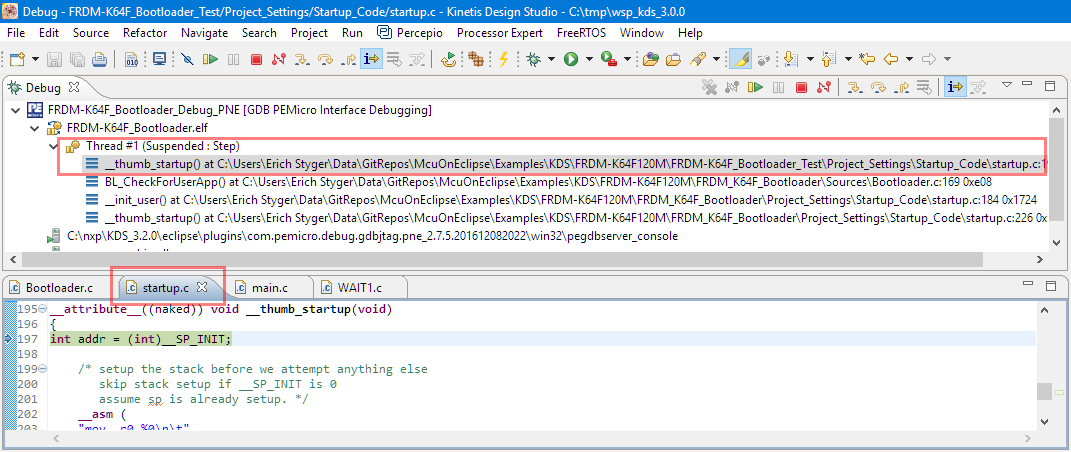
When working and debugging a bootloader, debugging can be a challenge: During debugging the bootloader, a new binary gets loaded into the microcontroller address space which is unknown to the debugger. As soon as I step into the newly loaded binary, I only see assembly code, with that ugly “No source available” in Eclipse:

No Source Available, debugging in assembly

No Source Available, debugging in assembly

But wait: GDB is able to do pretty much everything you can imagine, so here is how to debug multiple binaries with GDB and Eclipse, and to turn the above into something which is easy to debug:

Debugging with Symbolics

Debugging with Symbolics

Continue reading

Reprogramming the Mikroelektronika Hexiwear Dockingstation

The Hexiwear docking station would have a nice feature: it has embedded a debug circuit (OpenSDA). That way I would not need an external debug probe to debug the Hexiwear. However, a debug probe is required to reprogram the docking station itself:

Repgrogramming the Mikroelektronika Docking Station

Repgrogramming the Mikroelektronika Docking Station

Continue reading

Upgrading to Sharp 128×128 Pixel Memory Display

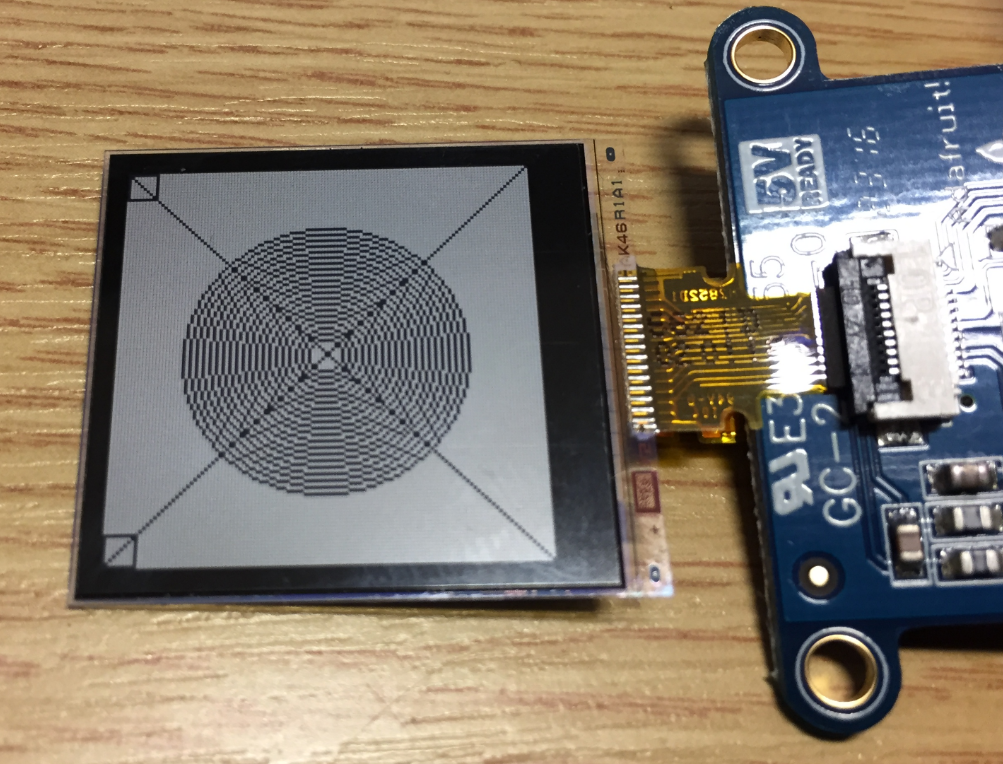
In “Low Power LCD: Adafruit Breakout Board with Sharp Memory Display” I used a 96×96 Sharp Display (LS013B4DN04) with the Adafruit breakout board, but because that one seems to be EOL (End Of Life), I searched for a replacement. I have found the 128×128 pixel version (Sharp LS013B7DH03), and best of all, it is pin compatible :-). With a small tweak of the driver, it works :-):

Sharp Memory Display 128x128

Sharp Memory Display 128×128

Continue reading

Building the NXP BLE Stack with Open Source GNU and Eclipse Tools

One of the biggest road blocks (beside of closed source) using the BLE (Bluetooth Low Energy) stack from NXP is that it requires expensive tools to compile and build the stack. The good news is that I have now the NXP BLE stack for the Mikroelektronika Hexiwear ported to Eclipse and GNU gcc build tools for ARM 🙂

NXP BLE Stack in Eclipse

NXP BLE Stack in Eclipse

Continue reading

DIY IKEA Wireless Qi Charging for the Hexiwear

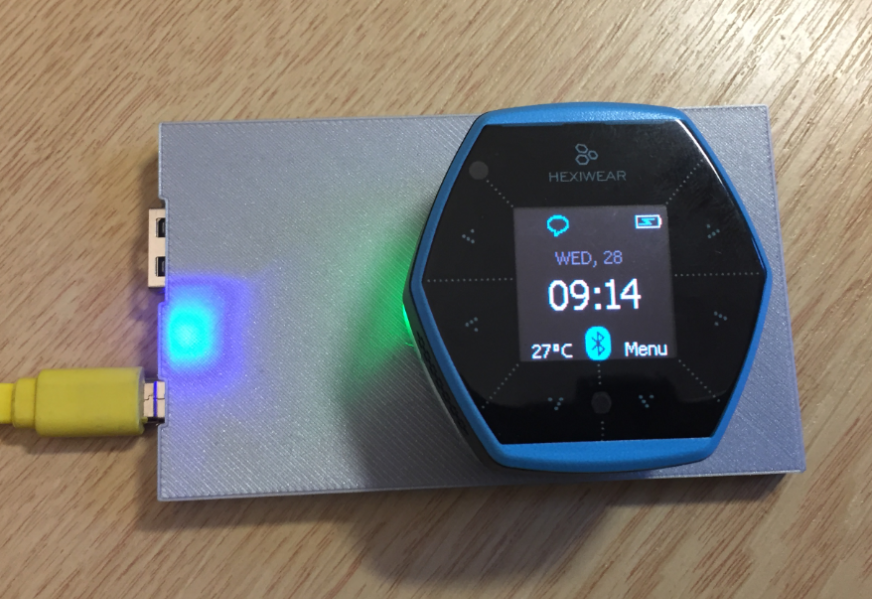
The Achilles Heel of the Mikroelektronika Hexiwear is its charging: the charging and USB connector are only designed for a limited number of plug-unplug cycles, and it does not have a wireless charging capability like the Apple iWatch. Until now! I have built a DIY wireless charging system for the Hexiwear 🙂 :

Wireless Qi Charging the Hexiwear

Wireless Qi Charging the Hexiwear

Continue reading

Tutorial: Hexiwear Bluetooth Low Energy Packet Sniffing with Wireshark

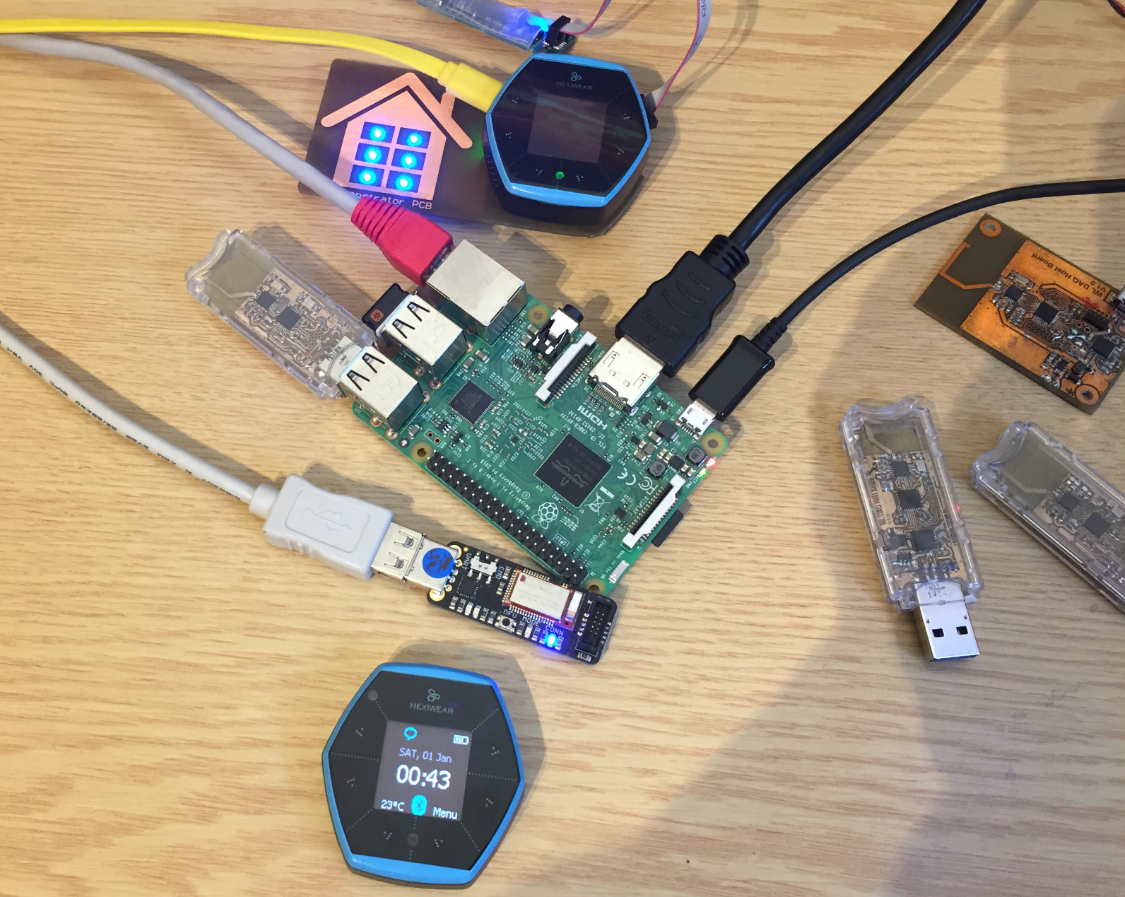
For a university reasearch project I try to pair the Raspberry Pi 3 with a Mikroelektronika Hexiwear using BLE (Bluetooth Low Energy). Most of things worked after a lot of trial and error, but at a certain point I was stuck trying to write to send data from the Raspy to the BLE device.The Hexiwear BLE protocol description is very thin, so I ended up using a BLE sniffer to reverse engineer the protocol with Wireshark.

Sniffing BLE Packets between Raspy and Hexiwear

Hardware setup between Raspy and Hexiwear

Continue reading

Tutorial: BLE Pairing the Raspberry Pi 3 Model B with Hexiwear

The Hexiwear (see “Hexiwear: Teardown of the Hackable ‘Do-Anything’ Device“) is a small and portable sensor node with built-in BLE (Bluetooth Low Energy) transceiver. In a research project we try to use multiple Hexiwear in a classroom environment and to collect sensor data on a Raspberry Pi. The Raspberry Pi 3 Model B running Linux has an on-board BLE transceiver too, so why not binding them (wirelessly) together?

Raspberry Pi 3 connected with Hexiwear over BLE

Raspberry Pi 3 connected with Hexiwear over BLE

Well, things seemed easy at the beginning, and as always, there are many things to learn on a journey like this…

Continue reading

McuOnEclipse Components: 12-Dec-2016 Release

Time is passing by so fast, and the year end is approache fast! I’m pleased to announce that a new release of the McuOnEclipse components is available in SourceForge:

  • Percepio Trace V3.1 for FreeRTOS which includes both Segger RTT continuous streaming and snapshot tracing in a single API
  • Generation of sources and drivers so they can be used without Processor Expert using McuLibConfig, removal of dependency to NXP Kinetis SDK: components use a generic API approach to have them working with other SDKs.
  • New contributed ExceptionsHandler component
  • Callback Setter and Getter in USB CDC stack for simpler option handling
  • GenericTimeDate with flexible RTC support and added Unix Timestamp functions
  • LongKey events in Key component
  • FreeRTOS with optimized task selection on Cortex-M4/M7
  • Many smaller bug fixes and enhancements

SourceForge

SourceForge

Continue reading