Tutorial: Blinky with the FRDM-KL27Z and Kinetis SDK v2

I’m using the FRDM-KL25Z in my classes, and that board is very popular: low price (<$15), reasonable features (48 MHz ARM Cortex M0+, 128 KByte of FLASH, 16 KByte of RAM), and many tutorials elsewhere and on McuOnEclipse :-).

For the next (Fall) semester I’m looking for alternative boards, and one is the Freescale (now NXP) FRDM-KL27Z:
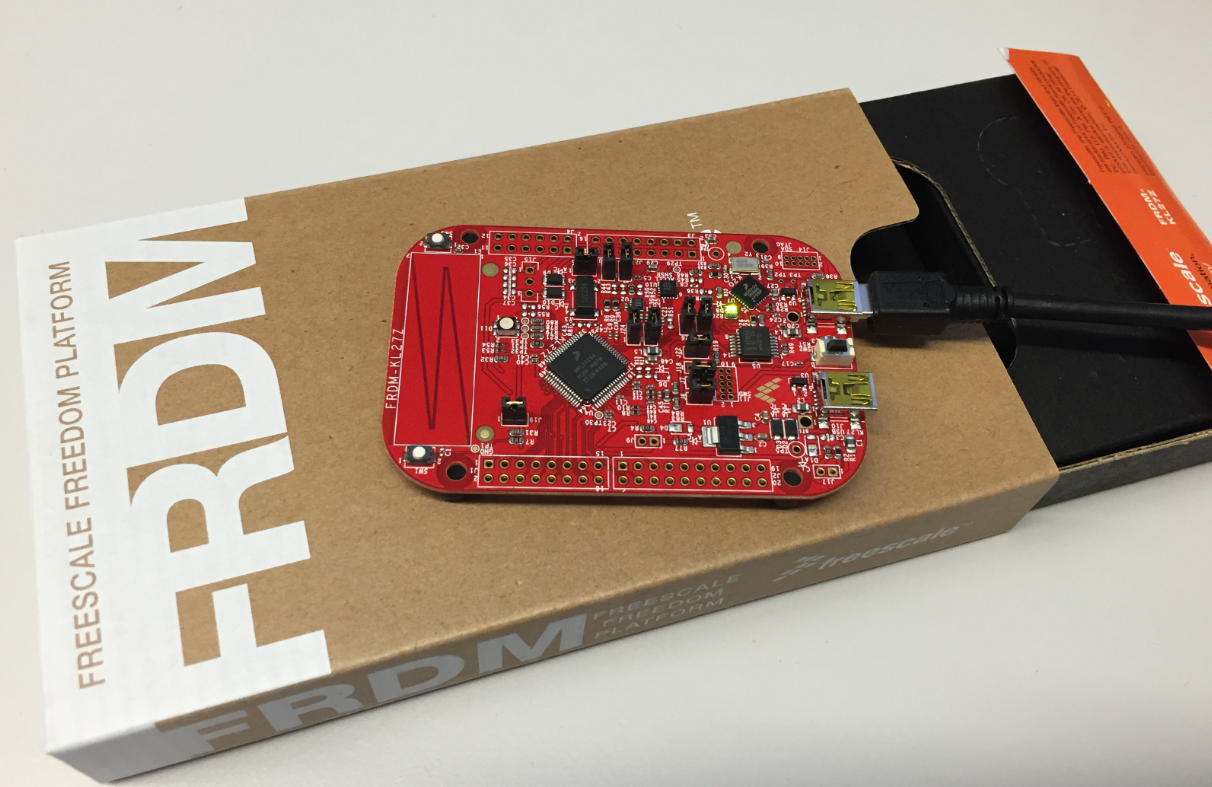
FRDM-KL27Z with Box
FRDM-KL27Z with Box

Continue reading →

Dealing with Code Size in Kinetis SDK v2.x Projects

I’m exploring the Kinetis SDK v2.0 (see “First NXP Kinetis SDK Release: SDK V2.0 with Online On-Demand Package Builder“). For this, I’m using the ‘standard’ way: blinking the LED on the board 🙂

Blinky on FRDM-K64F Board

Blinky on FRDM-K64F Board

Continue reading →

McuOnEclipse Components: 7-Feb-2016 Release

New in this release:

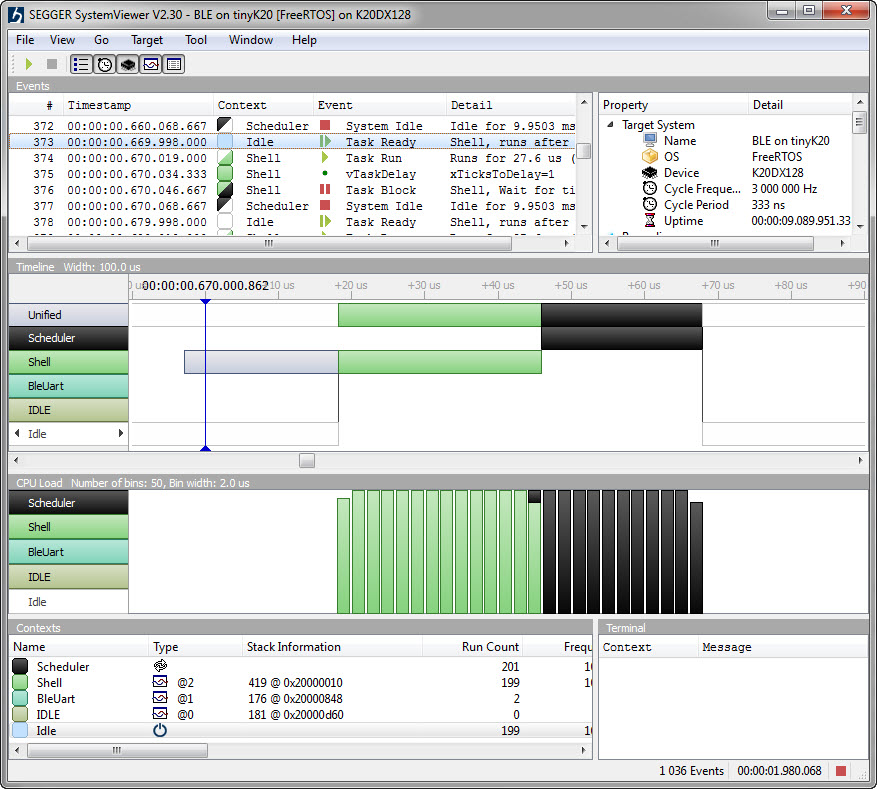
  • Segger SystemViewer: Upgraded to V2.30, added stack high-water mark
  • Segger RTT: fixed BASEPRI issue on Cortex M4 for critical sections
  • Utility: Fixed issue with Utility module and Kinetis SDK (usage of ‘byte’)
  • USB CDC: property to specify USB device current usage, new status getter functions.
Segger SystemViewer V2.30

Segger SystemViewer V2.30

Continue reading →

Show Floating Point Variable Bytes in Eclipse CDT

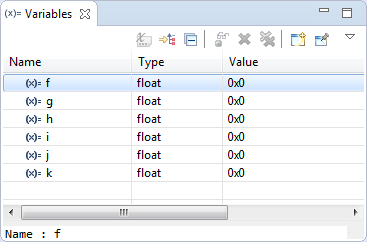
My preferred variable format in Eclipse is hexadecimal (see “Debugging Variables in Hexadecimal with Eclipse“). However, this does not work well with floating point variables:

Floating Point Variables in Eclipse Variables View

Floating Point Variables in Eclipse Variables View

The above view shows all variables having the value 0x0 (zero), but that’s actually not really true.

Continue reading →

Debug Multiple Boards with GDB at the Same Time

Many times it is very useful to debug multiple boards at the same time. For example if I’m debugging a communication stack between two boards: that way I can debug the protocol on both sides. Eclipse is a great framework which allows that. This post shows how to debug multiple boards (e.g. the NXP Freedom boards) in parallel from the same Eclipse IDE using GDB and the Segger J-Link:

Two NXP Freedom Boards debugged at the same time

Two NXP Freedom Boards debugged at the same time

Continue reading →

Hardware Reset for ARM Cortex-M with Segger J-Link and Kinetis Design Studio

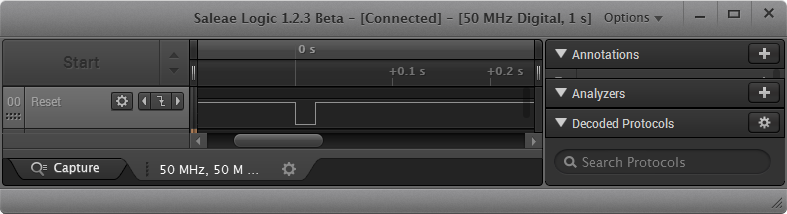
The reset and signal line of a microcontroller is probably the most important signal to a microcontroller. And if things go wrong, then a first thing to check is the reset line. So having control over reset is an important aspect for embedded development. You would think that if you download a program to a microcontroller, the debug probe would put the device into reset at the start with a short pulse like this:

Reset Signal in Logic Analyzer

Reset Signal in Logic Analyzer

Continue reading →

McuOnEclipse Release 10-Jan-2016

With the start of the new year 2016 I have published a new McuOnEclipse component release with the following major updates:

  1. Updated Segger SystemView and Real Time Transfer (RTT): added terminal functions and extra interfaces
  2. Improved USB CDC with serial number handing
  3. FreeRTOS TaskList shell command
  4. USB Stack: added MSD Host support for MCF52259, added support for K24FN120 and for the 100 MHz K20 devices
  5. New NEOMatrix component for Adafruit NeoPixel Matrix displays

    256 NeoPixel Matrix with FRDM-KL25Z

    256 NeoPixel Matrix with FRDM-KL25Z

Continue reading →

Renaming Eclipse CDT Projects

When I create a project in Eclipse (e.g. in Kinetis Design Studio with the GNU ARM Eclipse plugins), I have to specify the name of the project during creation time:

Project Name in Eclipse

Project Name in Eclipse

But what if I change my mind later on and want to use a different name? How to rename the project?

Continue reading →

Using the KwikStik K40 Board to Debug an external Board

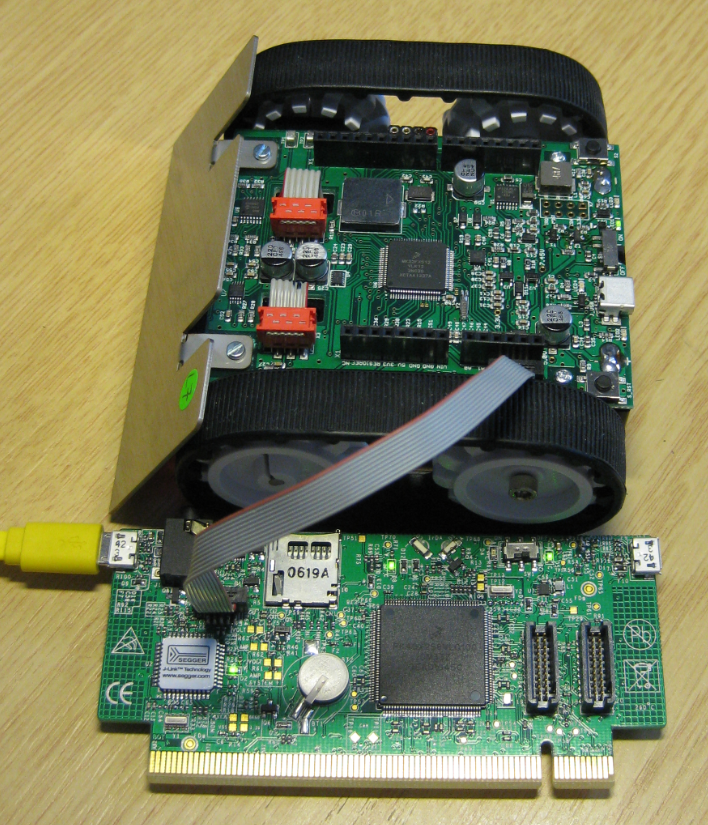
When I left for the week-end, I missed to take with me my Segger J-Link debug box. I have one P&E Universal Multilink at home, but I needed a Segger J-Link to use the SystemViewer with my robot. I need that for a FreeRTOS trainig I will deliver in Poing/Germany on Monday at Avnet/Silica.

But I had a Freescale KwikStk board at home, and I did remember that I can use that board as a Segger J-Link to debug my custom hardware (see “Freescale Kinetis KwikStik (part 1)“).

Debugging Custom Board with KwikStik

Debugging Custom Board with KwikStik

Continue reading →