I have been asked to share what I’m creating with the laser cutter. So here is one more design: a wooden chest box:
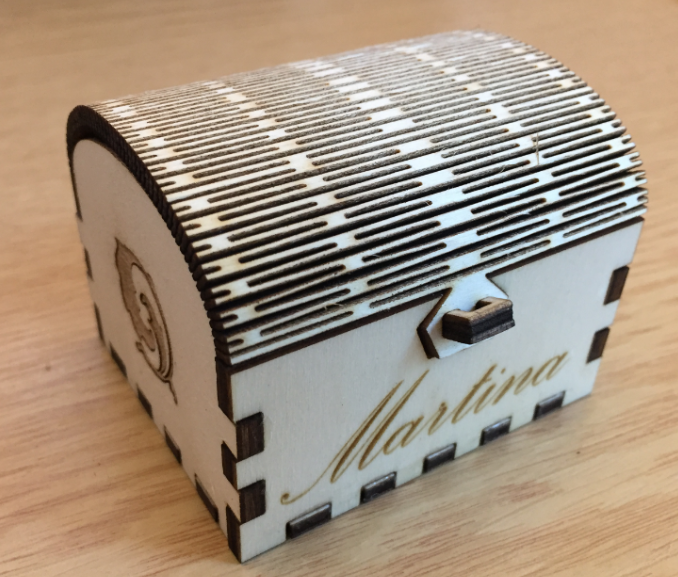
Wooden Chest Box

I have been asked to share what I’m creating with the laser cutter. So here is one more design: a wooden chest box:
Wooden Chest Box
One of the most scenic hiking trails in the Dolomites is the ‘Hirzelweg’ (Sentiero del Masaré): a scenic trail under the walls of the Rotwand (Roda di Vael) on the west side of the Dolomites.

Rotwand and Hirzelweg
I know that some might disagree with me: but to me, watching a sunrise in the mountains is one of the most beautiful things to do. Get up early, hike to a perfect spot and enjoy.
The tools and IDE market is constantly changing. Not only there is every year at least one new major Eclipse IDE release, the commercial tool chain and IDE vendors are constantly changing the environment too. For any ARM Cortex-M development, the combination of Eclipse with the GNU tool chain provided by ARM Inc. is the golden standard. But this does not mean that things can be easily moved from one IDE package to another.
While moving between Eclipse versions and GNU versions is usually not a big deal at all, moving between the Eclipse build tool integration is usually not simple. While the GNU MCU Eclipse plugins are widely used (see Breathing with Oxygen: DIY ARM Cortex-M C/C++ IDE and Toolchain with Eclipse Oxygen), the Eclipse based IDEs from the silicon vendors or commercial Eclipse toolchain vendors are using their own GNU toolchain integration. Which means the project files are not compatible :-(.
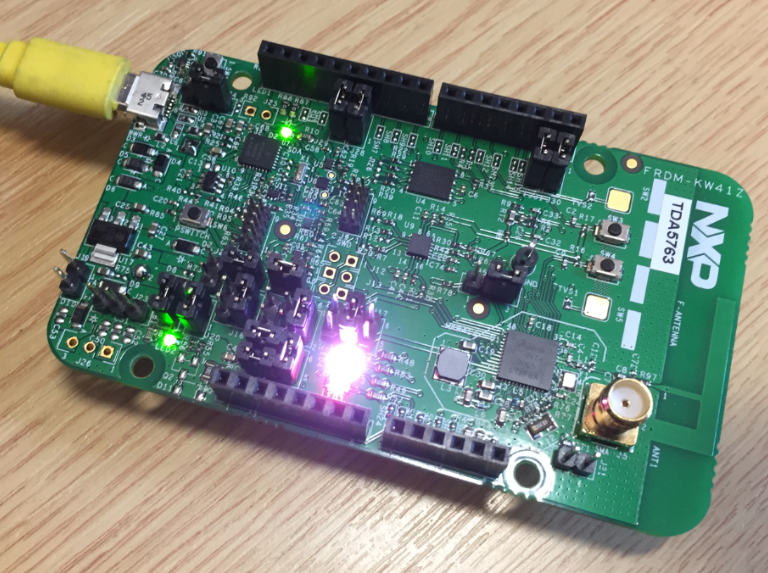
NXP FRDM-KW41Z Board
The Lago di Carezza (German: Karersee) is an emerald green mountain lake in the Dolomites in South Tyrol, Italy. It not only features an amazing emerald color: there is a legend and fairy tale too about it.
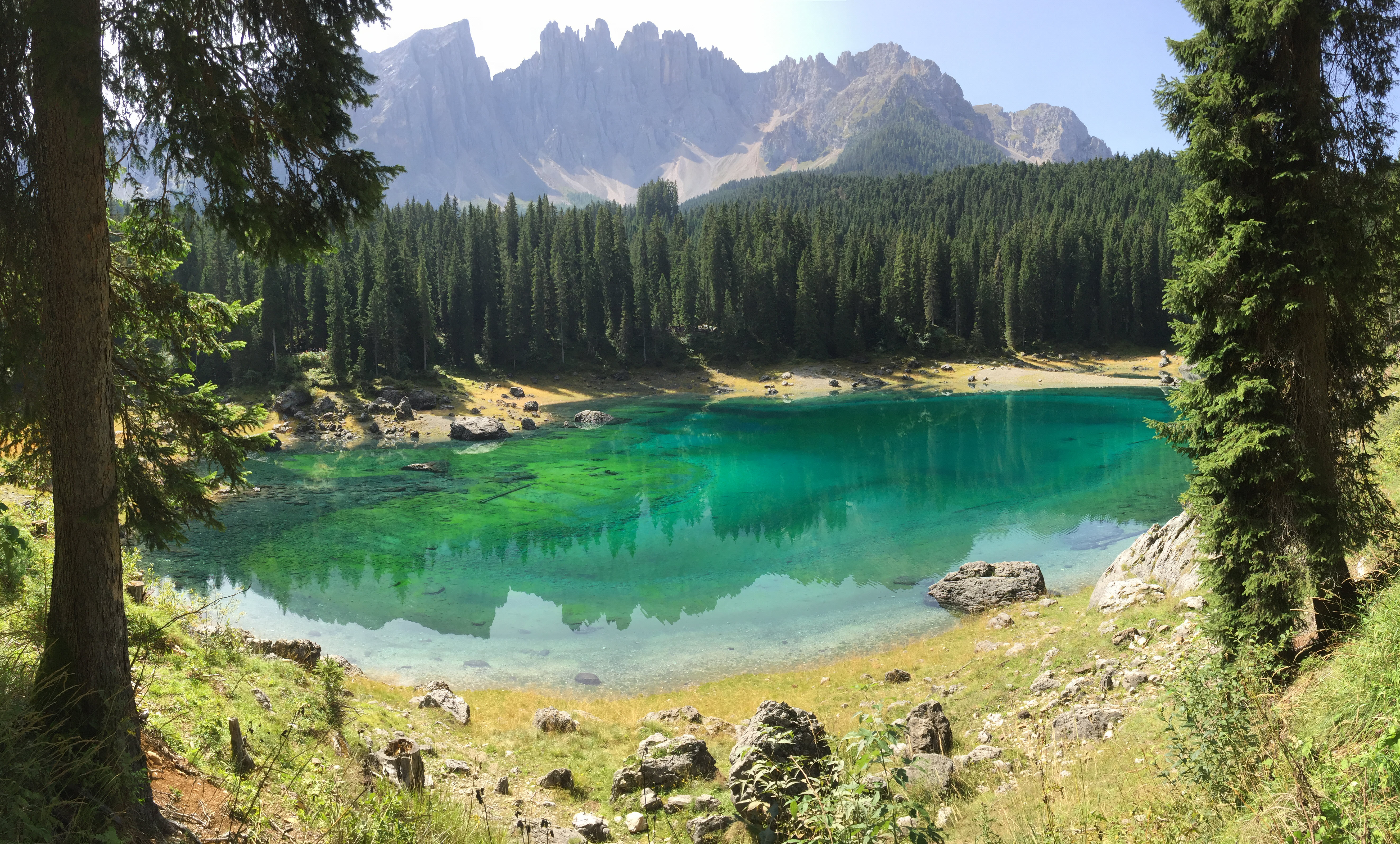
Karersee
This time we were hiking around the Rothenflue: a wonderful area close by the Grosser Mythen, with stunning views.

Gleitschirm über Talkessel von Schwyz
The question has been: If I buy such a 50 Watt cheap laser cutter from China, how many Watts does it really have? I have read all these stories that usually what is advertised is only the theoretical maximum I could get, and will not be realistic at all. This article is about how I tuned the machine and how much I got out of it.

Different Laser Power
We are creating a new course (PRG-G) at the Lucerne University. This course teaches C programming and is part of the new curriculum in EE (Electrical Engineering). Every student will receive a microcontroller board on an extension board as give-away, in a custom card box for the board and cable. To make things a bit more exciting, why not laser engrave that box? That gives me a perfect excuse to experiment with the laser cutter 🙂

Laser Engraved Card Box
Have a read at http://embedded.fm/blog/2017/8/12/dont-use-arduino-for-professional-work.
I love the Arduino ecosystem, and it is great for getting something up and running quickly for a ‘proof of concept’. But it stops at that point.
I think it should be obvious why Arduino (code and libraries) should not be used for professional work. Especially the lack of proper debugging support makes it nearly impossible to solve the problems of the real world.’printf()’ style of debugging is simple, but it is a huge waste of time. I have seen too many student projects failing because the inability to properly debug the system and solve the problems.
Even equally important for professional work is the topic of IP and licensing. Be aware of the licensing terms and conditions as pointed out by above article. If not, your product easily get GPL’d which might not want you want.

Arduino
Happy Arduinoing 🙂

 MCU on Eclipse