Sometimes projects need more than a year from start to finish. And this project is even not finished yet. So here is a quick update of the enlarged Split-Flap project for 2025:
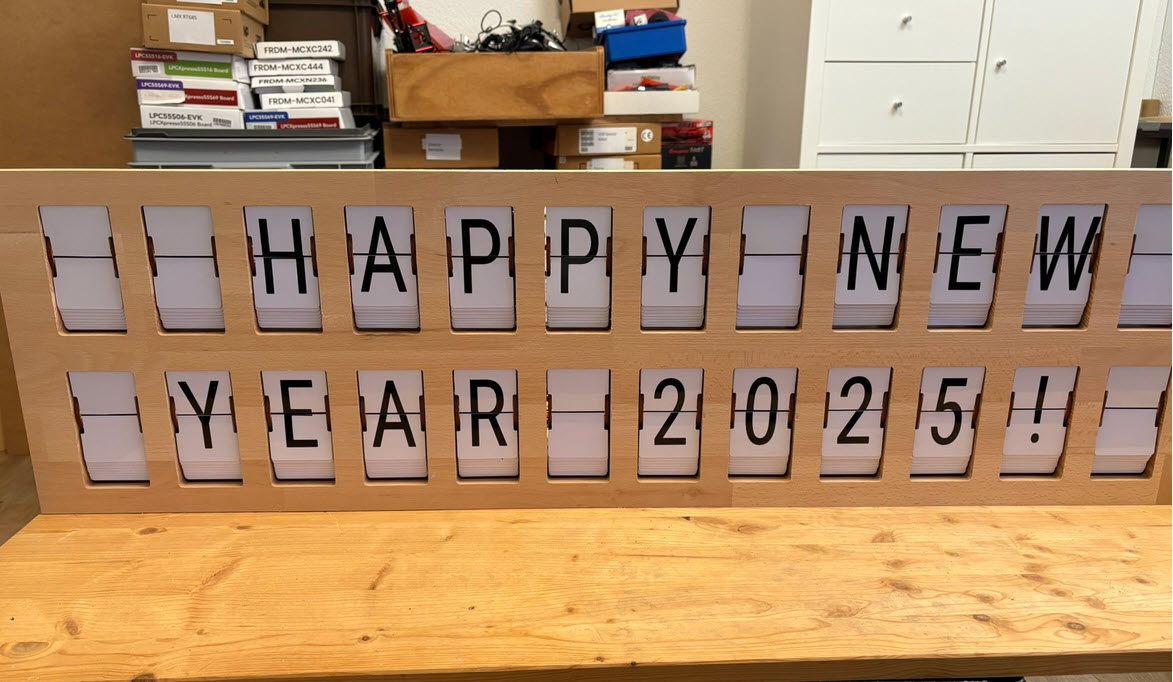
Sometimes projects need more than a year from start to finish. And this project is even not finished yet. So here is a quick update of the enlarged Split-Flap project for 2025:
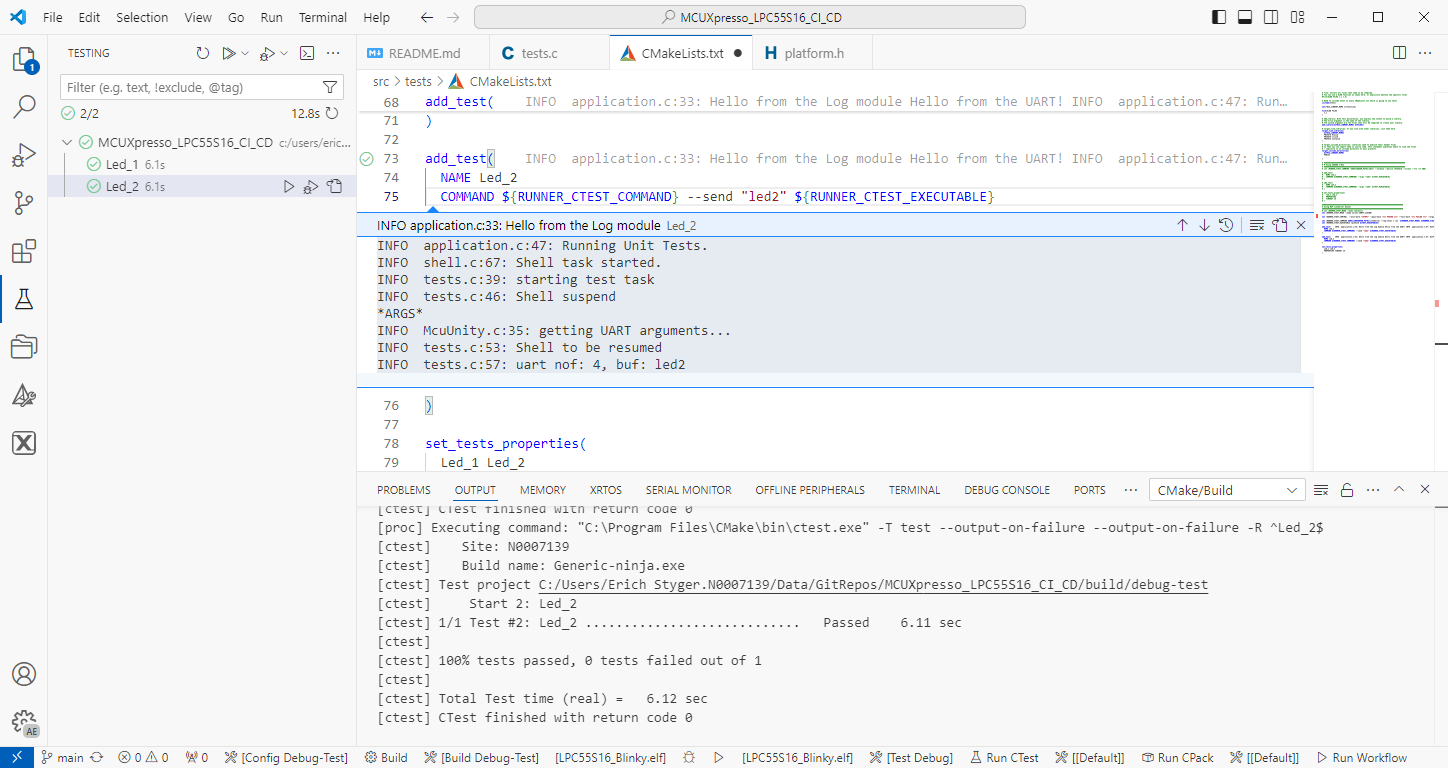
The release 24.9.75 of LinkServer software and tools includes interesting feature: the ability to use the debug probe for automated on-target testing. It includes a ‘runner’ which can program, launch and run the application on the target through a debug probe. While the target is running, it uses semihosting or UART for communication. This makes it a perfect tool for automated testing, especially in a CI/CD environment. One such environment is running automated tests with CMake and CTest in VS Code.
In an earlier article I explained how to generate GNU coverage information, for an embedded application written in C.
In this article, I show the steps and configuration needed to use GNU gcov targeting an embedded application with C++.

Europe is currently facing an ‘Energy Crisis,’ and ‘Sustainability’ is a popular topic among companies. However, embedded engineers go beyond talking—they take action and make tangible changes in the world. With the increasing use of electronic devices, minimizing their energy and power consumption is crucial. Optimizing systems for deep low power or deep low energy is a challenging task. Nonetheless, as I will demonstrate in this article, it is possible to reduce energy consumption by a factor of 100 or more. This article provides a brief overview of the foundational concepts and then applies them step-by-step to an ARM Cortex microcontroller.
Eclipse includes many ways to build a project. One of it is the built-in builder which makes it super easy. And for more complex building needs I can use an external make (see Tutorial: Makefile Projects with Eclipse) or cmake or combination of multiple ways (see Building a Triumvirate: From Eclipse CDT to CMake, CMD and Visual Studio Code).
There is yet another use case how to easily tweak the build process in Eclipse: using a script file in the project to be used as the ‘compiler’:
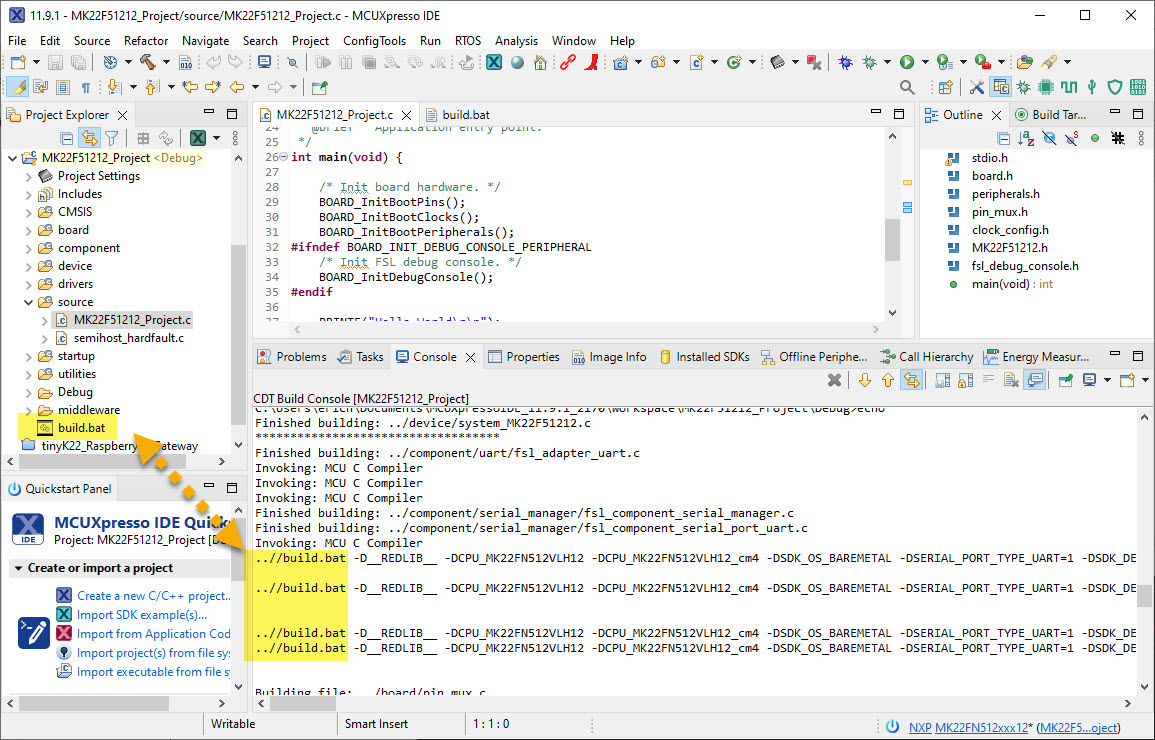
That way I can do all kind of custom steps (analysis, re-formatting, static checkers, …) for each file compiled.
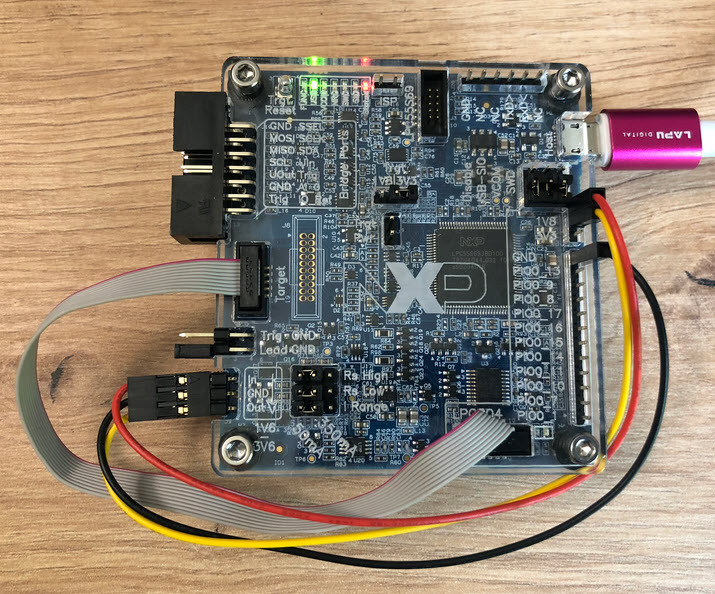
Continue readingNeed to debug your robot or drone? In a HSLU university research project I’m using a Pixhawk and PX4 based drone hardware. Pixhawk and PX4 is an open standard for drone hardware and firmware and runs with NuttX RTOS. It is mainly used for drones, but is very capable for any other kind of mobile robots.
With the Pixhawk 6x-RT there is a powerful flight controller, using the NXP i.MX RT1176 dual-core processor. While this and other controller hardware do offer a hardware debug probe, it is not a simple task as there are different pin-outs and connectors, making debugging a mess with different cables and adapters. To simplify this, I have now a unified debug CMSIS-DAP debug probe using the NXP LPC55S69 as processor, with all the different headers and UART adapters included: the MCU-Link-MR (Mobule Robots) debug probe.

I have been running out of business cards, so I have created custom wood cards with RFID chip integrated:

Float and double data types area a bad choice for embedded applications. At least in most applications, and can or should be avoided, even with hardware FPU support present.
But how can I be sure that no floating point operations are used?

This article describes how to configure the GNU toolchain, so that no float or double operations are used, with the example of ARM Cortex-M. What I do? ‘Poisoning’ (!!!) the source code, force the gcc compiler to use software floating point operations and then catch them with the GNU linker :-).
Continue readingMany cost-sensitive ARM Cortex-M devices like the M0+ do not have a hardware floating point unit, and some like the M4 only has an optional single-precision floating point unit (FPU). As outlined in “Be aware: Floating Point Operations on ARM Cortex-M4F“, using floating point operations without a hardware unit can be costly.
Looking at the disassembly for sure will tell you if the hardware is handling the float or double operation or not:

But who wants check the all the disassembly? With the GNU tools there is an easier way: readelf.
Continue readingThis blog usually features Printed Circuit Boards (PCBs), but my other passion are Personalized Cutting Boards :-).
It has been a while since my last CNC or laser cutter post, so I thought I showcase just quickly one of the recent designs.

 MCU on Eclipse