Sometimes I start a project with an ARM microcontroller, and in the middle of the project I find out that it was a wrong choice at the beginning and I need to switch the microcontroller derivative or even the used ARM core. With little knowledge of the project structure and the files needed, such a switch is not the easiest thing, but definitely possible.
Category Archives: NXP
Tutorial: Blinky with the NXP LPC845-BRK Board
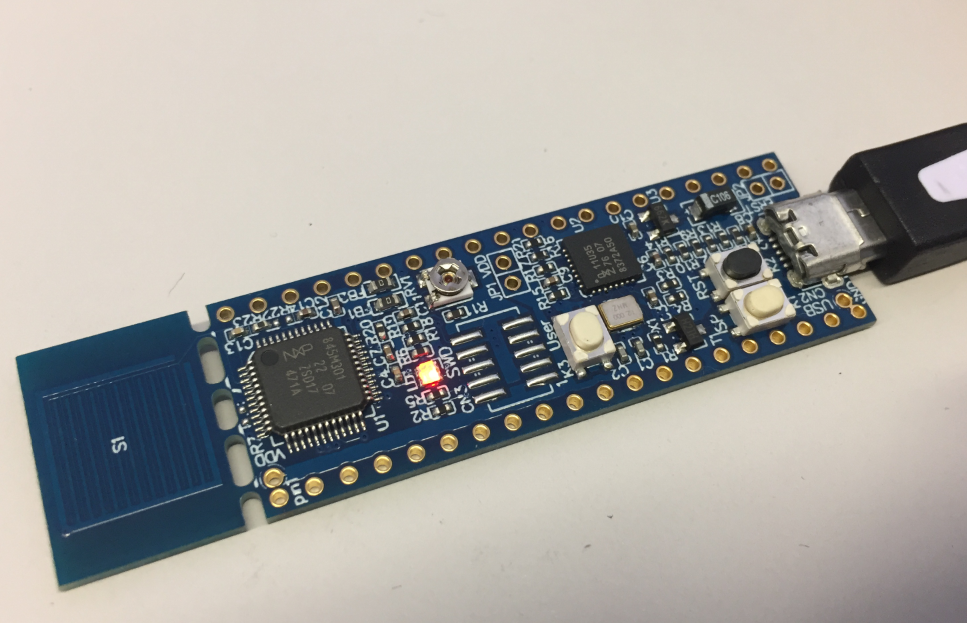
The NXP LPC845-BRK board is a sub-$6 breadboard friendly development board with an ARM Cortex-M0+ on it. This tutorial is about developing a ‘blinky’ on it using MCUXpresso.
Tutorial: Transforming the NXP LPC845-BRK into a CMSIS-DAP Debug Probe
The NXP LPC845-BRK board is a tiny an inexpensive (sub $6) breakout board. The board includes a CMSIS-DAP (LPC11U35) on-board debug probe which can be used as a debug probe to debug any NXP LPC, Kinetis or i.MX RT device 🙂
Tutorial: Using external Debug Probes with NXP LPC845-BRK Board
One great thing with that new NXP LPC845-BRK board is that it is possible to use it with any standard SWD/JTAG debugger, as it has the 10pin debug header present on the board. It is not populated by default, because the LPC845-BRK includes a CMSIS-DAP debug probe already. But if I want to use a SEGGER J-Link, a P&E Multilink or the NXP LPCLink2, this is certainly something to consider:
Unboxing the NXP LPC845-BRK Board
I really love tiny and bread board friendly boards, especially if they are very affordable and can be use with Eclipse based tools. So I was excited to see the NXP LPC845-BRK board to be available at Mouser, so I ended up ordering multiple boards right away. Why multiple? Because they only cost CHF 5.95 (around $6)!
Tutorial: HD44780 Display Driver with NXP MCUXpresso SDK
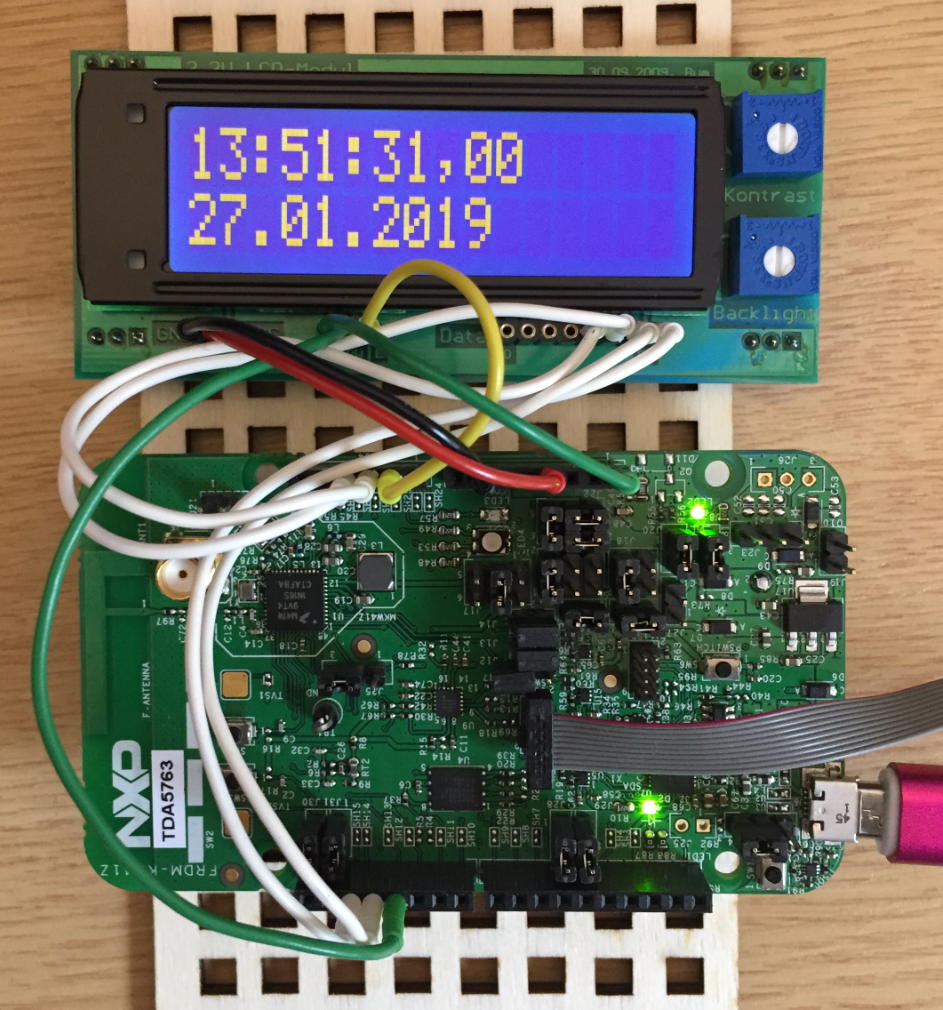
In the age of high-resolution graphical LCDs using a character display might look like a bit anachronistic. But these displays provide a lot of value for me as they are robust, available in different shapes and number of lines. And such a character display can be a better solution for an industrial application.
Tutorial: Booting the NXP i.MX RT from Micro SD Card
It is a common thing to boot a Linux system (see the Raspberry Pi) from a micro SD card. It is not that common for a microcontroller. The NXP i.MX RT ARM Cortex-M7 fills that gap between these two worlds. No surprise that it features a ROM bootloader which can boot from a micro SD card.
FreeRTOS: how to End and Restart the Scheduler
Most host or desktop systems (say Linux, Mac or Windows) have a normal use case where you start the operating system say in the morning and shut it down in the evening, and then you leave the machine. Embedded Systems are different: they are not attended, and they are supposed to run ‘forever’. Not every embedded system needs to run an OS (or in that world: Real-Time Operating System or RTOS), but the same applies here: after the RTOS is started, it is not intended that it will shutdown and restart. To the extend that you won’t they support the ‘shutdown’ and ‘restart’ functionality at all. In case of gathering coverage information this would be really useful:
In the case of FreeRTOS: what if I really need to shutdown the RTOS and restart it again, as by default this is not supported. This is what this article is about …
GDB All-Stop and Non-Stop Mode with LinkServer
GDB supports a mode which allows the GDB debug client to read memory while the target is running. This allows features like ‘live variables’: that way I can see the variables refreshed and changing over time without halting the target. Another functionality which comes with that feature is to check stopped threads or to see all threads in the system.
Driver and Command Line Shell for Winbond W25Q128 16MByte Serial FLASH Device
Modern microcontroller come with plenty of internal FLASH memory. On the other side, many high performance MCUs as the NXP i.MX RT are ‘flashless’, because the silicon process for high performance cores is not matching the FLASH memory technology, so they are using external serial SPI or Quad-SPI (QSPI) memory instead.
Why not using an external SPI FLASH for a ‘normal’ microcontroller too?