New MetaClockClock: Combining Art and Technology in Clocks

The MetaClockClock is a clock made of clocks. It consists of multiple dual-shaft stepper motors, arranged as a matrix of 5×12 analog clocks. Each clock has two motorized hands that can move independently. The clock can tell the time, but in a unconventional way. The entire matrix creates a meta-display that shows the time or other information. Between the updates, the hand can do coordinated, choreographed movements.
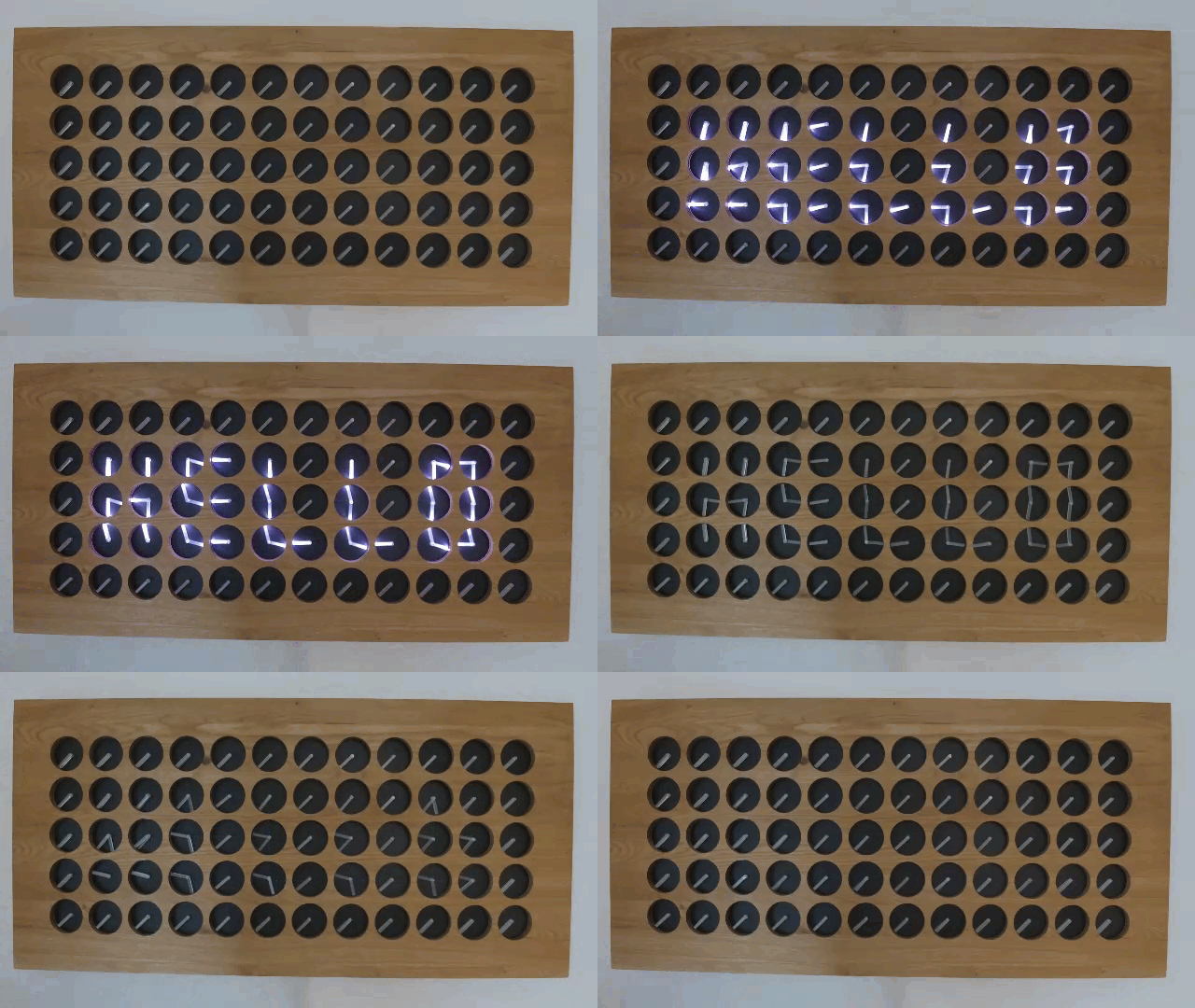
The clock hands are laser cut acrylics with get light up with a LED ring around the clock.

This article describes the build with CNC cut oak enclosure, laser-cut parts and 3D printed items.

Continue reading
Optimizing CI/CD with RAM Target Applications

Usually, I run applications in the micro-controller FLASH memory. But for a CI/CD or testing environment that is not the best choice.

It is possible to have a ‘RAM target’, where the application is running in RAM instead of FLASH memory. This has the advantage not to ‘wear-out’ the FLASH memory. Plus loading and running in RAM is faster. This makes having RAM targets especially useful for testing.

In this article I’m using the NXP LPC55S16-EVK board, but any other target or board is applicable.

NXP LPC55S16-EVK
NXP LPC55S16-EVK
Continue reading

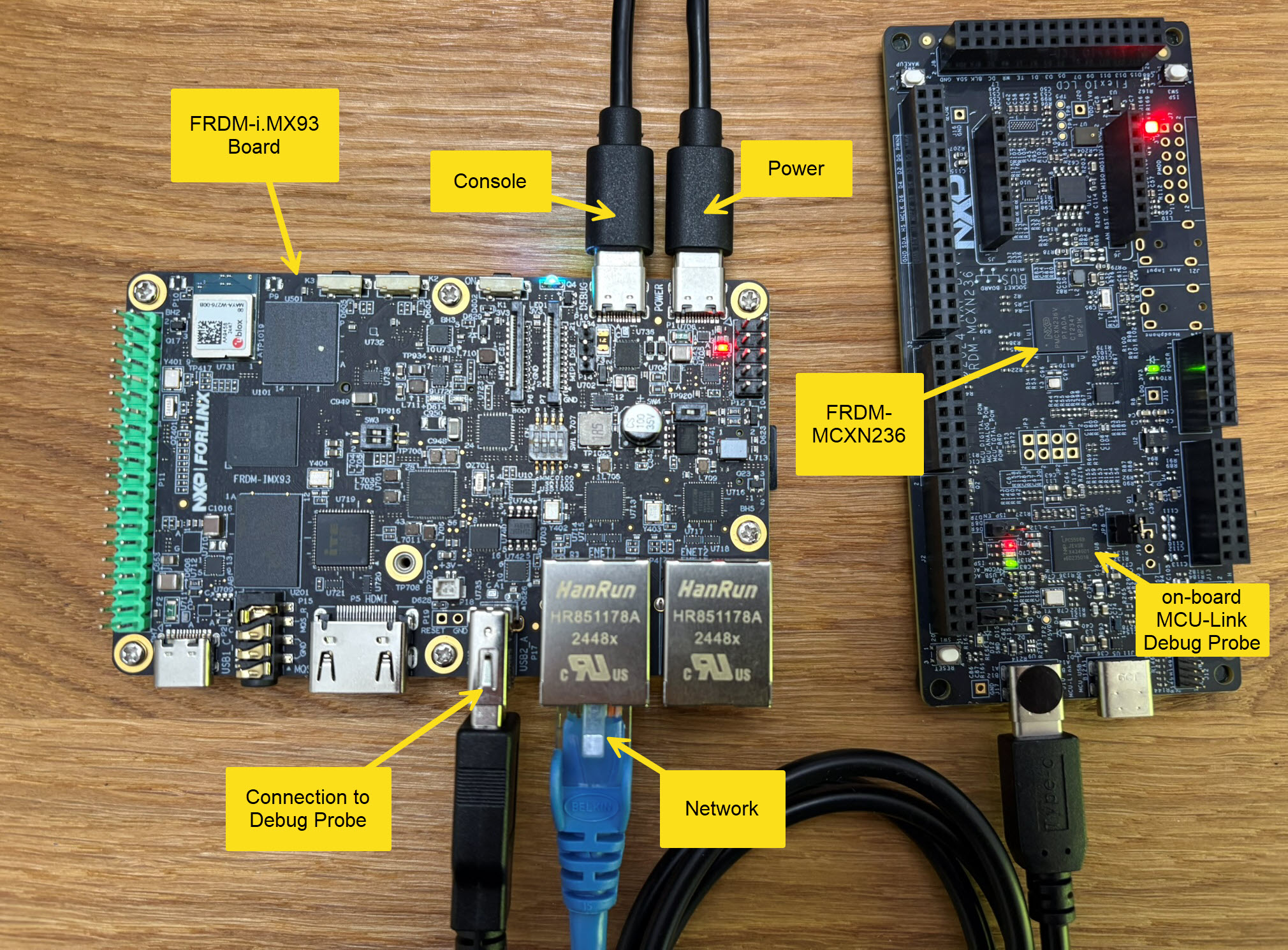
Setup Guide for FRDM-IMX93 as Debug Server

In Using Raspberry Pi and MCU-Link for Remote Embedded Debugging I created a remote server for debugging. I did order the NXP FRDM-IMX93 a few weeks ago, and did not had a chance to use it. So why not doing the same?

FRDM-i.MX93 with MCU-Link

Here is how it can be uses as remote debug server,

Continue reading

Running On-Target Tests with Coverage in VS Code

Test coverage is a very useful metric: it tells how much of your code has been covered by tests. Or the other way: it helps identifying areas of my code which has not been running tests. A new CMake extension in VS Code is available. It works with the new NXP LinkServer test runner to allow running tests on an embedded target. The really cool thing is: it collects and visualizes test data with coverage information in a single step:

Test Data combined with Coverage in VS Code
Continue reading

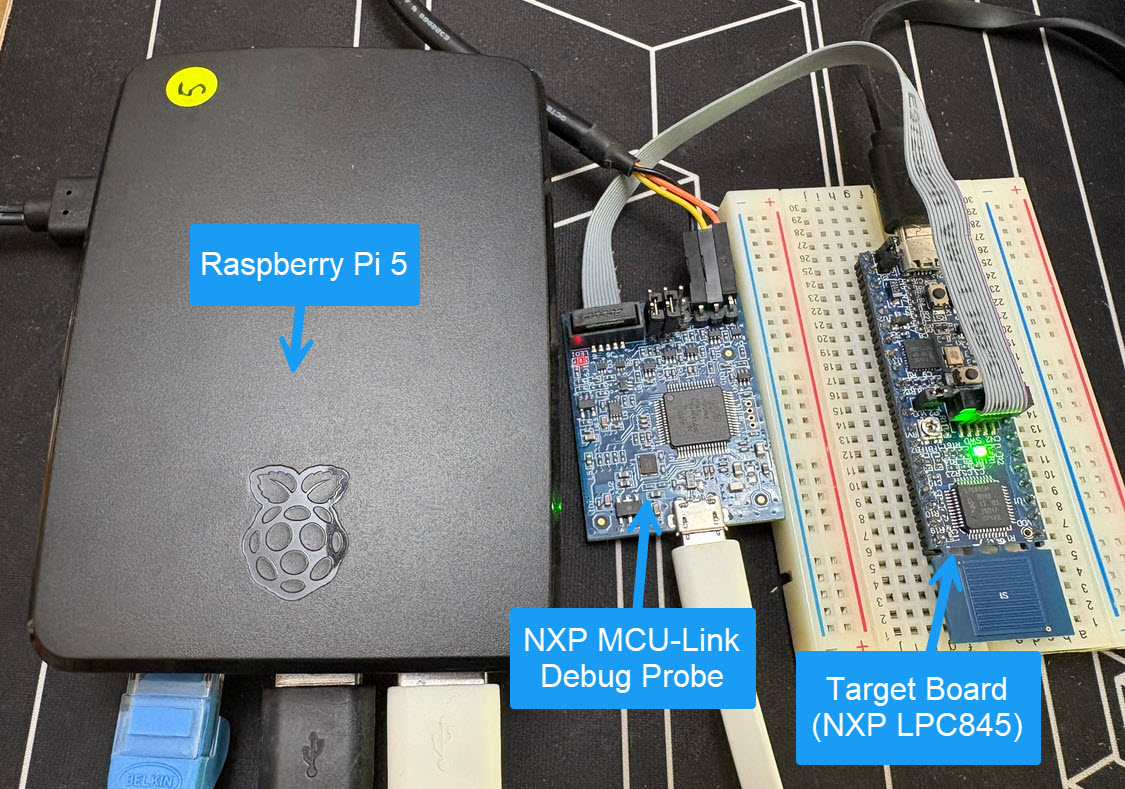
Using Raspberry Pi and MCU-Link for Remote Embedded Debugging

Remote debugging an embedded target is very useful: I don’t need a direct debug probe or USB cable connection. Instead, I’m using a network connection (wired or even wireless) over TCP/IP to talk to the debug probe and target. That way I can place the debug probe and target system away from my desk.

In Debugging ARM Cores with IP based Debug Probes and Eclipse I have used IP-based debug probes. This is a logical path, but expensive.

In Remote Debugging with USB based JTAG/SWD Debug Probes I showed how normal USB based debug probes can be used. This approach uses a remote host machine (e.g. desktop machine or notebook). This approach is still expensive, not scalable and the host machine needs a lot of space too.

So what if I use a Raspberry Pi instead? The RPi is small, inexpensive and ideal for such a task. Additionally, I can easily use it to build a test or debug farm. In this article, I show the use of the Raspberry Pi for remote debugging. A sub $20 or embedded target debug probe can be employed.

Raspberry Pi with NXP MCU-Link for Embedded Target Debugging
Continue reading

MCU-Link-MR: Affordable CMSIS-DAP Debug Probe for Robotics and beyond

The MCU-Link-MR from NXP is a CMSIS-DAP debug probe. It includes dedicated connection headers found on mobile robotic systems. These systems include the Pixhawk/PX4 drone and robotics hardware.

MCU-Link-MR CMSIS-DAP Debug probe with Pixhawk 6x RT
Continue reading

Sharing Standalone NXP SDK Projects in VS Code

The NXP SDK is git based which is great. If I create a project with VS code, it references the SDK cloned locally.

Standard NXP SDK Project in VS Code

A standalone project structure is needed if you want to easily share a project with your team. It’s also necessary for sharing inside a classroom environment. This article shows how to use an NXP SDK project in standalone mode.

Continue reading

Workaround for FreeRTOS Runtime Counter Issues in VS Code

FreeRTOS has a great performance measurement feature built-in: Performance counters. At each context switch, the RTOS can do a bookkeeping of time spent in tasks. With this, it can estimate the runtime distribution between the tasks. A very useful feature to get a feeling what the tasks are doing.

But I noticed that with recent FreeRTOS versions, VS Code extension have issues showing the correct runtime counter values:

Unknown Runtime Counters in VS Code Extension (mcu-debug.rtos-views)
Continue reading

Remote Debugging with DevContainer and VS Code

This is the second part describing how to use DevContainer for embedded applications with VS Code.

In Optimizing Embedded Development with VS Code and DevContainer I use VS Code with a docker ‘development’ container. The container is created with a recipe to install the development tools and SDK. With VS Code and DevContainer I have the same developer experience as I would develop locally on the host.

One thing not addressed in that earlier article is debugging. Using USB debug probes like a SEGGER J-Link or NXP MCU-Link is a challenge inside a container. This applies to any other debug probe as well.

The solution is to transform an USB based debug probe into one with a network connection:

VS Code DevContainer with Hardware Debugging

In this article, I show how to do this.

Continue reading

Building a DIY Split-Flap Clock

I’m making progress on my larger split-flap project (see Update on the Split-Flap Project for 2025). So far I have 32 operational for the larger 64 flap installation. In parallel, I worked on a smaller 4 flaps unit used as a clock.

Split-Flap Clock
Split-Flap Clock
Continue reading