Tutorial: CRC32 Checksum with the KBOOT Bootloader

In “Flash-Resident USB-HID Bootloader with the NXP Kinetis K22 Microcontroller” I presented how I’m using the tinyK22 (or FRDM-K22F) with a flash resident USB HID bootloader. To make sure that the loaded application is not corrupted somehow, it is important to verify it with a Cyclic redundancy Checksum (CRC). The NXP KBOOT Bootloader can verify such a CRC, but how to generate one and how to use it is not really obvious (at least to me), so this article explains how to generate that CRC.

CRC Values for KBOOT
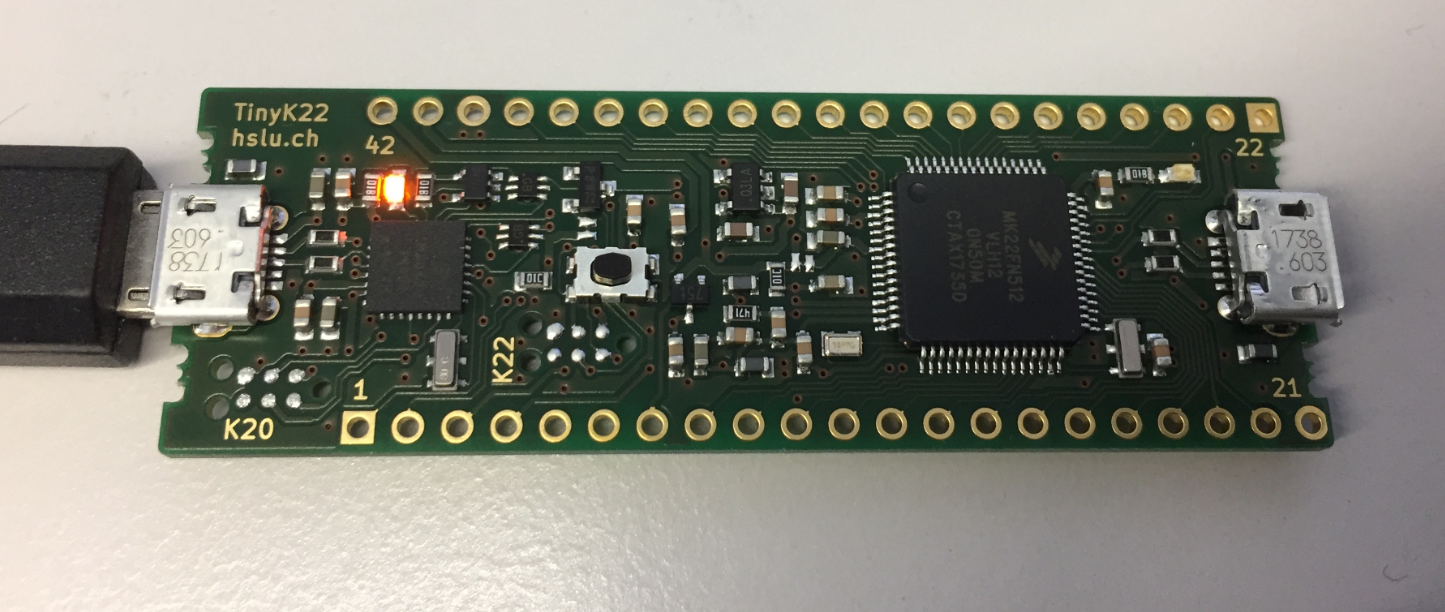
CRC Values for KBOOT

Continue reading

Flash-Resident USB-HID Bootloader with the NXP Kinetis K22 Microcontroller

The tinyK22 board (see “tinyK22 Boards arrived“) gets rolled out at the Lucerne University of Applied Sciences and Arts, so I thought I write-up an article this weekend how to use that board with a Flash Resident Bootloader.

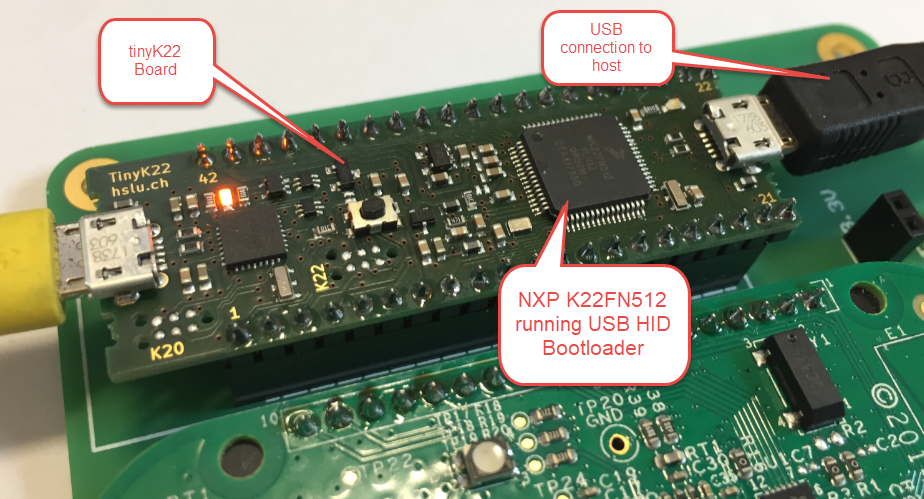
tinyK22 with USB HID Bootloader

tinyK22 with USB HID Bootloader

Continue reading

Using a Laser Cutter and Engraver with Cellulose Acetate Sheets

I’m mostly using my 50W laser cutter machine with plywood, simply because that material is available and very inexpensive. I have used it cutting or engraving PMMA (Polymethyl methacrylate or ‘Plexiglas’), simply because that material is more expensive.

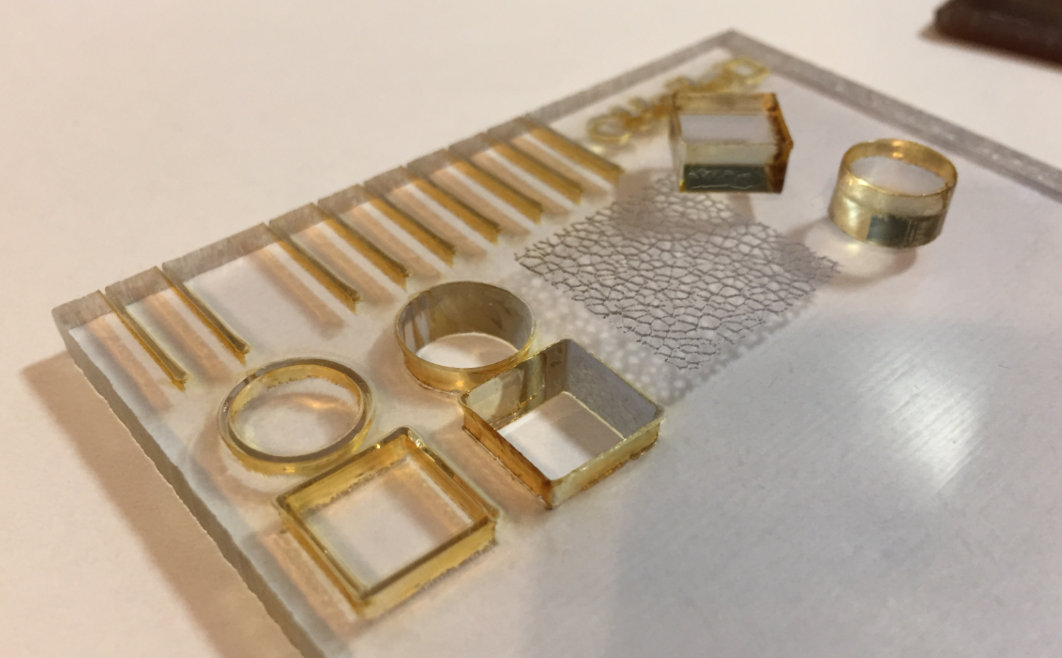
From a reader of this blog I received something to experiment with: Cellulose Acetate sheets. Time to experiment with something new šŸ™‚

Washed off

Washed off

Continue reading

Performance and Runtime Analysis with FreeRTOS

One of the great things with the FreeRTOS operating system is that it comes with free performance analysis: It shows me how much time is spent in each task. Best of all: it shows it in a graphical way inside Eclipse too:

FreeRTOS Runtime Information in Eclipse

FreeRTOS Runtime Information in Eclipse

Continue reading

Faster FreeRTOS Percepio Tracealyzer Streaming with Segger RTT

To solve the real hard problem of Embedded Systems development, I usually need all the data I can get from the target. The Percepio Tracealizer is such a tool which can stream application and FreeRTOS trace from the target over a Segger J-Link connection using the Segger RTT protocol. I’m using that combination a lot.

Streaming trace data that way does not need a dedicated hardware like ETM Trace. Using RTT is usually not much intrusive and affects the performance of the target in the 1-2% range (of course depending on the amount of data).

But what worried me for several weeks is that after moving to FreeRTOS V10.0.0 and the same time updating the Segger libraries, the target performance was heavily affected:

RTT Streamnig affects target performance

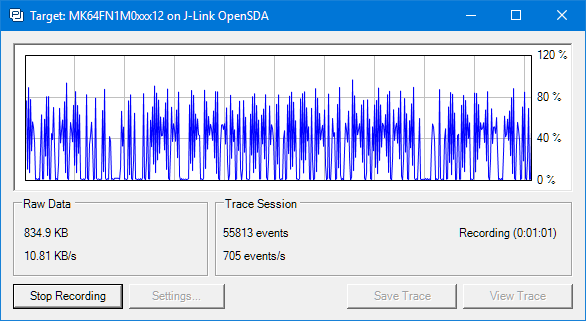
RTT streaming affects target performance?

Continue reading

Troubleshooting Tips: Failed Debugging with GDB

Three years ago I published “Debugging Failure: Check List and Hints” and unfortunately this article is one of the most popular ones: obviously debugging problems are very common. Debugging with GDB works usually fine, but if things are failing, then it can be hard to find the cause for it. Recently I have been asked to check some failures, so here are two more hints about what could go wrong…

Error while launching command: arm-none-eabi-gdb --version

Error while launching command: arm-none-eabi-gdb –version

Continue reading

Converting a Raw Binary File into an ELF/Dwarf File for Loading and Debugging

Binary files are just a binary blob without debug information. Most debug tools and flashers are able to deal (raw) binary (see “S-Record, Intel Hex and Binary Files“). But GDB or the P&E GDB server really needs a ELF/Dwarf file which usually has all the debug information in it. This is a problem if all what I have is a binary file.

This post is about transforming a raw binary (.bin) file into an ELF/Dwarf file with adding a header to it:

Added Elf Header to Raw Binary File

Added Elf Header to Raw Binary File

Continue reading

Custom 3D Printed Magnetic Encoder Disks for Robotics Projects

I’m making great progress with the firmware for the new Mini Sumo Robot (see “New Concept for 2018 Mini Sumo Roboter“). The goal is a versatile and low-cost Mini Sumo robot, and the robot comes with the feature of magnetic position encoders. In a previous article I have explained how to mold custom tires for robots (see “Making Perfect Sticky DIY Sumo Robot Tires“), this article is about how to make DIY Magnetic disk encoders.

3D Printed Magnetic Disk Encoders

3D Printed Magnetic Encoders Disks

Continue reading