New FreeRTOS V10.0.0: Amazon, Segger SystemView and Percepio Tracealyzer

“Amazon FreeRTOS – IoT operating system for microcontrollers”: The announcement of FreeRTOS V10.0.0 was one of the biggest news last week for me. Not only is there now a Version 10, the bigger news is that FreeRTOS is now part of Amazon. Wow! Now this explains why Richard Barry (the founder behind FreeRTOS) was kind of hiding away for about a year: he joined Amazon as a principal engineer about a year ago. I think we all have to wait and see what it means for FreeRTOS.

Amazon FreeRTOS

Amazon FreeRTOS (Source: Amazon Web Site)

Continue reading

Tuning a Laser Cutter and Determine the Maximum Usable Laser Power

The question has been: If I buy such a 50 Watt cheap laser cutter from China, how many Watts does it really have? I have read all these stories that usually what is advertised is only the theoretical maximum I could get, and will not be realistic at all. This article is about how I tuned the machine and how much I got out of it.

Different Laser Power

Different Laser Power

Continue reading

Getting Control over a 50 Watt CO2 Laser Cutter from China

There are people around me who think I’m crazy. And they are probably right. Who else would buy a machine from someone he does not know. I have to pay upfront. It is not clear how things will get delivered, what gets delivered, or if it gets delivered at all. Up to the point I can lose the money I have spent. Best of all: that machine is dangerous enough to potentially kill me. And it has the potential to put my home on fire too. Well, that sounds like an exciting weekend project, or not?

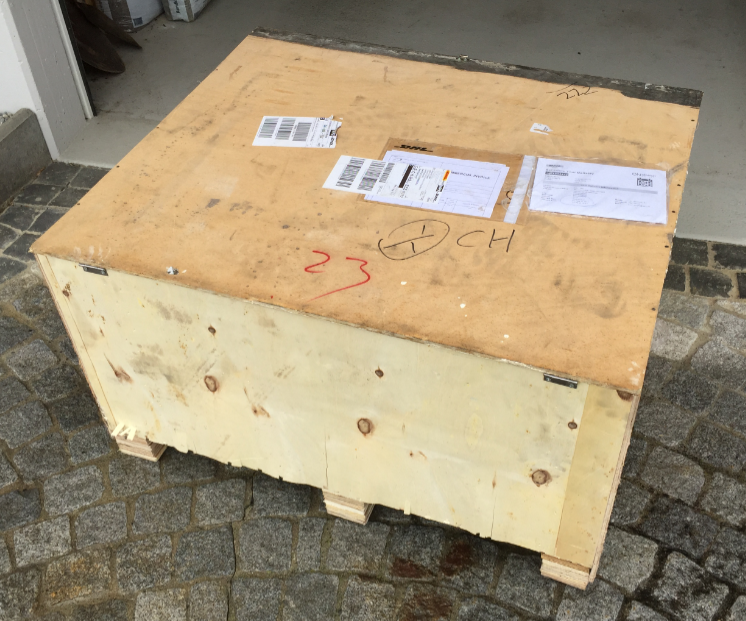
Weekend Box

60 kg Weekend Project Box arrived on the front door

Continue reading

First Steps with the Variscite DART-6UL i.MX6 UltraLite Development Kit

For a next-gen course I’m evaluating different platforms, and one of it are modules based on the NXP i.MX ARM architectures. In this article I have a look a the Variscite DART-6UL development kit which includes the NXP i.MX6Ultralite ARM Cortex-A7 plus a 7″ capacitive touch LCD:

Variscite VAR-DVK-6UL_LO Kit

Variscite VAR-DVK-6UL_LO Kit

Continue reading

Is Developing for ARM more difficult than for other Architectures?

I believe in ‘life-long-learning’. With this I continue to learn and discover new things every day. I’m writing tutorials to give something back to the community from which I have learned so much.

On top of this, I receive emails on a nearly daily basis, asking for help. Many articles have the origin in such requests or questions. I prefer questions or comments in a public forum, because that way I feel all others can benefit from it. Last week Alessandro contacted me with this:

“Hi Erich,

I hope this find you well! I’m starting to using ARM processors, but I find them quite complicated on the configuration side. I started in the past with PIC micro (PIC16) with asm, and I found them quite straightforward to be configured (clock, IO, peripherals, …). Then I moved myself on C language, and on PIC18 without any big issues.

Now I would really like join the ARM community, I see that these processors are what I’ve always looking for, on energy, calc power, peripherals, and FINALLY on IDE (editor, toolchain and utilities)… AMAZING!!!”

The topic is about how to start learning developing for ARM. Alessandro agreed to make this public, so I thought this might be a good topic for an article?
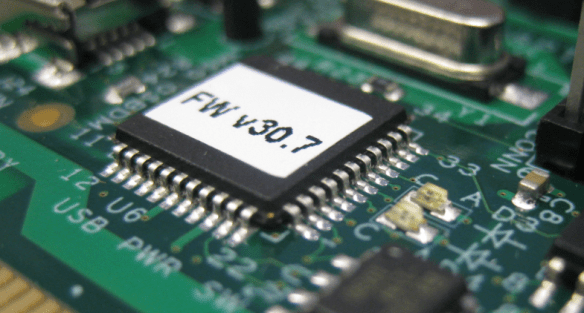
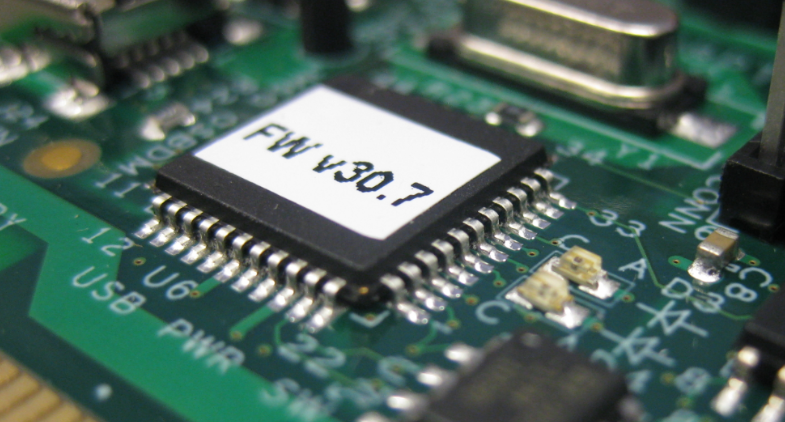
Firmware

Firmware

Continue reading

The Influence of Software and Tools on ARM Cortex-M Microcontroller Vendor Selection

For me, the available software and tools are the primary key decision factor why I select a particular silicon vendor. Without good software and tools, a microcontroller only ‘sand in plastic case’, even if it is the best microcontroller in the world. I do have several probably excellent microcontroller boards, and they are only getting touched by more durst over the months and years.

Undusted LPC824 Board

Undusted LPC824 Board

Continue reading

Simulating Space on Earth: Irradiation Tests at the Paul Scherrer Institute

Space is a hostile environment. Sending hardware to space means putting it under irradiation tests: exposing the object to radiation and see what happens :-). For this, under the lead of the ETHZ (Mathematical and Physical Geodesy), we had the opportunity to put the CubETH payload board under a proton beam. The test facility is at the Paul Scherrer Institute (PSI) in Villigen, Switzerland:

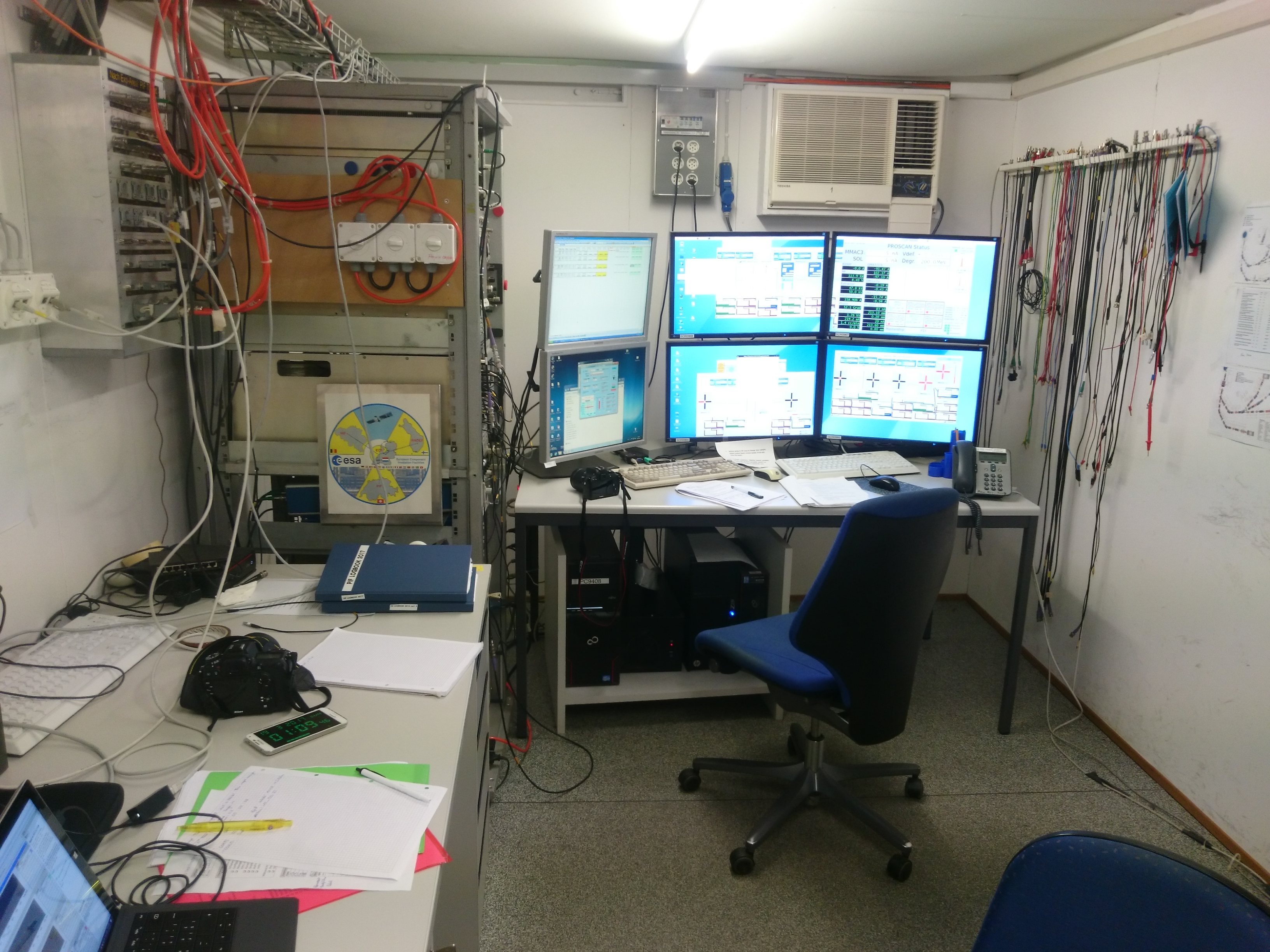
Control Room at PSI

Control Room at PSI

Continue reading

Sending a Satellit to Space: What could possibly go wrong?

Coming out of a project meeting Friday evening, the following wisdom came to my mind:

“The major difference between a thing that might go wrong and a thing that cannot possibly go wrong is that when a thing that cannot possibly go wrong goes wrong it usually turns out to be impossible to get at or repair.” – Anonymous

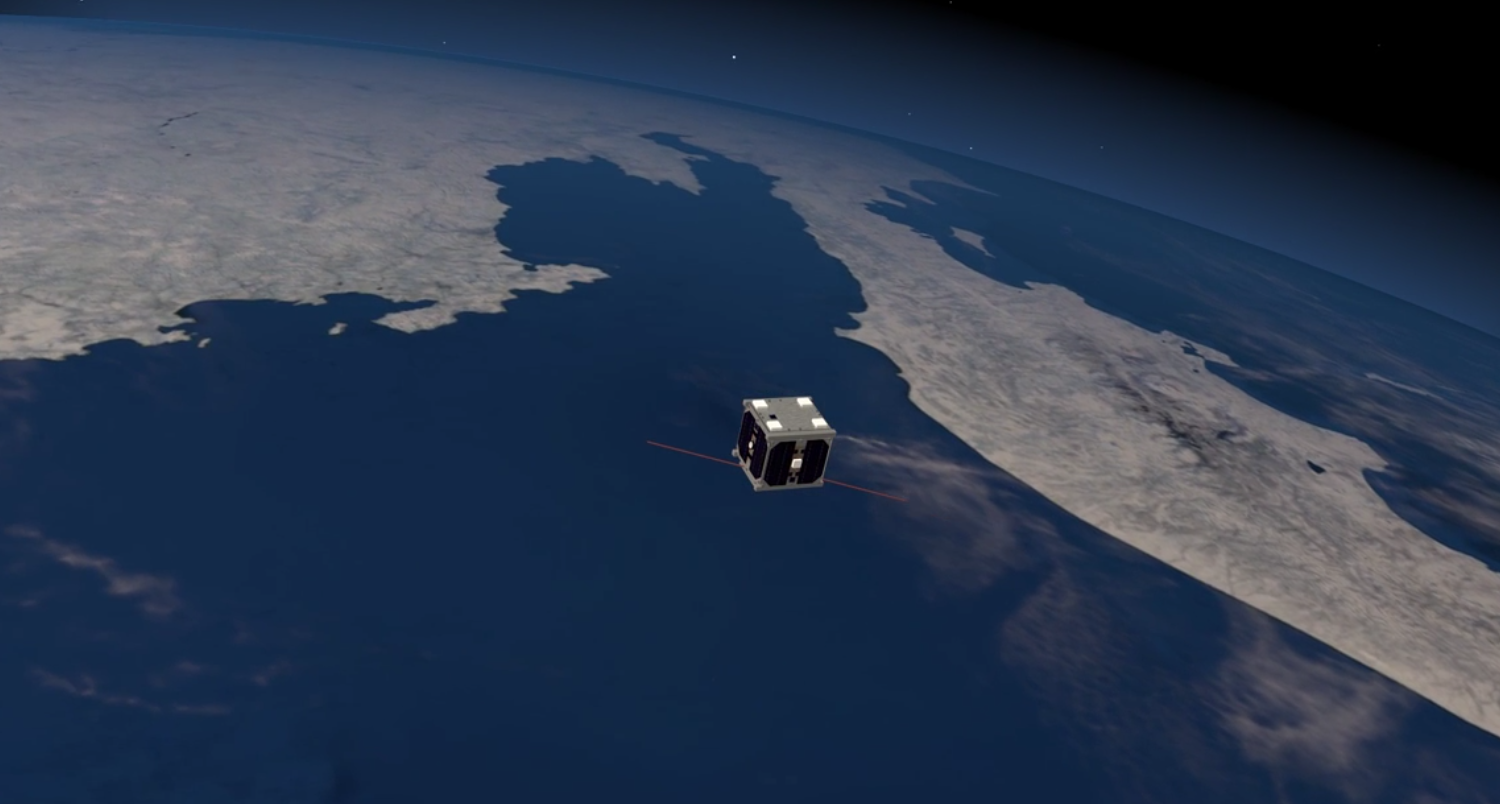
CubETH

Continue reading

Zephyr: Thoughts and First Steps on the ARM Cortex-M4F with gcc, gdb and Eclipse

The concept of Linux (Open Source, broad developer base and broad usage) is a success story. While there is a lot of diversity (and freedom) in the Linux world, Linux is Linux and again Linux :-). And the world has (mostly) standardized on Linux and its variants on the high embedded system side.

On the other side, the ‘middle and lower end’ Embedded world is fragmented and in many aspects proprietary. So it was no surprise to me when the Linux Foundation announced the ‘Zephyr’ project back in February 2016:

“The Linux Foundation Announces Project to Build Real-Time Operating System for Internet of Things Devices. Open source Zephyr™ Project aims to deliver an RTOS; opens call for developers to help advance project for the smallest footprint IoT devices.

Ζεφυρος (Zephyros) is the Greek good of spring and the west wind. Obviously this inspired the logo for the Zephyr project:

Zephyr logo
Zephyr logo (Source: https://www.zephyrproject.org/)
Continue reading