Remote Debugging with USB based JTAG/SWD Debug Probes

For some projects it is not possible to have the device under debug available on my desk: the board might be in another room, on another site or in a place where physical access is not possible or even dangerous. In that case an IP-based debug probe (see Debugging ARM Cores with IP based Debug Probes and Eclipse) is very useful: as long as I can access its IP address, that works fine. It is an excellent solution even if the board is moving or rotating: hook it up to a WLAN access point and I still can use it as it would be on my desk.

But what if I have a debug probe only connected to USB? This article shows how to turn a USB debug probe into a IP-based debug solution: that way I can easily debug a board from remote, connected to the network:

IP Based Debugging with USB Debug Probe

IP Based Debugging with USB Debug Probe

Continue reading

Contributing an IoT LoRaWAN Raspberry Pi RAK831 Gateway to The Things Network

LoRa and LoRaWAN is getting the de-facto wireless IoT network in my area. No surprise that traditional telecom providers like Swisscom trying to monetize the ‘Internet of Things’ area. Luckily there is an open and free alternative: https://www.thethingsnetwork.org/. Volunteers, enthusiasts and members in the different TTN communities build gateways and offer free LoRaWAN network access. I wanted to contribute to that grassroots movement with building my gateway, providing LoRaWAN access to my neighborhood.

LoRaWAN TheThingsNetwork Gateway

LoRaWAN TheThingsNetwork Gateway

Continue reading

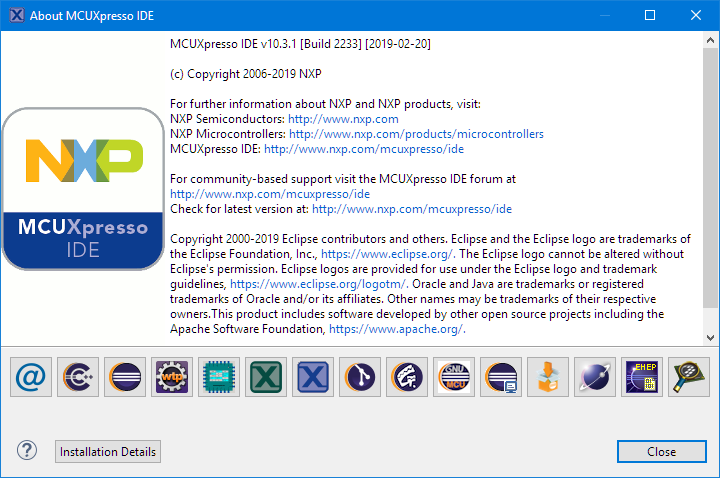
MCUXpresso IDE V10.3.1 available

On Friday a new release of the Eclipse Oxygen based NXP MCUXpresso IDE V10.3.1 has been made available. The IDE supports MacOS, Linux and Windows 32/64-bit and will be 64-bit only going forward.

MCUXpresso 10.3.1 About Information

MCUXpresso 10.3.1 About Information

Continue reading

Different Ways of Software Configuration

Most of the time software needs some way to configure things: depending on the settings, the software will do different things. For example the software running on the microcontroller on top of the Raspberry might have the OLED LCD available or not:

Raspberry Pi and tinK22 with OLED LCD

Raspberry Pi and tinyK22 (NXP Kinetis K22FN512) with OLED LCD

How can I deal with this in my application code? Continue reading

Debugging the Startup Code with Eclipse and GDB

By default, when debugging an embedded application, the target usually stops at main():

stopped in main

stopped in main

That’s usually fine, but what if I want to debug the code out of reset?

Continue reading

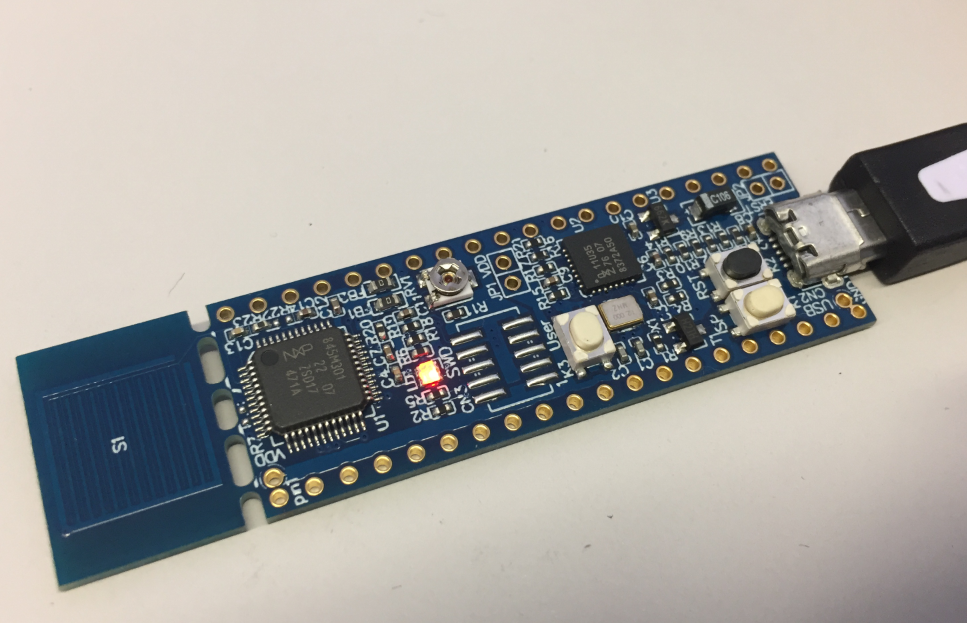
Unboxing the NXP LPC845-BRK Board

I really love tiny and bread board friendly boards, especially if they are very affordable and can be use with Eclipse based tools. So I was excited to see the NXP LPC845-BRK board to be available at Mouser, so I ended up ordering multiple boards right away. Why multiple? Because they only cost CHF 5.95 (around $6)!

NXP LPC845-BRK Board

NXP LPC845-BRK Board

Continue reading

Tutorial: Booting the NXP i.MX RT from Micro SD Card

It is a common thing to boot a Linux system (see the Raspberry Pi) from a micro SD card. It is not that common for a microcontroller. The NXP i.MX RT ARM Cortex-M7 fills that gap between these two worlds. No surprise that it features a ROM bootloader which can boot from a micro SD card.

SD Card with i.MX RT1052

SD Card with i.MX RT1052

Continue reading

FreeRTOS: how to End and Restart the Scheduler

Most host or desktop systems (say Linux, Mac or Windows) have a normal use case where you start the operating system say in the morning and shut it down in the evening, and then you leave the machine. Embedded Systems are different: they are not attended, and they are supposed to run ‘forever’. Not every embedded system needs to run an OS (or in that world: Real-Time Operating System or RTOS), but the same applies here: after the RTOS is started, it is not intended that it will shutdown and restart. To the extend that you won’t they support the ‘shutdown’ and ‘restart’ functionality at all. In case of gathering coverage information this would be really useful:

coverage information from freertos application

coverage information from FreeRTOS application

In the case of FreeRTOS: what if I really need to shutdown the RTOS and restart it again, as by default this is not supported. This is what this article is about …

Continue reading

GDB All-Stop and Non-Stop Mode with LinkServer

GDB supports a mode which allows the GDB debug client to read memory while the target is running. This allows features like ‘live variables’: that way I can see the variables refreshed and changing over time without halting the target. Another functionality which comes with that feature is to check stopped threads or to see all threads in the system.

multiple freertos threads in debug view

multiple FreeRTOS threads in debug view

Continue reading

Driver and Command Line Shell for Winbond W25Q128 16MByte Serial FLASH Device

Modern microcontroller come with plenty of internal FLASH memory. On the other side, many high performance MCUs as the NXP i.MX RT are ‘flashless’, because the silicon process for high performance cores is not matching the FLASH memory technology, so they are using external serial SPI or Quad-SPI (QSPI) memory instead.

Winbond w25q128 breakout board

Winbond w25q128 Serial Flash Breakout Board

Why not using an external SPI FLASH for a ‘normal’ microcontroller too?

Continue reading