New NXP MCUXpresso Eclipse IDE v11.0

A few days ago NXP has released a new version of their Eclipse IDE flagship: the MCUXpresso IDE v11.0.
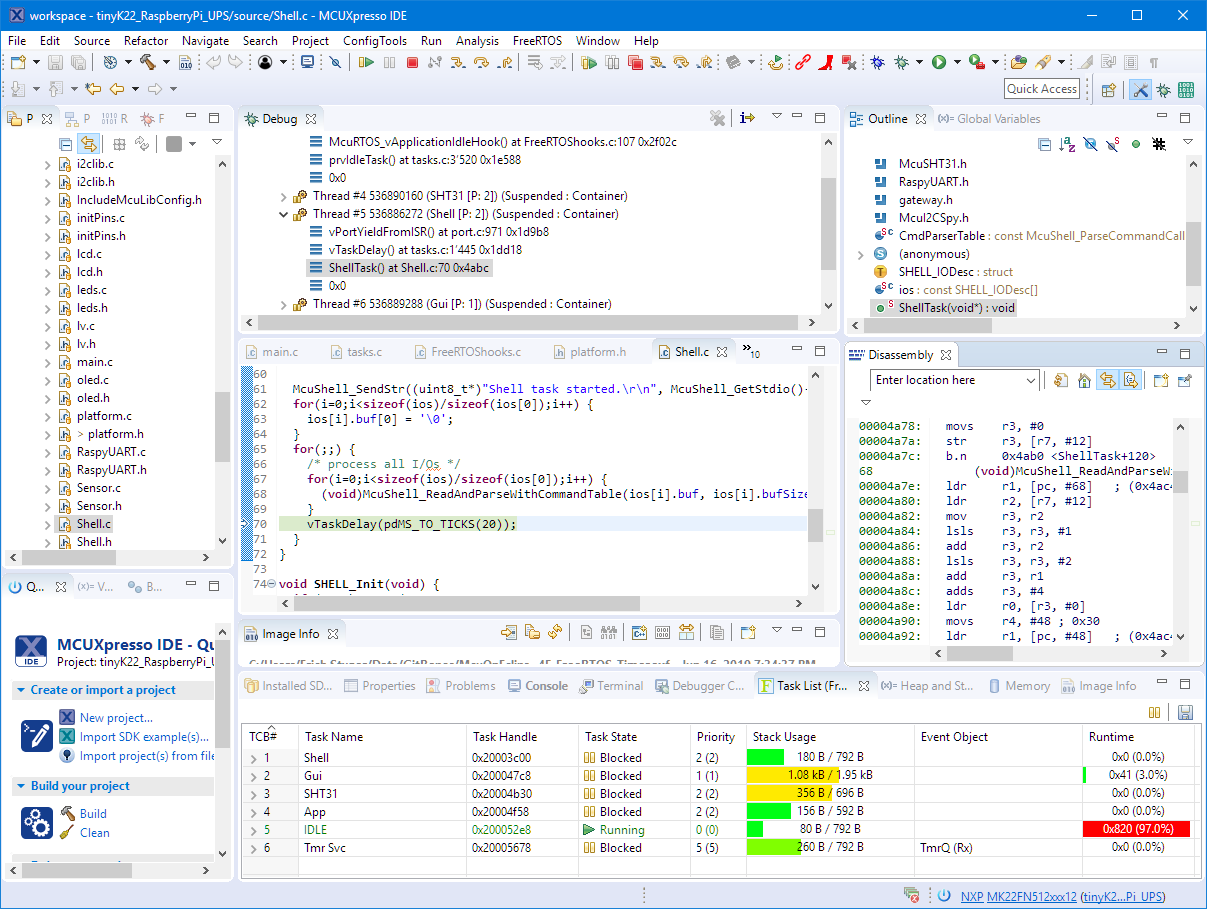
NXP MCUXpresso IDE V11.0.0

NXP MCUXpresso IDE V11.0.0

The previous v10.3.1 was released back in Feb 2019, and the 11.0 now in June this year matches up with the Fall university semester. I appreciate that the releases are about every 6 months, so this gives me time to use it in my university lecture material and lab work. I had the weekend for trying it out, and I’m very pleased.

Continue reading

SWO with NXP i.MX RT1064-EVK Board

With the cost of an single pin, many ARM Cortex-M boards including the NXP i.MX RT1064 can produde SWO data: think about a pin able to stream data out of the chip in realtime. For example interrupt activity which otherwise might be hard to capture:

SWO Interrupt Trace

SWO Interrupt Trace

Continue reading

Internal and External Debug Options for the NXP LPC55S69-EVK Board

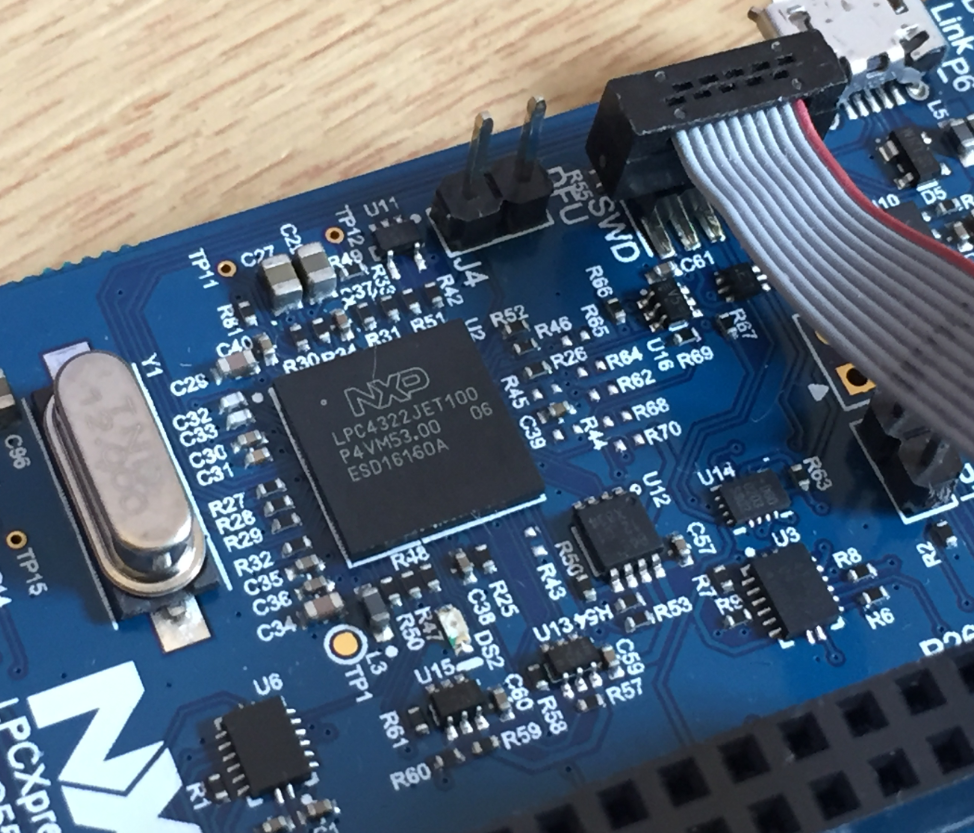
The LPC55S69-EVK board comes on-board debug probe. The board includes the LPC4322JET100 device which acts like NXP LPC-Link2 debug probe:

LPC4322JET100 on LPC55S69-EVK

LPC4322JET100 on LPC55S69-EVK

But it is easily possible to use the board with an external debug probe or re-program the onboard one as a SEGGER J-Link debug probe.

Continue reading

Building a Raspberry Pi UPS and Serial Login Console with tinyK22 (NXP K22FN512)

There are different ways to ruin a Linux system. For the Raspberry Pi which uses a micro SD card as the storage device by default, it comes with two challenges:

  1. Excessive writes to the SD card can wear it out
  2. Sudden power failure during a SD card write can corrupt the file system

For problem one I do I have a mitigation strategy (see “Log2Ram: Extending SD Card Lifetime for Raspberry Pi LoRaWAN Gateway“). Problem two can occur by user error (“you shall not turn it off without a sudo poweroff!”) or with the event of a power outage or black out. So for that problem I wanted to build a UPS for the Raspberry Pi.

Raspberry Pi with UPS System and tinyK22

Raspberry Pi with UPS System and tinyK22

Continue reading

TrustZone with ARMv8-M and the NXP LPC55S69-EVK

The ARM TrustZone is an optional security feature for Cortex-M33 which shall improve the security for embedded applications running on microcontroller as the NXP LPC55S69 (dual-core M33) on the LPC55S69-EVK.

NXP LPC55S69-EVK Board

NXP LPC55S69-EVK Board

Continue reading

First Steps with the LPC55S69-EVK (Dual-Core ARM Cortex-M33 with Trustzone)

For the long Easter weekend I have organized a new toy: the NXP LPC55S69-EVK board: a dual ARM Cortex-M33 running at 100 MHz with ARM TrustZone:

LPC55S69 Microcontroller

LPC55S69 Microcontroller

Continue reading

Tutorial: MCUXpresso SDK with Linux, Part 2: Commandline Debugging with GDB

In “Tutorial: MCUXpresso SDK with Linux, Part 1: Installation and Build with Maked” I used cmake and make to build the SDK application. In this part I’m going to use the command line gdb to debug the application on the board.

Cross-Debugging with GDB

Cross-Debugging with GDB

Continue reading

Tutorial: MCUXpresso SDK with Linux, Part 1: Installation and Build with Make

I admit: my work laptop machine is running a Windows 10 OS by default. But this does not prevent me running Linux in a Virtual Machine (VM). Each host platform has its benefits, and I don’t feel biased to one or the other, but I have started using Ubuntu more and more, simply because I have worked more on Embedded Linux projects. While I have used mostly Windows with Eclipse for NXP LPC, Kinetis and i.MX platforms in the past, I started using Ubuntu too from last year with the NXP MCUXpresso SDK. I did not find much documentation about this on the web, so I thought it might be a good idea to write a tutorial about it. So here we go…

Building NXP MCUXpresso SDK on Linux Ubuntu

Continue reading

Log2Ram: Extending SD Card Lifetime for Raspberry Pi LoRaWAN Gateway

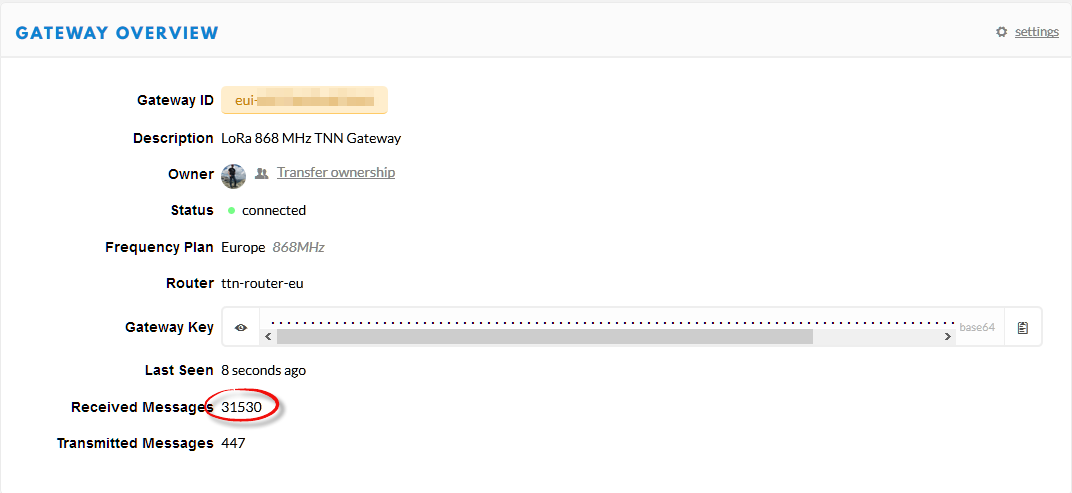
My LoRaWAN gateway (“Contributing an IoT LoRaWAN Raspberry Pi RAK831 Gateway to The Things Network” is running and working great now for more than a month and it already has transmitted more than 30k messages:

Gateway Overview

Gateway Overview

This creates a lot of log entries on the micro SD card of the Raspberry Pi. To avoid writing too many times log data, I have installed Log2Ram.

Continue reading

Be aware: Floating Point Operations on ARM Cortex-M4F

My mantra is *not* to use any floating point data types in embedded applications, or at least to avoid them whenever possible: for most applications they are not necessary and can be replaced by fixed point operations. Not only floating point operations have numerical problems, they can lead to performance problems as in the following (simplified) example:

#define NOF  64
static uint32_t samples[NOF];
static float Fsamples[NOF];
float fZeroCurrent = 8.0;

static void ProcessSamples(void) {
int i;

for (i=0; i < NOF; i++) {
Fsamples[i] = samples[i]*3.3/4096.0 - fZeroCurrent;
}
}
Continue reading