FRDM with Arduino Ethernet Shield R3, Part 4: MinIni

I admit: my Ethernet Shield project got stuck because of too many urgent other priorities. I was not happy with the way the project was using configuration data from FLASH memory: I have now multiple ethernet shields in use, and configuring the IP address for each shield is a pain. I have not got DHCP working (yet), so why not using the SD card on the shield for configuration data? And right on time I received a tip from Marc about MinIni: perfect, exactly what I need!

Ethernet Shield with SD card

Ethernet Shield with SD card

Continue reading

The Turbo Encabulator

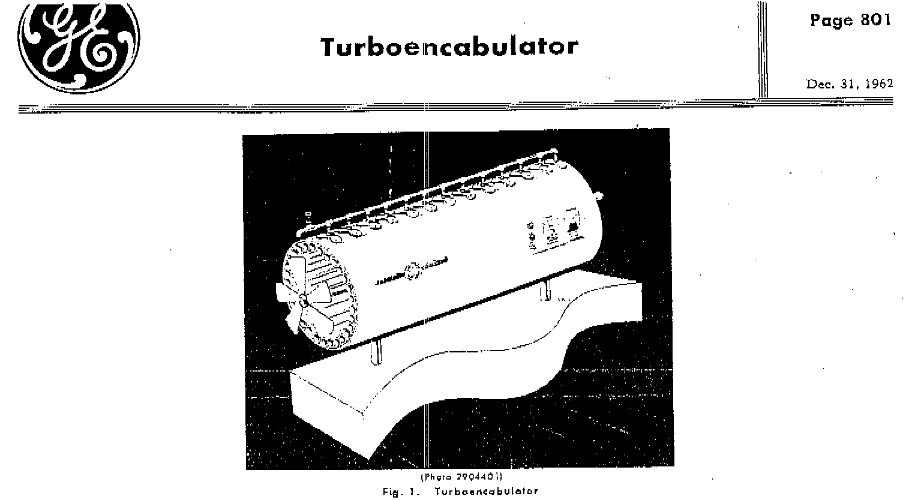
At the university the mid-term presentations are due. Which reminds me about the importance to use the right terms and keywords not only for scientific presentations and abstracts, but as well to use and know the correct terms in any presentation or documentation. A have been pointed to an interesting concept: The Turbo Encabulator, described in this data sheet:

Turboencabulator

Turboencabulator

Continue reading

Binary (and S19) Files for the mbed Bootloader with Eclipse and GNU ARM Eclipse Plugins

The existing OpenSDAv1 (see “OpenSDA on the Freedom KL25Z Board“) bootloader is using the industry standard Motorola S-Record (S19) Files. However, new FRDM-K64F board (see “FTF: FRDM-K64F, Kinetis Design Studio and Kinetis SDK“) has OpenSDAv2 on it, which is an mbed bootloader. So how to create files with an IDE other than mbed for that bootloader which is present on the FRDM-K64F board by default? Well, creating binary files is one thing, but to have it working with the mbed bootloader is another challenge :-(.

FRDM-K64F with mbed MSD bootloader

FRDM-K64F with mbed MSD bootloader

Continue reading

Using the FRDM-K64F with CodeWarrior

The new flagship of FRDM boards is the FRDM-K64F board. After FTF I have explored different ways debugging the board, and received many comments and questions about it (thanks!). Freescale announced the supports with the new Eclipse based Kinetis Design Studio (KDS). But until KDS is out, how can I use the FRDM-K64F board with CodeWarrior?

Debugging FRDM-K64F Board with CodeWarrior for MCU v10.6

Debugging FRDM-K64F Board with CodeWarrior for MCU v10.6

Continue reading

Recovering FRDM-K64F mbed Board

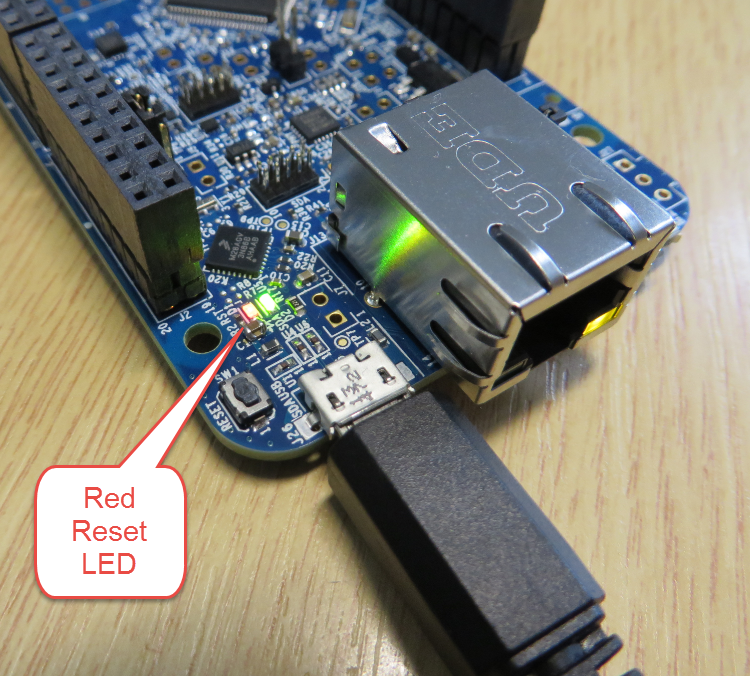
The mbed for FRDM-K64F firmware (http://mbed.org/handbook/Firmware-FRDM-K64F) has great potential. Unfortunately it seems that edges are still very rough: It happens very  often that my FRDM-K64F board gets locked up :-(. I can see that the target CPU is constantly resetting: the red reset LED is always on:

FRDM-K64F Red Reset LED always on

FRDM-K64F Red Reset LED always on

Continue reading

GNU Linker, can you NOT Initialize my Variable?

my students sometimes are afraid to ask questions, although I urge them ask any question. In my opinion there are no ‘dumb’ questions: only questioning things let us think and learn new things. I see that many readers of this blog are *not* afraid to comment or ask questions. The WordPress statistics shows 5’687 questions/comments for this blog (thank you all!), and the spam filter protected me from 202,341 items (ok, these *are* dumb) :-).

The ‘question of the week’ comes from Andy. That question caused me some serious head scratching, but the same time I have learned something important and useful for my next project: how to tell the ARM GNU linker *not* to initialize variables?

GNU ARM Embedded Linker Options

GNU ARM Embedded Linker Options

Continue reading

Pin Muxing: Using the NMI Pin as GPIO Pin

Many modern microcontroller have a cool feature: Pin Muxing. What it means is that I can ‘mux’ the pins for different purposes: such as I can use a SPI or I2C pin as GPIO (General Purpose Pin) or vice versa. In an ideal world, I would be able to ‘route’ or ‘mux’ pins freely around. In practice these ‘way switches’ are more or less limited.

In “Using the Reset Button on the Freedom Board as User Button” I muxed the FRDM-KL25Z reset pin as GPIO pin. The same approach can be used for muxing the NMI (Non-Maskable Interrupt) pin for the Freescale Kinetis devices. I’m showing it here how to do this with Processor Expert as this allows me to do this with a few mouse clicks.

NMI Pin Used as GPIO Pin

NMI Pin Used as GPIO Pin

Continue reading

Creating New Eclipse Debug Configuration

Eclipse is very powerful. To the point that you can do the same thing in multiple ways. I’m always learning new things, and recently I discovered a new way how to create a new launch or debug configuration.

So far I selected the item (e.g. GDB Hardware Debugging) and used the ‘New’ Icon:

New Debug Configuration with New Icon

New Debug Configuration with New Icon

Continue reading