Binary, do you use Hard-Float or Soft-Float?

Many cost-sensitive ARM Cortex-M devices like the M0+ do not have a hardware floating point unit, and some like the M4 only has an optional single-precision floating point unit (FPU). As outlined in “Be aware: Floating Point Operations on ARM Cortex-M4F“, using floating point operations without a hardware unit can be costly.

Looking at the disassembly for sure will tell you if the hardware is handling the float or double operation or not:

Disassembly showing runtime routines

But who wants check the all the disassembly? With the GNU tools there is an easier way: readelf.

Continue reading
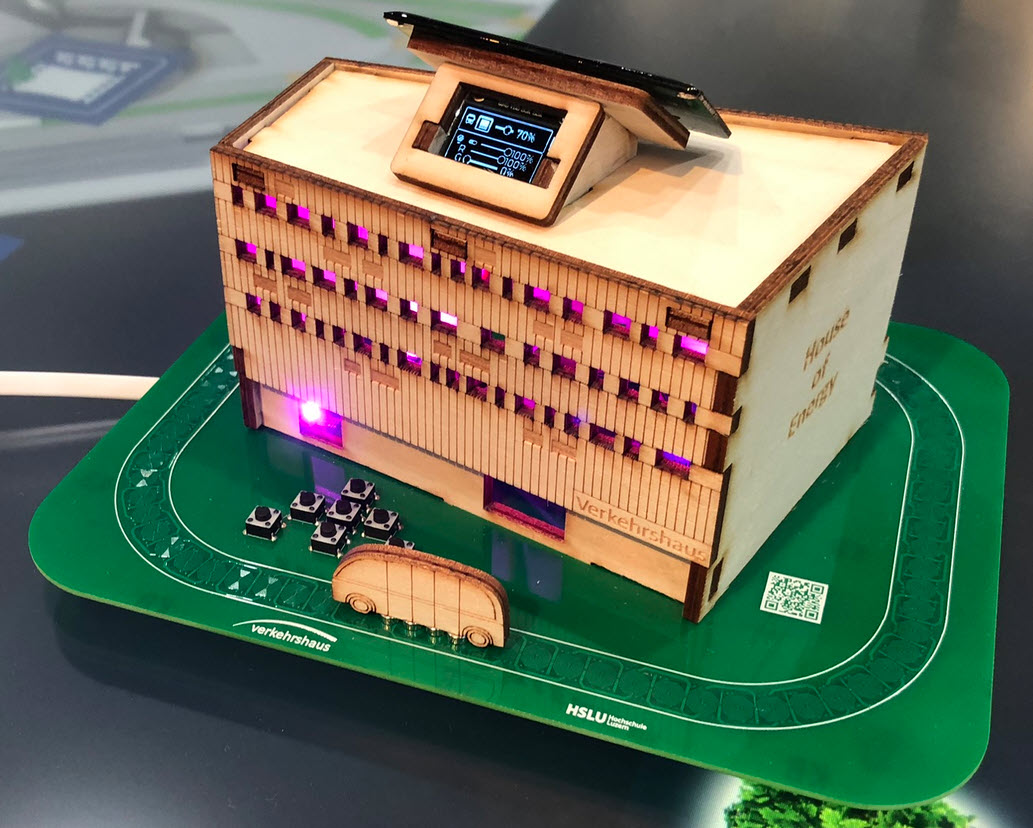
‘Experience Energy’ at the Verkehrshaus: The ‘House of Energy’ Construction Kit

The ‘Verkehrshaus der Schweiz‘, the ‘Swiss Museum of Transport’ is Switzerland’s most popular museum.

In April 2023, it opened up a new building and the ‘Experience Energy!’ exhibition. For the opening event we created a unique construction kit to explore energy: from harvesting to storing and up to distributing and using energy.

“House of Energy” at the Swiss Museum of Transport in Lucerne
Continue reading

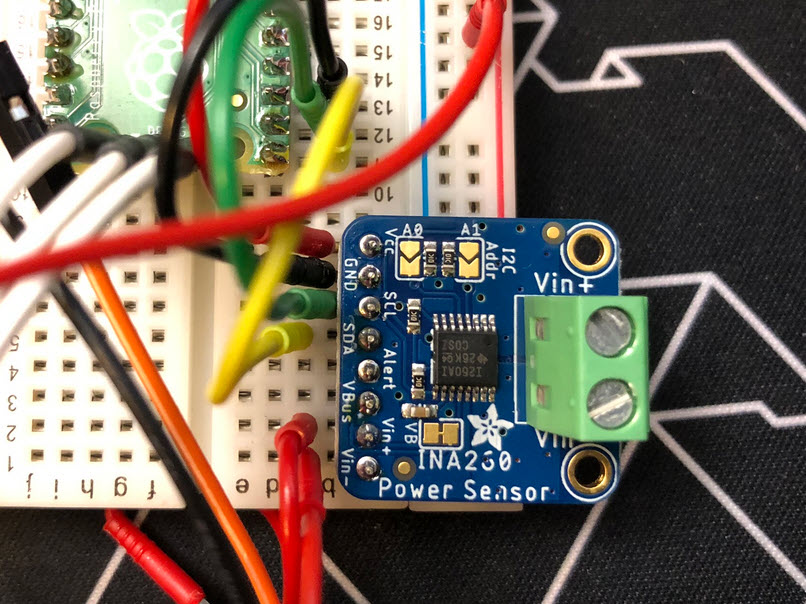
Power Measurement with INA260 Sensor

For a research project and demonstrator at HSLU university I have to measure voltage a DC voltage and current. For this I’m planning to use the Texas Instrument Texas Instruments INA260, so I had to quickly develop a software driver for it.

TI INA260 Power Sensor Breakout Board
Continue reading

Moving Pixel Clock Project

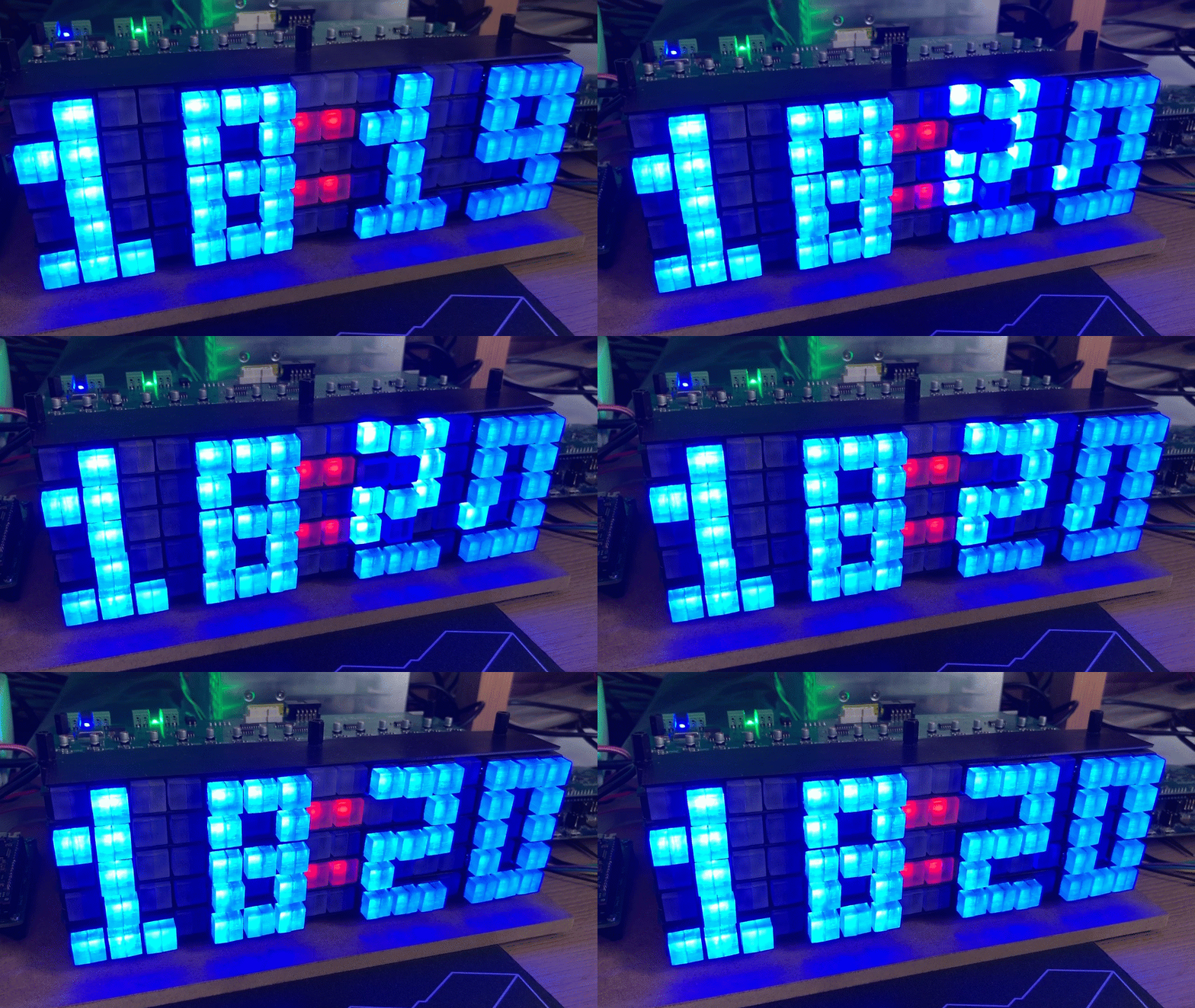
Clock projects are cool. LED projects are cool too. And if it moves, the better. So why not building a moving pixel LED mechatronics clock? A matrix with addressable RGB LEDs, each can change color and is moved by a tiny stepper motor, to let pixels stand out?

Moving Pixel Clock
Continue reading

Processor Expert Components: 24-Dec-2023 Release

The new year 2024 is coming, so time to close the current year with a new release: I’m pleased to announce a new release of the Processor Expert components, available on SourceForge and GitHub.

Processor Expert Components in Eclipse (KDS)

Continue reading

Modern On-Target Embedded System Testing with CMake and CTest

One key element of a CI/CD pipeline is the automatic testing phase: whenever I check in new source code or manually trigger it, I can run a test suite to make sure that the changes do not break anything. For this, I have to run automated tests. For an an embedded target, it means that I have to run some tests on the board itself too.

CTest with VS Code
Continue reading

Building with CMake Presets

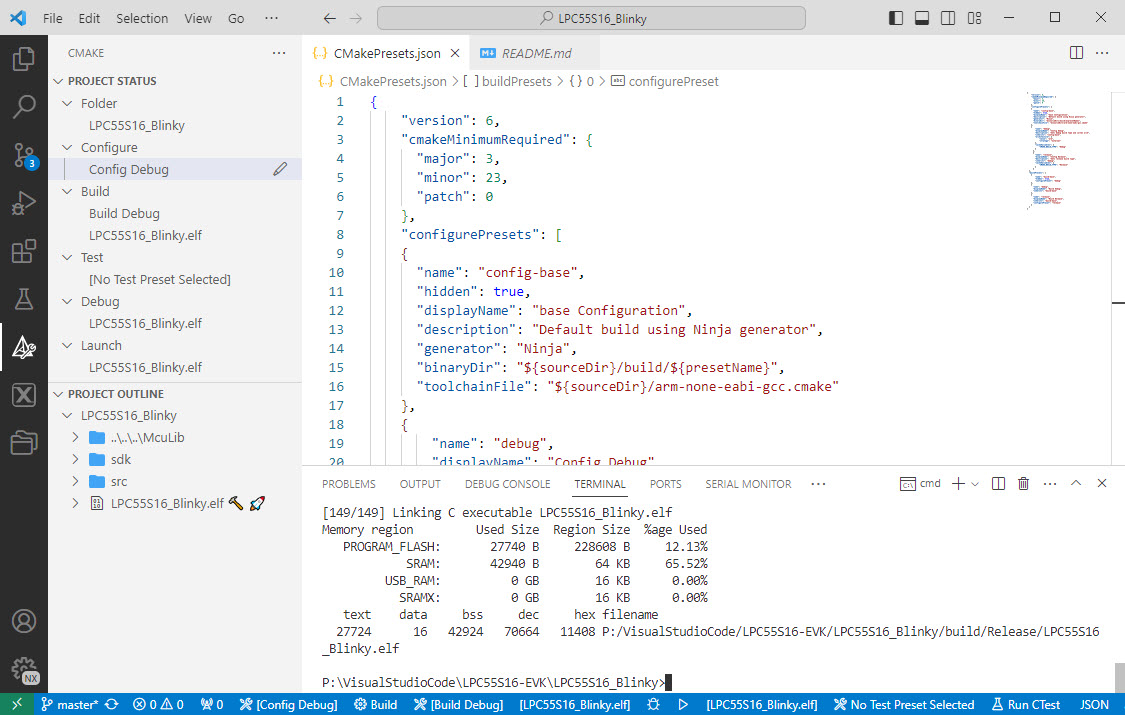
I’m getting my head more and more around CMake and its features. After having so many issues with VS Code dealing with CMake Kits, I have found feature in CMake which really is a game changer for me: CMake Presets.

Working with CMake Presets in VS Code
Continue reading

GNU Coverage (gcov) for an Embedded Target with VS Code

An important part of every CI/CD pipeline is having a testing phase. In this article I show how to use GNU gcov (coverage) with an embedded target, using Visual Studio Code as front end:

GNU gcov with VS Code

With this, I can run the code on the embedded target which stores the coverage data on the host.

Continue reading

“No Kit Selected”: Fixing VS Code CMake Kit Assignment

One important thing in using VS Code and CMake projects is that one needs to have a CMake kit assigned to the project. But after a restart of VS Code or if I re-load a project, VS Code has lost the previously assigned CMake kit:

VS Code has forgotten about the previously assigned CMake Kit?

This is very annoying, but luckily I have found a fix for this.

Continue reading

Implementing File I/O Semihosting for the RP2040 and VS Code

I’m working recently on a new lecture module using the Raspberry Pi Pico (RP2040) board, which highlights several aspects of modern software engineering, including DevOps and CI/CD. An important part of any CI/CD pipeline is testing. For a host application, one could pass arguments to the application, e.g. ‘myapp --test=module1‘, or let it read such information from a configuration file which describes the tests. Or write GNU gcov data to a file to collect coverage information.

Unfortunately, a normal embedded application has no argv[], and many system have no file system. A solution to this problem would be using semihosting with file I/O. Unfortunately for the Raspberry Pi Pico SDK 1.5.1 for the RP2040, there is no semihosting file I/O implemented :-(.

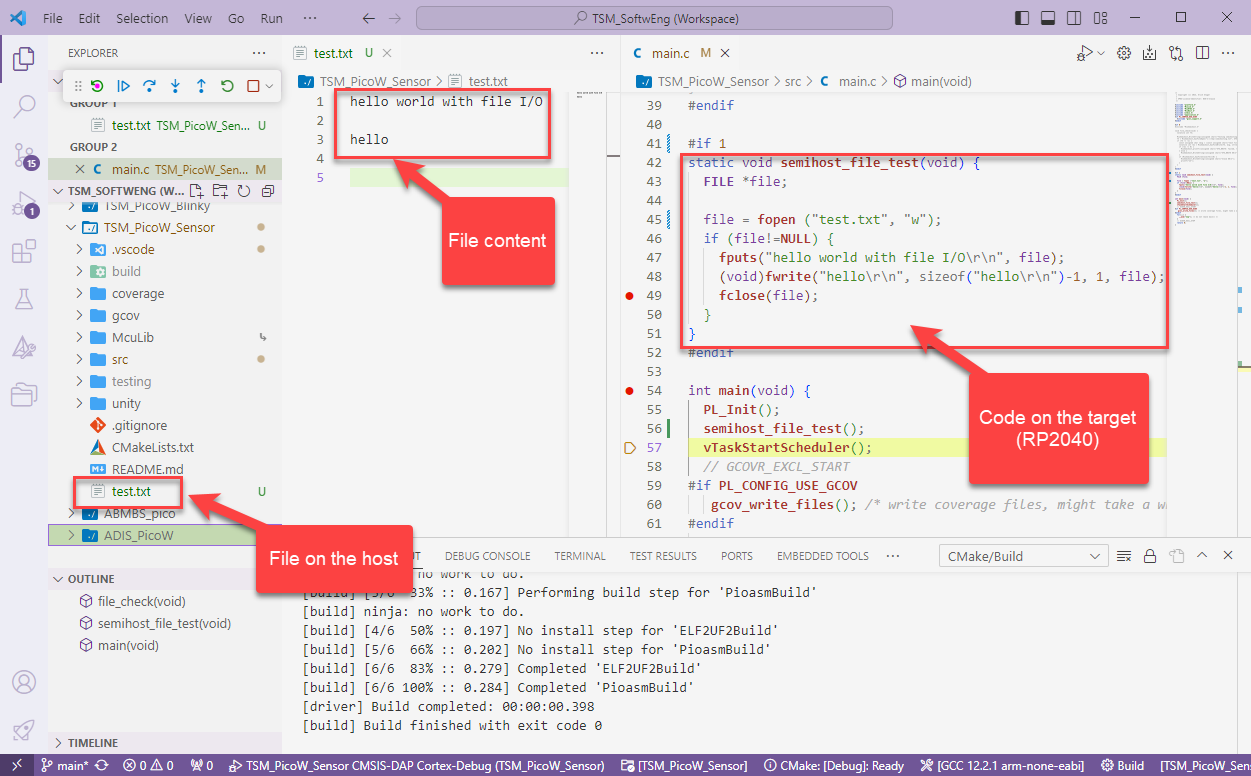
I have now implemented and added file I/O to the SDK, making it possible for the RP2040 to access and use files on the host, among other things. This greatly extends the capabilities of the device, and is very useful for testing, including gathering test coverage information.

RP2040 writing files on the host with semihosting
Continue reading