GNU Code Coverage on Embedded Target with Eclipse Neon and ARM gcc 5

For a research project, we are going to send a satellite with an embedded ARM Cortex microcontroller into space early next year. Naturally, it has to work the first time. As part of all the ESA paperwork, we have to prove that we tested the hardware and software thoroughly. One piece of the that is to collect and give test coverage evidence. And there is no need for expensive tools: Free-of-charge Eclipse and GNU tools can do the job for a space mission 🙂

Eclipse with Coverage Views

Eclipse with Coverage Views

Continue reading

Adding GNU Coverage Tools to Eclipse

The GNU tools include powerful utilities to collect coverage information. With coverage I know which lines of my code have been executed, which is a very useful test metric. The GNU coverage tools are commonly used for Linux applications. But to my surprise not much for embedded application development, mostly because it requires a few extra steps to have it available? Why not using free and powerful tools for improving software quality? This article explains how to install the GNU gcov tools into the Eclipse IDE.

gcov with Embedded Target

gcov with Embedded Target

Continue reading

MCUXpresso IDE: Blinky the NXP LPC800-DIP Board

During Embedded World 2017 in Nürnberg I was lucky to get a handful LPC800-DIP boards. To get all students who were lucky to get one, here is a tutorial to make that very exciting ‘blinky’ application on that board:

Blinky on the NXP LPC800-DIP

Blinky on the NXP LPC800-DIP

Continue reading

Tutorial: Secure TLS Communication with MQTT using mbedTLS on top of lwip

One of the most important aspects of the ‘IoT’ world is having a secure communication. Running MQTT on lwip (see “MQTT with lwip and NXP FRDM-K64F Board“) is no exception. Despite of the popularity of MQTT and lwip, I have not been able to find an example using a secure TLS connection over raw/native lwip TCP :-(. Could it be that such an example exists, and I have not found it? Or that someone implemented it, but has not published it? Only what I have found on the internet are many others asking for the same kind of thing “running MQTT on lwip with TLS”, but there was no answer? So I have to answer my question, which seems to be a good thing anyway: I can learn new things the hard way :-).

Blockdiagram MQTT Application with TLS using lwip

Block diagram MQTT Application with TLS using lwip

Continue reading

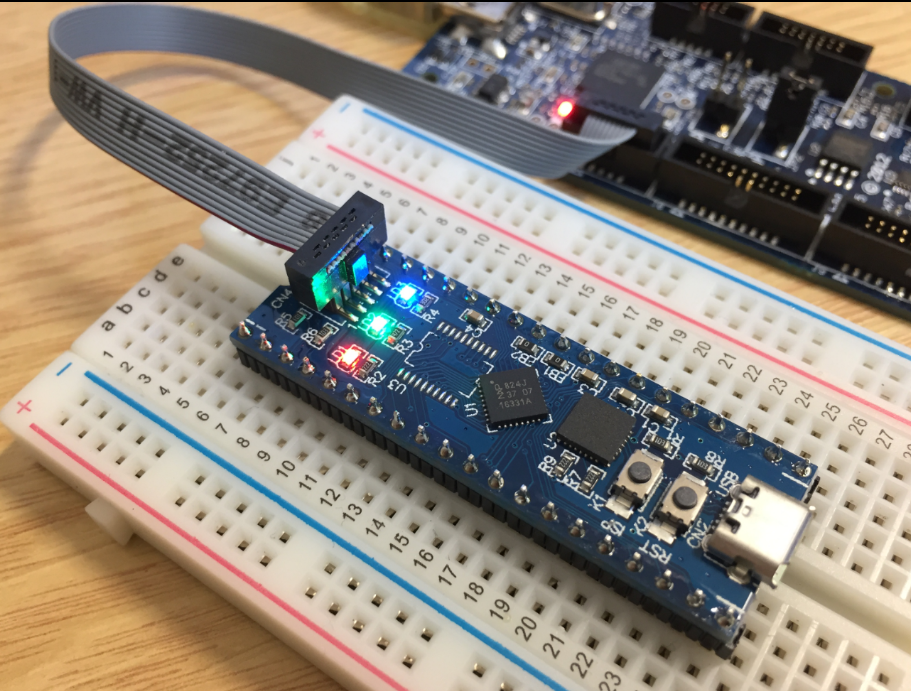
MCUXpresso IDE: Installing Processor Expert into Eclipse Neon

In “MCUXpresso IDE: Importing Kinetis Design Studio Projects” I explained how Kinetis Design Studio projects can be imported and used inside the MCUXpresso IDE. Processor Expert projects can be used, but no new components added, modified or new Processor Expert projects created. To fully use Processor Expert, two plugins need to installed, and this is what this article is about.

Processor Expert in MCUXpresso IDE

Processor Expert in MCUXpresso IDE

Continue reading

MCUXpresso IDE: S-Record, Intel Hex and Binary Files

This is another article about the NXP MCUXpresso IDE (see “MCUXPresso IDE: Unified Eclipse IDE for NXPs ARM Cortex-M Microcontrollers“), this time it is about Post-build steps. Post-build steps are custom actions which can be executed after the build (or link phase), and are typically used to generate S-Record, Binary or Intel Hex files (see “S-Record, Intel Hex and Binary Files“).

Post Build Steps Details

Post Build Steps Details

Continue reading

MCUXpresso IDE: Unified Eclipse IDE for NXPs ARM Cortex-M Microcontrollers

There are many mergers going on in the industry, and one of the largest one was in 2016 the integration of Freescale Semiconductor with NXP Semiconductors, with both providing Eclipse based IDE’s to their customer base. Consequently, the company merger triggered a merger of the IDE’s, and last week NXP has released the result: the MCUXpresso IDE.

MCUXpresso IDE

MCUXpresso IDE

Continue reading

Percepio FreeRTOS Tracealyzer Plugin for Eclipse

Good news for everyone using Eclipse, FreeRTOS and Percepio Tracealyzer: Percepio has released an Eclipse plugin which makes snapshot tracing very easy and convenient using the a GNU gdb debugger in Eclipse like Kinetis Design Studio:

Eclipse with Percepio Tracealizer

Eclipse with Percepio Tracealyzer

Continue reading

Tips for Making Copy of Eclipse CDT Projects Easier

Instead creating a new project from scratch, often it is simpler to copy an existing Eclipse CDT project, then change it and go on.  To copy-past the a project in Eclipse:

  1. Select the project in the Project Explorer View (CTRL-C on Windows)

    Copy of a project

    Copy of a project

  2. Then paste it in the Project Explorer View (CTRL-V on Windows), and I can specify the new name:

    Paste of Project

    Paste of Project

However, to make that process simpler, a few things have to be done right in the ‘source’ project first.

Continue reading

Zephyr: Thoughts and First Steps on the ARM Cortex-M4F with gcc, gdb and Eclipse

The concept of Linux (Open Source, broad developer base and broad usage) is a success story. While there is a lot of diversity (and freedom) in the Linux world, Linux is Linux and again Linux :-). And the world has (mostly) standardized on Linux and its variants on the high embedded system side.

On the other side, the ‘middle and lower end’ Embedded world is fragmented and in many aspects proprietary. So it was no surprise to me when the Linux Foundation announced the ‘Zephyr’ project back in February 2016:

“The Linux Foundation Announces Project to Build Real-Time Operating System for Internet of Things Devices. Open source Zephyr™ Project aims to deliver an RTOS; opens call for developers to help advance project for the smallest footprint IoT devices.

Ζεφυρος (Zephyros) is the Greek good of spring and the west wind. Obviously this inspired the logo for the Zephyr project:

Zephyr logo
Zephyr logo (Source: https://www.zephyrproject.org/)
Continue reading