Tutorial: How to Optimize Code and RAM Size

It is great if vendors provide a starting point for my own projects. A working ‘blinky’ is always a great starter. Convenience always has a price, and with a ‘blinky’ it is that the code size for just ‘toggling a GPIO pin’ is exaggerated. For a device with a tiny amount of RAM and FLASH this can be concerning: will my application ever fit to that device if a ‘blinky’ takes that much? Don’t worry: a blinky (or any other project) can be easily trimmed down.

Binky on NXP LPC845-BRK Board

Binky on NXP LPC845-BRK Board

I use a ‘blinky’ project here just as an example: the trimming tips can apply to any other kind of projects too.

Continue reading

Tutorial: MCUXpresso SDK with Linux, Part 1: Installation and Build with Make

I admit: my work laptop machine is running a Windows 10 OS by default. But this does not prevent me running Linux in a Virtual Machine (VM). Each host platform has its benefits, and I don’t feel biased to one or the other, but I have started using Ubuntu more and more, simply because I have worked more on Embedded Linux projects. While I have used mostly Windows with Eclipse for NXP LPC, Kinetis and i.MX platforms in the past, I started using Ubuntu too from last year with the NXP MCUXpresso SDK. I did not find much documentation about this on the web, so I thought it might be a good idea to write a tutorial about it. So here we go…

Building NXP MCUXpresso SDK on Linux Ubuntu

Continue reading

Regaining Debug Access to NXP i.MX RT1064-EVK executing WFI

Working with low power modes can be challenging. It can severely affect debugging capabilities of a microprocessor or microcontroller. I ported a FreeRTOS application using the Tickless Idle Mode to the NXP i.MX RT1064 board, and all of a sudden, the board was unresponsive to any debugger connection. Luckily the board was not really bricked, but it took me while to find a way to recover it. So for when you end up in a situation with a ‘bricked’ i.MX RT1064 board, this article might be helpful for you to recover it.

i.MX RT1064-EVK Board

i.MX RT1064-EVK Board

Continue reading

Tutorial: Git with Eclipse

There are things which are game changer in the world of software development: one such event was when I started using a VCS (Version Control System): it changed for me how I keep and store my projects and settings. It even changed the way how I deal with non-software related items like documents or other valuable things: I started storing them in to a VCS too.

EGit with Eclipse
EGit with Eclipse
Continue reading

Tutorial: μCUnit, a Unit Test Framework for Microcontrollers

Unit testing is a common practice for host development. But for embedded development this still seems mostly a ‘blank’ area. Mostly because embedded engineers are not used to unit testing, or because the usual framework for unit testing requires too many resources on an embedded target?

What I have used is the μCUnit framework which is a small and easy to use framework, targeting small microcontroller applications.

uCUnit

uCUnit

Continue reading

Tutorial: FreeRTOS 10.0.1 with NXP S32 Design Studio 2018.R1

NXP not only sells general purpose microcontroller, but as well a portfolio of automotive devices which includes the S32K which is ARM Cortex based. For this device family, they offer the S32 Design Studio (or S32DS) with its own Eclipse distribution and SDK. The interesting part is that the S32DS includes Processor Expert (which is a bit different from the ‘mainstream’ Processor Expert). It comes with its own components for the S32K SDK which includes a component for FreeRTOS. But that component in S32DS 2018.R1 comes with an old V8.2.1 FreeRTOS component:

FreeRTOS 8.2.1 in S32DS 2018.R1

FreeRTOS 8.2.1 in S32DS 2018.R1

So what to do if I want to use the latest FreeRTOS (currently 10.0.1) with all the bells and whistles?

Continue reading

Tutorial: Understanding and Using FreeRTOS Software Timers

Hardware Timers are essential to most embedded applications: I use them mostly for triggering actions at a given frequency, such as acquiring data from a  sensor. With using an RTOS I can do a similar thing using a task: the task will run with a given frequency and I can periodic work in it. However, using a task might be too much overhead doing this. The good news is that there is a much more efficient way to do this in FreeRTOS with Software Timers. And this is what this tutorial is about: how to use Software Timers with FreeRTOS.

FreeRTOS Software Timers

FreeRTOS Software Timers

Continue reading

Converting Binary Files to Intel Hex Format with the SRecord Tool

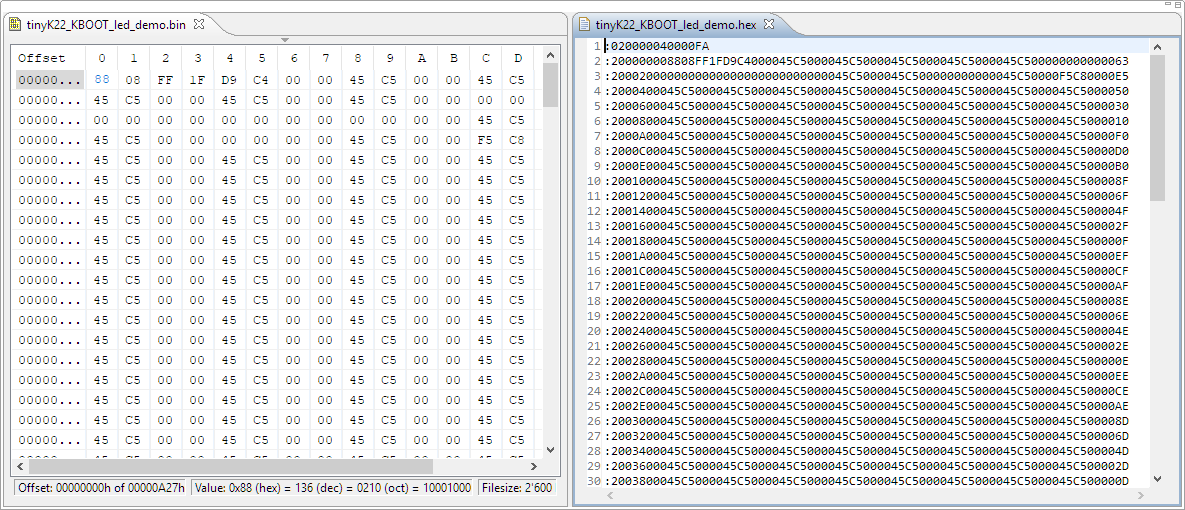
I’m dealing a lot with bootloaders recently (see “Flash-Resident USB-HID Bootloader with the NXP Kinetis K22 Microcontroller“), and bootloaders are sometimes very picky about what file format they are able to consume. So what if I have a binary (see “S-Record, Intel Hex and Binary Files“) file and I need to convert it into the Intel Hex format?

converted binary to intel hex

converted binary to intel hex

Continue reading

Tutorial: Secure TLS Communication with MQTT using mbedTLS on top of lwip

One of the most important aspects of the ‘IoT’ world is having a secure communication. Running MQTT on lwip (see “MQTT with lwip and NXP FRDM-K64F Board“) is no exception. Despite of the popularity of MQTT and lwip, I have not been able to find an example using a secure TLS connection over raw/native lwip TCP :-(. Could it be that such an example exists, and I have not found it? Or that someone implemented it, but has not published it? Only what I have found on the internet are many others asking for the same kind of thing “running MQTT on lwip with TLS”, but there was no answer? So I have to answer my question, which seems to be a good thing anyway: I can learn new things the hard way :-).

Blockdiagram MQTT Application with TLS using lwip

Block diagram MQTT Application with TLS using lwip

Continue reading

Tutorial: Hexiwear Bluetooth Low Energy Packet Sniffing with Wireshark

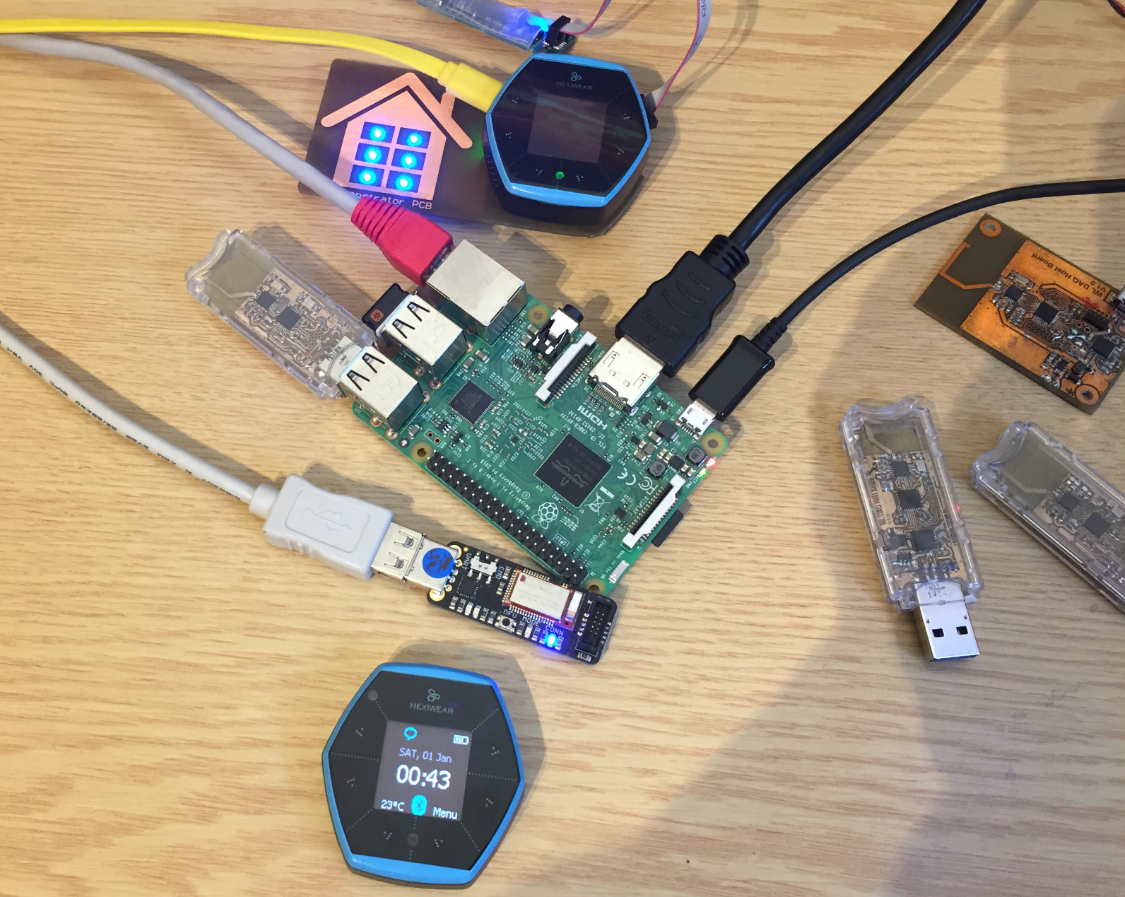
For a university reasearch project I try to pair the Raspberry Pi 3 with a Mikroelektronika Hexiwear using BLE (Bluetooth Low Energy). Most of things worked after a lot of trial and error, but at a certain point I was stuck trying to write to send data from the Raspy to the BLE device.The Hexiwear BLE protocol description is very thin, so I ended up using a BLE sniffer to reverse engineer the protocol with Wireshark.

Sniffing BLE Packets between Raspy and Hexiwear

Hardware setup between Raspy and Hexiwear

Continue reading