A week ago I asked: what you would like to see next on this blog? Thank you all for your reaction and comments! To me, the result is interesting:
Annakirchl
Image
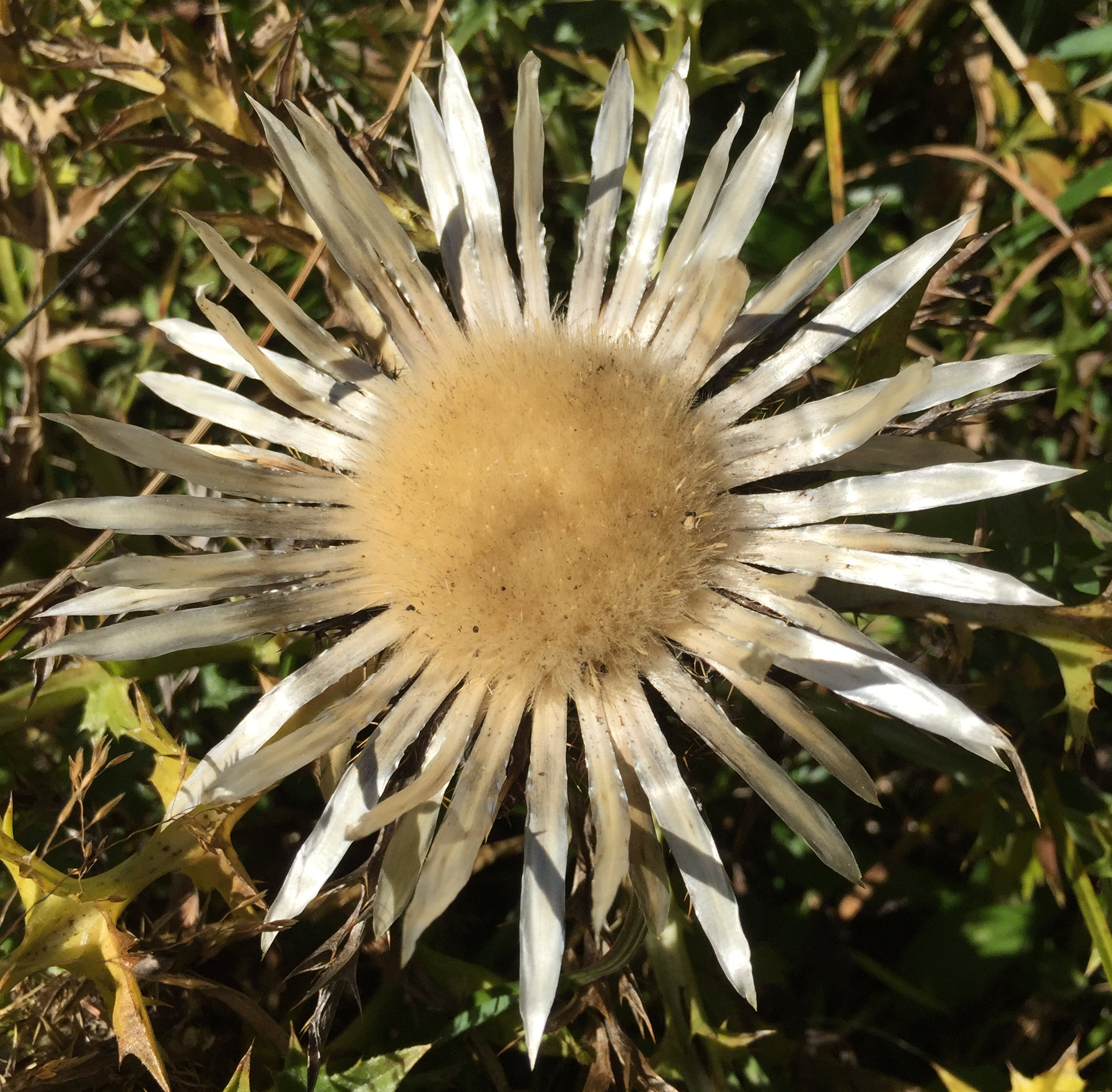
Achenkirch is a municipality in the Schwaz district in the Austrian state of Tyrol. Located nearby on a hill is the “Annakirchl”:
ARM Cortex-M, Interrupts and FreeRTOS: Part 2
In “ARM Cortex-M, Interrupts and FreeRTOS: Part 1”Ā I started with the ARM Cortex-M interrupt system. Because the ARM implementation cann be very confusing, I confused myself and had to fix and extend the description in Part 1 :-). Thank for all the feedback and comments!
Originally I wanted to cover FreeRTOS in Part 2. Based on the questions and discussions in Part 1 I thought it might be a good idea to provide visual examples.
Survey: After 0x8888888 Seconds, What’s Next?
When I have hit ‘publish’ for this post, the McuOnEclipse blog exists for exactly 0x888888 seconds. Or almost. I admit there might be a latency of a few seconds. But hey, that’s still a good (hexadecimal) number! :-).
I would like to reach out about what you would like to see on McuOnEclipse in a not too distant future:
- What do you like the most?
- About what should I write more?
- Any other subject or topic you would like to see?
Add a comment if you have anything else on your mind.
Thank you!
Happy Polling š
ARM Cortex-M, Interrupts and FreeRTOS: Part 1
The ARM Cortex-M microcontroller are very popular. And it has a very flexible and powerful nested vectored interrupt controller (NVIC) on it. But for many, including myself, the Cortex-M interrupt system can be leading to many bugs and lots of frustration :-(.
Understanding the NVIC and the ARM Cortex-M interrupt system is essential for every embedded application, but even for if using an realtime operating system: if you mess up with interrupts, very bad things will happen….
Sunrise at the Haggenegg
Image
The Haggenegg is a summit at 1414 m between Schwyz and Alpthal. The summit played an important role during the “Marchenstreit“: a border conflict starting around the year 1100 between Schwyz and the Einsiedeln Abbey.
Prototype of Wireless Remote Controller with NXP Kinetis K20
For next semester I plan to use the tinyK20 as a remote controller for the Zumo Robots. I already had an early prototype presented in “3D Printed Gameboy and Remote Controller with tinyK20 Board“, so here is the next iteration of, in a sneak preview:
Avoid Warping ABS on Ultimaker 2
3D printing is like cooking or like BBQ: It is more about barometric pressure, humidity and temperature than you mightĀ think of. To me, printing (and cooking) is a combination of art and science. And as with cooking, sometimes the result is not usable.
I’m very happy with the Ultimaker 2 printing PLA material. For a LED matrix project I have to use ABS as this material is suitable for higher temperature: PLA simply will not stand the heat produced by the LEDs I’m going to use. And here the joy ended: printing using ABS was definitely no fun. While the first small test print came out OK, I produced afterwards a pile of unusable parts because of warping :-(.
Apple Juice Brined Pulled Pork
After brining fish (see “Cedar Planked Smoked Sesame Salmon and Tuna“) and thanks to Greg I’m now exploring brining pork shoulder for pulled pork. Pulled pork is amazingly simple, but requires preparation work. Brining adds to this, but is well worthy.
Eclipse and GDB: Process Properties, Arguments and GDB Traces
To me this was new, and thanks to Liviu I know now how to inspect the command line passed to the GDB server (see “Semihosting (again!) with NXP Kinetis SDK V2.0“) š