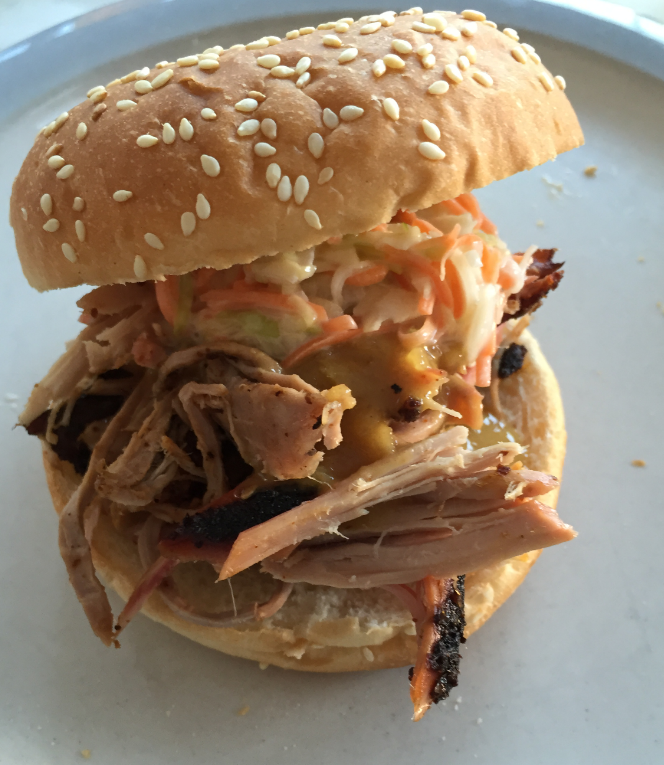
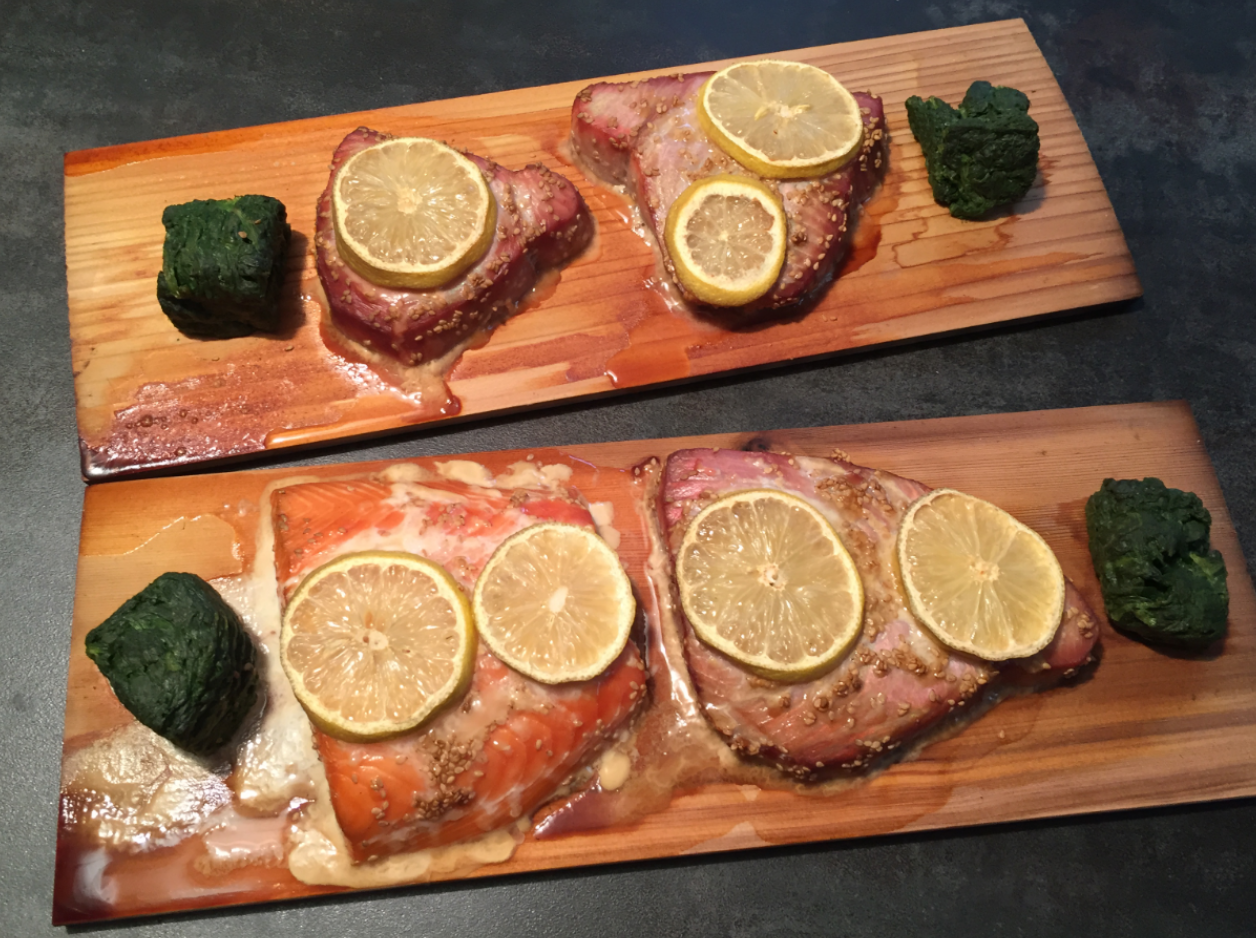
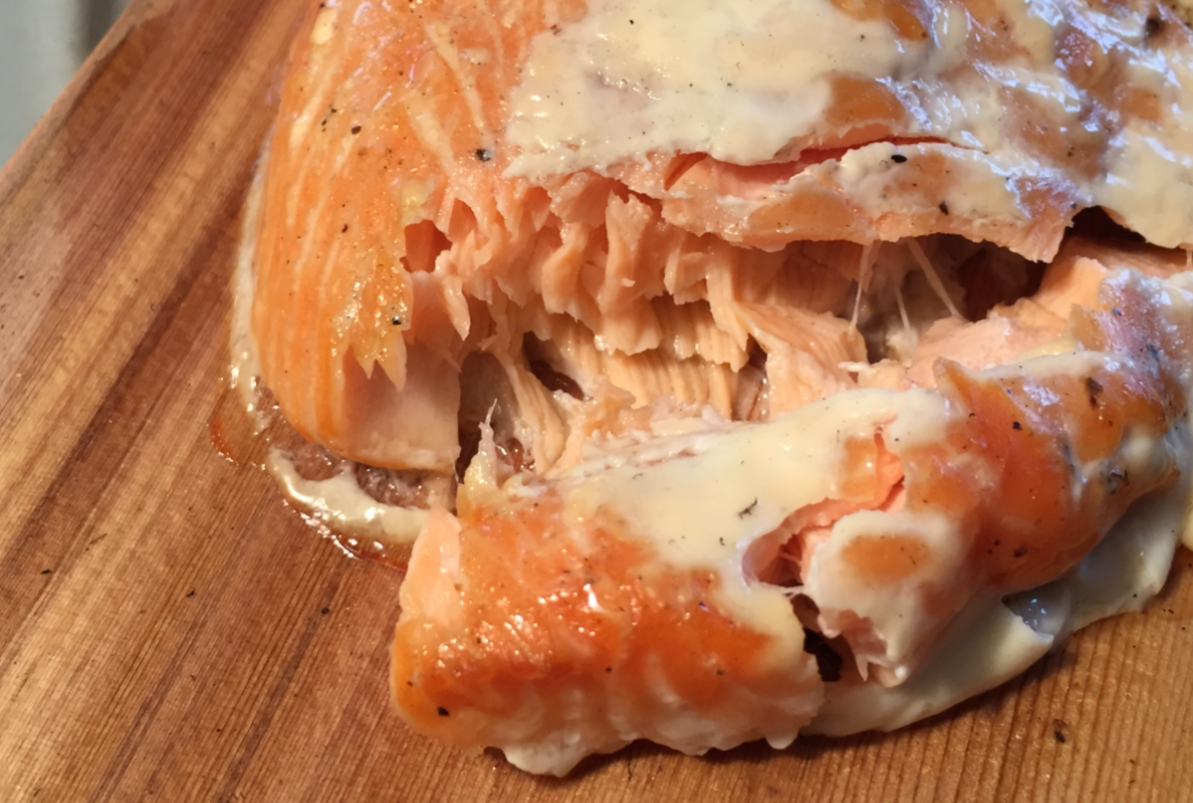
After brining fish (see “Cedar Planked Smoked Sesame Salmon and Tuna“) and thanks to Greg I’m now exploring brining pork shoulder for pulled pork. Pulled pork is amazingly simple, but requires preparation work. Brining adds to this, but is well worthy.
Category Archives: Tips & Tricks
Eclipse and GDB: Process Properties, Arguments and GDB Traces
To me this was new, and thanks to Liviu I know now how to inspect the command line passed to the GDB server (see “Semihosting (again!) with NXP Kinetis SDK V2.0“) 🙂
Four States BBQ Sauce for Pulled Pork (or anything else)
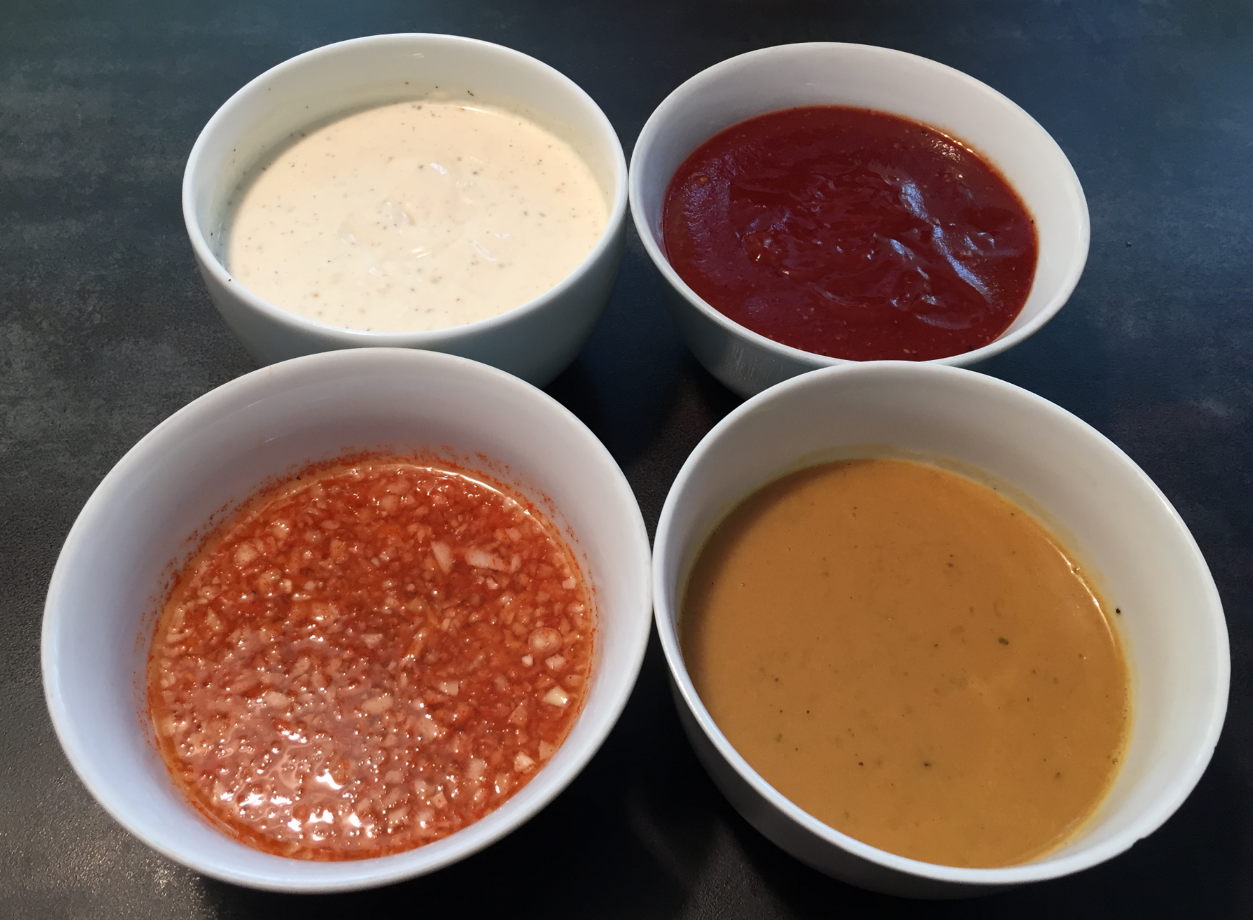
It seems that my pulled pork BBQÂ (see “Tutorial: BBQ Pulled Pork“) gets more and more fans :-). We will have a BBQ party for 10 person tomorrow evening :-). In preparation for that, the two pork shoulders started brining in the refrigerator from yesterday night on. Today we prepared the BBQ sauce for tomorrow, in four different styles: North Carolina, South Carolina, Alabama and Kansas:
Semihosting (again!) with NXP Kinetis SDK V2.0
I kind of hoped that after “Why I don’t like printf()” and all my other articles about printf and semihosting, that topic would be 200% handled and I won’t have to deal with any more. Well, I was wrong and underestimated how the Kinetis SDK is interfering with semihosting. And I underestimated how many of my readers are still using semihosting (even as there are other and better alternatives), so I keep getting questions and requests for help. That’s ok, and I hope I can help :-).
So here is yet again another post about how to turn on semihosting with Eclipse, GNU ARM Embedded and the Kinetis SDK v2.0. This time with the FRDM-K64F board:
Bricking and Recovering OpenSDA Boards in Windows 8 and 10
Getting a board from a distributor like Farnell/Element14/Mouser (add your own distributor) means that chances are high that the default firmware on it is written years from now because the inventory has not been updated, or because boards are still produced with that original firmware (because of testing?). So what happens if I use board with a firmware developed pre-Windows 8/10 area?
It might work, but chances are high that the bootloader and firmware is not ready for the ‘modern age’, and as a result the board might be bricked. If you still have a Windows 7 machine around (I do!), you are lucky. If not, then you need to read this article….
impulse: Segger SystemView in Eclipse
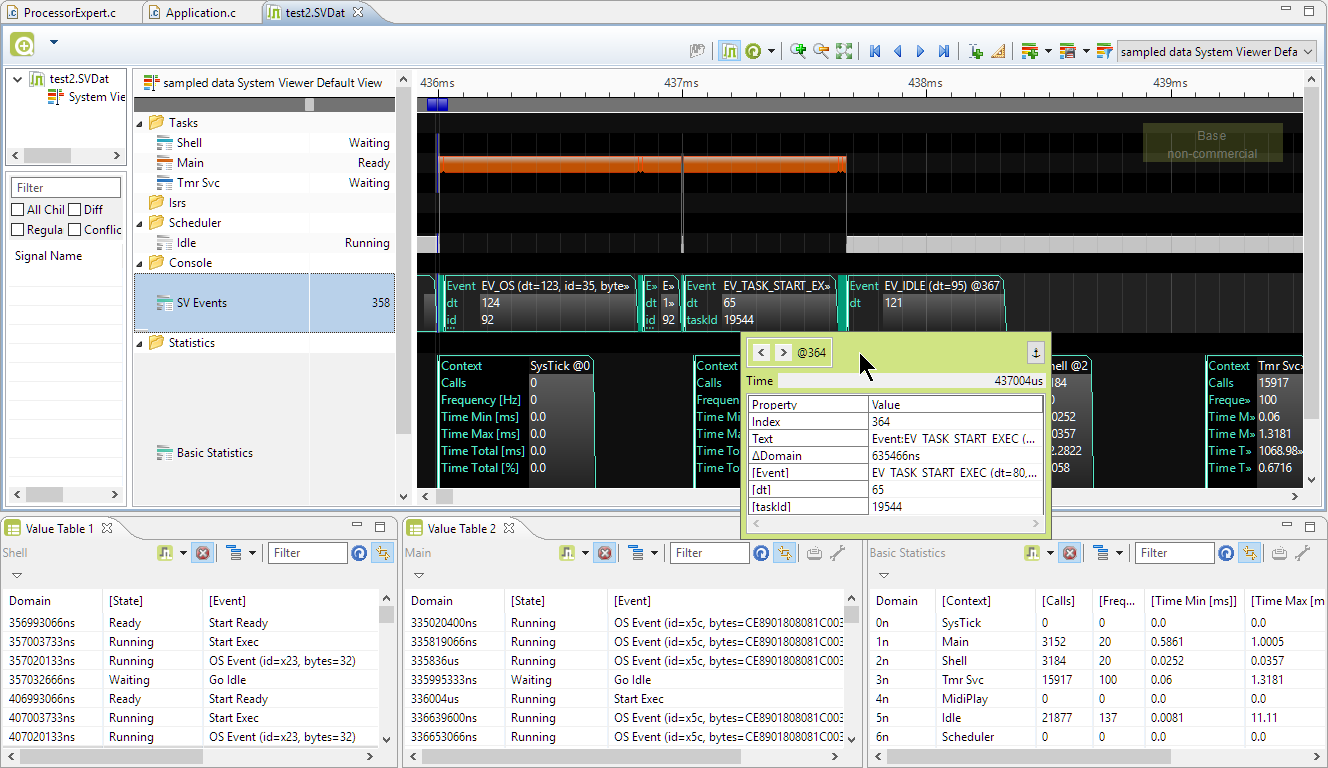
I’m using the Segger SystemView in many of my applications to get insights of the running application. A reader of my blog pointed me to the company ‘toem’ (http://toem.de/) based in Germany which offers powerful data viewer (‘impulse’) for Eclipse. I have tried this out, and it is really an amazing piece of technology with lots of potential. It allows me to view Segger SystemView data 🙂
Cedar Planked Smoked Sesame Salmon and Tuna
Thanks for all the tips and comments on the “Salmon on Cedar Planks” recipe! With all the new knowledge and some experiments, here is my next variant of smoking fish:
NXP Pins Tool: Understanding Data for Offline Usage
I’m using the NXP Pins tool (see “Tutorial: Muxing with the New NXP Pins Tool“) now in several projects, and I think it is time to share a few tips and tricks.
So join me on a journey through the internals of the NXP Pins tool :-).
Salmon on Cedar Planks
A smoker is great for big pieces of pork, beef or chicken. Putting fish directly on the grid is usually not an option because the fish can fall apart or is difficult to remove. Instead wrapping it into aluminium foil or putting it on a metal or stone plate, I prefer to put fish on a cedar plank. In my opinion the best way to BBQ fish:
NXP Pins Tool: Clock Gates and Controlling the Bits
With the NXP Pins Tool (see “Tutorial: Muxing with the New NXP Pins Tool“) I can configure and mux (multiplex) the microcontroller pins. What is really powerful and what might not be so obvious at the first sight is that it gives me deep control over every register bit and setting. For example I have below the PTB1 (Port B, pin 1) muxed as GPIO (General Purpose I/O):
But it only generates this:
void BOARD_InitPins(void) {
 CLOCK_EnableClock(kCLOCK_PortB);                          /* Port B Clock Gate Control: Clock enabled */
 PORT_SetPinMux(PORTB, PIN1_IDX, kPORT_MuxAsGpio);         /* PORTB1 (pin 54) is configured as PTB1 */
}
So what about all the other bits and pieces? Continue reading