Tutorial: Using Single Wire Output SWO with ARM Cortex-M and Eclipse

As a standard procedure, I add some console functionality to my embedded applications. That way I have a command line interface and can inspect and influence the target system. One interesting hardware feature of ARM Cortex-M is Single Wire Output (SWO): it allows to send out data (e.g. strings) over up to 32 different stimulus ports, over a single wire.

swo-pin-on-arm-debug-header

swo-pin-on-arm-debug-header

Continue reading

FreeRTOS Kernel Awareness with Ozone

In my first post about Segger Ozone (see “First Steps with Ozone and the Segger J-Link Trace Pro“) I missed the fact that it includes support for kernels like FreeRTOS. So here is how to show the FreeRTOS (or any other RTOS) threads with Ozone:

freertos-threads-in-ozone

freertos-threads-in-ozone

Continue reading

First Steps with Ozone and the Segger J-Link Trace Pro

From time to time I face some problems which are really hard to find. Mostly these kind of bugs are very timing sensitive and depend on interrupt execution order. Maybe a dangling pointer is overwriting memory, code is running wild, or some functions are not reentrant as they should be. For these kind of bugs, good tools are worth their weight in gold. The Percepio FreeRTOS+Trace and the Segger SystemView have helped me many times to narrow down such kind problems in my applications. Another ultimate tools is hardware trace: Now I have a Segger J-Trace Pro for ARM Cortex-M in my arsenal of bug extinguishing weapons on my desk:
Dear bugs, look what I have on my desk. Your hiding time is over! 🙂

tracing-cortex-m4-with-j-trace

tracing-cortex-m4-with-j-trace

Continue reading

Tutorial: RFID Tags with the NXP NFC Controller PN7120 and Eclipse

Playing with RFID and NFC is definitely fun :-), and they are everywhere! For a research project I’m exploring different RFID tags and solutions. I several types around for a long time, but never found the time to actually work on it, so last nightI thought I give it a try, and I have it working with GNU ARM and Eclipse, powered by the NXP FRDM-K64F board 🙂

NXP NFC PN7120S

NXP NFC PN7120S with a FRDM-K64F Board

Continue reading

Enclosure for the Remote Robot Controller with LCD Display

The first enclosure for the INTRO robot remote controller board (see “INTRO Robot Remote – First Production PCB“) is ready, and it is looking good:

Enclosure for the Remote Controller Board

Enclosure for the Remote Controller Board

Continue reading

ARM Cortex-M Interrupts and FreeRTOS: Part 3

This is the third part about ARM Cortex-M and how the interrupts are used. In Part 1 I discussed the Cortex-M interrupt system and in Part 2 I showed nested interrupt examples. This part is about FreeRTOS and how it uses the Cortex-M interrupt system.

NXP KV58F ARM Cortex-M7

NXP KV58F ARM Cortex-M7

Continue reading

ARM Cortex-M, Interrupts and FreeRTOS: Part 1

The ARM Cortex-M microcontroller are very popular. And it has a very flexible and powerful nested vectored interrupt controller (NVIC) on it. But for many, including myself, the Cortex-M interrupt system can be leading to many bugs and lots of frustration :-(.

NXP KV58F ARM Cortex-M7

ARM Cortex-M7: NXP KV58

Understanding the NVIC and the ARM Cortex-M interrupt system is essential for every embedded application, but even for if using an realtime operating system: if you mess up with interrupts, very bad things will happen….

Continue reading

Prototype of Wireless Remote Controller with NXP Kinetis K20

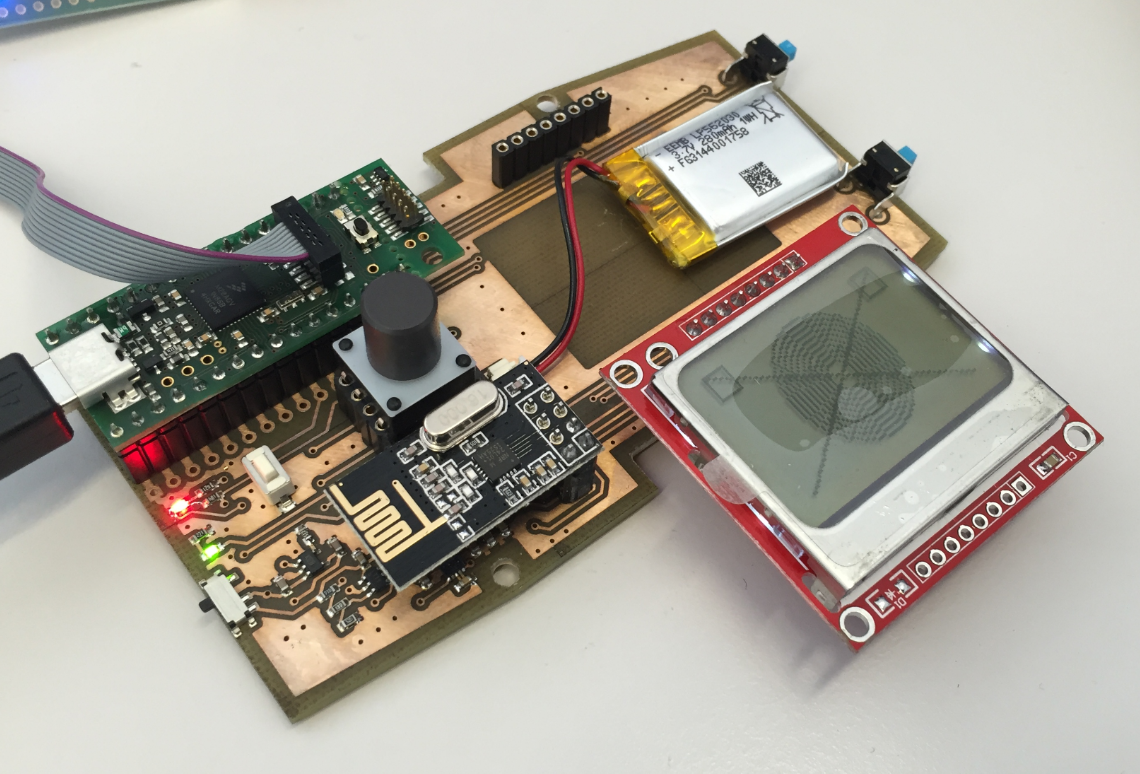
For next semester I plan to use the tinyK20 as a remote controller for the Zumo Robots. I already had an early prototype presented in “3D Printed Gameboy and Remote Controller with tinyK20 Board“, so here is the next iteration of, in a sneak preview:

Remote Controller Prototype

Remote Controller Prototype

Continue reading

Eclipse and GDB: Process Properties, Arguments and GDB Traces

To me this was new, and thanks to Liviu I know now how to inspect the command line passed to the GDB server (see “Semihosting (again!) with NXP Kinetis SDK V2.0“) 🙂

Process Properties

Process Properties

Continue reading