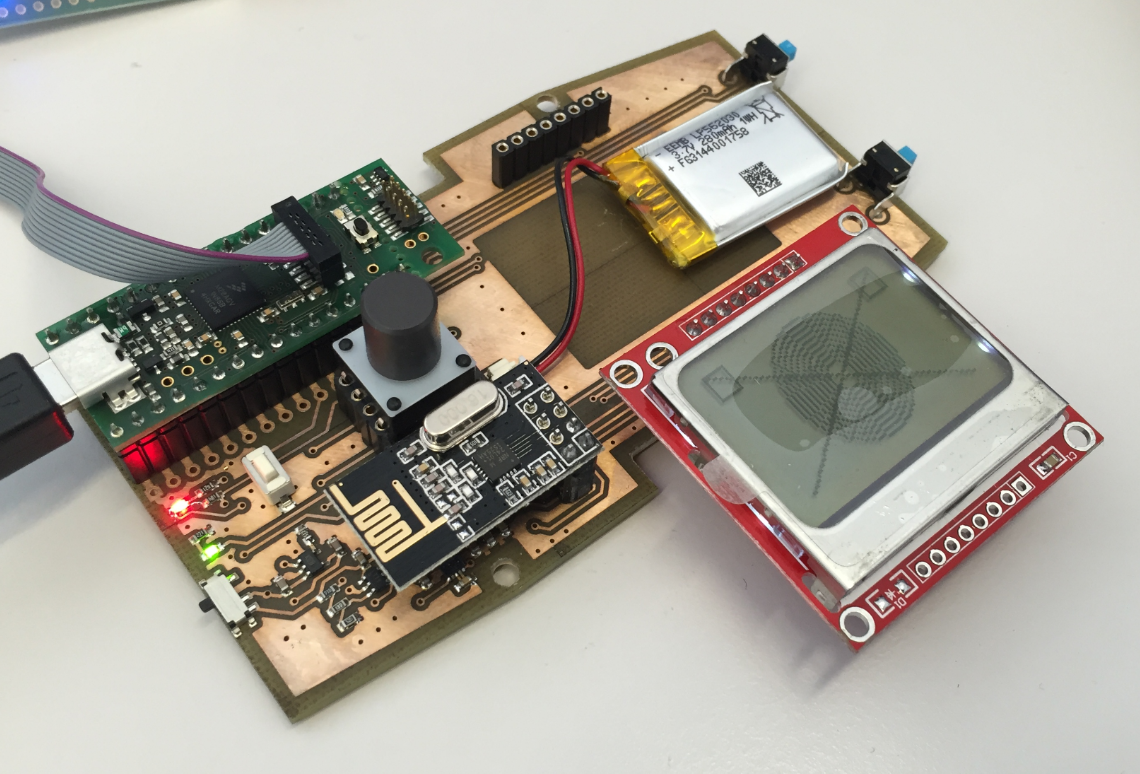
For next semester I plan to use the tinyK20 as a remote controller for the Zumo Robots. I already had an early prototype presented in “3D Printed Gameboy and Remote Controller with tinyK20 Board“, so here is the next iteration of, in a sneak preview:
Category Archives: CPU’s
Eclipse and GDB: Process Properties, Arguments and GDB Traces
To me this was new, and thanks to Liviu I know now how to inspect the command line passed to the GDB server (see “Semihosting (again!) with NXP Kinetis SDK V2.0“) 🙂
Semihosting (again!) with NXP Kinetis SDK V2.0
I kind of hoped that after “Why I don’t like printf()” and all my other articles about printf and semihosting, that topic would be 200% handled and I won’t have to deal with any more. Well, I was wrong and underestimated how the Kinetis SDK is interfering with semihosting. And I underestimated how many of my readers are still using semihosting (even as there are other and better alternatives), so I keep getting questions and requests for help. That’s ok, and I hope I can help :-).
So here is yet again another post about how to turn on semihosting with Eclipse, GNU ARM Embedded and the Kinetis SDK v2.0. This time with the FRDM-K64F board:
Bricking and Recovering OpenSDA Boards in Windows 8 and 10
Getting a board from a distributor like Farnell/Element14/Mouser (add your own distributor) means that chances are high that the default firmware on it is written years from now because the inventory has not been updated, or because boards are still produced with that original firmware (because of testing?). So what happens if I use board with a firmware developed pre-Windows 8/10 area?
It might work, but chances are high that the bootloader and firmware is not ready for the ‘modern age’, and as a result the board might be bricked. If you still have a Windows 7 machine around (I do!), you are lucky. If not, then you need to read this article….
McuOnEclipse Components: 31-July-2016 Release
Time for a new major update of the McuOnEclipse components, with the fillowing main features and changes:
- FatFS component updated to R0.12 with patch 3 and exFAT support
- Extended support for Cortex-M7
- Extended support for Kinetis SDK V2.0
- USB component support for Kinetis SDK V1.3
- Improved FreeRTOS for NXP FreeRTOS TAD plugin
- Added C++ wrappers to multiple components
- Many smaller fixes and improvements
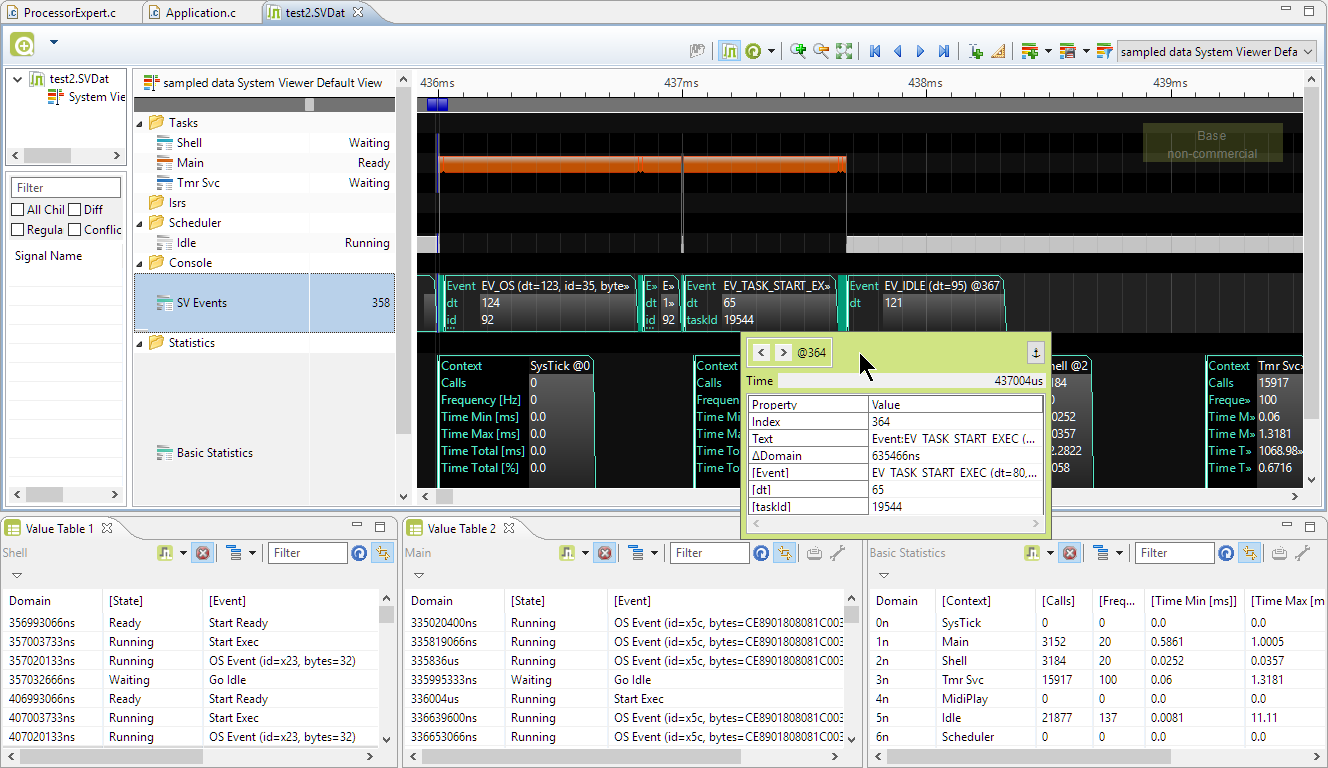
impulse: Segger SystemView in Eclipse
I’m using the Segger SystemView in many of my applications to get insights of the running application. A reader of my blog pointed me to the company ‘toem’ (http://toem.de/) based in Germany which offers powerful data viewer (‘impulse’) for Eclipse. I have tried this out, and it is really an amazing piece of technology with lots of potential. It allows me to view Segger SystemView data 🙂
NXP Pins Tool: Understanding Data for Offline Usage
I’m using the NXP Pins tool (see “Tutorial: Muxing with the New NXP Pins Tool“) now in several projects, and I think it is time to share a few tips and tricks.
So join me on a journey through the internals of the NXP Pins tool :-).
NXP Pins Tool: Clock Gates and Controlling the Bits
With the NXP Pins Tool (see “Tutorial: Muxing with the New NXP Pins Tool“) I can configure and mux (multiplex) the microcontroller pins. What is really powerful and what might not be so obvious at the first sight is that it gives me deep control over every register bit and setting. For example I have below the PTB1 (Port B, pin 1) muxed as GPIO (General Purpose I/O):
But it only generates this:
void BOARD_InitPins(void) {
 CLOCK_EnableClock(kCLOCK_PortB);                          /* Port B Clock Gate Control: Clock enabled */
 PORT_SetPinMux(PORTB, PIN1_IDX, kPORT_MuxAsGpio);         /* PORTB1 (pin 54) is configured as PTB1 */
}
So what about all the other bits and pieces? Continue reading
Hexiwear: Teardown of the Hackable ‘Do-Anything’ Device
Smartwatches are around for a while now. To me it is still questionable how useful the ‘big’ ones for iOS and Android are. But there are definitely the crowd funded smartwatch projects which caught my attention. Maybe it is about the ‘do-anything’ with connectivity? One of these gadgets is Hexiwear: a hackable open source device
While it *could* be a kind of smartwatch, the value of this thing is more that it includes a plethora of sensors with two microcontroller, and I can use Eclipse with GNU tools to build my firmware :-).
Alert: Hackster.io is giving away 100 Hexiwears, but you need to hurry up (submission until July 15th 2016)!
FatFS with Adafruit MicroSD Breakout Board and NXP FRDM-KL25Z
Breakout boards are great: they allow me to explore functions quickly, without to build my custom board: all what I need is some wires and ideally a bread board.