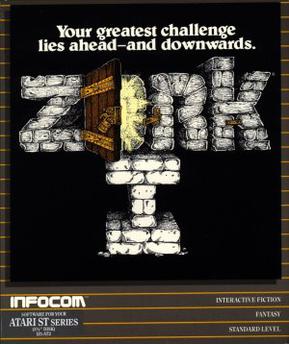
You might wonder what ‘Zork‘ is? Zork is one of the first and earlist fictive computer games, written around 1977 and 1979, written in MDL on a DEC PDP-10 by members of the MIT Dynamic Modelling group (see https://en.wikipedia.org/wiki/Zork). I believe the first time I have played Zork was around 1984 on a Commodore 64.
Category Archives: Boards
Using GDB Server Monitor Commands from Eclipse GDB Console
With Eclipse as IDE it is very easy to debug an application on a board. Still sometimes it is useful to get one level down and control the GDB server directly.
Lasercut Plywood Board for Raspberry Pi
Need a quick way how to attach a LED, a push button and two resistors to the Raspberry Pi header? One way is to use some ‘flying’ wires. Or to use three pieces of lasercut plywood for a nice looking Raspy extension board:
Tutorial: μCUnit, a Unit Test Framework for Microcontrollers
Unit testing is a common practice for host development. But for embedded development this still seems mostly a ‘blank’ area. Mostly because embedded engineers are not used to unit testing, or because the usual framework for unit testing requires too many resources on an embedded target?
What I have used is the μCUnit framework which is a small and easy to use framework, targeting small microcontroller applications.
Tutorial: First Steps with Embedded Artists NXP i.MX RT1052 OEM Module
Not ready for the complexity of a full blown Embedded Linux, but need that extra compute performance? Need an ARM Cortex-M7 running at 600 MHz module on a half-sized business card, ready to be integrated? Here we go: the Embedded Artists i.MX RT1052 OEM module:
Compute modules are very common in the Embedded Linux space, for example see this Toradex module. The reason is simple: these high-performance boards simplify the design, as I don’t have to care about the BGA packages and the external SDRAM and FLASH devices: everything is on a module I can easily integrate into my base board.
Open Source RISC – Eclipse with RISC-V on the SiFive HiFive1 Board
Open Source software has been around for decades. But open source on hardware especially microcontroller is not much a reality these days. But there is something which might change this: RISC-V is a free and open RISC instruction set architecture and for me it has the potential to replace some of the proprietary architectures currently used. RISC-V is not new, but it gets more and more traction in Academia (no surprise).
I wanted to play with RISC-V for over a year, but finally a week ago I did one of these “hey, let’s buy that board” thing again. Sometimes these boards get on a pile to wait a few weeks or longer to get used, but that one I had to try out immediately :-).
Tutorial: Open-Source Embedded GUI Library LittlevGL with i.MX RT1050-EVK
Most embedded projects need an user input device. For the NXP i.MX RT1050-EVK board I have recently added a 480×272 full color touch LCD (see “Adding a Rocktech Capacitive Touch LCD to the NXP i.MX RT1052 EVK“). I have looked at different commercially available GUI libraries, but none of them really were matching my expectations: either very expensive or closed source, or an overkill for small LCDs and projects. But then I have found LittlevGL: free-of-charge, open source, easy to use, well documented and has everything I need. And it really looks gorgeous 🙂
Tutorial: Catching Rogue Memory Accesses with ARM Watchpoint Comparators and Instruction Trace
In my “Tutorial: Catching Rogue Memory Accesses with Eclipse and GDB Watchpoints” I have used Eclipse/CDT and GDB watchpoints. I used a conditional watchpoint, but this comes with a performance hit. In this article I show how to use the ARM Cortex trace hardware to catch specific writes to a memory location. Without severe performance degradation. But for this I need a little helper: the DEADBEEF catcher!
First Steps with the NXP i.MX RT1020 EVK Board
Powerful ARM Cortex-M7 microcontroller are on the rise, bridging the gap between traditional microcontroller and Embedded Linux systems. I already published articles for the NXP i.MX RT1052 which is an ARM Cortex-M7 running at 600 MHz. Because the RT105x is available in BGA196 package only, I have as oredered the i.MX RT 1050 EVK which has a similar device on it, but in LQFP package:
i.MX RT1050 EVK vs. EVKB
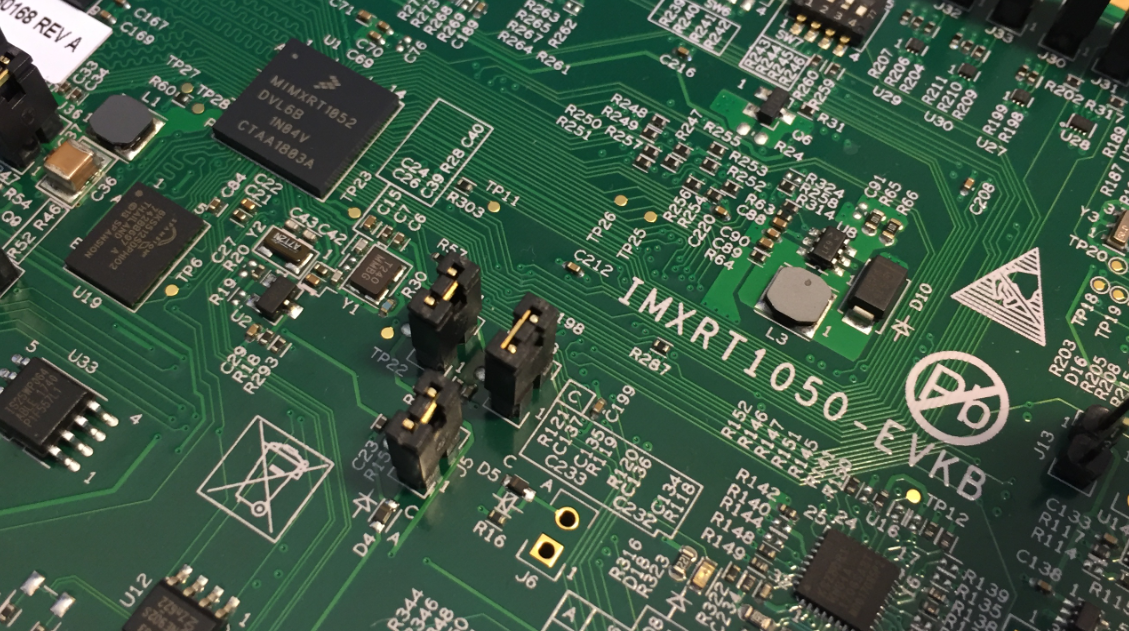
I noticed on Mouser.com that there is a new i.MX RT1050 board: the EVKB one. I have used the EVK (the one without the ‘B’) for several weeks (see “MCUXpresso IDE V10.1.0 with i.MX RT1052 Crossover Processor” and “Adding a Rocktech Capacitive Touch LCD to the NXP i.MX RT1052 EVK“). I needed anyway a second board, so I ordered that EVKB from Mouser, and after some delay and waiting it arrived on my desk. So far this boards seems to be a better one: