In my first post about Segger Ozone (see “First Steps with Ozone and the Segger J-Link Trace Pro“) I missed the fact that it includes support for kernels like FreeRTOS. So here is how to show the FreeRTOS (or any other RTOS) threads with Ozone:
Category Archives: FRDM-K64F120M
Tutorial: RFID Tags with the NXP NFC Controller PN7120 and Eclipse
Playing with RFID and NFC is definitely fun :-), and they are everywhere! For a research project I’m exploring different RFID tags and solutions. I several types around for a long time, but never found the time to actually work on it, so last nightI thought I give it a try, and I have it working with GNU ARM and Eclipse, powered by the NXP FRDM-K64F board π
ARM Cortex-M, Interrupts and FreeRTOS: Part 2
In “ARM Cortex-M, Interrupts and FreeRTOS: Part 1”Β I started with the ARM Cortex-M interrupt system. Because the ARM implementation cann be very confusing, I confused myself and had to fix and extend the description in Part 1 :-). Thank for all the feedback and comments!
Originally I wanted to cover FreeRTOS in Part 2. Based on the questions and discussions in Part 1 I thought it might be a good idea to provide visual examples.
Semihosting (again!) with NXP Kinetis SDK V2.0
I kind of hoped that after “Why I donβt like printf()” and all my other articles about printf and semihosting, that topic would be 200% handled and I won’t have to deal with any more. Well, I was wrong and underestimated how the Kinetis SDK is interfering with semihosting. And I underestimated how many of my readers are still using semihosting (even as there are other and better alternatives), so I keep getting questions and requests for help. That’s ok, and I hope I can help :-).
So here is yet again another post about how to turn on semihosting with Eclipse, GNU ARM Embedded and the Kinetis SDK v2.0. This time with the FRDM-K64F board:
Bricking and Recovering OpenSDA Boards in Windows 8 and 10
Getting a board from a distributor like Farnell/Element14/Mouser (add your own distributor) means that chances are high that the default firmware on it is written years from now because the inventory has not been updated, or because boards are still produced with that original firmware (because of testing?). So what happens if I use board with a firmware developed pre-Windows 8/10 area?
It might work, but chances are high that the bootloader and firmware is not ready for the ‘modern age’, and as a result the board might be bricked. If you still have a Windows 7 machine around (I do!), you are lucky. If not, then you need to read this article….
NXP Pins Tool: Clock Gates and Controlling the Bits
With the NXP Pins Tool (see “Tutorial: Muxing with the New NXP Pins Tool“) I can configure and mux (multiplex) the microcontroller pins. What is really powerful and what might not be so obvious at the first sight is that it gives me deep control over every register bit and setting. For example I have below the PTB1 (Port B, pin 1) muxed as GPIO (General Purpose I/O):
But it only generates this:
void BOARD_InitPins(void) {
Β CLOCK_EnableClock(kCLOCK_PortB);Β Β Β Β Β Β Β Β Β Β Β Β Β Β Β Β Β Β Β Β Β Β Β Β Β Β /* Port B Clock Gate Control: Clock enabled */
Β PORT_SetPinMux(PORTB, PIN1_IDX, kPORT_MuxAsGpio);Β Β Β Β Β Β Β Β Β /* PORTB1 (pin 54) is configured as PTB1 */
}
So what about all the other bits and pieces? Continue reading
How to Recover the OpenSDA V2.x Bootloader
More and more of my students are using Microsoft Windows 10 machines, and my computer has been upgraded to Windows 10 a couple of week ago too. From my work and experience, a new operating system causes always some challenges, and Windows 10 is no difference. And no, this is not about Microsoft vs. Apple vs. Linux, this post is about addressing a potential and painful problem which I have observed with Windows 10 machines, and to my understanding it could happen with any other operating system too. The problem is that somehow on several student machines the bootloader and OpenSDA application on their FRDM boards did not work any more.
Tutorial: Making Music with Floppy Disk Drives
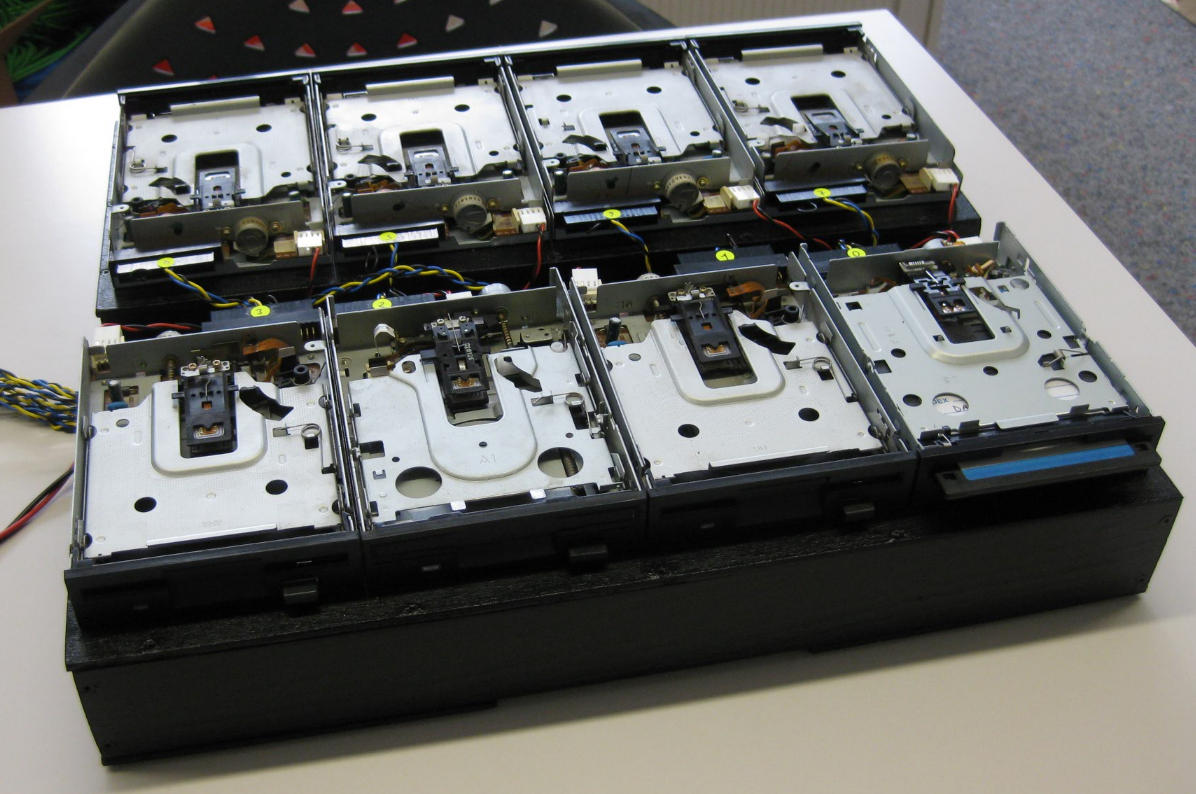
3.5″ Diskette Drives are not widely used any more: CDs, DVDs, memory/thumb drives and downloads from the web are the usual distribution method these days for software. Back a few years ago, software was distributed on one or many 3.5″ diskettes, and even before that time on 5 1/4″ floppy disk drives. So what to do with all these not-used-anymore hardware? Play music with it π
Dealing with Code Size in Kinetis SDK v2.x Projects
I’m exploring the Kinetis SDK v2.0 (see “First NXP Kinetis SDK Release: SDK V2.0 with Online On-Demand Package Builder“). For this, I’m using the ‘standard’ way: blinking the LED on the board π
Tutorial: FreeRTOS Projects with Kinetis SDK V1.3 and the SDK Project Generator
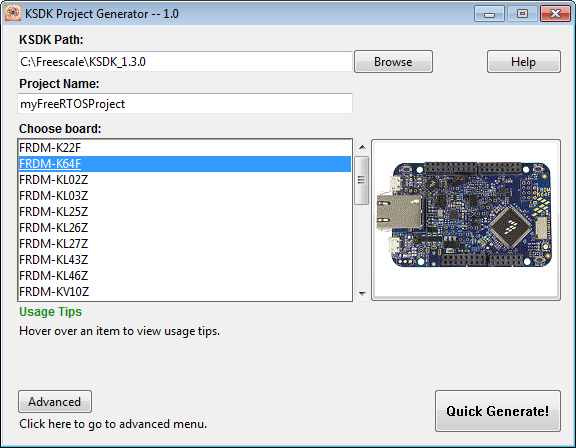
This tutorial describes how to create a Kinetis SDK V1.3 project using the Freescale project generator in Kinetis Design Studio.