McuOnEclipse Components: 09-July-2017 Release

I’m pleased to announce that a new release of the McuOnEclipse components is available in SourceForge, with the following major changes and updates:

  • Complete refactoring for 1-Wire stack and DS18B20 temperature sensor components
  • Added HID Joystick device class to the FSL_USB_Stack
  • New SDK_Timer component to work with Kinetis SDK
  • New ST756P LCD driver component
  • New TSL2561 digitial temperature sensor driver
  • Added ReadByte() and WriteByte() GenericI2C functions
  • Added 64bit mapping functions to Utility
  • added configUSE_NEWLIB_REENTRANT and newlib reentrancy support to FreeRTOS
  • Pull resistor support for SDK_BitIO
  • Many smaller bug fixes and enhancements
SourceForge
SourceForge

Continue reading

Three more Reasons to Commute by Train in Switzerland

Video

Commuting to work can be boring. I’m gifted that I can use the Swiss train system, and I wrote about the “10 Reasons Why I Love my Train Commute“.

Immensee

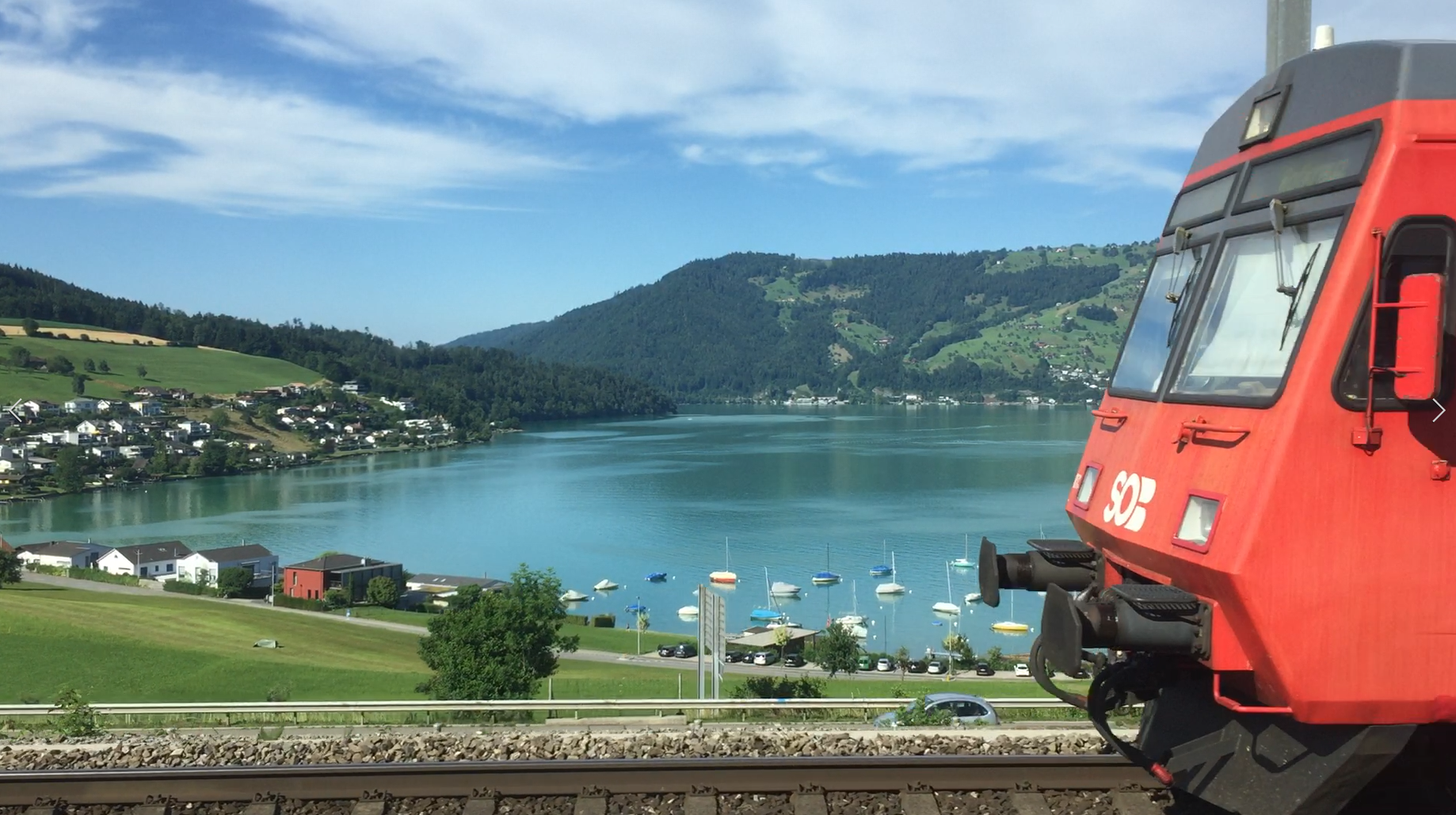
Train at Immensee Station

Brendon asked if I need more reasons. I don’t. But there are indeed three more reasons I can share from my work commute today: Three lakes in three minutes. First Lake Lucerne on the right side, then Lake Zug on the left and finally Lake Lauerz on the right. Enjoy the ride:

Happy Commuting 🙂

Using FreeRTOS with newlib and newlib-nano

For reliable applications, I avoid using functions of the standard libraries. They are banned for most safety related applications anyway. I do not use or avoid malloc(), printf() and all the other variants, for many reasons including the ones listed in “Why I don’t like printf()“. Instead, I’m using smaller variants (see “XFormat“). Or I’m using only the thread-safe FreeRTOS heap memory allocation which exist for many good reasons.

Things get problematic if malloc() still is pulled in, either because it is used by a middleware (e.g. TCP/IP stack) or if using C++. Dave Nadler posted a detailed article (http://www.nadler.com/embedded/newlibAndFreeRTOS.html) about how to use newlib and newlib-nano with FreeRTOS.

FreeRTOS Newlib Memory Allocation Scheme

FreeRTOS Newlib Memory Allocation Scheme

Continue reading

Transforming Eclipse Linked Projects into Standalone Projects

Some silicon vendors provide their Eclipse example and SDK projects using linked files and folders. For example a bootloader demo application is provided in the context of an SDK or library. That’s fine until the time I want to transform such an example into a real project or if I want to have it without the hundreds of files for all the other devices I don’t need or use. I cannot take the project and put it into a version control system as the linked files won’t be in my VCS. I cannot move the project to another place as the links are pointing to many places. What I need is a ‘standalone’ project: a project which has all the needed files in it and is self-containing.

Eclipse Project with Linked Files

Eclipse Project with Linked Files and virtual groups

Continue reading

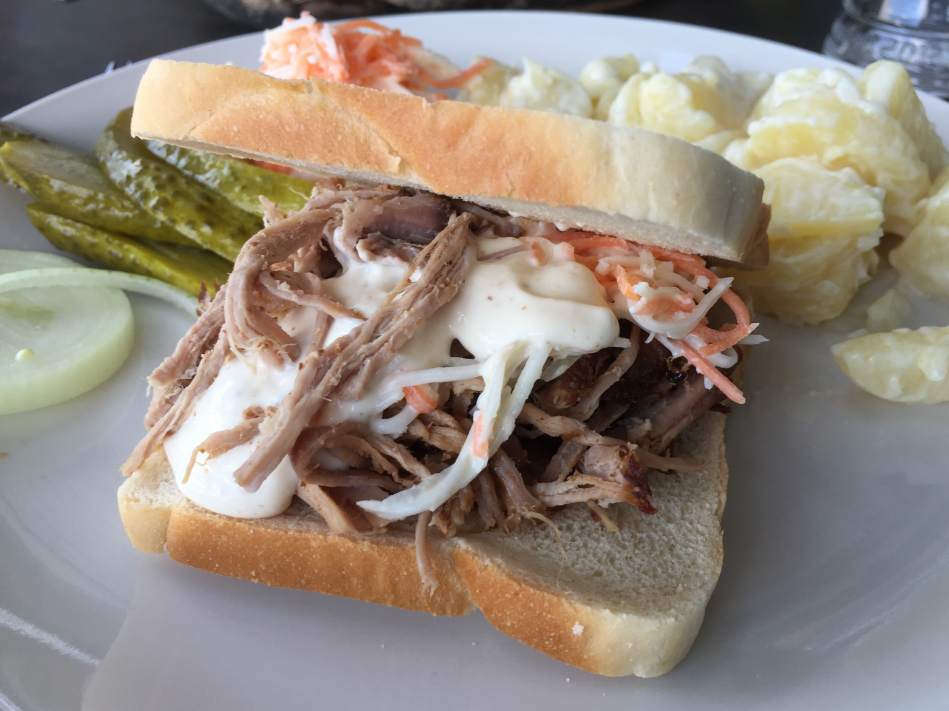
Experimental Smokerless Pulled Pork Sous-Vide Style

Don’t get me wrong. I love a good slow-smoked and true BBQ pulled pork shoulder just as probably everyone else out there. And I love the babysitting (aka beer drinking 🙂 ) while the shoulder gets that incredible taste inside the smoker. But my workload for this weekend is insane high with all the university exam and grading work. My family loves that pulled pork too, and I knew upfront that I would not have the time to check and handle the smoking process for 12-18 hours (see “Easter Weekend Apple Juice Brined Pulled Pork Smoked on Beech Wood“). So I decided to prepare pulled pork the ‘easy’ way: Using a Sous Vide cooker and then use a normal oven to finish it. So it was an experiment, and the result is interesting:

Pulled Pork on Toast

Pulled Pork on Toast

Continue reading

First Steps with the Variscite DART-6UL i.MX6 UltraLite Development Kit

For a next-gen course I’m evaluating different platforms, and one of it are modules based on the NXP i.MX ARM architectures. In this article I have a look a the Variscite DART-6UL development kit which includes the NXP i.MX6Ultralite ARM Cortex-A7 plus a 7″ capacitive touch LCD:

Variscite VAR-DVK-6UL_LO Kit

Variscite VAR-DVK-6UL_LO Kit

Continue reading

Zooming In and Out of Text with Eclipse

I like to have as many lines of source code visible on my notebook or desktop monitor. And I think I have found a good balance between font size and readability.

On the other side: I’m getting older and my eyes are not getting any better. At the same time I noticed that students start using these ‘high-resolution-retina-displays’. They are great, but result in tiny default system fonts, so I have a hard time to read the source code on their machines.

Another challenge I noticed are the high-resolution projectors in class rooms or conferences. They are not well suited to show source code or text files because of the tiny fonts. Starting with Eclipse Neon there is an awesome feature which I can use to dynamically increase and decrease the font size which solves that problem:

Eclipse with Large Font Size

Eclipse with Large Font Size

Continue reading

GNU Code Coverage on Embedded Target with Eclipse Neon and ARM gcc 5

For a research project, we are going to send a satellite with an embedded ARM Cortex microcontroller into space early next year. Naturally, it has to work the first time. As part of all the ESA paperwork, we have to prove that we tested the hardware and software thoroughly. One piece of the that is to collect and give test coverage evidence. And there is no need for expensive tools: Free-of-charge Eclipse and GNU tools can do the job for a space mission 🙂

Eclipse with Coverage Views

Eclipse with Coverage Views

Continue reading