Combining Multiple NXP Kinetis SDKs into One

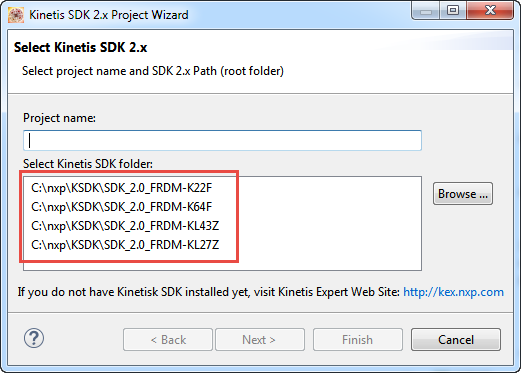
My wife tells me that I have too many boards on my desk. That is only *partially* correct: there are many, but not *too* many. But I’m working on too many tasks, but that’s a different aspect :-). I’m using more and more the Kinetis SDK V2.0, and as a result of this I have multiple SDKs installed on my machine. Because with the SDK V2.0 I get a download for each device/board installed (see “First NXP Kinetis SDK Release: SDK V2.0 with Online On-Demand Package Builder“). So my list of SDK folders is growing, as shown with the ‘New SDK 2.x’ wizard in Kinetis Design Studio:

Multiple Kinetis SDKs

Multiple Kinetis SDKs

The same time, the amount of free disk space is reducing. What if I could combine all these SDK’s?

Continue reading

Split and Clone Editor Views in Eclipse

Sometimes it is all about knowing the simple tricks in Eclipse which make life easier. Like this one: how to have a split editor view so I can edit multiple different sections of a source file:

Splitted Editor View in Eclipse

Split Editor View in Eclipse

Continue reading

Tutorial: Muxing with the New NXP Pins Tool

I don’t know if it is the same for you. But for me, configuring the pins on these new ARM microcontroller is a challenge: Most pins can do multiple functions, such as be used as I²C, UART or GPIO pins.

Configuring the pins ‘by hand’ is difficult, error-prone and usually the first thing I need to do for a new project/device. NXP developed a new tool for this task and previewed it at FTF 2016. It is available now both as web (online) and desktop (locally installed) tool. At FTF it was possible to play with an engineering release: time to get my hands on the public release :-). And as more and more student projects will start using that tool for their boards, I better have a tutorial for it :-).

Desktop Version of Pins Tool

Desktop Version of Pins Tool

Continue reading

Daylight beating my Jetlag

Air travel and especially across many time zones is no fun. I returned from the NXP FTF conference in Austin, Texas. Travelling to the west works pretty good, but travelling east is a beast.

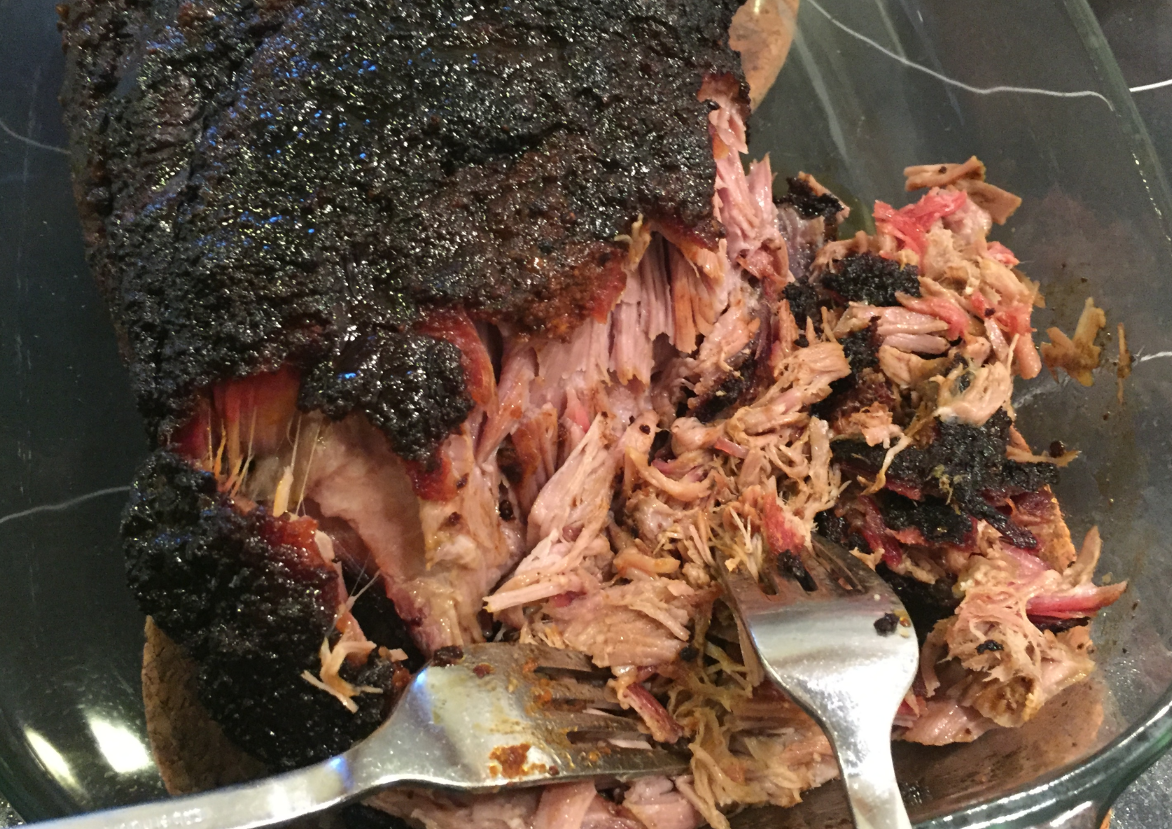
My best tip beating timezone tiredness is to get out and tank as much sunlight as I can after. It has been a beautiful day today, I got a lot of sunlight, so here is a share of that:

Sun against Jetlag

Sun against Jetlag (click to enlarge)

Continue reading

NXP FlexIO Generator for the WS2812B LED Stripe Protocol

The challenge with the selection of a microcontroller for a project is: which one has the required number of UART, I2C, SPI? Combine this with the desired package (48pins, 64pins? LQFN?), the needed FLASH and RAM size and then even the hundreds of available microcontroller shrink to a handful only. And many times I need to make compromises: such as I need two hardware I2C, but the microcontroller matching all my other needs has only one I2C hardware. So I might end up with bit-banging the slower I2C bus. Doable, but not ideal.

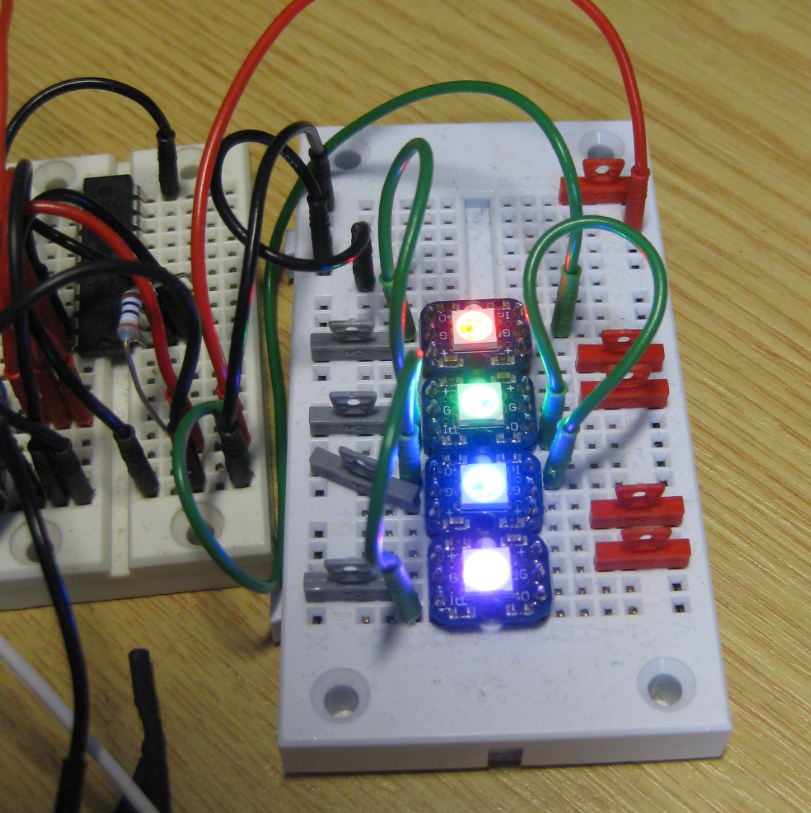
What is cool that some of the newer NXP Kinetis microcontroller come with an interesting hardware: FlexIO. A peripheral hardware which allows me to implement a custom protocol, including driving WS2812B (Adafruit NeoPixel) LEDs with a FRDM-KL43Z board:

Four NeoPixels with FlexIO

Four NeoPixels with FlexIO

Continue reading

Tutorial: FreeRTOS with NXP Kinetis SDK V2.0 and Processor Expert

In “Tutorial: Blinky with NXP Kinetis SDK V2.0 and Processor Expert” I used Processor Expert components with the NXP Kinetis SDK to blink some LEDs. This tutorial extends the earlier project and adds FreeRTOS.

FreeRTOS running on a NXP FRDM-K22F Board

FreeRTOS running on a NXP FRDM-K22F Board

Continue reading

Tutorial: Blinky with NXP Kinetis SDK V2.0 and Processor Expert

In “Mother of Components: Processor Expert with NXP Kinetis SDK V2.0 Projects” I presented an approach how to use Processor Expert components with the NXP Kinetis SDK. This article is a tutorial how to create a blinking LED project with that approach, using McuOnEclipse Processor Expert components and the Kinetis SDK V2.0. As board the FRDM-K22F is used:

Blinky on a FRDM-K22F with SDK V2.0 and Processor Expert

Blinky on a FRDM-K22F with SDK V2.0 and Processor Expert

Continue reading

Build Configurations in Eclipse

Eclipse based IDE’s have a powerful feature to make ‘variants’ of the same projects: Build Configurations. Build configurations are a powerful thing in Eclipse: they allow me to make ‘variants’ of a project. The project will share the common things, and I can simply tweak things one way or the other for example to produce a ‘release’ or a ‘debug’ binary of my application without duplicate the project.

Build configurations are manged through either the context menu on the project or with the top menu:

Eclipse Project Build Configuration

Eclipse Project Build Configuration

Continue reading