Investigating ARM Cortex® M33 core with TrustZone® – running TrustZone® example projects in MCUXpresso IDE

Last week I wrote about why we need the TrustZone® security extension for ARMv8-M. There are software use-cases where it can be very helpful to partition the software into 2 separate worlds, secure and non-secure. TrustZone® acts as the gatekeeper between these two worlds and manages how the core transitions between the worlds. The ARMv8-M architecture introduces two new States for the core – secure and non-secure. Cortex® M33 core (and M23 core also) is implemented to ARMv8-M standard and of course supports the two new states.
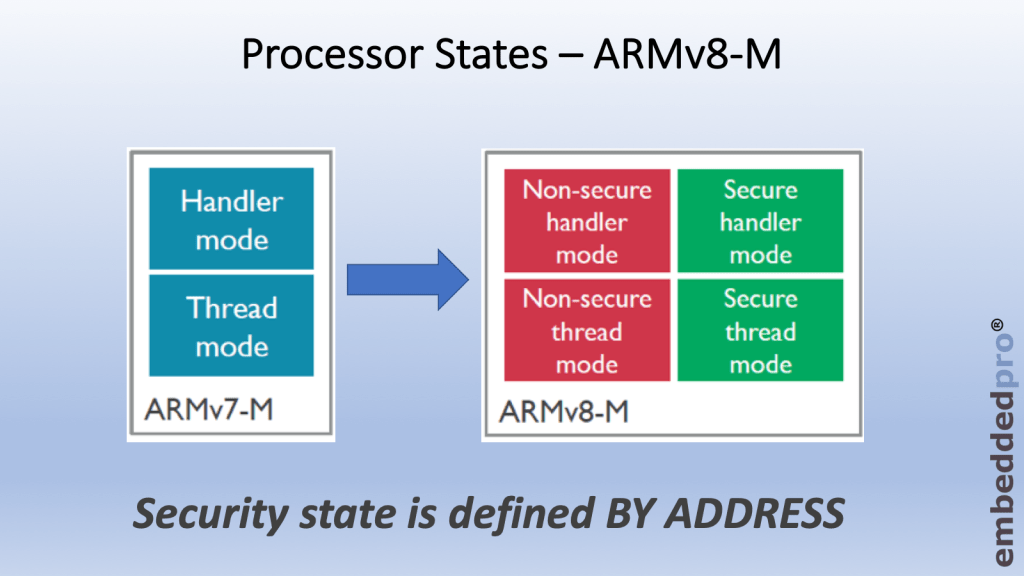
ARMv8-M architecture introduces 2 states for the core – secure and Non-secure
Continue reading

Linking Bootloader Applications with Eclipse and FreeMarker Scripts

Bootloaders are a fine thing: With this I can load any applications I like. Power comes with some complexity, and a bootloader alone is a complex thing already. But this applies to the application part too: I need to link the application to a certain offset in the memory space so it can be loaded by the bootloader, plus the application typically needs to add some extra information to be used by the bootloader. This article describes how to build a bootloader application with Eclipse (MCUXpresso IDE) using the MCUXpresso SDK.

Build Configuration for Bootloader Application

Continue reading

Investigating ARM Cortex® M33 Core with TrustZone® – What is TrustZone® anyway?

After the Getting Started material from the previous weeks, today we are ready to investigate TrustZone®. We all remember TrustZone® – it is that magic piece of embedded IP that miraculously solves all of our IOT security problems – right? It’s true that TrustZone® is an embedded component related to security, but not in the way that you think.

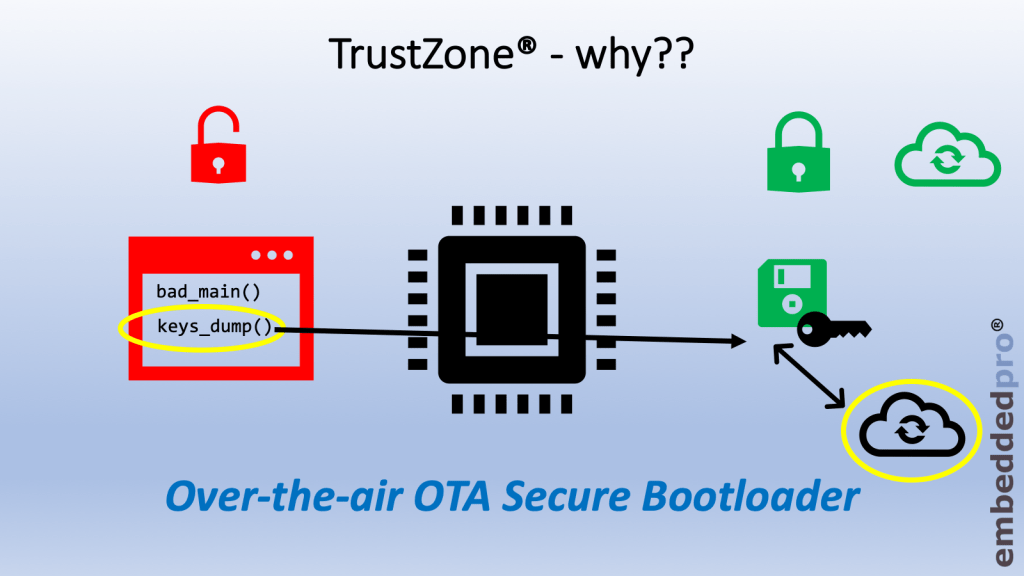
Non-trusted software can dump out our keys to a cloud server hosted by malign third-party

Before we get stuck into all the fancy technical details, let us at first stop and think about some of the challenges that we face with embedded systems, and what can be done about them. This week I simply address the topic: What is TrustZone® and Why do we need it??

Continue reading

Stack Canaries with GCC: Checking for Stack Overflow at Runtime

Stack overflows are probably the number 1 enemy of embedded applications: a call to a a printf() monster likely will use too much stack space, resulting in overwritten memory and crashing applications. But stack memory is limited and expensive on these devices, so you don’t want to spend too much space for it. But for sure not to little too. Or bad things will happen.

The Eclipse based MCUXpresso IDE has a ‘Heap and Stack Usage’ view which can be used to monitor the stack usage and shows that a stack overflow happened:

Heap and Stack Usage

Heap and Stack Usage

But this is using the help of the debugger: how to catch stack overflows at runtime without the need of a debugger? There is an option in the GNU gcc compiler to help with this kind of situation, even if it was not originally intended for something different. Continue reading

Investigating ARM Cortex® M33 core with TrustZone® – Using the Clocks Config Tool

Clocks. I’ve always found the clock setting of a microcontroller one of the hardest things to get right during my embedded career. If I re-use the clocks setup from the development board it is easy. But if the development board runs from a crystal and I want to use the free-running internal clock, or if I change to a different frequency crystal (and keep the same PLL output frequency) it always gets difficult. To be honest I’ve developed some projects early in my career and never been 100% certain at what frequency the core, flash and peripherals are running.

That’s not good.

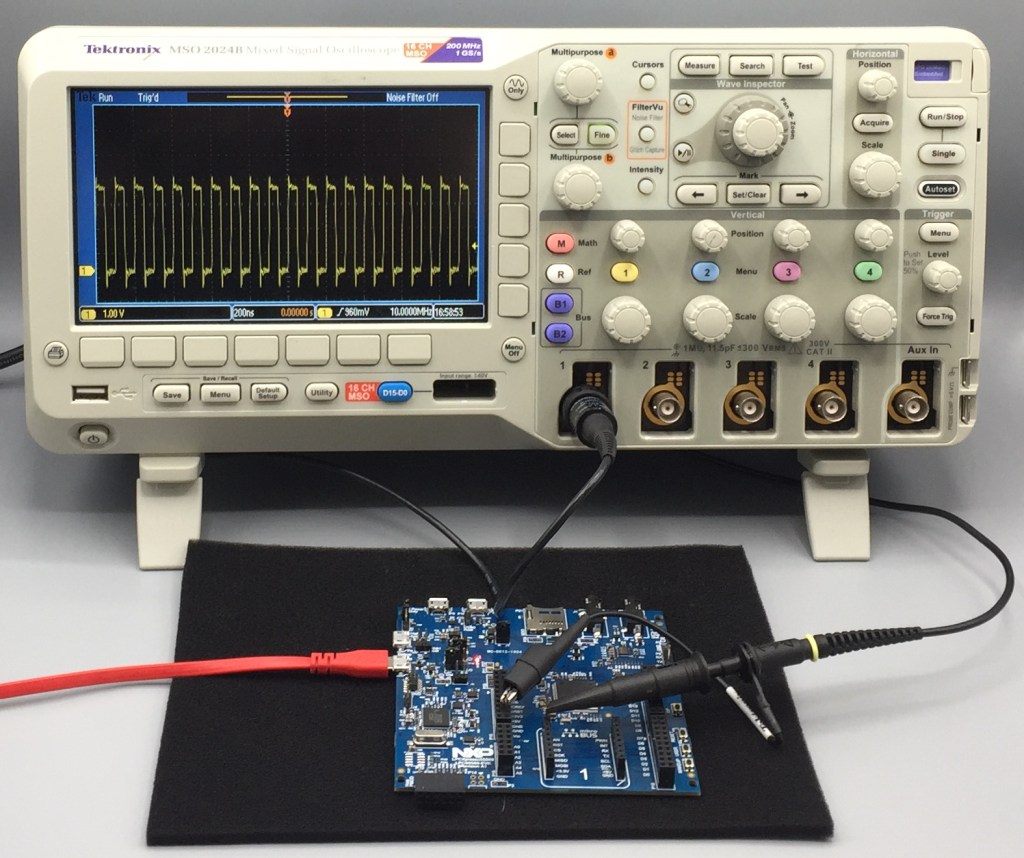
The Config Tools within the MCUXpresso brand have greatly simplified setting up the pins, clocks, peripherals (and next week – Trusted Execution Environment 🙂 ) on NXP microcontrollers. So I’m going to quickly show you how to set up 3 different clock arrangements, and output the main clock to an output pin named CLK_OUT.

Continue reading

Eclipse JTAG Debugging the ESP32 with a SEGGER J-Link

When Espressif released in 2014 their first WiFi ESP8266 transceiver, they took over at least the hobby market with their inexpensive wireless devices. Yet again, the successor ESP32 device is used in many projects. Rightfully there are many other industrial Wi-Fi solutions, but Espressif opened up the door for Wi-Fi in many low cost projects. Many projects use the ESP devices in an Arduino environment which basically means decent debugging except using printf() style which is … hmmm … better than nothing.

What is maybe not known to many ESP32 users: there *is* actually a way to use JTAG with the ESP32 devices :-). It requires some extra tools and setup, but with I have a decent Eclipse based way to debug the code. And this is what this article is about: how to use a SEGGER J-Link with Eclipse and OpenOCD for JTAG debugging the ESP32.

Roboter with ESP32 and JTAG Debug Port

Robot with ESP32 and JTAG Debug Port

Continue reading

Investigating ARM Cortex® M33 core with TrustZone® – Setting up your environment and creating your first project with MCUXpresso IDE

This is the second of my 17-part video tutorial series investigating the ARM Cortex® M33 core with TrustZone® security extension. My preferred platform for this investigation is the LPC55S69 from NXP, and of course it is necessary to have a development board and IDE. So I’m using the LPC55S69-EVK with NXP’s MCUXpresso IDE and the MCUXpresso Software Development Kit (SDK).

This week the video is really low on theory, but high on practical, step-by-step information to get started with these tools. Maybe you are similar to me, and make the same mistake every time?? I get the self-assembly furniture home from the store, or open the box containing the new development board and just get started. At some point it doesn’t work properly and that’s the time I must read the supporting information.

Well, with this video I show you beginning-to-end in just over 10 minutes, and you won’t need to refer to any other material.

During the video I show you the following steps:

Continue reading

Investigating ARM Cortex® M33 core with TrustZone® – Unboxing and Getting Started

Hi, I’m Mark from embeddedpro® in the United Kingdom and Erich’s allowed me to be a guest blogger here on mcuoneclipse. At many industry events, trade shows and conferences I’ve seen and given presentations about TrustZone®, but have not found tutorials or practical information online.

So I’m creating a 17 part video tutorial series (it will be published weekly here) investigating the ARM Cortex® M33 core with the TrustZone® security extension. Each week from now until the end-of-year holidays I will let you know what I’ve found out with a blog here, and a video blog on youtube. My friends at NXP have given me a LPC55S69-EVK board as the basis for my experiments:

LPC55S69-EVK (linked from nxp.com)

This is my first quick post showing the unboxing of the LPC55S69-EVK and the out-of-box experience.

Continue reading

Building and Flashing ESP32 Applications with Eclipse

The new semester is approaching in a very fast way, and so is the new lecture and lab module ‘Advanced Distributed Systems’ at the Lucerne University. For that module we are going to build a new ‘Sumo’ style robot with WLAN capabilities using the ESP32 chip. It will be a new robot PCB, and below is the current robot (based on NXP K22FX512) with the WLAN module connected to it:

Zumo connected to TTGO ESP32 module

Zumo connected to TTGO ESP32 module

Continue reading

Tutorial: How to Optimize Code and RAM Size

It is great if vendors provide a starting point for my own projects. A working ‘blinky’ is always a great starter. Convenience always has a price, and with a ‘blinky’ it is that the code size for just ‘toggling a GPIO pin’ is exaggerated. For a device with a tiny amount of RAM and FLASH this can be concerning: will my application ever fit to that device if a ‘blinky’ takes that much? Don’t worry: a blinky (or any other project) can be easily trimmed down.

Binky on NXP LPC845-BRK Board

Binky on NXP LPC845-BRK Board

I use a ‘blinky’ project here just as an example: the trimming tips can apply to any other kind of projects too.

Continue reading