In “Debug Multiple Boards with GDB at the Same Time” I have used the Segger J-Link to debug multiple boards, from the same IDE, at the same time. The remaining question in that article was: how to do the same the P&E Multilink/OpenSDA?
Category Archives: Boards
Semihosting with Eclipse and the NXP Kinetis SDK V2.0
The world is changing, and the say is “change is good” :-). In the software and API world, change very often means that a change results into something broken. So I had battled with semihosting working on the NXP Kinetis parts, only to find out that it does not work any more with using the latest version 2.0. The semihosting output e.g. with P&E debug connection remains empty:
So how to fix this?
Solution for OpenOCD “Cannot communicate… target not haltet”
Related to my earlier article about using OpenOCD, I want to share something I have learned (again) with OpenOCD v0.10.0:
I was running often into the following error:
Warn : Cannot communicate... target not halted. Error: auto_probe failed Error: Connect failed. Consider setting up a gdb-attach event for the target to prepare target for GDB connect, or use 'gdb_memory_map disable'. Error: attempted 'gdb' connection rejected
FreeRTOS Thread Debugging with Eclipse and OpenOCD
FreeRTOS is probably the number one RTOS used, and Eclipse is likely the most popular IDE I can think of. But debugging FreeRTOS applications with Eclipse and GDB is somewhat limited? What I would like to get at the minimum is this: ability to see all the different threads in the Eclipse debug view like this:
As you might guess from that screenshot: this post is about how to make FreeRTOS tread debugging possible with Eclipse and GDB :-).
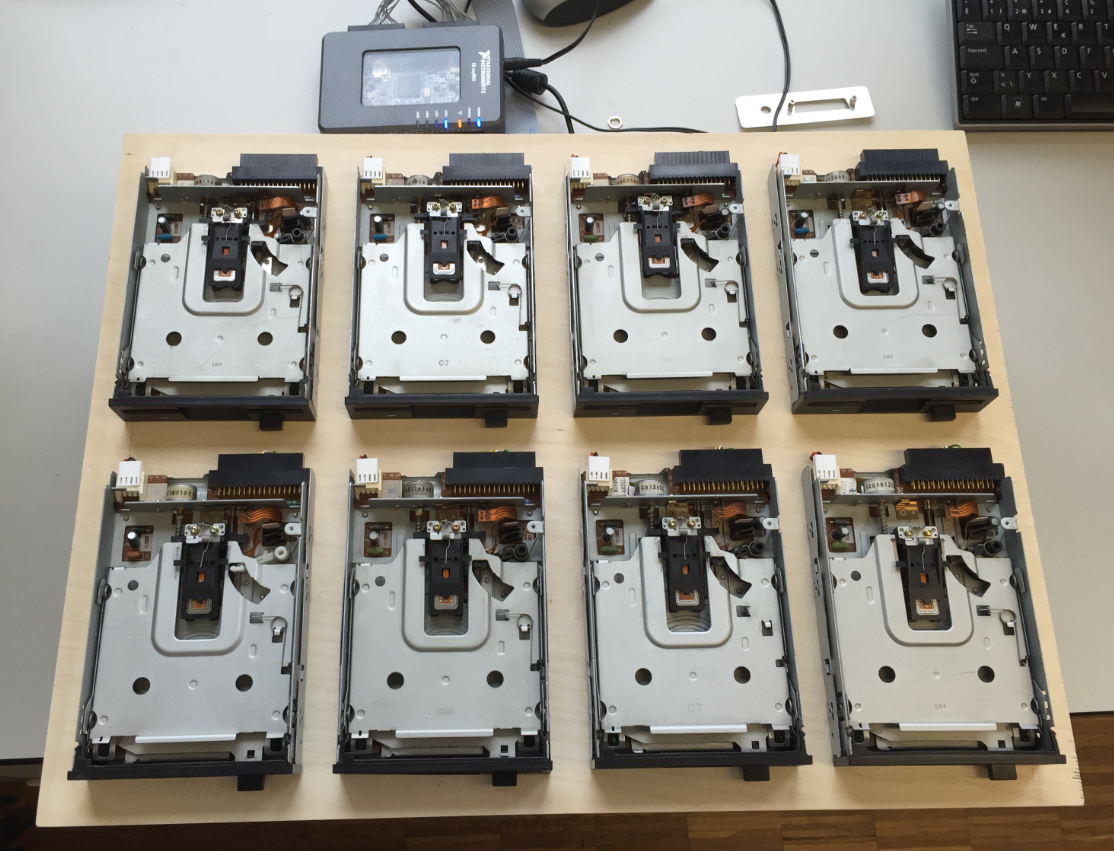
Music Player with Eight 3.5″ Diskette Drives
These days, everyone is using USB memory sticks to transfer data from one machine to another. Or we are using CDs or DVD’s to install software. Well, sometimes at least.
Still remember the ‘old’ days where 3.5″ Diskettes were commonly used? Seems like these days are gone. So what to do with that hardware? Play music!
Flashing many ARM Boards without a Host PC
So here I have 50 new NXP Kinetis K22 Robot boards (see “Zumo Robot with Magnetic Encoders“), and they all need to be programmed with the first firmware on the bench:
The challenge is: how to do this in a fast an efficient way, without the need for an IDE or even host PC machine?
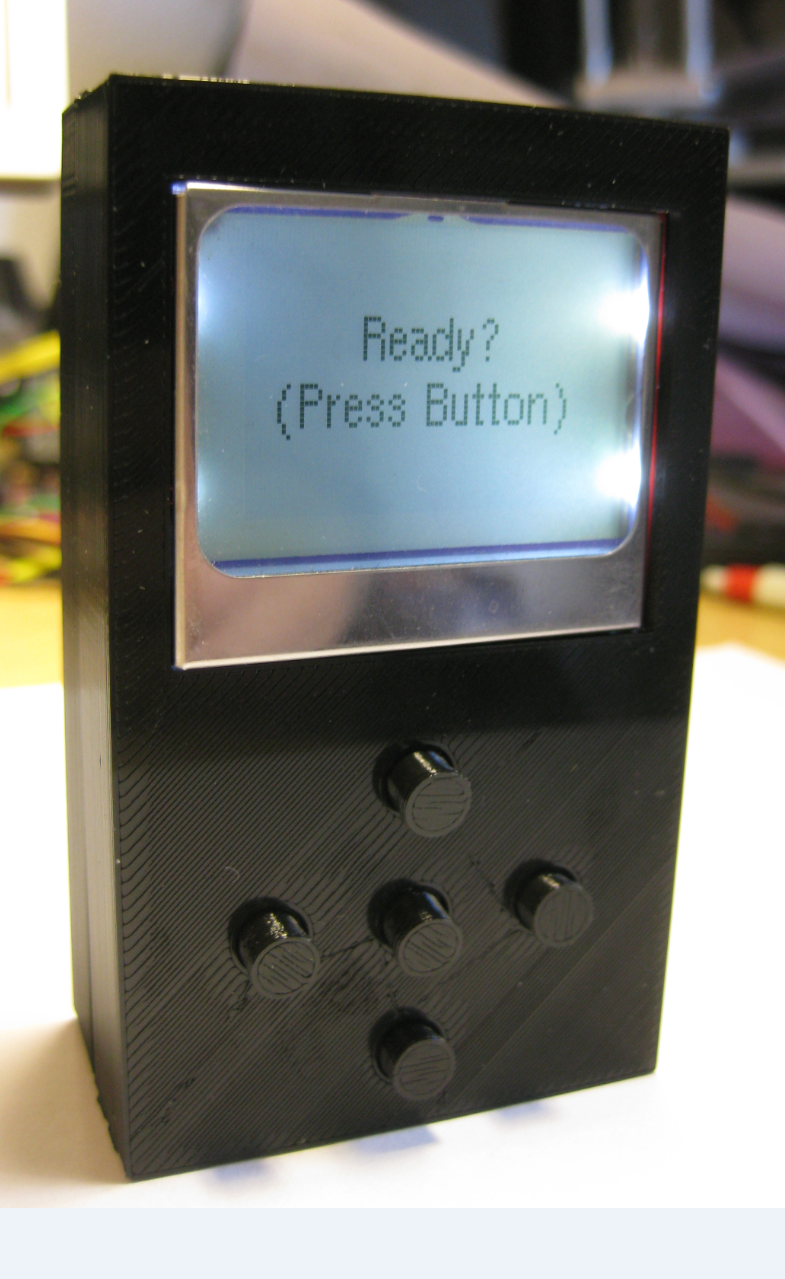
3D Printed Gameboy and Remote Controller with tinyK20 Board
As a remote controller for the Sumo robot (see “Zumo Robot with Magnetic Encoders“) we have used so far a combination of NXP FRDM-KL25Z board and a Joystick Shield (see “Joystick Shield with nRF24L01 driving a Zumo Robot“). That solution was not ideal, so this weekend I created a 3D printed prototype:
Zumo Robot with Magnetic Encoders
We are using robots to teach advanced embedded system programming at the Lucerne University (see “Sumo Robot Competition“). Students can buy the kit, and we are running out of available hardware. Time to produce a new series of robots :-). It took us a while to get to the next revision of the Zumo Robot, but finally the first one has been produced and assembled, and I think it is looking good :-).
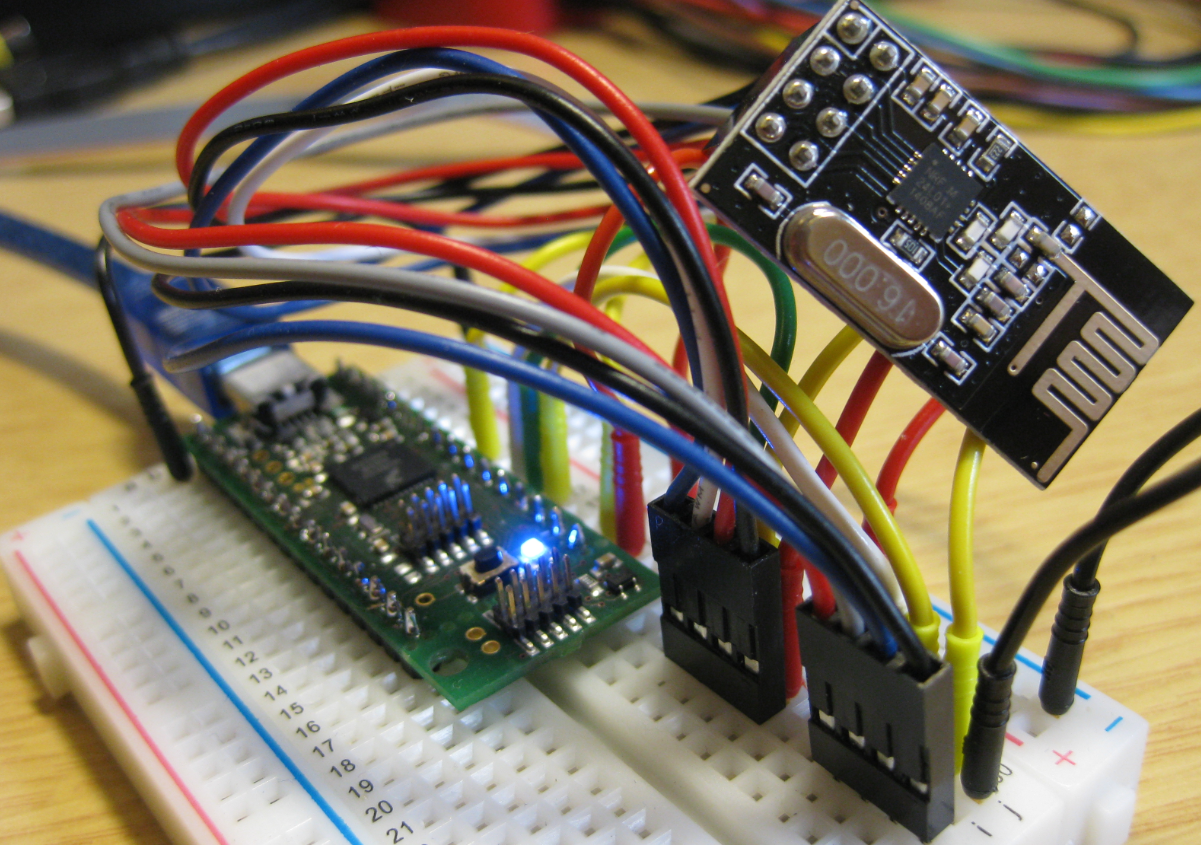
nRF24L01+ 2.4 GHz Wireless Connectivity with the tinyK20 Board
I’m using the tiny and inexpensive Nordic Semiconductor nRF24L01+ transceiver (see “Tutorial: Nordic Semiconductor nRF24L01+ with the Freescale FRDM-K64F Board“) in many projects: it costs less than $3 and allows me to communicate with a proprietary 2.4GHz protocol in a low power way (see “IoT: FreeRTOS Down to the Micro Amps“). I have that transceiver now running with the tinyK20 board too:
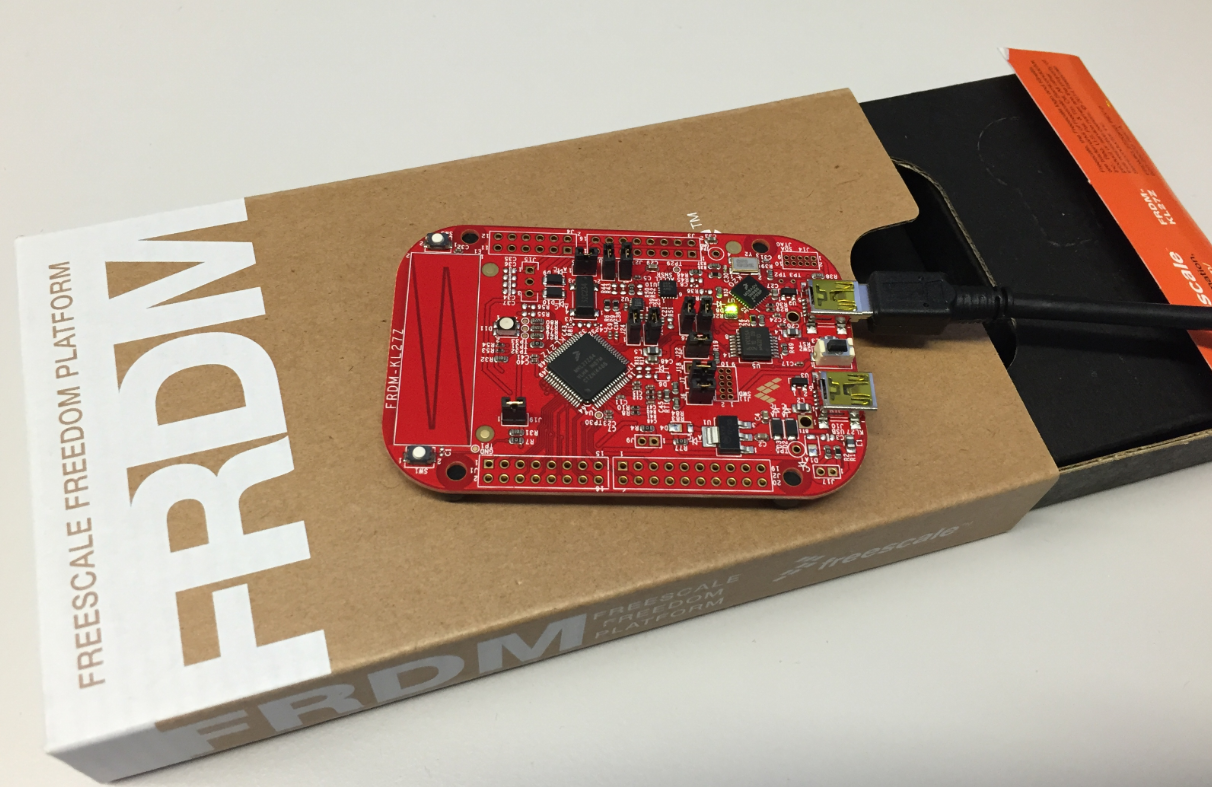
Tutorial: Blinky with the FRDM-KL27Z and Kinetis SDK v2
I’m using the FRDM-KL25Z in my classes, and that board is very popular: low price (<$15), reasonable features (48 MHz ARM Cortex M0+, 128 KByte of FLASH, 16 KByte of RAM), and many tutorials elsewhere and on McuOnEclipse :-).
For the next (Fall) semester I’m looking for alternative boards, and one is the Freescale (now NXP) FRDM-KL27Z: