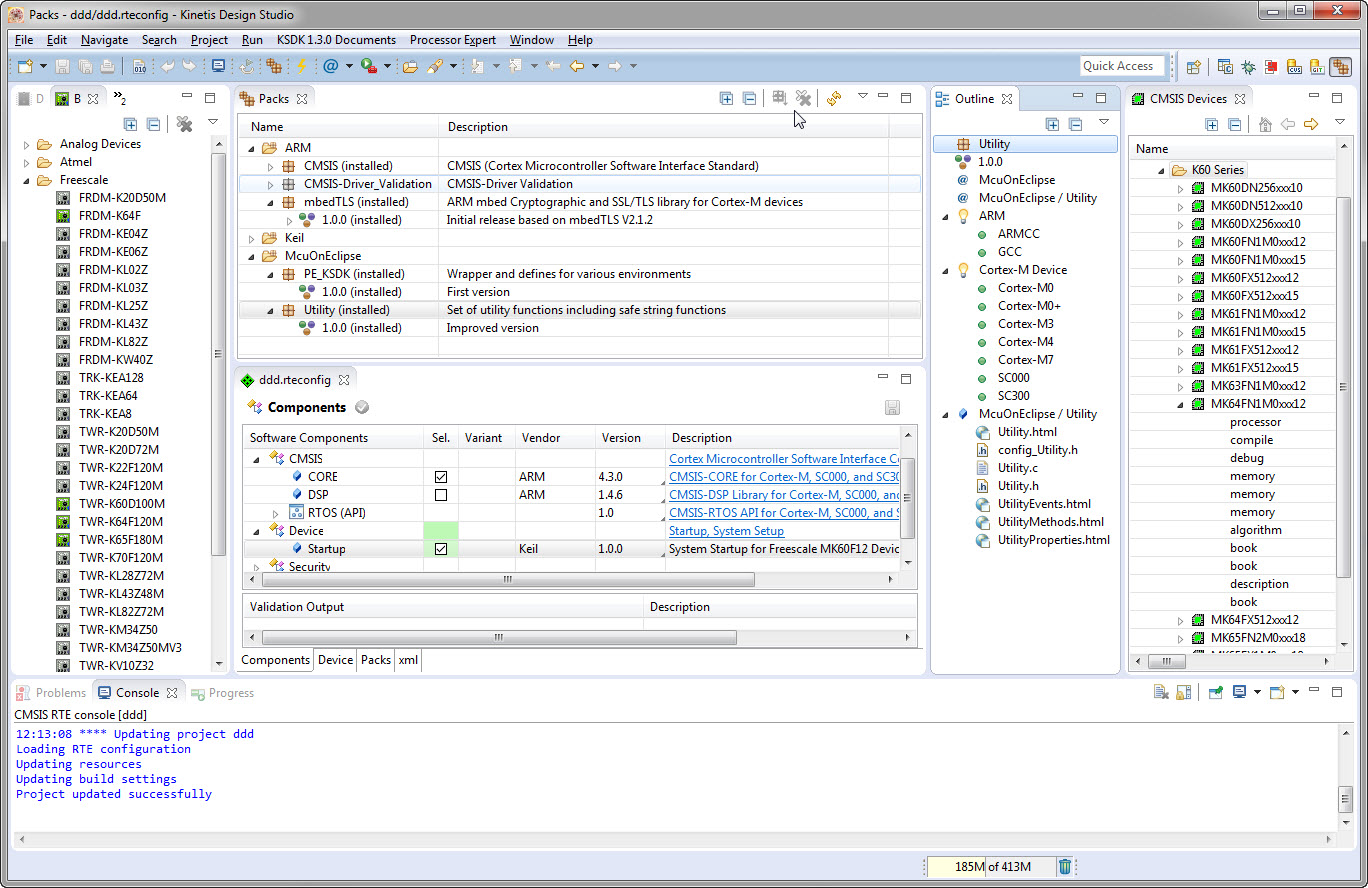
I’m using Processor Expert components for nearly every Freescale (now NXP) projects: for S08, S12, ColdFire, DSC and especially all the different NXP Kinetis devices. Not only because it makes software development fast and easy and allows re-use of software, but as well because Processor Expert has a good way to pack and distribute software components. Unfortunately Processor Expert is not any more included for the new Kinetis devices (see “First NXP Kinetis SDK Release: SDK V2.0 with Online On-Demand Package Builder“). So I have looked into an alternative and hopefully vendor neutral way to build and distribute software packages using CMSIS-Pack.
Yearly Archives: 2016
Winter is not over yet…
Image
Overnight the higher areas received lots of snow, while it was raining in the lower areas, creating a ‘blue, white and green painting’. A new rain and snow weather front is coming, but there was a small blue sky window in the morning. With the sun coming up in my back, I captured the view towards the snow-covered Rigi mountain range:
Happy Snowing 🙂
McuOnEclipse Components: 7-Feb-2016 Release
New in this release:
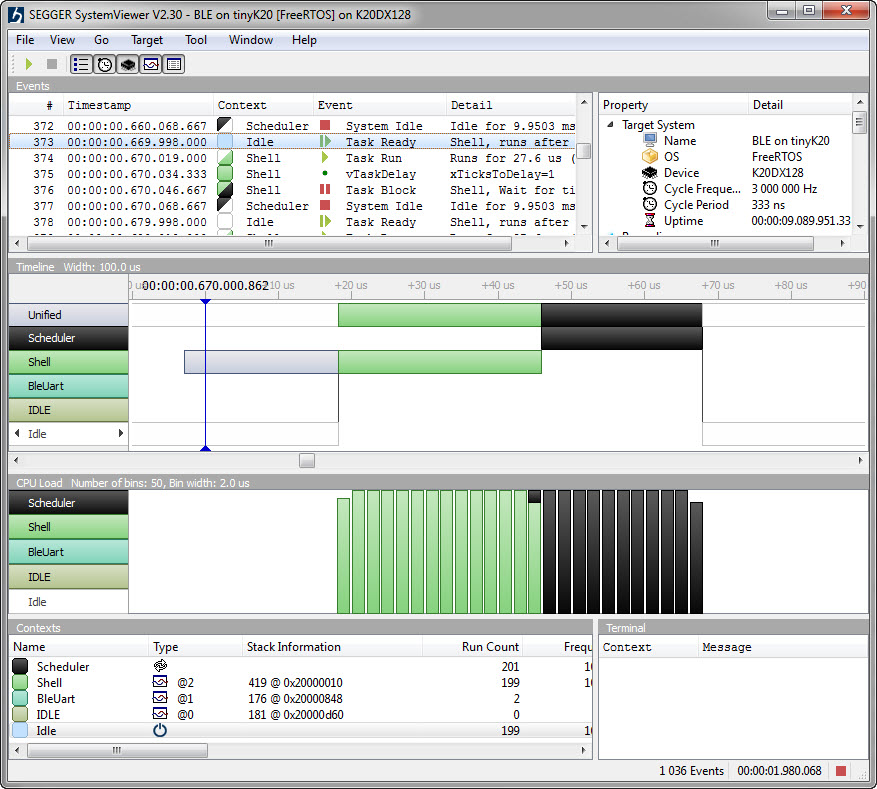
- Segger SystemViewer: Upgraded to V2.30, added stack high-water mark
- Segger RTT: fixed BASEPRI issue on Cortex M4 for critical sections
- Utility: Fixed issue with Utility module and Kinetis SDK (usage of ‘byte’)
- USB CDC: property to specify USB device current usage, new status getter functions.
Composition in Black, White, Orange and Blue
Image
The Föhn Wind kept me up tonight: it was pretty strong with 90-110 km/h browsing through the central valleys of Switzerland. An amazing sunrise with colors I have rarely seen compensated for that restless night with a natural painting:
The clouds are arranged in lines: this because the Föhn Wind is building ‘standing wind waves over the mountains: if the wind goes up it, water condensate and builds the cloud lines.
Happy Föhning 🙂
Kinetis Lava LED Light Cube
In “openHAB RGB LED Light Cube with WS2812B and NXP Kinetis” I started experimenting Kinetis boards, a LED cube diffuser and Adafruit WS2812B NeoPixel LEDs. That worked well, but I was not to very happy about the visual effect. So here is my next version: I wanted to have control over each side of the cube. For this I have built a cube inside the cube with a 3D printed structure:
Tutorial: Bare-Metal Shell for Kinetis
I have been asked to provide a command line shell example for a bare-metal (no RTOS) application, so here we go!
Having a way to communicate to the firmware on a board is essential for most of my projects: it is simply, incredibly helpful and easy to do (see “A Shell for the Freedom KL25Z Board“). This tutorial shows how to add a simple command line shell to the NXP Freedom board which then can be extended as necessary.
Freefall
Quote
“It’s not the fall that kills you; it’s the sudden stop at the end.”
Douglas Adams
I think I have to re-read all the Douglas Adams books as I’m not sure where he wrote that quote. Anyone?
Happy Reading 🙂
Forces of Nature: Video of Destructive Rockslide
Overnight it was raining a lot in the central part of Switzerland. Additionally it is warming up so it adds water with all the snow melting in the higher areas. As a result, a dangerous rock- and mudslide went down today nearby in Moutathal, damaging bridges and power lines. A video records the destructive power of nature:
The Return of the 3D Printed Flying Toaster!
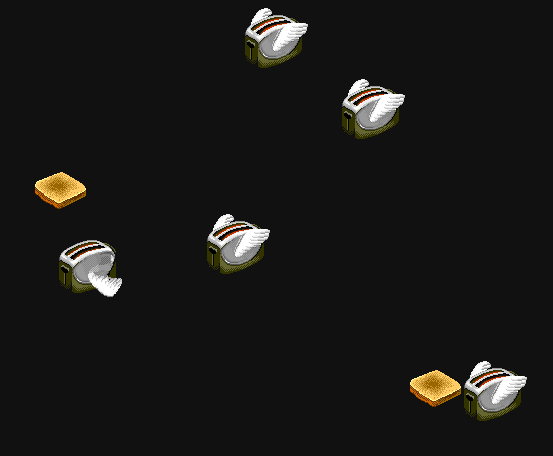
Does everybody still know why in the ‘old’ days there was the need for running a ‘screen saver’ on the computer? With the modern LCD displays they lost their initial purpose. After “3D Printed Classic Mac Apple Watch Charging Station” I’m doing more ‘good old days’ 3D printing. The ‘elder ones’ might remember the “After Dark” screen saver software for Apple Macintosh and Microsoft Windows machines. Yes, that was 1991! For me most famous and iconic theme were the “Flying Toasters”:
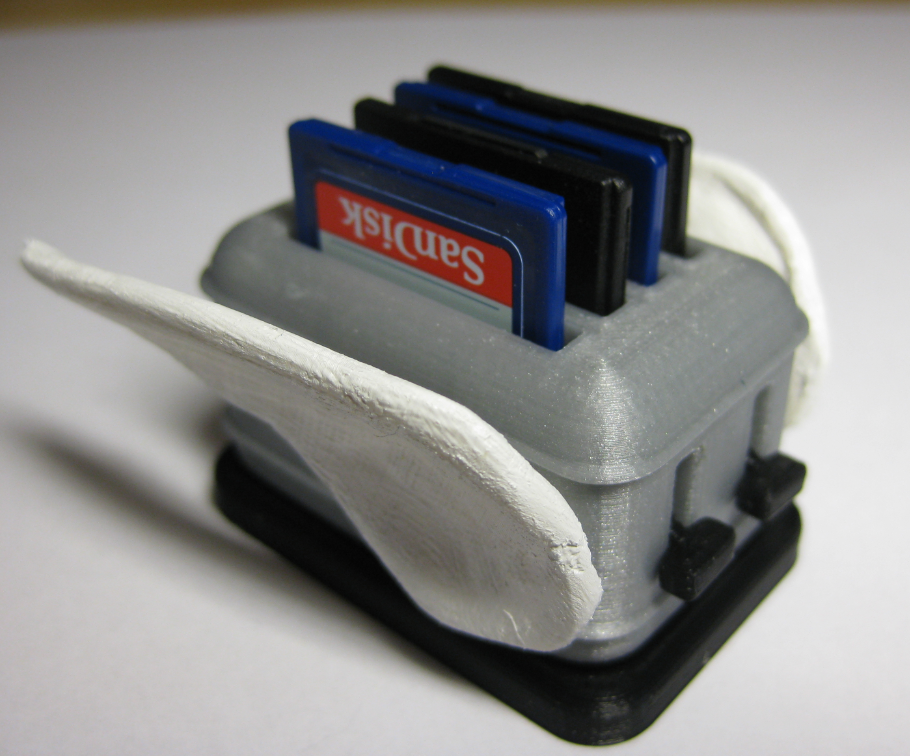
Now there is a 3D printed version 🙂
openHAB RGB LED Light Cube with WS2812B and NXP Kinetis
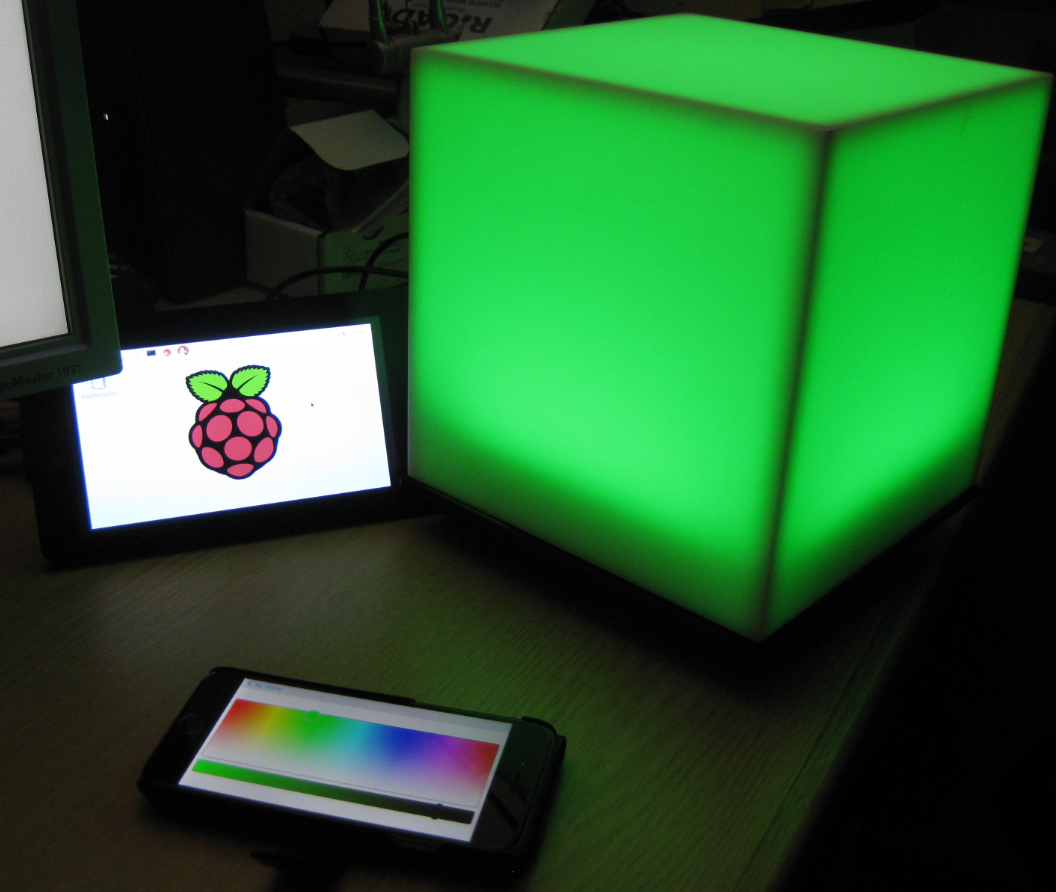
From my earlier work to use the NXP Kinetis with openHAB (see “Controlling NXP Freedom Board RGB LED with openHAB and Raspberry Pi“) it was only a small step to control a 20x20x20 cm light cube with 256 Adafruit WS2812 NeoPixels: