On Monday the new semester starts, and yet again: we will do a Sumo thing :-). They can choose which tool chain they would like to use to develop their application for the ARM Cortex-M0+ used from Freescale. One option is to create a ‘Do-It-Yourself’ toolchain. Since the start of the series, things have evolved: there is a new GNU ARM tool chain available, Segger has updated their drivers, and most important the GNU ARM Eclipse plugin has been greatly extended to support Freescale parts and Processor Expert. So instead to read through all the previous tutorials, this one is about putting together a free tool chain less than 10 minutes (not counting the time to download around 500 MByte).
Foehn Wind and Ground Fog
Gallery
This gallery contains 2 photos.
The local weather in my area in Switzerland has amazed the past weeks. It has been much warmer than usual. And the weather fronts are changing daily. Having a Föhn (or Foehn) situation in the north valleys of the Alps: … Continue reading
IoT: FreeRTOS Down to the Micro Amps
University research projects can be a lot fun, and are very challenging the same time. The good thing is that there is always someting new to learn :-).
This week-end I was working on my Internet of Things (IoT) project, based on a Freescale KL15Z and a nRF24L01+ transceiver. In essence it is a wireless data logger. For this, I only can afford a few micro amps consumed by the whole board over an extended period of time. I mean 21 micro amps for running a whole board with sensor, EEPROM, wireless transceiver, operating system and an ARM Cortex-M0+ ready to crunch numbers at 20 MHz 🙂
Burning Morning Sky
Gallery
This gallery contains 6 photos.
Today was again one of these days: Getting up to work early in the morning has one possible benefit: there is a chance to watch a wonderful sunrise. If the conditions are right, then the morning sky can glow in … Continue reading
CriticalSection Component
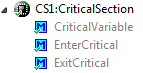
I have created and published on GitHub a new component ‘CriticalSection’:
This component is a wrapper between my components and the problematic current implementation in Processor Expert (see EnterCritical() and ExitCritical(): Why Things are Failing Badly). It uses a flexible approach and uses macros to either use my modified version of EnterCritical() and ExitCritical(), or simply defaults to the original implementation.
EnterCritical() and ExitCritical(): Why Things are Failing Badly
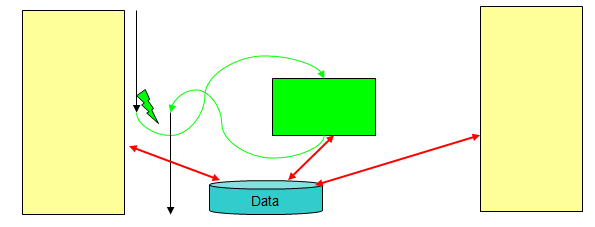
I have carefully implemented my firmware. It works perfectly for hours, days, months, maybe for years. If there would not be this problem: the firmware crashes sporadically :-(. Yes, I’m using watchdogs to recover, but hey: it is a serious problem. And because it happens only under rare and special conditions, it is hard to track it down or to debug it.
The thing is: these nightmares exist, and they are real and nasty. I’m pushing my students hard on this topic: It is about how to protect critical sections. And what could go wrong. And here is just yet another example: how it can go badly wrong if you are not careful. And it took me a while too to realize where the problem is. It was not a fun ride….
Snow on Green
Gallery
This gallery contains 3 photos.
January 25th 2014. It was a cold night, with little snowfall overnight. A beautiful morning, blue sky with a wonderful sun light, slowly melting away the snow in the lower areas. Parts of Lake Lowerz are still frozen. The green … Continue reading
FRDM with Arduino Ethernet Shield R3, Part 3: Embedded Web Server
This is Part 3 of an ongoing tutorial to use the Arduino Ethernet Shield R3 with a Freescale FRDM-KL25Z board (or any other board you like).
In Part 1 I worked on the SD card, in Part 2 I have added basic network connection. Now time to run a web server with my FRDM-KL25Z :-). With this, I can get access to my board through the network, and the board will host a web page where I can do pretty much everything: showing status, or adding functions to turn on things like an LED 🙂
Inversion
Gallery
This gallery contains 2 photos.
‘Inversion‘ is a meteorology phenomena in my area in Switzerland: typically the air gets colder the higher you get up in the mountains. But under special conditions during Fall/Winter time, it is possible that cold air is on the ground, … Continue reading
DIY Free Toolchain for Kinetis: Part 8 – Processor Expert, Eclipse and GNU ARM Eclipse Plugins
There has been many new releases these days: Freescale released Processor Expert Driver Suite 10.3, and Liviu Ionescu released new GNU ARM Eclipse Plugins with new and updated documentation. So time for me to show how this all comes together 🙂
It is now easier than ever before to use the GNU ARM Eclipse plugins and Processor Expert. There are still some manual steps, and this post is about all the details to get it working as smooth as possible.