Low Power LCD: Adafruit Breakout Board with Sharp Memory Display

Many projects benefit from a small display as a user interface. For very low power applications this is usually a no-go as the display needs too much energy. I have used e-paper displays from Kent: while these e-paper displays do not need any power to keep the image, changing the display content is not for free, plus is very slow (around 1 second needed to update the display). So I was looking for something low power and fast for a long time, until Christian (thanks!) pointed me to a display from Sharp: both very low power and fast:

Font Test with Sharp Memory Display

Font Test with Sharp Memory Display
Continue reading

Tutorial: STMicroelectronics VL6180X Time-of-Flight LIDAR Sensor

For many of my applications I need to measure a distance. I have used ultrasonic sensors, but there view angle (beam) is not able to detect smaller objects, it very much depends on the object surface and angle, it is slow and not very precise. I have used infrared sensors, but here again it depends on the infrared reflection of the object in range, it depends the amount of reflected light is not really telling much about the distance, and yet IR reflection is subject of material and object targeted.

But there is yet another sensor type to consider: ToF! ToF (or Time-of-Flight) sensors have a built-in LIDAR: The sensor is sending out light pulses and measures how much time it takes for the light to come back. Similar to ultrasonic sensors (see “Tutorial: Ultrasonic Ranging with the Freedom Board“), but instead of ultrasonic it uses an infrared laser light. Or think about a radar system using an infrared laser light.

Vl6180x Breakout Board with tinyK20 Microcontroller-board

Vl6180x Breakout Board with tinyK20 (NXP Kinetis K20) Microcontroller-board

Continue reading

Making-Of Sea Shell Sand Clock

The year is coming to an end, the Holiday season is approaching. In case you are looking for a nice present: I have completed my version of a sand clock: a clock writing the time into sand:

Sandclock

Sandclock

If you are interested to build your own version, I have documented the different steps with tips and tricks…

Continue reading

MINTomat: World’s Most Complicated Bubble Gum Automata?

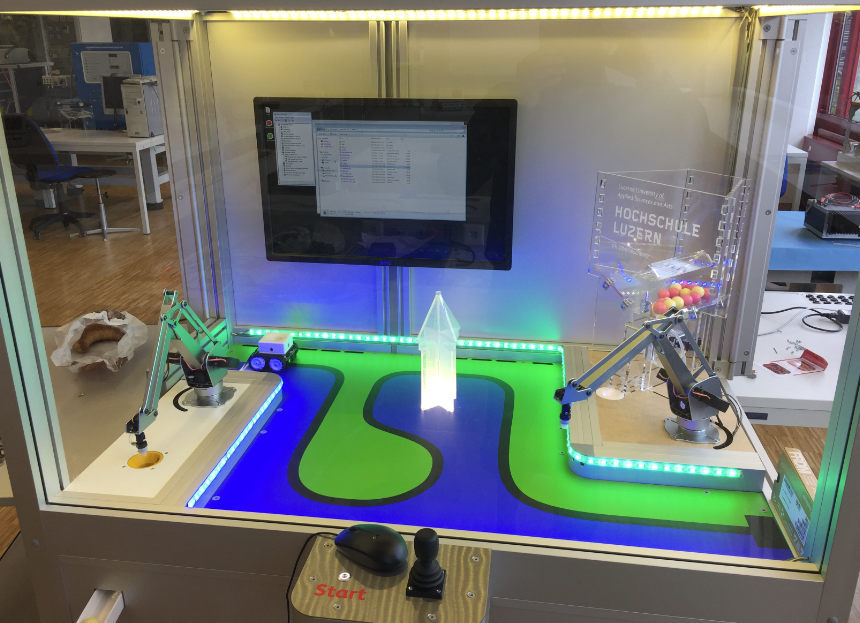
How to fascinate kids for technology? Show them that engineering is fun :-). At the Lucerne University of Applied Sciences and Arts we have created the ‘MINTomat’: a robotics system for STEM activities rewarding interaction with bubble gums:

MINTomat

MINTomat

Yes, pretty over engineered compared to a normal bubble gum automata, but that’s part of the fun :-).

Continue reading

Enclosure for the Remote Robot Controller with LCD Display

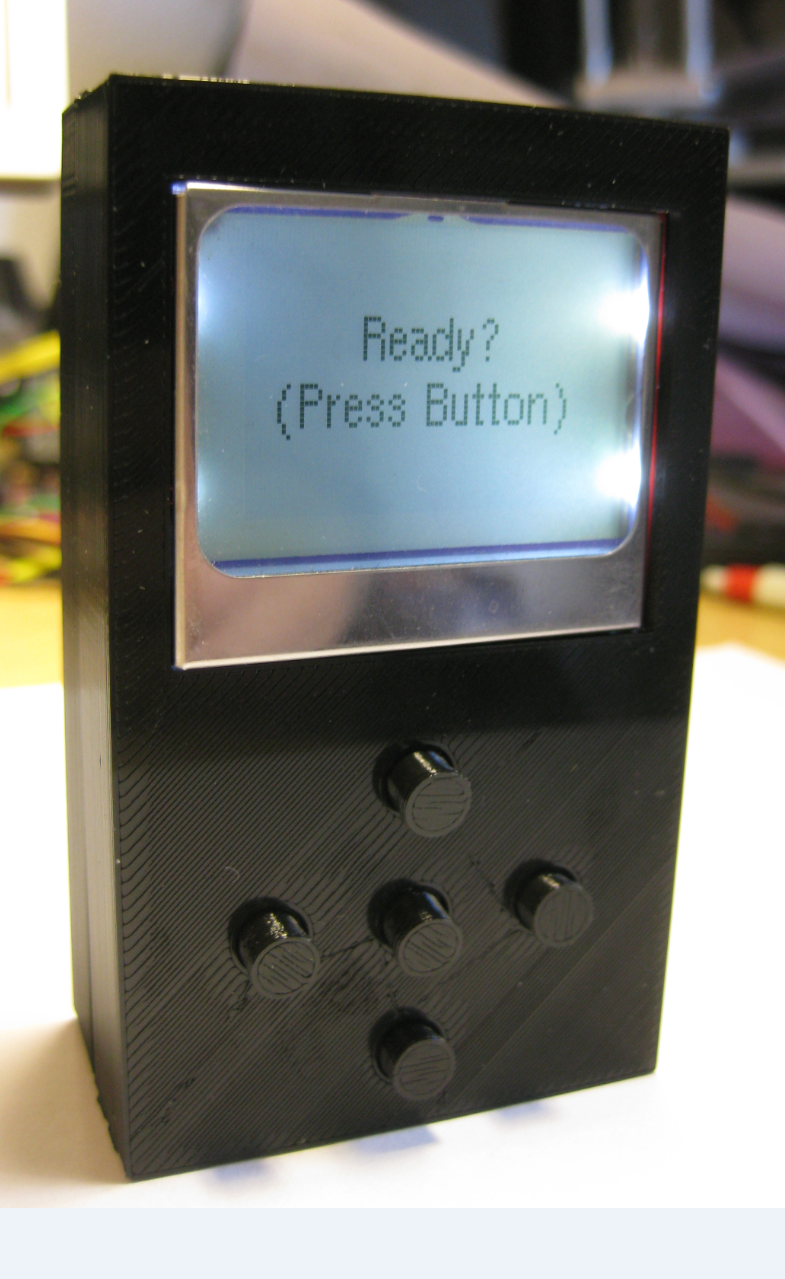
The first enclosure for the INTRO robot remote controller board (see “INTRO Robot Remote – First Production PCB“) is ready, and it is looking good:

Enclosure for the Remote Controller Board

Enclosure for the Remote Controller Board

Continue reading

Prototype of Wireless Remote Controller with NXP Kinetis K20

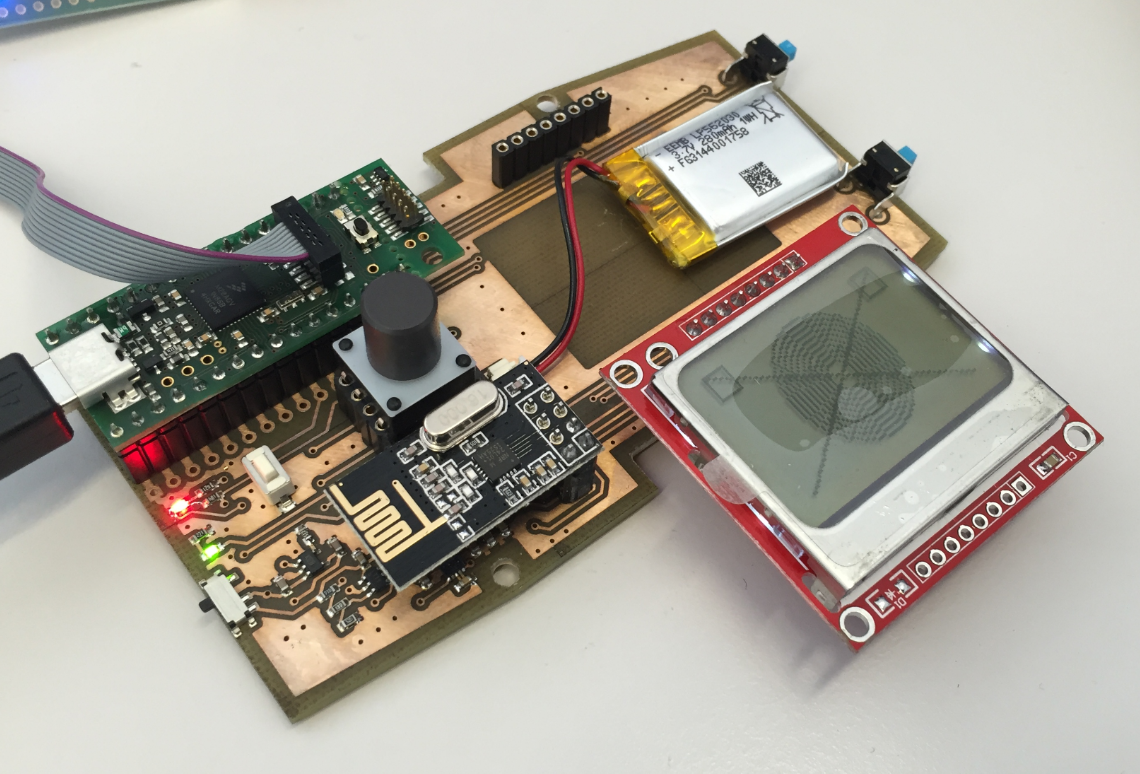
For next semester I plan to use the tinyK20 as a remote controller for the Zumo Robots. I already had an early prototype presented in “3D Printed Gameboy and Remote Controller with tinyK20 Board“, so here is the next iteration of, in a sneak preview:

Remote Controller Prototype

Remote Controller Prototype

Continue reading

Bricking and Recovering OpenSDA Boards in Windows 8 and 10

Getting a board from a distributor like Farnell/Element14/Mouser (add your own distributor) means that chances are high that the default firmware on it is written years from now because the inventory has not been updated, or because boards are still produced with that original firmware (because of testing?). So what happens if I use board with a firmware developed pre-Windows 8/10 area?

Freshly Unboxed NXP FRDM-KL25Z Board

Freshly Unboxed NXP FRDM-KL25Z Board

It might work, but chances are high that the bootloader and firmware is not ready for the ‘modern age’, and as a result the board might be bricked. If you still have a Windows 7 machine around (I do!), you are lucky. If not, then you need to read this article….

Continue reading

A Flying UAV Drone Full of Sensors

One goal of this blog is to inspire engineers, in one way or another. And when I get reports back that things were useful, I like to share it :-).

So here is something what a team of young undergraduates (Przemyslaw Brudny, Marek Ulita, Maciej Olejnik) did for theirs Master Thesis work at the Politechnika Wroclawska, Poland: a very cool flying machine controlled by two Kinetis K66, having many sensors (on own designed boards) with a custom debug/programmer board similar to the tinyK20, developed with the NXP Kinetis Design Studio:

Plane Model

UAV (Source: Thesis of Przemyslaw Brudny)

Continue reading

3D Printed Gameboy and Remote Controller with tinyK20 Board

As a remote controller for the Sumo robot (see “Zumo Robot with Magnetic Encoders“) we have used so far a combination of NXP FRDM-KL25Z board and a Joystick Shield (see “Joystick Shield with nRF24L01 driving a Zumo Robot“). That solution was not ideal, so this weekend I created a 3D printed prototype:

tinyK20 Remote Controller

tinyK20 Remote Controller

Continue reading