There is a new feature in the SEGGER SystemView: the ability to plot any data provided by the application, for example sensor data or any other useful data:


There is a new feature in the SEGGER SystemView: the ability to plot any data provided by the application, for example sensor data or any other useful data:
In an earlier article I explained how to generate GNU coverage information, for an embedded application written in C.
In this article, I show the steps and configuration needed to use GNU gcov targeting an embedded application with C++.

The GNU Coverage (gcov) is a source code analysis tool, and is a standard utility in the GNU gcc suite. It works great in a hosted environment (e.g. Linux or Windows), where you have plenty of resources and a file system. But the gcov tools is relevant and usable for restricted embedded systems too. I have used it for years with the help of debug probes and file I/O semihosting. But semihosting does not come for free, depends on a library with support for constructors and destructors, plus relies on file I/O.
Fortunately, there is a way to use gcov without debugger, semihosting, file I/O and special system initialization: using a freestanding environment:

This article explains how to collect coverage information using a data stream for example over UART or USB-CDC. Key benefits are less code side, no need for a debugger or on-target file system, improved performance, better automation and flexible data collection.
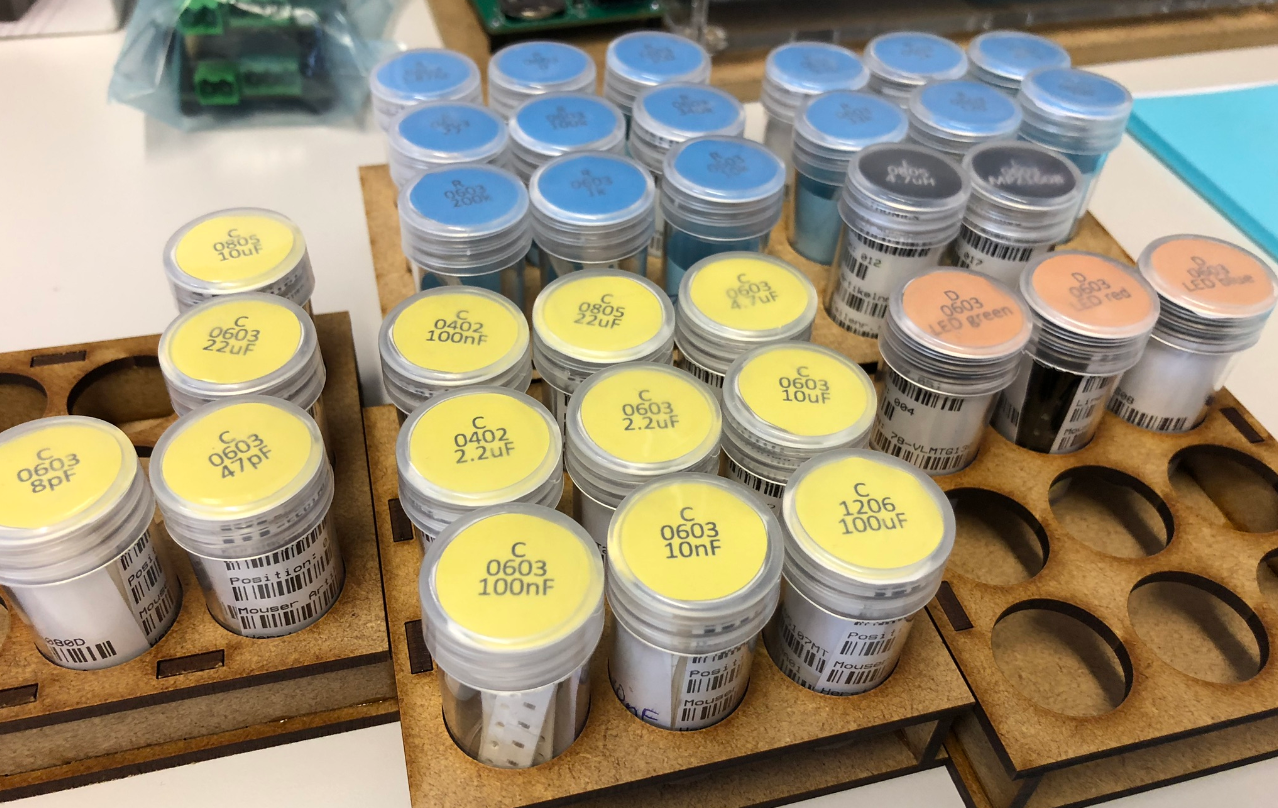
Continue readingFor many of my PCB projects I’m using cut-tape SMD components. So far I have used to keep the components in the little bags as shipped by Mouser and others.
But keeping all the components in bags for multiple projects is not ideal: it takes a lot of time to go through the inventory. What I wanted is an easy and simple storage system at least for the ‘common’ parts used in multiple projects.
A new eclipse-based NXP MCUXpresso IDE v11.10 is available With this new release, it includes an even easier firmware update mechanism for the MCU-Link (LinkServer) debug probes.

In case you are looking for an unusual business card, company badge or event badge holder, then this article is for you: A DIY RFID badge and business card with bling-bling addressable RGB LEDs to impress your customer, clients, friends at work or at a conference, packed with electronics. Plus it includes 10 original tools from Victorinox, the manufacturer of the Swiss Army Knife.

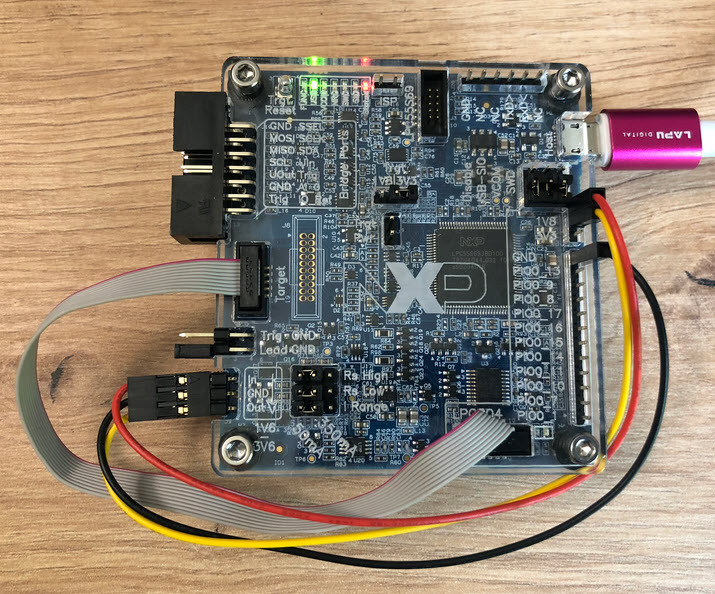
The NXP i.MX RT685 is an interesting device: an ARM Cortex M33 with a Cadence Xtensa audio DSP. To explore the features of the device, I’m using the NXP EVK board:

I have used it so far with the on-board MCU-Link debug probe and LinkServer. This article describes how I have added pyOCD as debug interface for the RT685, as well how to patch and use custom DFP (Device Family Pack) files with pyOCD and Eclipse.
Continue readingEurope is currently facing an ‘Energy Crisis,’ and ‘Sustainability’ is a popular topic among companies. However, embedded engineers go beyond talking—they take action and make tangible changes in the world. With the increasing use of electronic devices, minimizing their energy and power consumption is crucial. Optimizing systems for deep low power or deep low energy is a challenging task. Nonetheless, as I will demonstrate in this article, it is possible to reduce energy consumption by a factor of 100 or more. This article provides a brief overview of the foundational concepts and then applies them step-by-step to an ARM Cortex microcontroller.
Eclipse includes many ways to build a project. One of it is the built-in builder which makes it super easy. And for more complex building needs I can use an external make (see Tutorial: Makefile Projects with Eclipse) or cmake or combination of multiple ways (see Building a Triumvirate: From Eclipse CDT to CMake, CMD and Visual Studio Code).
There is yet another use case how to easily tweak the build process in Eclipse: using a script file in the project to be used as the ‘compiler’:
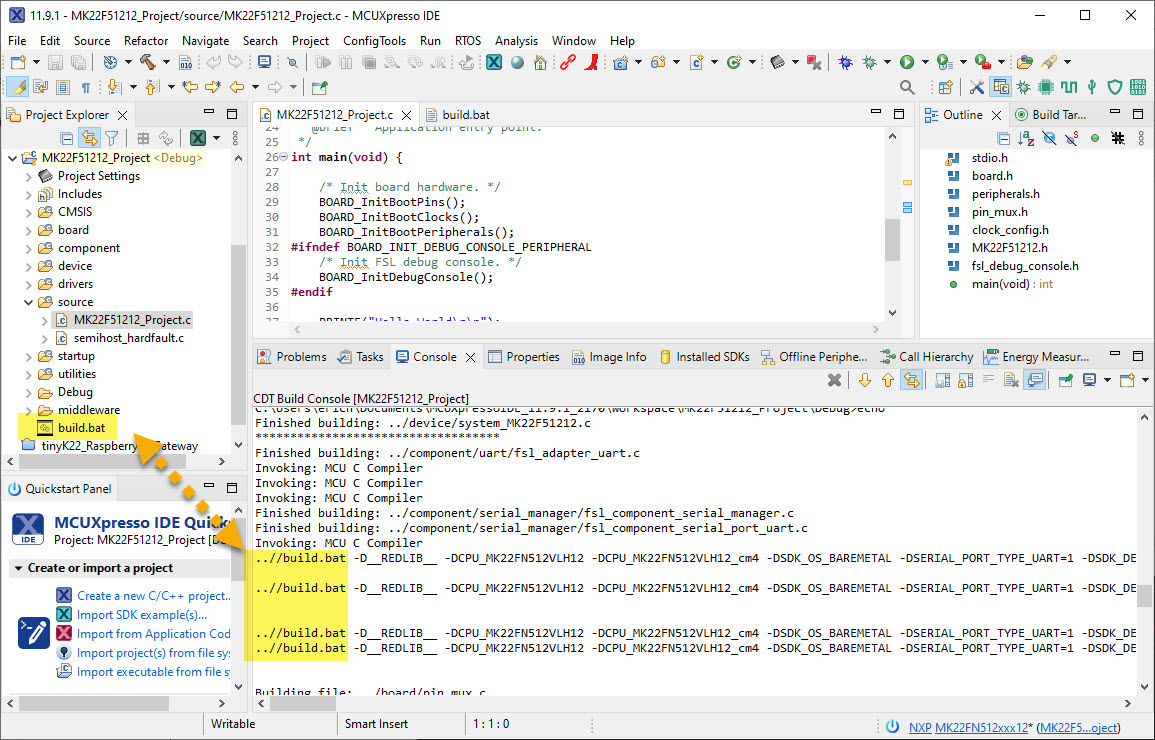
That way I can do all kind of custom steps (analysis, re-formatting, static checkers, …) for each file compiled.
Continue readingThis week I have received the new PCBs for the MCU-Link MR for drones and robots and have populated the parts on the PCB, and it works fine as UART bridge and debug probe for the PixHawk i.MX RT:

 MCU on Eclipse