Thanks for all the feedback and suggestions so far on the tinyK20 project! I’m proud to present the next iteration of the universal microcontroller & debugger board based on the Freescale Kinetis K20 USB microcontroller:

tinyK20 Board

Thanks for all the feedback and suggestions so far on the tinyK20 project! I’m proud to present the next iteration of the universal microcontroller & debugger board based on the Freescale Kinetis K20 USB microcontroller:
tinyK20 Board
What makes Eclipse great: using open source tools there are a lot of tools and techniques available which usually are only provided for desktop development.
A while back I described how to do code coverage with Eclipse Kepler and the GNU ARM Embedded (launchpad) tools (see “Code Coverage for Embedded Target with Eclipse, gcc and gcov“). With Kinetis Design Studio out, time to do the same with that Eclipse distribution, especially as Freescale is now using the stock GNU ARM Embedded tools too.

Coverage with multiple Files
In “tinyK20 Open Source ARM Debug/Universal Board – First Prototypes” I talked about using a USB thumb drive enclosure for the board, so here is the idea:

Thumb Case for tinyK20
Students worked hard implementing their robots for the coming Sumo battles. Amazing looking Sumo Robots are the result :-). Have a look yourself:
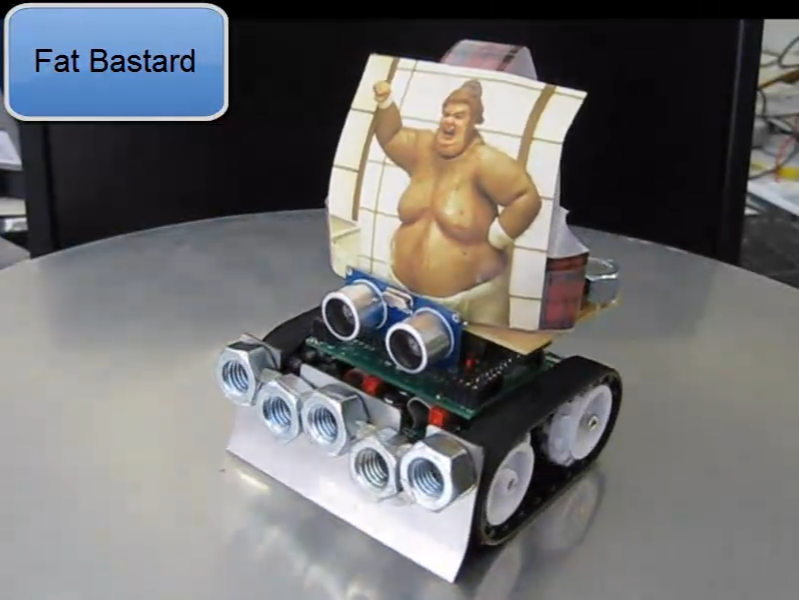
Fat Bastard
Happy Sumoing 🙂
After the proof of concept phase (see “Proof of Concept: Open Source ARM SWD Debug and General Purpose Board“), the first prototypes are ready:

Two tinyK20 Boards
The FRDM-K64F board as other Freescale Freedom board have an onboard debugging device. For everyone who wants to debug the FRDM-K64F board with say a P&E Universal Multilink, here is my setup in case you do not get it working out of the box:

FRDM-K64F with P&E Multilink (click to enlarge)
The Teensy is a great and tiny board (see “USB CDC with the Teensy 3.1 Board“), but it lacks real SWD/JTAG debugging capabilities (see “Hacking the Teensy V3.1 for SWD Debugging“). The Freescale Freedom boards are great, but for many applications too big, and have potentially too many components on it. So what about building a breadboard friendly tiny board which *has* SWD debugging ability *and* can be used to debug another boards?
So here is a working prototype based on the FRDM-K20D50M:
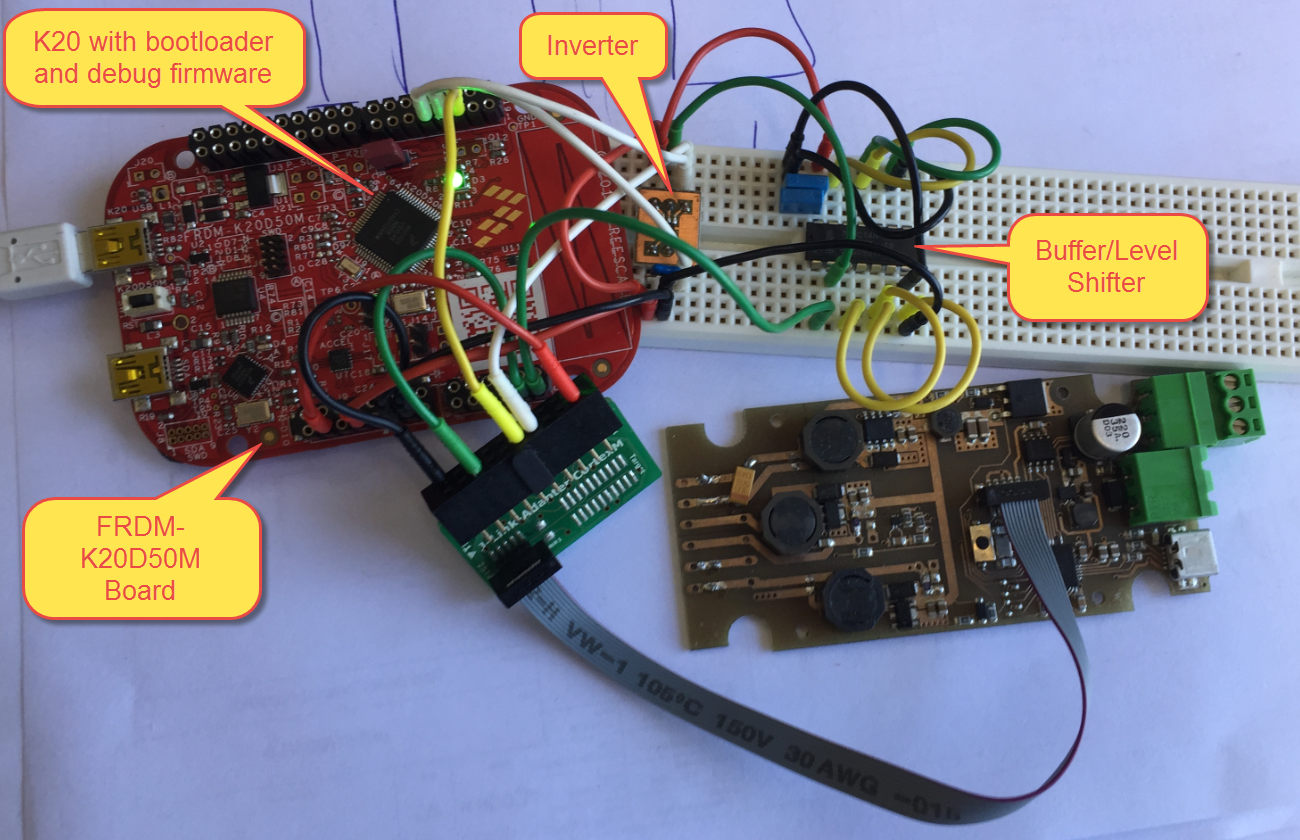
FRDM-K20D50M used as debug probe
In my classes I’m mainly using the Freescale FRDM-KL25Z board, as it provides the best value for the money, and 128 kByte FLASH with 16 kByte of RAM is enough for many smaller projects. I do have as well the FRDM-KL02Z Board (32 KByte FLASH, 4 KByte of RAM) which is an inexpensive board to evaluate the smaller KL02Z microcontroller. Because someone reported a problem not being able to use the UART over OpenSDA/USB-to-CDC bridge, I have created a demo project which communicates with a console on the host.
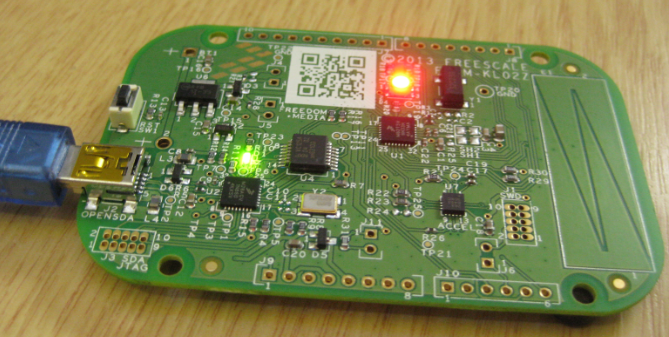
FRDM-KL02Z Board
For a project I want to use the Teensy 3.1 board (see “Hacking the Teensy V3.1 for SWD Debugging“) in USB CDC mode: that way the Teensy board can connect to the host and exchange data or attach a console to the Teensy board: that way I can connect the Teensy over USB to the host use the USB as communication interface:

Teensy with Octo WS2811 Board
In one of my earlier posts (“Using the DHT11/DHT22 Temperature/Humidity Sensor with a FRDM Board“) I’m using the DHT11/DHT22 temperature/humidity sensors with the FRDM-KL25Z board. These sensors are very inexpensive, but have limited measurement range and accuracy. As pointed out by a reader of that article, Sensirion (a Swiss company :-)) has good sensors too, and I decided I would like to try the SHT11 sensor:

SHT11 Sensor

