Probably for cost reasons, the Freescale FRDM-K22F does not come with the micro SD card socket populated on the the board:
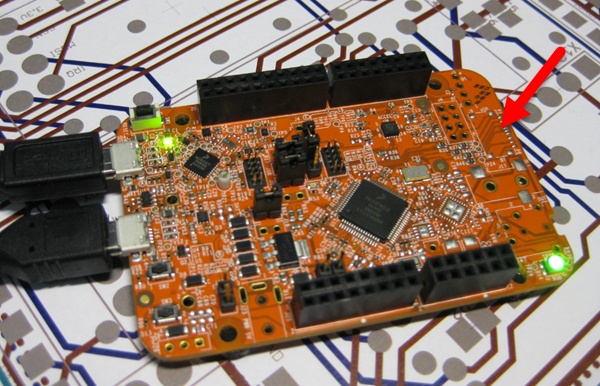
With a little soldering skills it is possible to populate the socket so the board can be used with a file system on it :-):
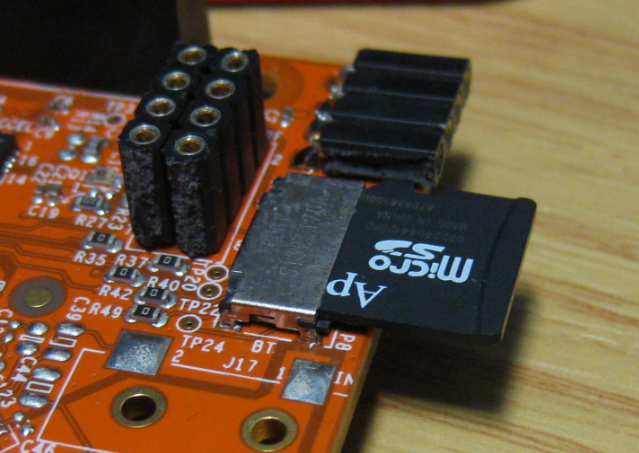
Probably for cost reasons, the Freescale FRDM-K22F does not come with the micro SD card socket populated on the the board:
With a little soldering skills it is possible to populate the socket so the board can be used with a file system on it :-):
FreeRTOS is probably the most popular RTOS used and I love it: it is efficient, has a lot of features, simple and easy to use. But despite its popularity, debugging it with open source tools as with Eclipse and GDB is really not that user-friendly: debugging threads/tasks is a pain compared to commercial solutions. For my university classes this semester I was looking for something easy to use by my students. Finally I managed to use a GDB helper which makes things easier now: I can switch task threads in Eclipse with GDB now 🙂
Every day, there is something new to learn. And having problems is always a good learning opportunity :-). Yesterday we were able to find a strange problem with our tinyK20 prototypes, just before we were about to send the design for manufacturing.
Sometimes I need to link an object file (e.g. bootloader.o) to my application, and I do not want to build it, or I do not have the sources to build it. There is a simple way with the GNU ARM Eclipse plugins to link extra object files:
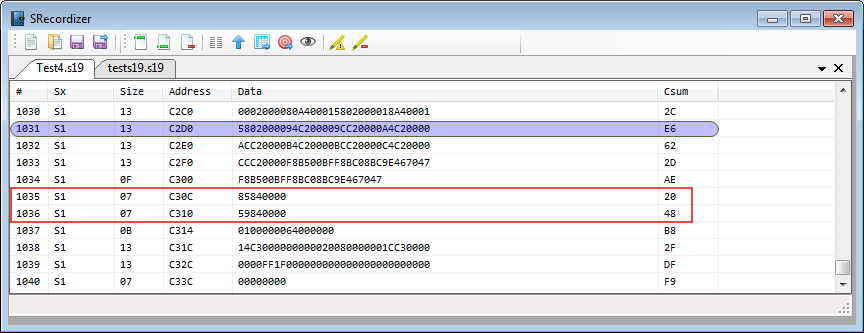
Many tool chains and linker are able to produce S19 files, such as with the GNU tools it is the ‘objcopy‘ which does this job (see “Binary (and S19) Files for the mbed Bootloader with Eclipse and GNU ARM Eclipse Plugins“). But these tools usually cannot handle the special cases. For example on the Freescale Kinetis K64F my serial bootloader (see “Serial Bootloader for the Freedom Board with Processor Expert“) had a problem with these lines in the S19 file:
Yesterday I started with something I had in my mind for a very long time:
to build my own DIY drone based on a Kinetis 🙂
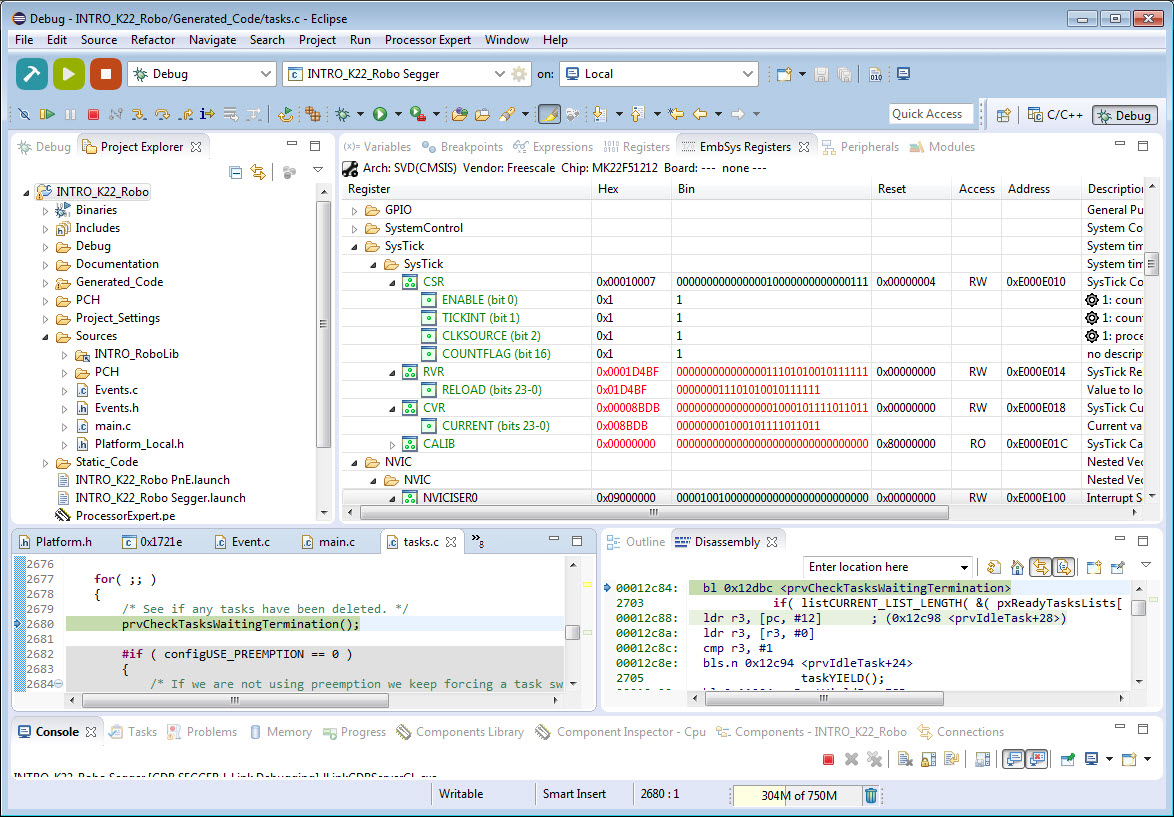
In “How to Add Register Details View in Eclipse” I showed how to add the Register detail support in Eclipse using the EmbSysRegView plugin. This was for Luna/Mars, and for the version v0.2.4 of the plugins.
Since then, there is a new version of Eclipse (MARS, see “Going to Mars: Building a DIY Eclipse IDE for ARM Embedded Microcontrollers“) and the EmbSysRegView plugin has been updated to v2.0.5. Makes everything much simple, so here is an updated post with the details how to add register detail view to Eclipse Mars.
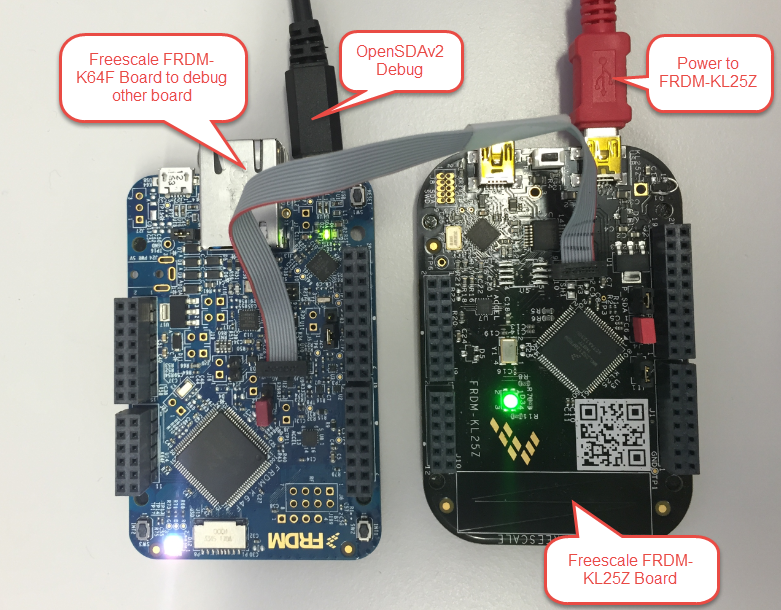
Given all the posts I already have published on a similar topic, this one will be a short one: how to use the Freescale FRDM-K64F board with OpenSDAv2 to debug another board:
Some of my robotics projects take a rather long time do a full build. When I developed applications with Visual C++ on the host, using precompiled headers gave me a big boost in compilation speed. I was looking for the same in similar with GNU and gcc, and as expected: gcc does support precompiled headers too. And indeed, I was able to cut down compilation time by 30% :-). So this post is about how to use gcc with precompiled headers in Eclipse/CDT to give my builds a boost.
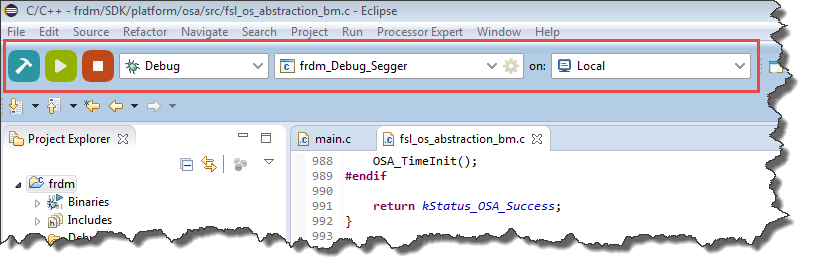
In “Going to Mars: Building a DIY Eclipse IDE for ARM Embedded Microcontrollers” I described how to install an Eclipse based IDE for ARM, based on Eclipse Mars (4.5) and CTD (8.7). There are many great new features in Eclipse Mars which makes that switch worthwhile: the Launchbar:
A dream is are now a reality: a really, really easy way to build, run/debug an application!