Tutorial: Secure TLS Communication with MQTT using mbedTLS on top of lwip

One of the most important aspects of the ‘IoT’ world is having a secure communication. Running MQTT on lwip (see “MQTT with lwip and NXP FRDM-K64F Board“) is no exception. Despite of the popularity of MQTT and lwip, I have not been able to find an example using a secure TLS connection over raw/native lwip TCP :-(. Could it be that such an example exists, and I have not found it? Or that someone implemented it, but has not published it? Only what I have found on the internet are many others asking for the same kind of thing “running MQTT on lwip with TLS”, but there was no answer? So I have to answer my question, which seems to be a good thing anyway: I can learn new things the hard way :-).

Blockdiagram MQTT Application with TLS using lwip

Block diagram MQTT Application with TLS using lwip
Continue reading

Zephyr: Thoughts and First Steps on the ARM Cortex-M4F with gcc, gdb and Eclipse

The concept of Linux (Open Source, broad developer base and broad usage) is a success story. While there is a lot of diversity (and freedom) in the Linux world, Linux is Linux and again Linux :-). And the world has (mostly) standardized on Linux and its variants on the high embedded system side.

On the other side, the ‘middle and lower end’ Embedded world is fragmented and in many aspects proprietary. So it was no surprise to me when the Linux Foundation announced the ‘Zephyr’ project back in February 2016:

“The Linux Foundation Announces Project to Build Real-Time Operating System for Internet of Things Devices. Open source Zephyr™ Project aims to deliver an RTOS; opens call for developers to help advance project for the smallest footprint IoT devices.

Ζεφυρος (Zephyros) is the Greek good of spring and the west wind. Obviously this inspired the logo for the Zephyr project:

Zephyr logo
Zephyr logo (Source: https://www.zephyrproject.org/)
Continue reading

Disabling EzPort on NXP Kinetis to Solve Power-On Issues

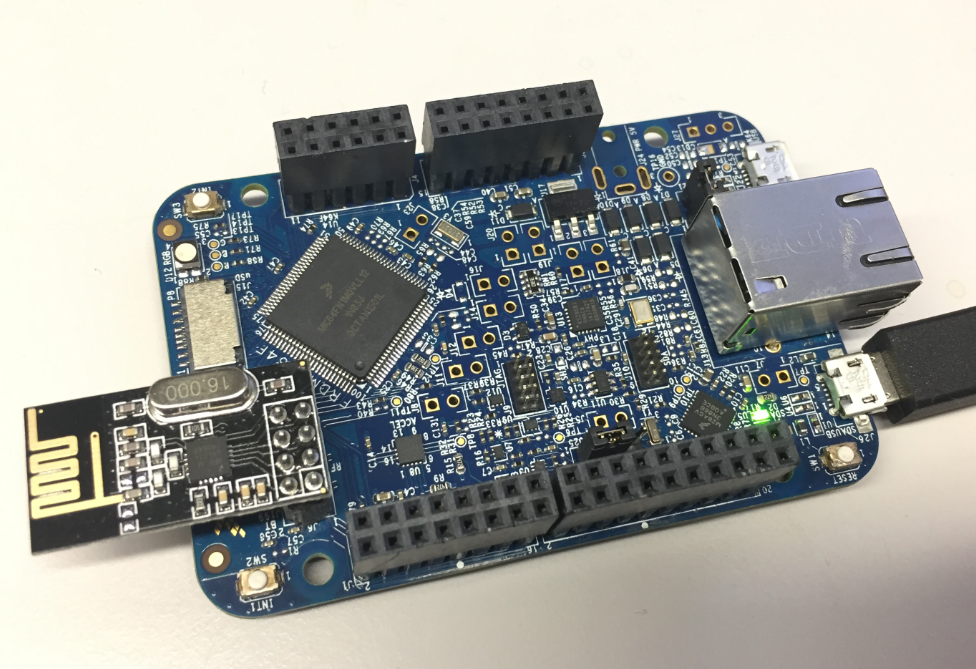
I’m using the NXP FRDM-K64F board in several projects: it is reasonably prices, has USB, Ethernet, micro SD card socket and connectors for Bluetooth classic and Nordic Semiconductor nRF24L01+ 2.4 GHz transceiver:

NXP FRDM-K64F Board

NXP FRDM-K64F Board

But one issue I have faced several times is that the board works fine while debugging and connected and powered by a host machine, but does not startup sometimes if powered by a battery or started without a debugger attached. I have found that the EzPort on the microcontroller is causing startup issues.

Continue reading

Tutorial: Using Single Wire Output SWO with ARM Cortex-M and Eclipse

As a standard procedure, I add some console functionality to my embedded applications. That way I have a command line interface and can inspect and influence the target system. One interesting hardware feature of ARM Cortex-M is Single Wire Output (SWO): it allows to send out data (e.g. strings) over up to 32 different stimulus ports, over a single wire.

swo-pin-on-arm-debug-header

swo-pin-on-arm-debug-header

Continue reading

FreeRTOS Kernel Awareness with Ozone

In my first post about Segger Ozone (see “First Steps with Ozone and the Segger J-Link Trace Pro“) I missed the fact that it includes support for kernels like FreeRTOS. So here is how to show the FreeRTOS (or any other RTOS) threads with Ozone:

freertos-threads-in-ozone

freertos-threads-in-ozone

Continue reading

ARM Cortex-M Interrupts and FreeRTOS: Part 3

This is the third part about ARM Cortex-M and how the interrupts are used. In Part 1 I discussed the Cortex-M interrupt system and in Part 2 I showed nested interrupt examples. This part is about FreeRTOS and how it uses the Cortex-M interrupt system.

NXP KV58F ARM Cortex-M7

NXP KV58F ARM Cortex-M7

Continue reading

Semihosting (again!) with NXP Kinetis SDK V2.0

I kind of hoped that after “Why I don’t like printf()” and all my other articles about printf and semihosting, that topic would be 200% handled and I won’t have to deal with any more. Well, I was wrong and underestimated how the Kinetis SDK is interfering with semihosting. And I underestimated how many of my readers are still using semihosting (even as there are other and better alternatives), so I keep getting questions and requests for help. That’s ok, and I hope I can help :-).

So here is yet again another post about how to turn on semihosting with Eclipse, GNU ARM Embedded and the Kinetis SDK v2.0. This time with the FRDM-K64F board:

FRDM-K64F Board with lwIP running

FRDM-K64F Board

Continue reading

Swiss Army Knife of Terminal Program for Serial Bootloaders

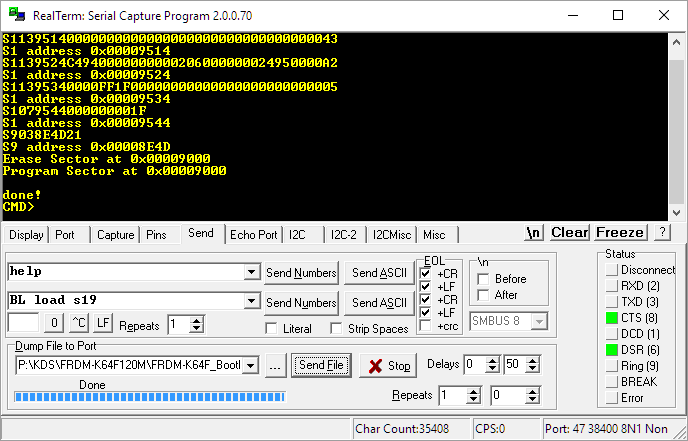
A bootloader shall be small and concise. I very much like bootloaders which do not need a ‘special’ program on the host, so I prefer a simple terminal for this. While porting my serial bootloader to the NXP FRDM-K64F board, I have found RealTerm which offers a lot of cool features:

RealTerm

RealTerm

Continue reading

Segger J-Link OpenSDA Firmware with Virtual MSD

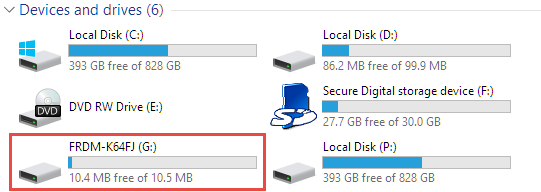
Sometimes it is very convenient to load a new firmware to a board without the need for a hardware debugger. This is usually done with a bootloader. The NXP Freedom and Tower evaluation boards have on-board debug device/microcontroller (OpenSDA) which can load different firmware implementations like CMSIS-DAP/mbed, P&E Multilink or a Segger J-Link OpenSDA applications. Both mbed and P&E implemenations support to program the board with drag&drop: simply send a file to a virtual MSD (Mass Storage Device) to get it programmed. The latest Segger OpenSDA firmware has this ability added now too: Programming the board with a virtual MSD device:

Virtual MSD Device

Virtual MSD Device

Continue reading

Tutorial: Making Music with Floppy Disk Drives

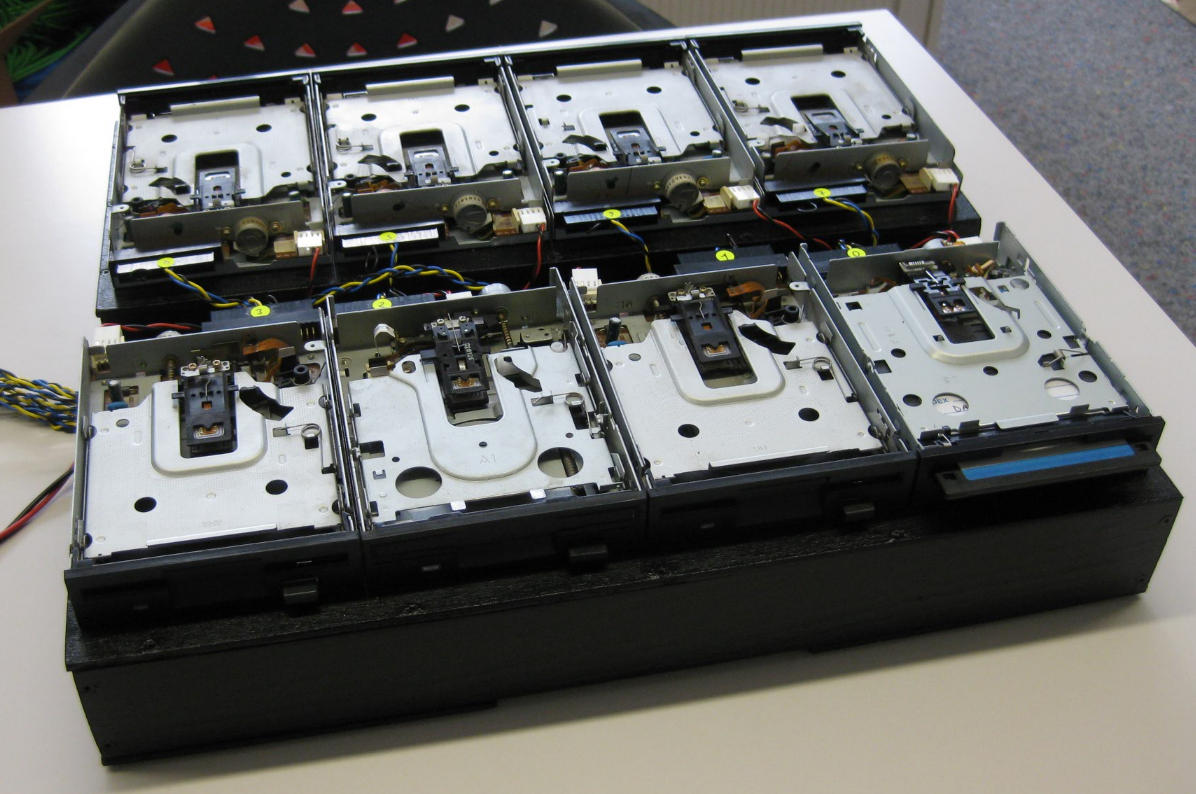
3.5″ Diskette Drives are not widely used any more: CDs, DVDs, memory/thumb drives and downloads from the web are the usual distribution method these days for software. Back a few years ago, software was distributed on one or many 3.5″ diskettes, and even before that time on 5 1/4″ floppy disk drives. So what to do with all these not-used-anymore hardware? Play music with it 🙂

Floppy Music

Floppy Music

Continue reading